





Low Mahogany Chest
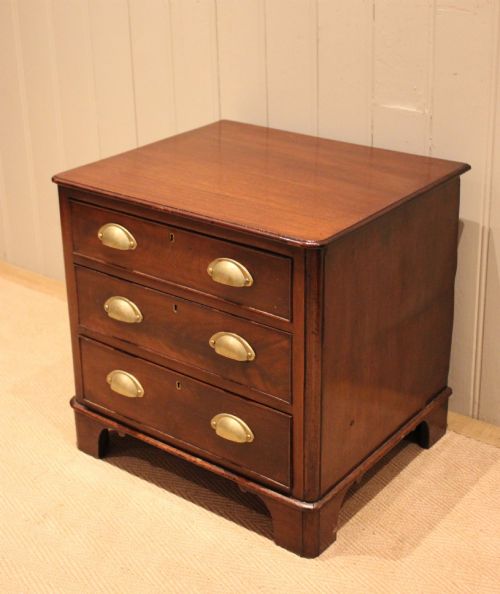
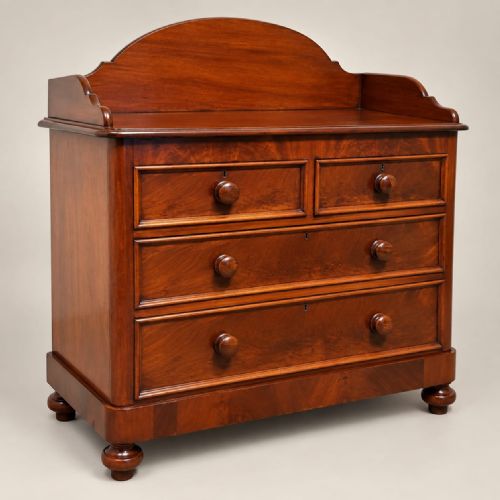
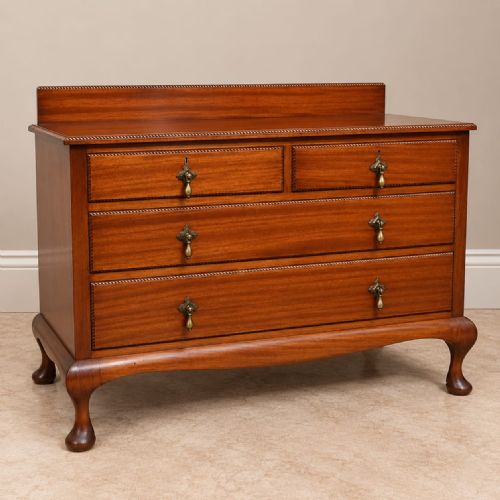
A low mahogany chest brings compact proportion and dense timber grain to a room, offering practical storage beneath a surface of warm, polished surface.
Low Mahogany Chest
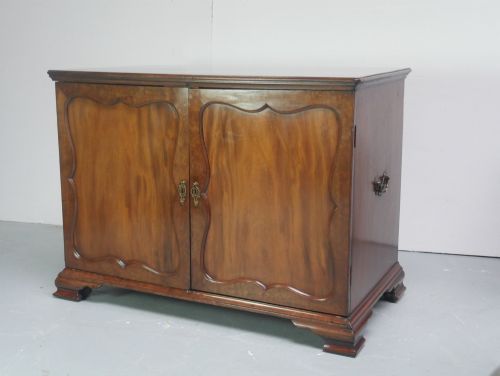
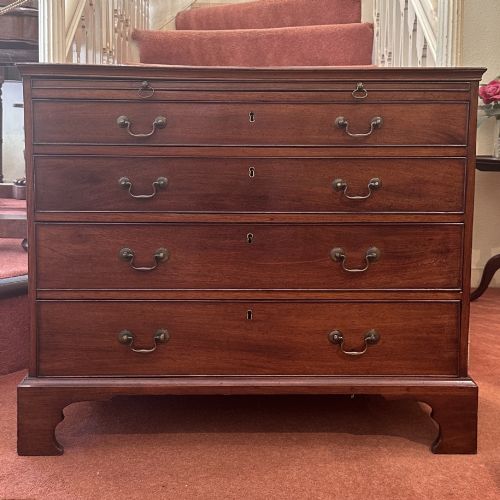
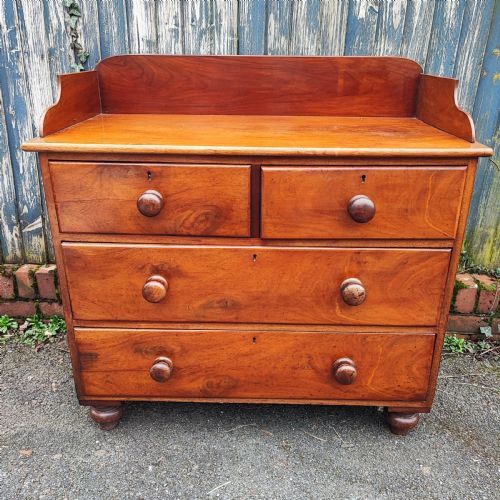
A low mahogany chest is a short storage unit built primarily to keep clothes, linens or documents while maintaining a low profile. These pieces span centuries from the Georgian and Regency eras through the Victorian and Edwardian periods, appearing in forms such as chests of drawers, linen presses, side cabinets and dwarf wardrobes.
The pieces met most often on this page take the form of compact drawer units or low press cupboards from the eighteenth and nineteenth centuries. Alongside standard drawer configurations, buyers encounter specialist formats including campaign chests, dressing chests, and pieces fitted with brushing slides or secretaire drawers.
Origins stretch from English workshops to Scottish regional centres, taking influence from major cabinet-making traditions. The combination of reduced height and rich mahogany timber makes these chests adaptable for placement beneath windows or within smaller domestic spaces.
Materials and construction
Makers utilised solid mahogany and figured veneers such as flame mahogany and plum pudding mahogany, laid over secondary carcase woods like pine. Drawer linings frequently employ secondary timbers, whilst structural strength relies on tight dovetail joints at the drawer corners and solid framing.
Surface embellishment involves brass hardware, including drop handles, escutcheons and campaign strapwork, alongside contrasting stringing in boxwood and satinwood. Cabinetmakers polished the timber to emphasise natural grain patterns, sealing the wood with traditional oil and wax finishes.
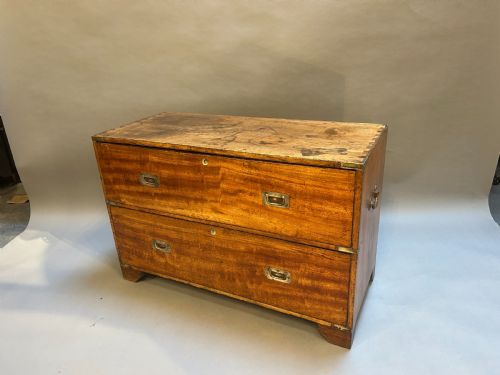
Some campaign chests split completely in half so officers could pack their wardrobe into a mule without denting the polished top.
Quality and construction differences
Selection of timber grain dictates much of the visual merit, with highly figured flame or plum pudding veneers marking out finer examples against plain solid boards. The skill of the cabinetmaker shows in the book-matching of drawer fronts and the precise execution of inlaid boxwood or satinwood stringing.
Mechanical integrity separates standard domestic pieces from workshop masterpieces, visible in smooth drawer operation, hand-cut dovetailing, and the retention of original brass handles and locks. Secondary wood selection and the neatness of internal linings also indicate the standard of production behind the exterior facade.
Gillows·Waring and Gillow
The Low Mahogany Chest Glossary
- Flame Mahogany
- A veneer cut from the fork of the mahogany tree where the branch meets the trunk. This timber displays a distinctive flickering flame pattern across the drawer fronts.
- Brushing Slide
- A pull-out wooden shelf integrated above the top drawer of a chest. It provided a clean surface for folding garments or brushing clothes within domestic chambers.
- Campaign Chest
- A modular chest built in two or more sections with recessed brass handles and corner brackets. Officers utilised these portable units during military relocation.
- Dwarf Wardrobe
- A shortened wardrobe standing lower than standard clothes presses. These units combined hanging space with low drawer compartments for bedroom storage.
Low Mahogany Chest: Frequently Asked Questions
How do I date a mahogany chest?
Dating relies on examining construction methods, timber choice, handle design, and overall stylistic proportions. Eighteenth-century examples often display hand-cut dovetailing and solid timber carcases, while later nineteenth-century pieces may incorporate specific veneer treatments and machine-assisted elements.
Hardware styles and secondary woods inside the drawers also offer chronological clues. Comparing the piece against documented period examples helps confirm whether a chest belongs to the Georgian, Regency, or Victorian eras.
Where were low chests used?
These chests served primarily in domestic bedrooms, dressing rooms, and private chambers for storing garments, linens, and personal accessories. Lower formats were particularly suited to rooms with restricted wall height or beneath windows.
Specialist variants like campaign chests travelled with military officers, whilst dressing chests combined storage with mirror attachments for daily grooming routines. Their versatility allowed placement across various residential rooms.
How should I care for mahogany?
Maintenance involves keeping the timber away from direct heat sources and strong sunlight to prevent the mahogany finish from fading or drying out. Regular application of a traditional beeswax polish helps preserve the lustre of the wood grain.
Cleaning should be performed with a soft, dry cloth to remove dust without harming the polished surface. Avoiding excessive moisture ensures the antique veneer and structural joints remain stable over time.