


Edwardian Marble Top Chest
Edwardian marble top chests bring sturdy stone surfaces to bedroom storage, offering a practical combination of cool stone tops and fitted timber drawers.
Edwardian Marble Top Chest
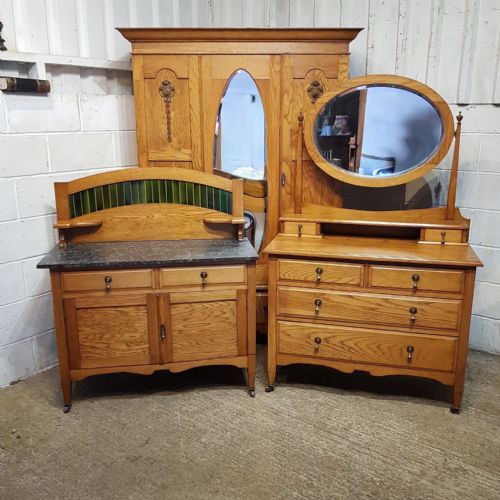
An edwardian marble top chest unites practical wooden storage with a durable stone surface designed to withstand daily use. Pieces on this page span the Edwardian era alongside Victorian and Regency periods, adopting forms such as washstands, bedside tables, and bedroom suites.
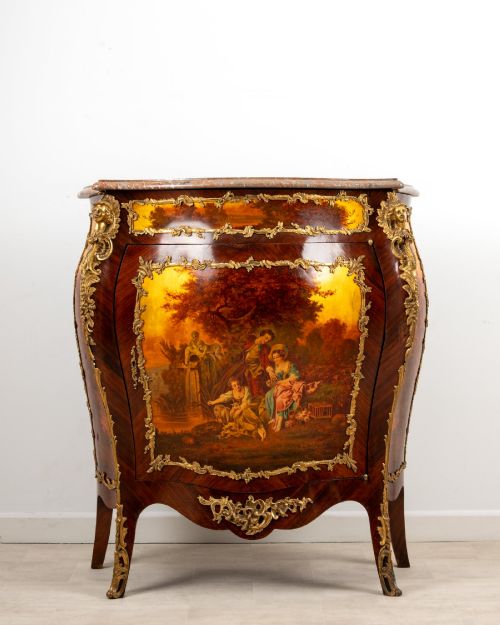
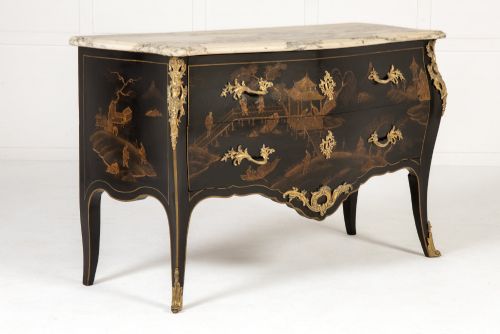
Makers utilised woods including oak, mahogany, ash, pine, walnut, and rosewood, often pairing them with white, rouge, or dark marble slabs. Styles range from plain Arts and Crafts designs to French Revival commodes and cabinets with parquetry veneer.
The category encompasses both dedicated chests of drawers and multi-piece bedroom suites, alongside smaller bedside tables and washing stands. Buyers encounter varied regional interpretations, from British oak and mahogany pieces to French commodes fitted with ormolu mounts.
Materials and construction
Makers constructed the primary carcase using solid timbers or applied veneers of mahogany, oak, walnut, ash, and pine over a secondary wood base. Marble slabs were cut, polished, and fitted directly to the top surface to provide a water-resistant working area.
Detailing often included brass handles, ceramic elements, glass panels, and cast ormolu mounts to accent the timber and stone. Parquetry veneer and inlaid banding frequently decorated the drawer fronts and cabinet doors of finer examples.
Some washstands served as hidden splashbacks for morning ablutions before indoor plumbing reached every bedroom.
Assessing quality in the range
Quality separates simple utility furniture from pieces finished with choice timbers and careful joinery. Finer examples display precise parquetry veneer, well-figured mahogany or walnut, and heavy marble tops free of structural flaws.
The distinction lies in the integration of the stone top with the wooden frame, the crispness of carved or applied ornament, and the stability of the drawers. Simple pine and oak washstands serve a utilitarian purpose, whereas inlaid mahogany and French polished commodes reflect higher workshop standards.
Lamb of Manchester
The Edwardian Marble Top Chest Glossary
- Parquetry
- Geometric wood veneer work arranged in repeating patterns. This technique creates decorative surface designs on drawer fronts and tabletops.
- Ormolu
- Gilded bronze mounts applied for decoration. Makers used these cast metal ornaments extensively on French-style furniture.
- Washstand
- A piece of bedroom furniture designed to hold a basin and jug. The marble top provided a water-resistant surface suited to this daily routine.
- Commode
- A low decorative chest of drawers or cabinet. These pieces often feature serpentine fronts and elaborate mounts.
Edwardian Marble Top Chest: Frequently Asked Questions
How do I clean a marble top?
Wipe the stone surface using a damp cloth and mild, neutral soap to remove dust and daily grime. Avoid acidic cleaners or harsh chemical agents that can etch the polished finish.
Dry the marble thoroughly with a soft cloth to prevent water spots. Promptly wipe away spills from oils or cosmetics to protect the stone.
Where should I place these pieces?
Position the chest in a bedroom or dressing room where the stone surface can function as a practical shelf or washing stand. Ensure the room has stable humidity to protect the antique timber carcase.
Keep the furniture away from direct heat sources and strong sunlight to prevent the wood from drying out and the veneer from lifting.
Are marble tops removable?
Most marble slabs rest loose on top of the wooden frame, held in place by their own considerable weight or a wooden retaining lip. This design made the heavy furniture easier to transport.
Exercise caution when moving the piece by lifting the stone off separately to reduce weight and prevent accidental chipping or cracking.
How do I date an Edwardian chest?
Examine the construction methods, secondary timbers, and hardware style to determine the manufacturing period. Edwardian pieces often combine traditional dovetailing with machine-sawn internal components.
Compare the decorative motifs, such as Arts and Crafts simplicity or French revival influences, with documented examples from the same era.