
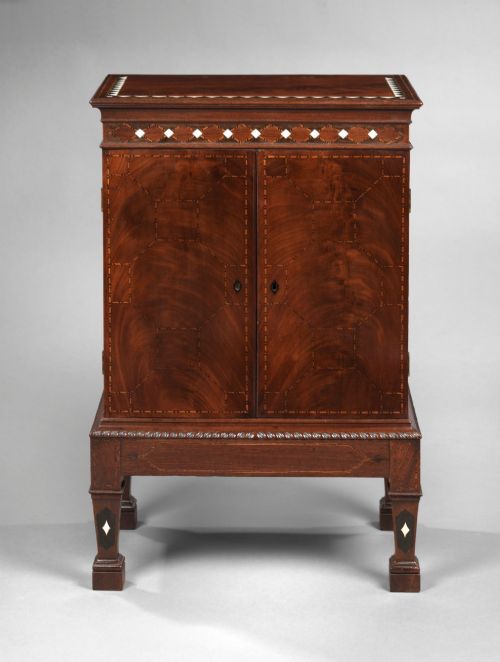
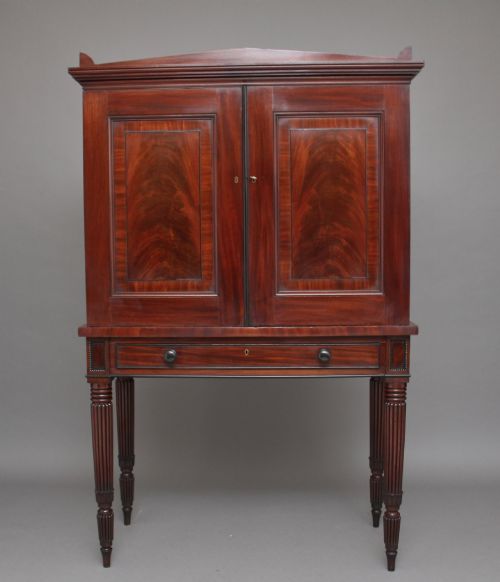
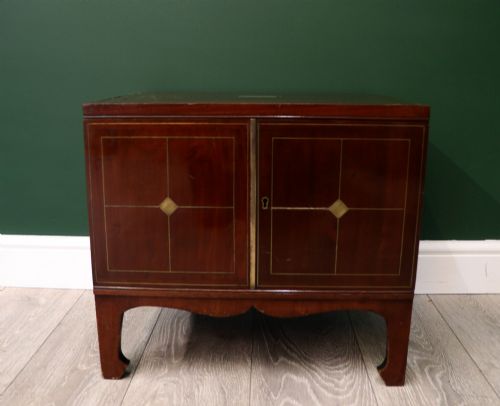
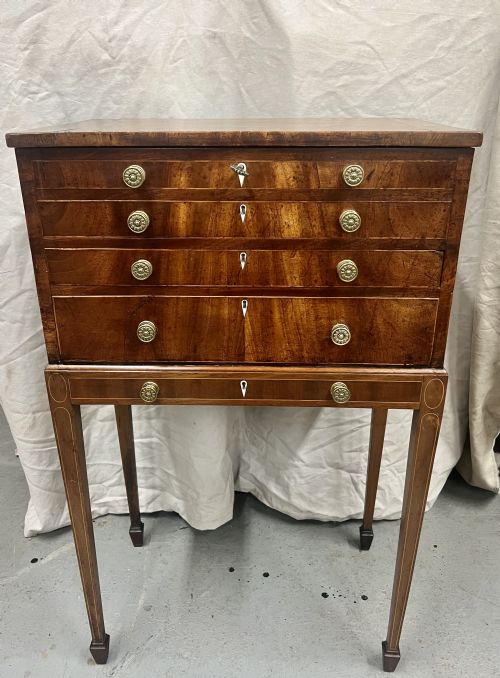




Mahogany Coin Chest
A mahogany coin chest organises small treasures in multiple snug drawers, offering collectors timeless utility.
Mahogany Coin Chest
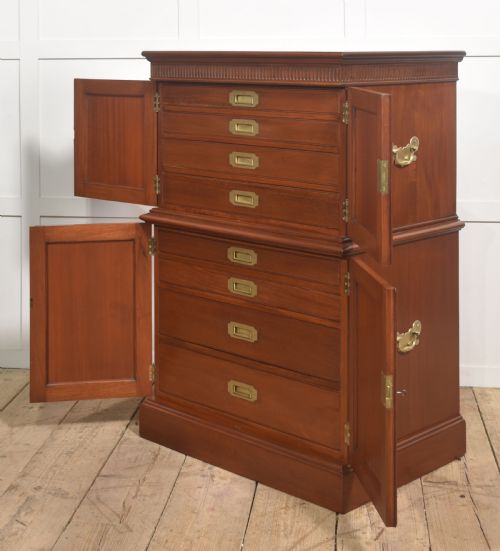
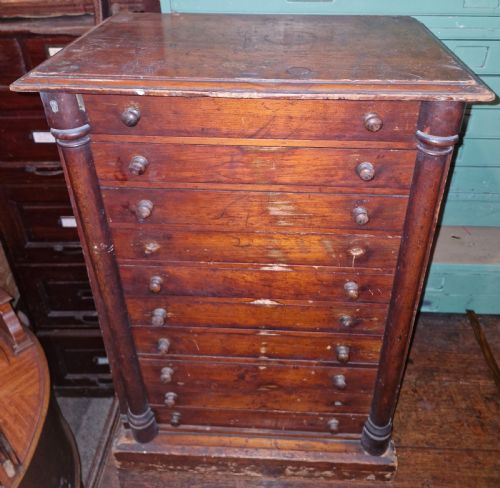
A mahogany coin chest is a purpose-built cabinet designed to house delicate specimens, medals, and currency securely in multiple shallow drawers. When you search for this phrase, you encounter pieces spanning the Georgian, Victorian, and Edwardian eras, often styled as miniature chests of drawers or specimen cabinets.
Originating primarily from English workshops, these cabinets range from modest five-drawer units to monumental forty-drawer pieces equipped with campaign handles and glass doors. Each variant serves the fundamental purpose of protecting fragile items from dust and handling.
Materials and construction
Makers utilised dense timbers, predominantly solid mahogany and Cuban mahogany, sometimes accented with satinwood, boxwood inlay, or burr walnut veneers. These robust woods provided the structural stability necessary to house numerous tight-fitting drawers without warping.
Hardware played a vital functional role, incorporating brass drop handles, campaign flush fittings, and occasionally glass fronts for viewing contents. Internal drawer construction relied on fine dovetail joints and precise tolerances to ensure smooth movement within the carcase.
Listings feature mahogany, brass, glass, bone inlay, and boxwood across Victorian, Georgian, Regency, and Edwardian periods.
Distinctions in quality
Quality in a mahogany coin chest rests upon the precision of the drawer construction and the selection of the timber grain. Finer examples display symmetrical flame mahogany veneers, crisp boxwood stringing, and robust brass hardware that anchors the piece firmly.
The reputation of the maker heavily influences distinction, with signed works by known workshops commanding greater appreciation. Additionally, the sheer scale and complexity of multi-drawer configurations separate standard utility pieces from exceptional archival cabinets.
Brady of Edmonton·Charles William Schofield·Standish
The Mahogany Coin Chest Glossary
- Campaign style
- Furniture designed for portability, featuring recessed brass handles and protected corners to withstand travel. These pieces often dismantle or feature secure locking mechanisms.
- Specimen cabinet
- A piece of furniture housing numerous shallow drawers intended for entomology, geology, or small artefacts. They provide dark, stable environments for sensitive collections.
- Dovetail joint
- An interlocking woodworking joint utilised in drawer construction for superior tensile strength. It prevents the corners from pulling apart under repeated use.
- Standish
- A maker or type of cabinet associated with specialised storage and writing equipment. These pieces often incorporate multiple fitted compartments alongside coin or specimen drawers.
- Stringing
- Thin inlaid lines of contrasting wood, such as boxwood or satinwood, used to decorate drawer fronts and borders. It provides subtle geometric contrast against dark mahogany.
Mahogany Coin Chest: Frequently Asked Questions
What were mahogany coin chests originally used for?
These cabinets served scholars, naturalists, and numismatists as secure repositories for delicate items like coins, medals, and fossils. The shallow drawers prevented items from piling on top of one another.
Inside, the compartmentalised space ensured that fragile pieces remained stable and protected from environmental damage during storage or study.
How do I date a mahogany coin chest?
Dating relies on observing construction methods, timber choices, and hardware styles across different eras. Georgian examples often feature simpler lines and solid timber, while Victorian pieces introduce glass doors and complex locking bars.
Maker stamps, brass handle designs, and secondary woods inside the drawers also provide reliable chronological clues for attribution.
Are the drawers usually lined?
Many interiors retain original velvet, baize, or leather linings designed to cushion delicate metallic items. These fabrics prevented scratching when drawers were opened and closed.
Over time, some linings have been replaced by later owners to refresh the interior presentation of the cabinet.
How should I maintain the wood?
Keep the timber away from direct sunlight and steady heat sources to prevent the mahogany from drying out or splitting. Occasional light waxing preserves the natural lustre of the finish.
Ensure the brass hardware remains unpolished unless necessary, allowing the metal to retain its aged patina alongside the timber.