

Mahogany Cellarette on Stand
Mahogany cellarette on stand pieces are fitted wooden drinking-vessels raised on legs, bought to hold bottles and bring formal proportion to a room.
Mahogany Cellarette on Stand
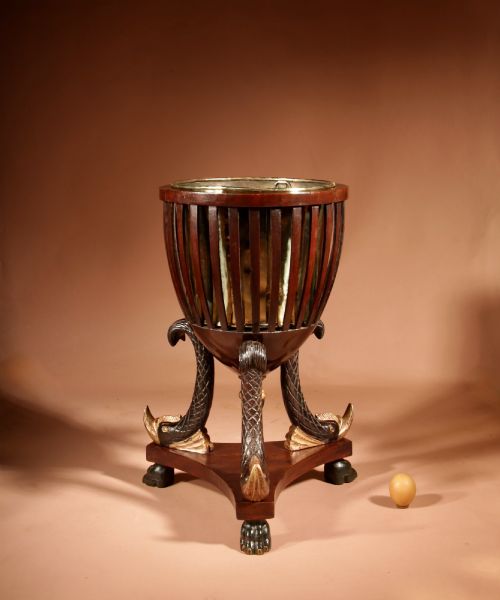
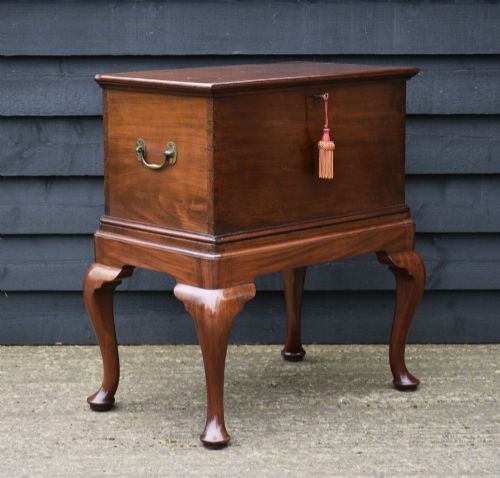
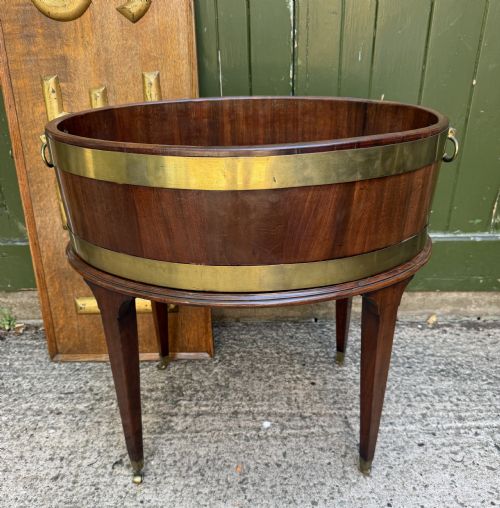
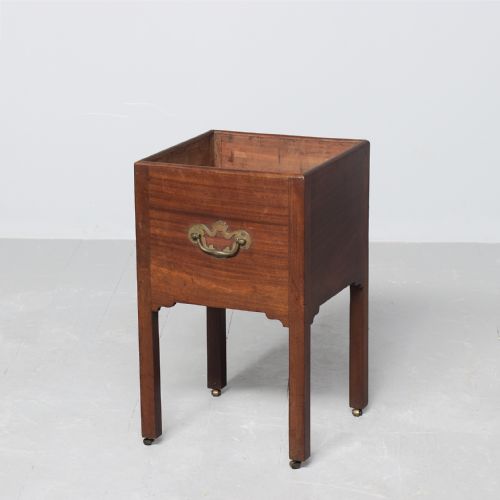
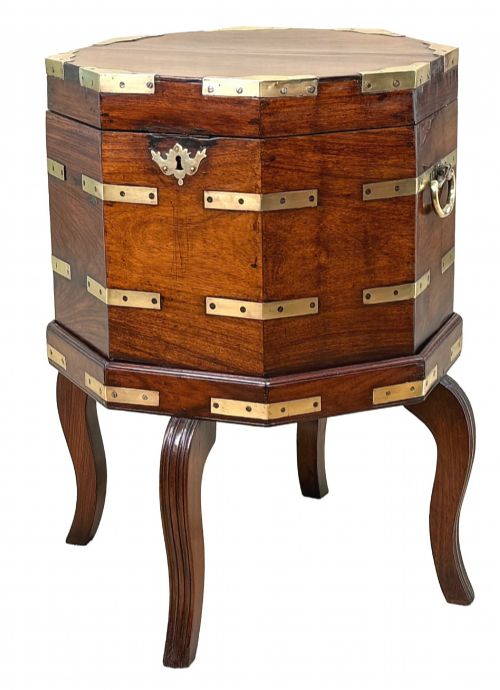
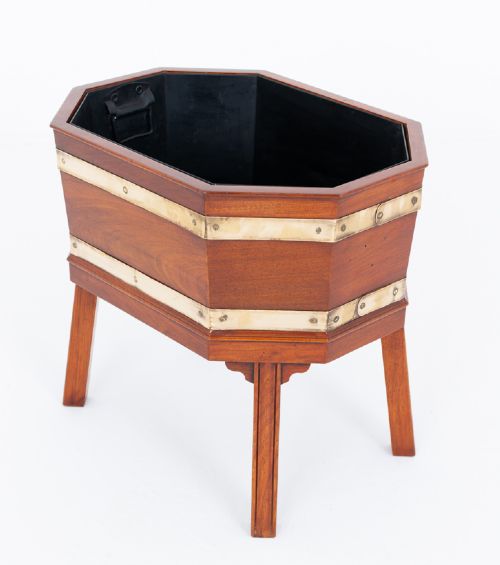
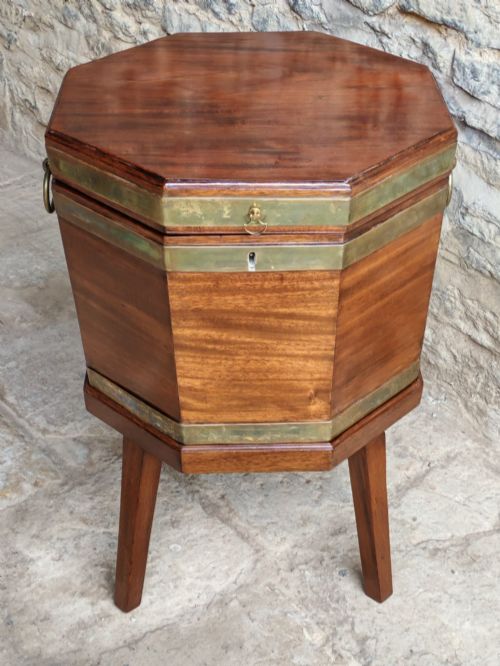
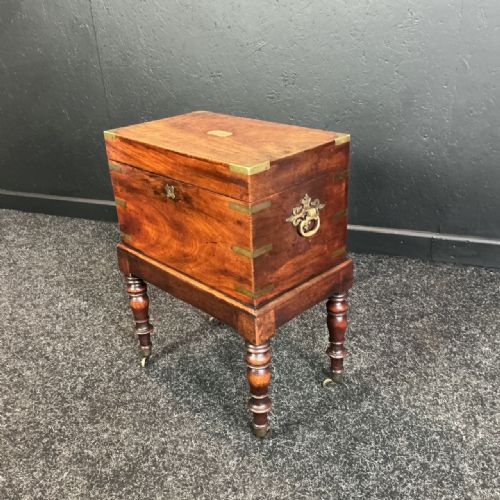
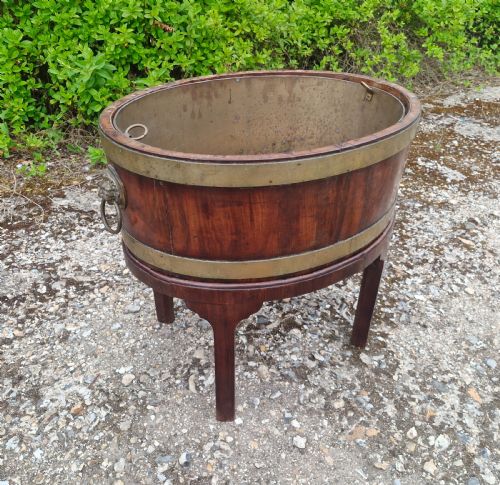
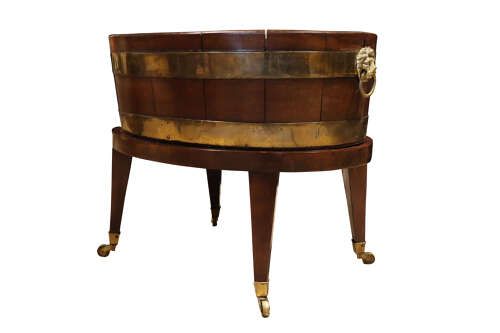
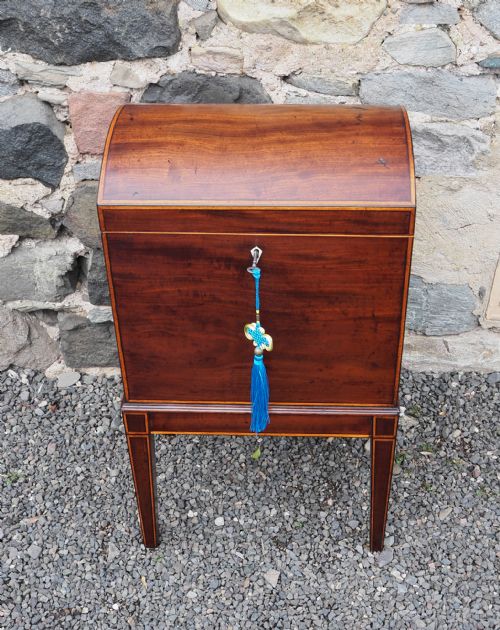
A mahogany cellarette on stand is a refined piece of dining furniture built to keep wine and spirits cool or stored close to the table. Most examples seen here date from the Georgian, Regency, and Victorian periods, taking forms such as oval or octagonal wine coolers, boxes on stands, and plant jardinières.
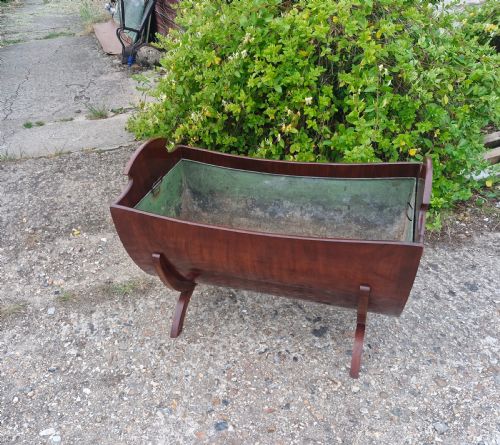
Makers shaped these items for large country houses and town residences, often incorporating lead or zinc linings for ice and bottles. The combination of a deep storage body and a dedicated stand distinguishes these objects from table-top vessels or floor chests.
How they were made
Cabinet-makers relied on solid mahogany, flame mahogany, and occasionally walnut or padouk, frequently accentuating the timber with boxwood stringing, shell inlay, or brass banding. Coopered construction techniques were common for rounded and oval bodies, using tight stave joints secured by metal hoops.
Listings feature eighteenth-century, Regency, and Victorian periods, constructed primarily in mahogany, walnut, and brass-bound metal.
What varies in quality
The distinction between ordinary and exceptional work lies in the choice of timber figure, such as richly grained flame mahogany, and the crispness of brass mounts and inlay. Original stands matching the exact period and timber of the upper vessel elevate a piece above later marriages or replacements.
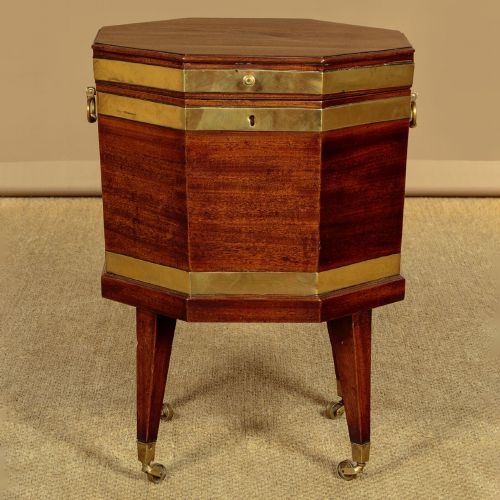
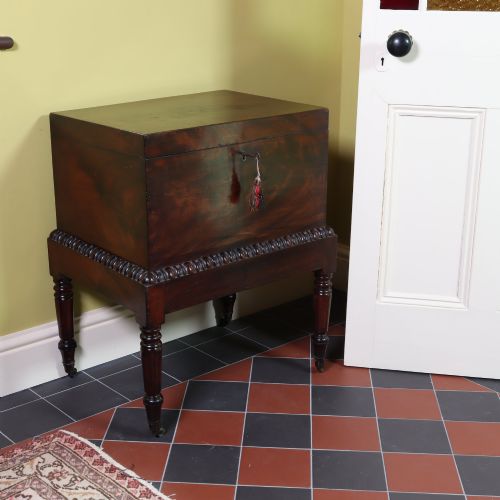
Joinery execution also dictates standing worth, particularly in the precision of stave cooperage and the survival of internal dividers or original metal linings. Pieces retaining their fitted compartmentalised interiors and authentic castors command greater regard.
Gillows
The Mahogany Cellarette on Stand Glossary
- Cellarette
- A lockable container designed for holding bottles of wine and spirits near the dining table. They frequently sat upon dedicated stands or low legs during the eighteenth and nineteenth centuries.
- Coopered
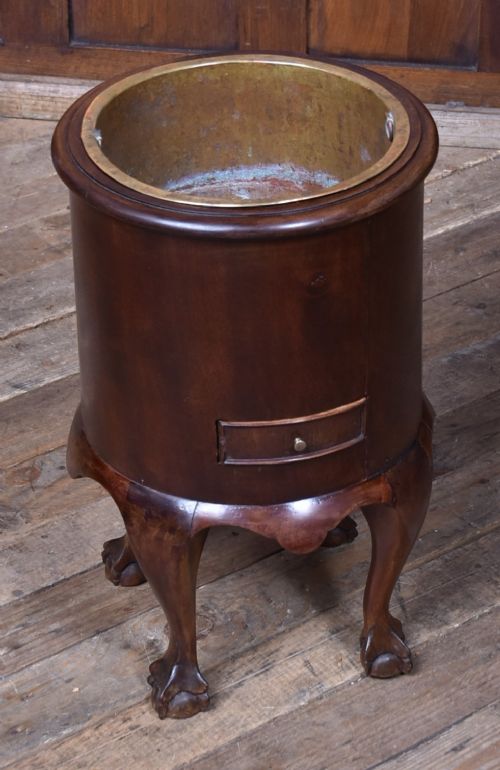
- Built using curved wooden staves joined side by side, similar to barrel construction. This technique gave wine coolers their rounded or oval profile.
- Jardinière
- An ornamental stand or container used to hold plants and flowers. Many examples share forms with wine coolers and were converted between uses over time.
- Padouk
- A dense tropical hardwood with reddish tones utilised in colonial cabinet-making. It appears in specific overseas pieces linked to the trade routes.
- Stringing
- Thin inlaid lines of contrasting wood used to outline panels and borders on furniture. This decorative detail marks finer neoclassical cabinet-work.
Mahogany Cellarette on Stand: Frequently Asked Questions
What is a mahogany cellarette on stand used for?
These vessels were originally manufactured to store bottles of wine, spirits, and ice beside the dining table during grand meals. They kept drinks chilled and accessible without requiring servants to fetch bottles from the cellar.
Today, buyers frequently utilise them as standalone decorative items, log baskets, or plant jardinières in reception rooms.
How do I tell a Georgian cellarette from a Victorian one?
Georgian and Regency pieces typically display crisper mahogany figuring, restrained brass banding, and proportioned bracket or tapering legs characteristic of eighteenth-century design. Eighteenth-century models often rely on precise coopered construction and subtle string inlay.
Victorian iterations tend to feature heavier proportions, darker finishes, and occasionally more robust or ornate turning on the supporting stand.
Are the stands usually original to the wine cooler?
Many surviving examples retain their original matching stands, though some pieces brought together separate boxes and bases over the centuries. Examining the timber grain, wear patterns, and mounting points helps determine if the stand belongs to the upper vessel.
Original matched pieces display consistent ageing and identical secondary woods throughout the framework.
How should I care for a mahogany cellarette?
Keep the wood away from direct heat sources and sudden humidity changes to prevent the mahogany staves from shrinking or splitting. Regular dusting with a soft, dry cloth preserves the finish and natural patina of the surface.
Avoid placing wet pots directly inside unlined timber interiors if using the piece as a modern jardinière.