
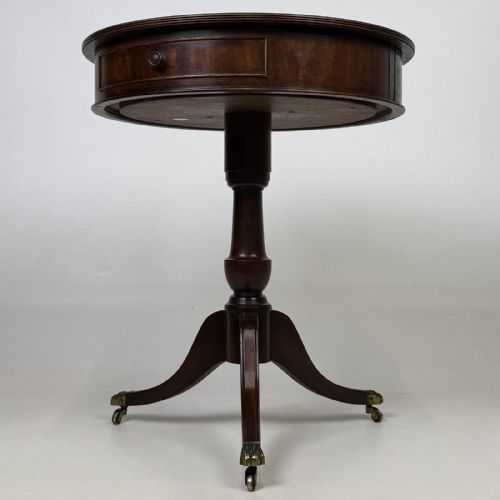
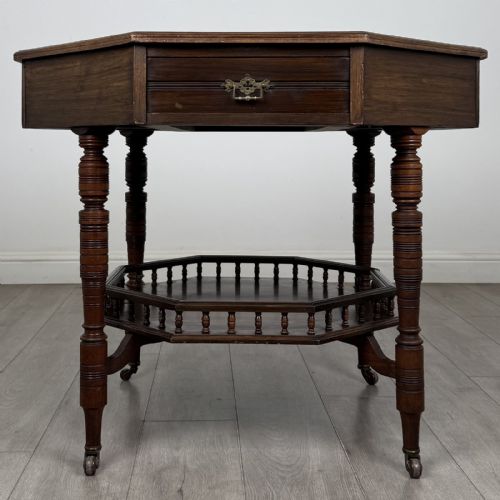
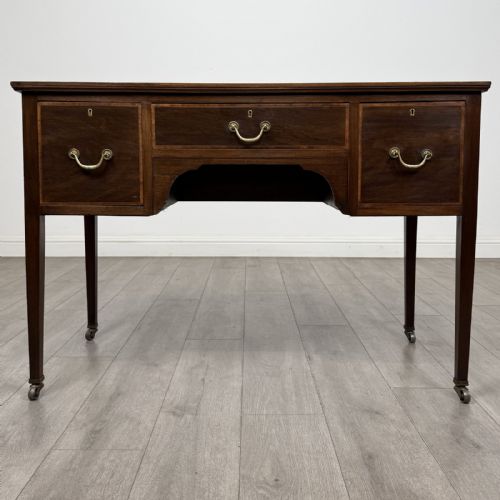
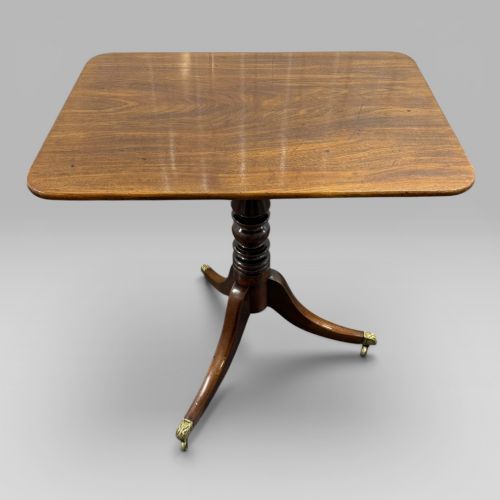
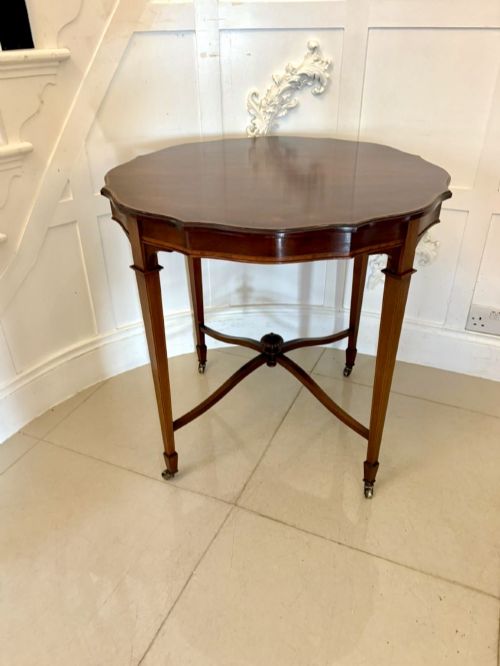
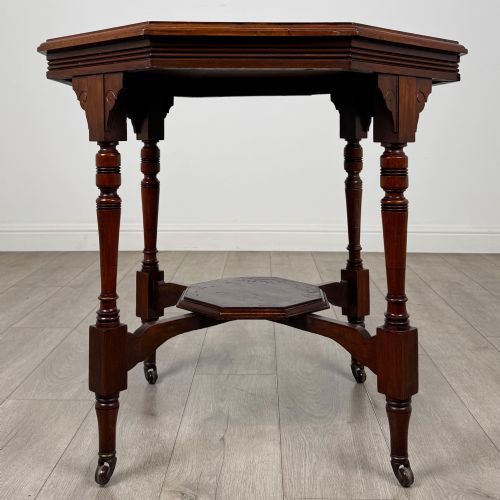
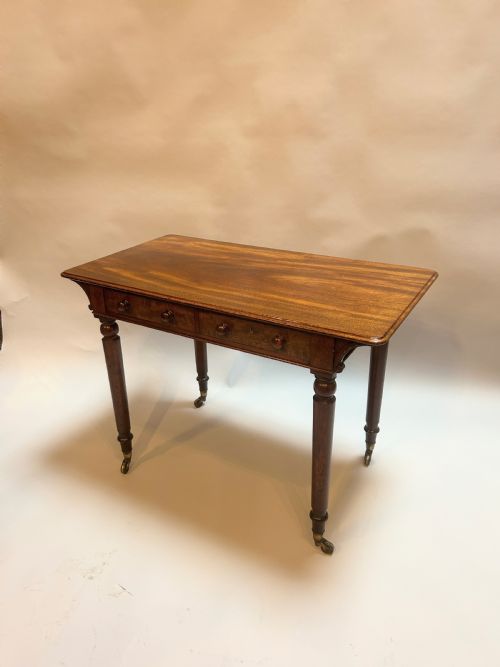
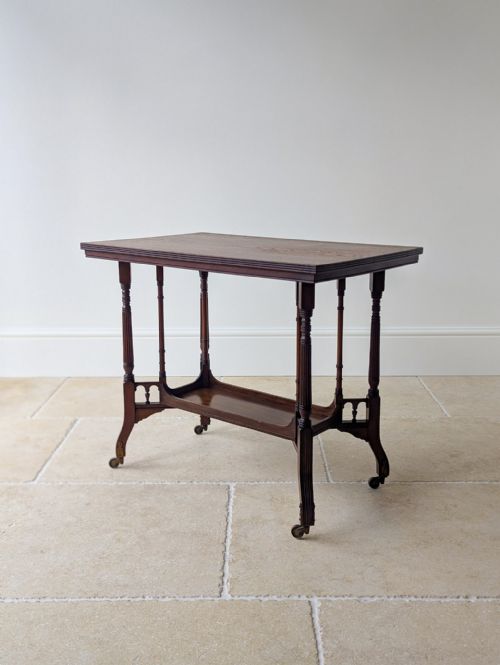
Mahogany Castored Side Table
Mahogany castored side tables bring practical mobility and rich timber grain to sitting rooms and libraries across several centuries of British design.
Mahogany Castored Side Table
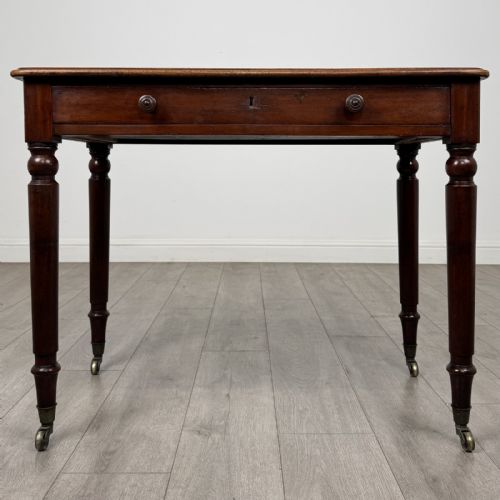
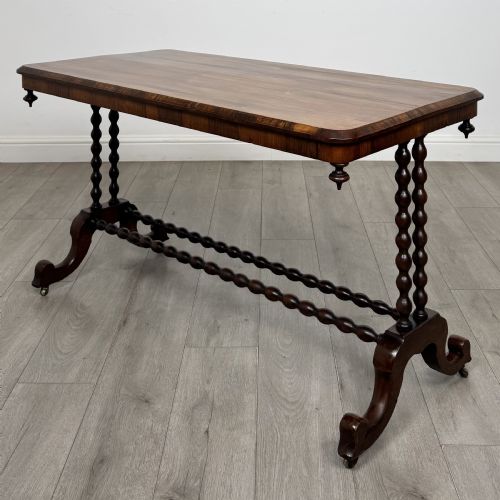
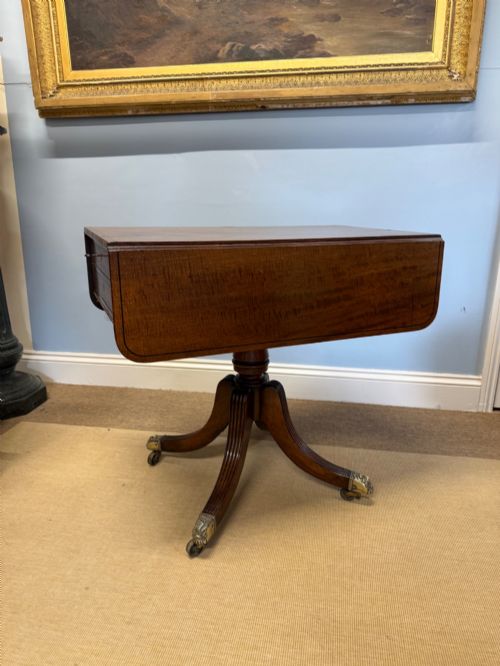
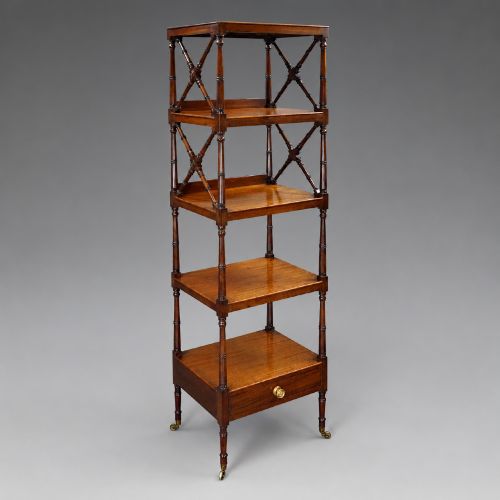
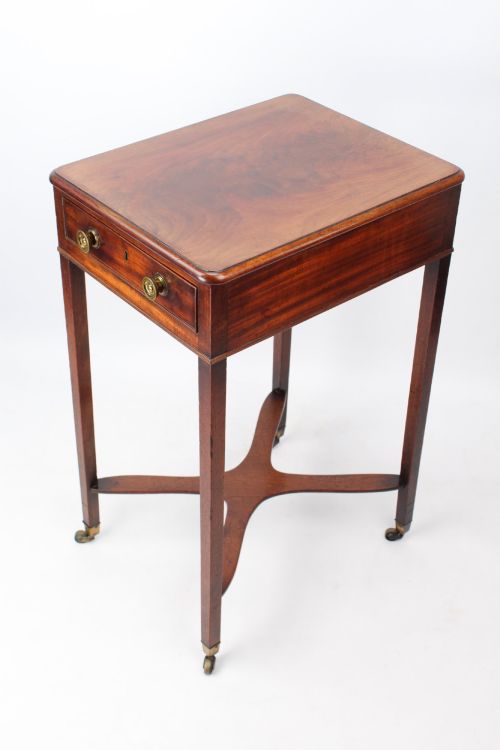
When you search for a mahogany castored side table, you encounter a versatile group of portable furniture pieces designed for everyday service in Georgian, Regency, and Victorian interiors. These items range from compact occasional tables and Pembroke drop-leaf variants to fitted writing desks and tiered whatnots.
The versions most commonly met on this page span the 19th century, drawing heavily on Regency and Victorian tastes. They often feature functional drawers, drop leaves, or revolving actions supported by sturdy timber frames.
Origins vary across the Georgian, William IV, and Edwardian periods, reflecting changing domestic habits. Yet they share a fundamental reliance on mobile castors to allow easy repositioning about the room.
Materials and construction
Cabinet makers relied primarily on solid mahogany and figured flame mahogany veneers to build these pieces, frequently accentuating the rich timber surfaces with boxwood inlay, satinwood banding, or rosewood cross-banding.
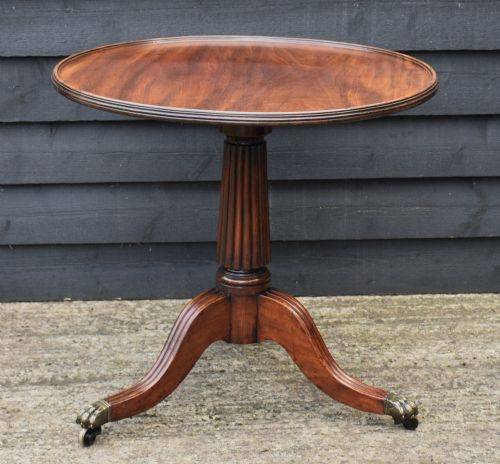
Brass castors attached to the foot of each leg provided the essential mobility, often paired with ceramic fittings or tilt-top actions. Secondary details included leather inserts for writing surfaces and turned wooden supports.
Listings feature mahogany, satinwood, rosewood, boxwood, brass, leather, and ceramic across multiple 19th-century periods.
Judging quality and craftsmanship
The distinction between standard domestic items and top-tier pieces lies in the selection of timber figures, such as heavily marked flame mahogany and finely figured grains. Superior workshops demonstrated exceptional joinery in drawer linings, secret compartments, and precise boxwood or satinwood stringing.
Maker attribution and documented provenance elevate certain pieces considerably. Tables carrying the stamp or distinct stylistic hallmarks of renowned cabinet makers display superior metalwork on the castors and more refined proportions throughout the frame.
Gillows·Gregory And Co·J A Mein
The Mahogany Castored Side Table Glossary
- Castor
- A small wheel fitted to the foot of a piece of furniture to allow smooth rolling across the floor. These were typically cast in brass and occasionally paired with ceramic wheels.
- Pembroke table
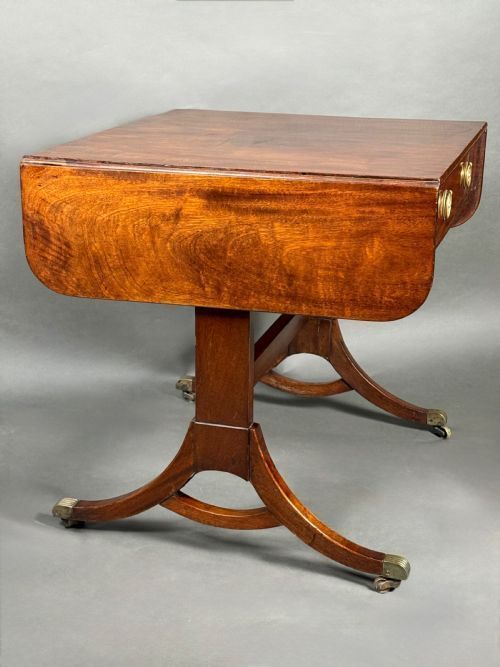
- A small rectangular table featuring two hinged drop leaves on opposite sides. They often include one or two drawers and square-tapered legs.
- Sofa table
- A low, elongated table traditionally placed in front of a sofa for writing or needlework. They usually possess drop leaves at either end and double pedestal bases.
- Whatnot
- An open set of freestanding shelves supported by slender corner posts used for displaying books or ornaments. They frequently incorporate a small drawer at the base.
- Drum table
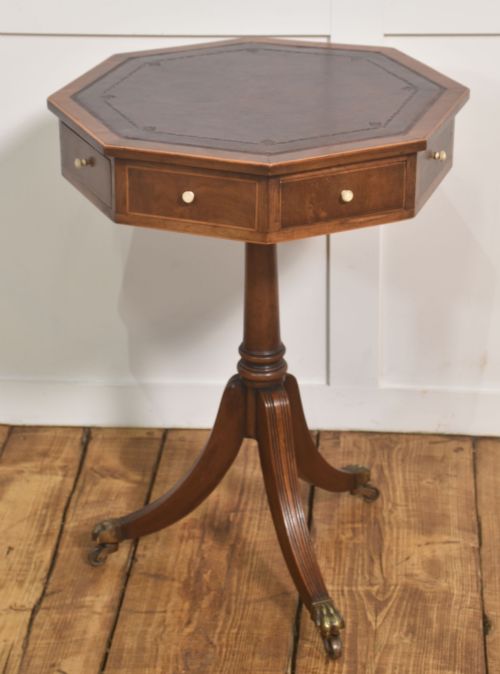
- A circular library table containing a deep top resembling a drum. These pieces often rotate on a central pillar supported by tripod legs.
Mahogany Castored Side Table: Frequently Asked Questions
What rooms suit a mahogany castored side table?
These tables adapt easily to sitting rooms, studies, and hallways where occasional surface space is useful. Their mobility allows them to shift beside a chair or sofa as needed.
Because many examples include drawers or drop leaves, they also serve well for holding books, writing materials, or lamps without cluttering the room.
How do I identify a Regency period table?
Regency tables typically display crisp classical proportions, dark flame mahogany surfaces, and robust brass castors. Details such as boxwood stringing and brass lion paw feet frequently point to this era.
They often incorporate clever mechanical actions like tilt-tops or revolving surfaces designed for convenience in the principal rooms of the house.
Were these tables used for writing?
Many side tables and Pembroke tables from the Georgian and Victorian periods doubled as writing desks. They often featured fitted drawers with compartments for inkwells and stationery.
Some incorporate inset leather tops specifically designed to provide a smooth surface for correspondence and reading.
How should I care for mahogany timber?
Mahogany responds best to regular dusting with a soft, dry cloth to protect the polished surface. Avoiding direct sunlight and sudden temperature changes prevents the timber from drying out.
Occasional application of traditional beeswax helps maintain the rich lustre of the grain without building up a heavy residue.