
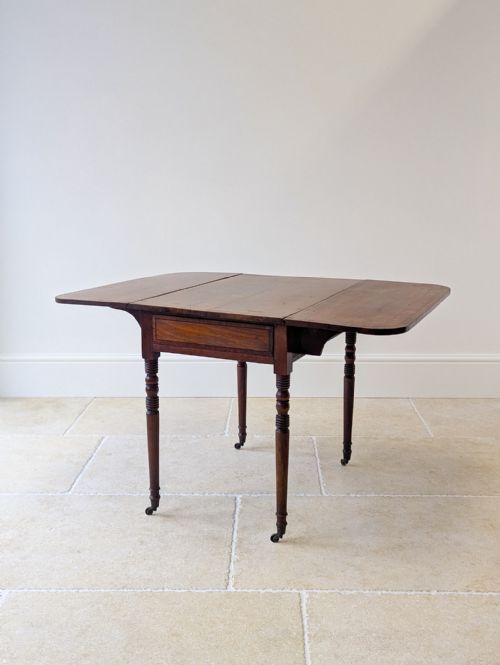
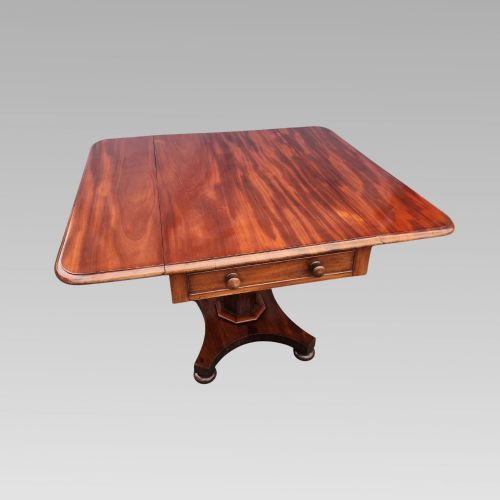
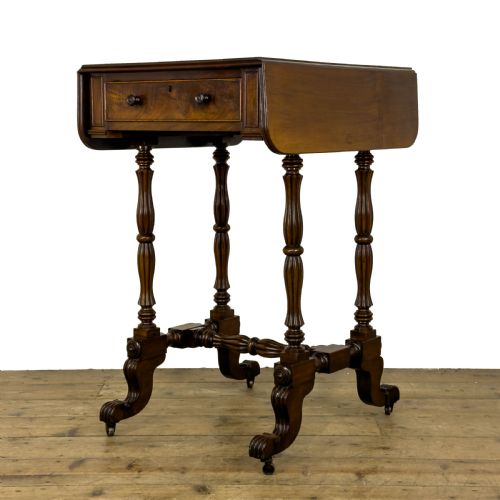

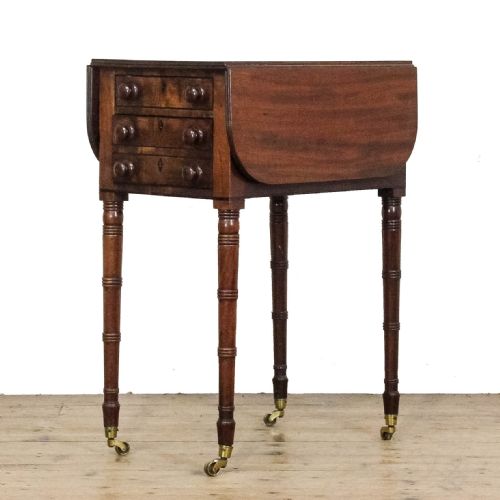


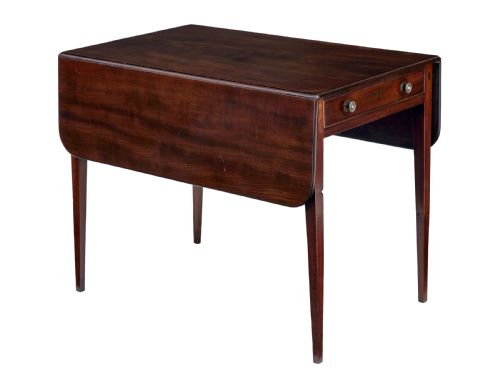
Wooden Pembroke Desk
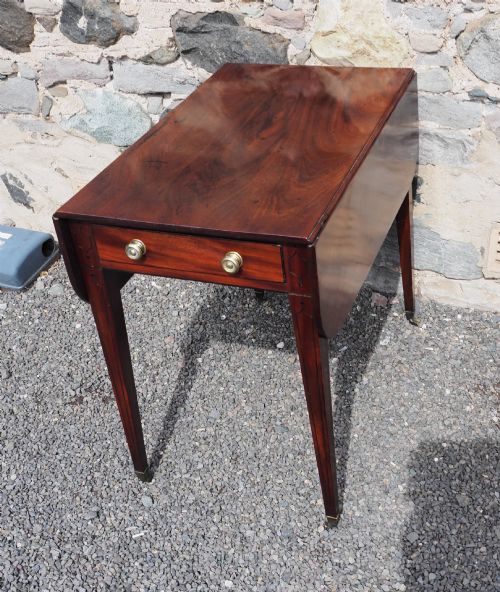
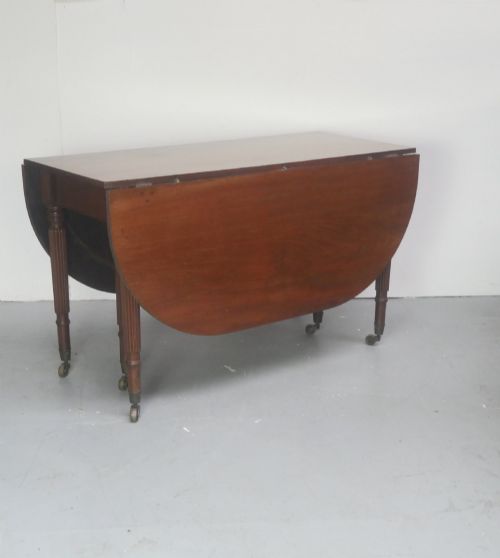
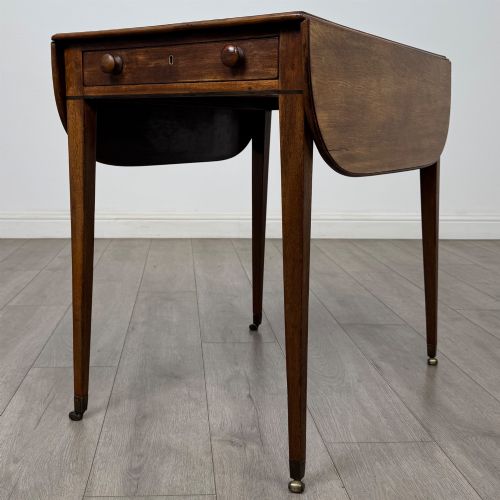
A wooden pembroke desk brings drop-leaf versatility to a room, offering a compact surface that expands when hinged flaps are raised.
Wooden Pembroke Desk
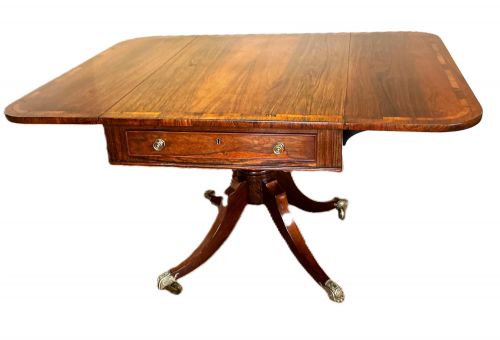
When searching for a wooden pembroke desk, collectors encounter drop-leaf tables originating from the eighteenth, nineteenth, and early twentieth centuries. These pieces span Georgian, Regency, and Victorian periods, often taking the form of pembroke tables, worktables, or sofa tables.
What varies in quality
Quality in these pieces depends upon the choice of timber and the subtlety of its figuring, with finely grained mahogany and decorative satinwood setting finer examples apart from plainer utilitarian items. Proportion also dictates standard, as smaller proportions and delicate leg turnings require greater skill from the maker.
The integration of drawers, hinging mechanisms for the drop leaves, and original brass fittings influence the overall integrity of a piece. Well-executed woodwork maintains stability across the extending flaps without sagging or misalignment.
Listings span the eighteenth century, the Regency era, and the Victorian period, using mahogany, satinwood, walnut, and rosewood.
The Wooden Pembroke Desk Glossary
- Pembroke table
- A small occasional table featuring two hinged drop leaves on opposite sides. It typically includes one or more drawers.
- Drop leaf
- A hinged flap on a table top that can be raised to increase surface area or lowered when space is limited.
- Satinwood
- A hard, durable timber with a golden sheen, often utilised for decorative veneers and inlay work during the eighteenth and nineteenth centuries.
- Sofa table
- A rectangular occasional table, traditionally placed in front of a sofa, equipped with drop flaps and often supported on double pedestals.
Wooden Pembroke Desk: Frequently Asked Questions
What is a wooden pembroke desk?
A wooden pembroke desk is a drop-leaf occasional table designed with hinged flaps on either side to expand the surface area. These tables frequently incorporate small drawers and slender legs.
Originating in the eighteenth and nineteenth centuries, they served versatile functions in drawing rooms, libraries, and parlours.
How do I date a pembroke table?
Dating relies on stylistic clues such as leg shape, hardware, and timber selection, spanning Georgian, Regency, and Victorian periods. Earlier eighteenth-century examples often feature Chippendale influences.
Later nineteenth-century pieces may show Victorian country characteristics or simpler turned legs and standardised drawer construction.
Where were these tables placed?
These tables sat freely in principal rooms, often positioned beside seating or against walls when the leaves were dropped. Their mobility allowed them to be moved easily for writing or serving tea.
In larger houses, they functioned as light writing surfaces or occasional desks in private chambers and drawing rooms.
What woods were commonly used?
Mahogany is the predominant timber found in these listings, valued for its stability and rich grain. Cabinetmakers also utilised satinwood, walnut, and rosewood for contrasting details and veneers.
Secondary woods like oak and pine appear in internal drawer framing, while brass hardware completes the construction.