


Mahogany Canteen of Cutlery
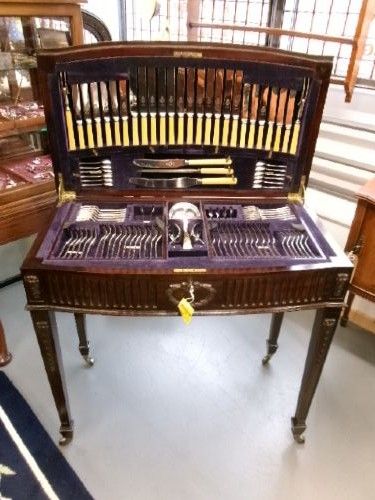
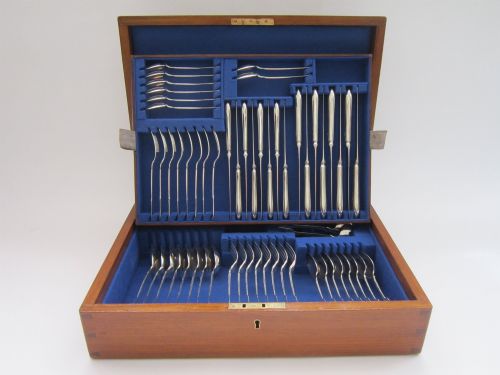
A mahogany canteen of cutlery is a fitted wooden chest designed to house dining implements safely and handsomely.
Mahogany Canteen of Cutlery
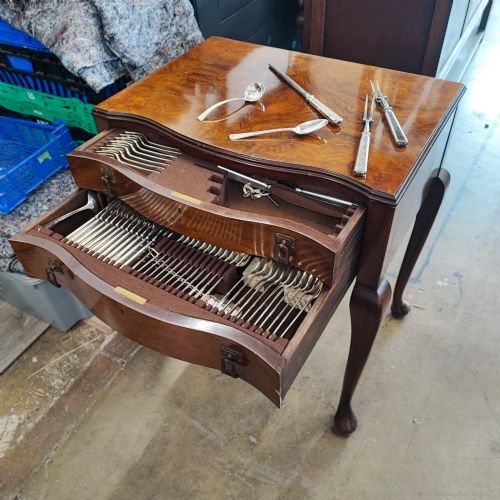
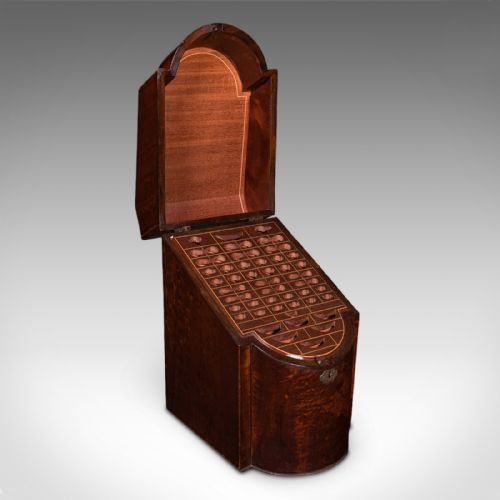
A mahogany canteen of cutlery provides an orderly storage solution for dining sets, appearing across periods from the eighteenth century through to the interwar decades. When buyers search for a mahogany canteen of cutlery, they encounter storage forms ranging from slant-front knife boxes and pairs of Georgian chests to large fitted cabinets and console tables.
The objects span Georgian, Victorian, Edwardian, and later revival styles, reflecting changing dining customs and domestic organisation. Examples on this page encompass smaller knife boxes alongside substantial chests and console tables containing complete service sets.
Materials extend beyond the primary timber to incorporate fitted interior linings such as velvet, felt, and satinwood alongside hardware in brass and silver plate. These pieces combine utility with formal dining display, serving as functional furniture and decorative containers alike.
How they were made
Construction relies heavily on mahogany, shaped into boxes, chests, and console tables with attention to timber grain and structural joinery. Cabinetmakers deployed brass for escutcheons, hinges, and carrying handles, securing both durability and aesthetic contrast against the dark wood.
Interiors are lined with textiles including velvet, felt, and satinwood partitions to protect individual pieces of cutlery or silver plate. Metal components encompass steel, silver plate, and sterling silver, demonstrating specialised manufacturing by silversmiths and metalworkers.
Several boxes double as stationery storage, proving that ancestors were just as keen on hiding paperwork inside fancy dining gear.
What varies in quality
The standard of a canteen rests upon the selection of mahogany timber, the crispness of any revival styling such as Chippendale or Queen Anne, and the integrity of the interior fittings. Pieces displaying finely figured wood and well-preserved satinwood or velvet linings command greater attention from collectors.
Hardware execution also differentiates examples, where solid brass mounts and functioning locks indicate superior original manufacture. Complete sets containing matching sterling silver or silver-plate implements represent a higher tier of domestic luxury compared to empty boxes or mismatched contents.
Elkington & Co·Walker & Hall
The Mahogany Canteen of Cutlery Glossary
- Canteen of cutlery
- A fitted box, chest, or cabinet designed specifically to store and organise dining implements. These vessels protect silver and steel sets when not in use on the dining table.
- Knife box
- A specialised upright container from the Georgian period featuring a sloping lid and shaped front, intended for storing table knives vertically. Pairs of these boxes often sat on sideboards.
- Silver plate
- A base metal coated with a thin layer of silver, commonly utilised for cutlery sets housed within canteens from the Victorian era onwards. This technique offered the appearance of solid silver at a lower cost.
- Satinwood
- A pale, lustrous timber native to India and Ceylon, frequently employed for interior banding, stringing, and drawer linings within high-quality cabinets.
- Fiddle pattern
- A traditional silhouette for flatware characterised by a stem that widens gradually towards the end with a slight shoulder, popular during the Victorian period.
Mahogany Canteen of Cutlery: Frequently Asked Questions
What is a mahogany canteen of cutlery?
A mahogany canteen of cutlery is a purpose-built box, chest, or cabinet created to hold dining implements securely. These pieces range from eighteenth-century knife boxes to twentieth-century console tables.
Inside, dedicated slots and compartments keep knives, forks, and spoons organised and protected from tarnish and damage.
How were cutlery canteens used?
These canteens functioned as secure storage vessels in large dining rooms, keeping expensive silver and steel services close at hand yet protected when meals concluded.
Servants retrieved the necessary implements before dinner and returned them to the fitted velvet or felt slots afterward.
How do I identify a Georgian knife box?
Georgian knife boxes typically feature an upright, serpentine or sloping shape designed to display and store dining knives vertically against the interior back.
They frequently appear in matched pairs and utilise dense mahogany timber with brass escutcheons and lock plates.
Can these canteens hold modern cutlery?
Many canteens feature slotted interiors tailored to nineteenth or twentieth-century service sizes, which may accommodate modern flatware depending on the handle dimensions.
It is advisable to check the specific interior configuration and slot measurements before attempting to store contemporary cutlery sets.