



Vintage Canteen Box
A vintage canteen box holds silver and cutlery safely, bringing fitted elegance and orderly storage to a dining room.
Vintage Canteen Box
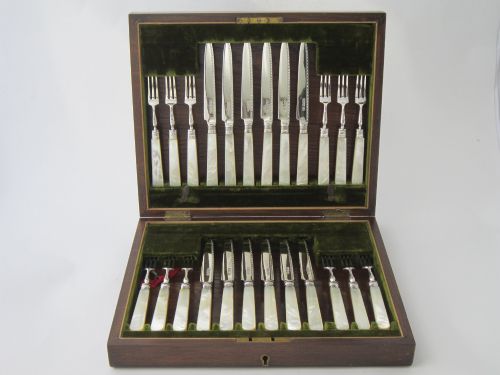
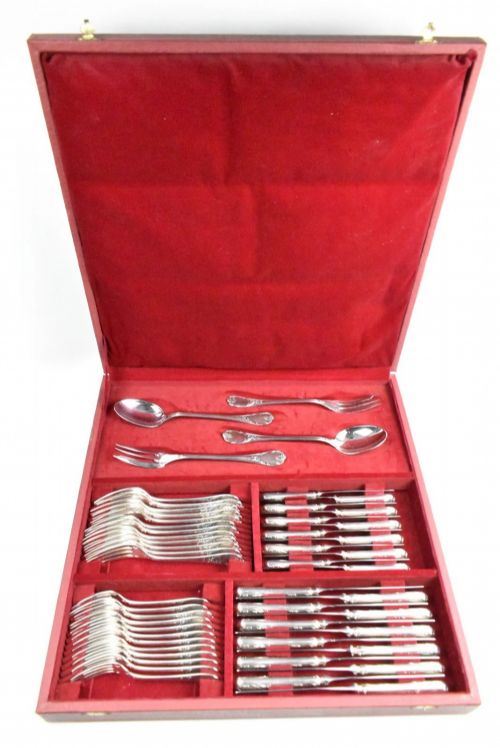
A vintage canteen box is a specialised storage chest designed to protect flatware, cutlery sets, and serving pieces. When you search for a vintage canteen box, you encounter pieces spanning from the Victorian and Edwardian eras through to the Art Deco period.
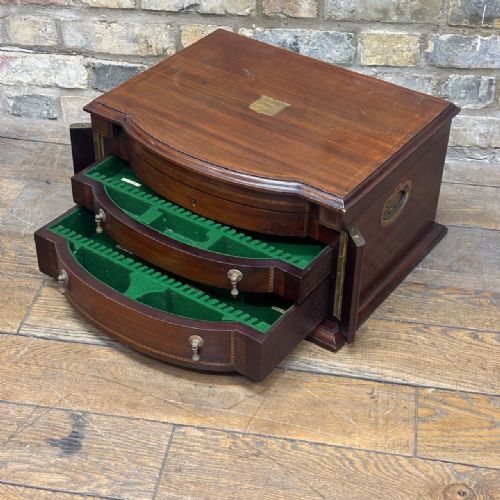
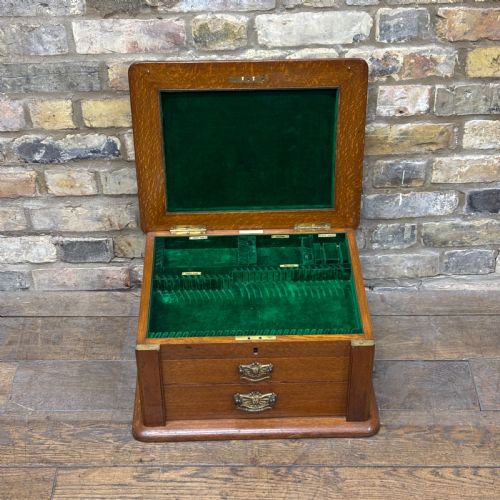
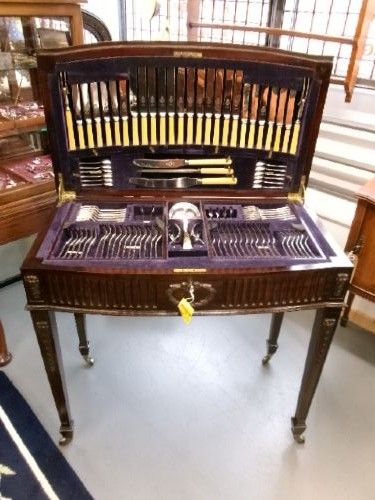
The selections on this page appear in various forms, including fitted oak and mahogany cabinets, standalone chests, and tabletop boxes. Many retain their original contents, housing silver plate, sterling silver, or mother of pearl handled pieces.
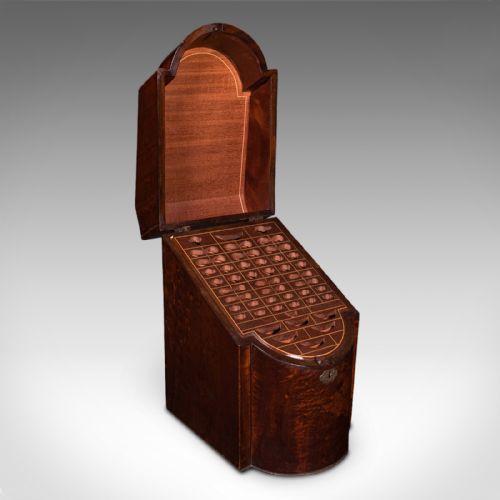
Originating mostly from English workshops alongside continental makers, these containers vary from simple oak cased designs to elaborate mahogany cabinets on stands. Buyers find everything from compact knife boxes to extensive multi-tier flatware storage.
Materials and Construction
Cabinetmakers constructed these boxes using dense hardwoods such as mahogany, oak, and walnut, frequently selecting coromandel for more decorative examples. These timbers provide the structural rigidity needed to support heavy internal trays and laden drawers.
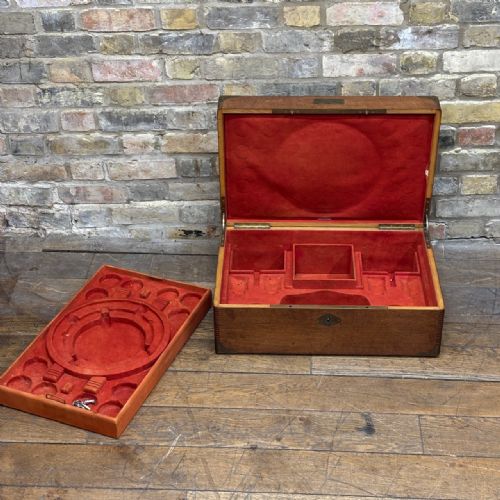
Interiors rely on soft linings including velvet and fitted fabric to prevent flatware from scratching during transport or storage. Metal fittings such as brass hinges and locks secure the heavy lids and drop-front doors.
External ornamentation ranges from restrained Georgian styling to elaborate Rococo Revival brass mounts and carved wood details. Makers integrated internal slots, baize-lined divisions, and lifting trays to organise specific cutlery sets.
Vintage Canteen Box Retail Price Guide 2026
Typical asking prices for vintage canteen box among the pieces listed under this phrase on Sellingantiques today, from the lower quarter to the upper quarter. They describe what is for sale here now, not the wider market.
Certain Victorian spirit cases hidden inside these boxes prove that previous owners liked a discreet drink with their dinner.
Distinguishing Quality
Quality in these storage pieces rests upon the selection of timber and the precision of the internal joinery. Superior examples utilise solid hardwoods with finely matched grain patterns rather than simpler veneered constructions.
The complexity and completeness of the interior arrangement dictate the standing of the piece. Canteens that retain their original fitted tiers, functioning locks, and matching cutlery sets command greater attention than empty or later-adapted boxes.
Christofle·Walker And Hall·Mappin And Webb·Waring And Gillows
The Vintage Canteen Box Glossary
- Canteen
- A fitted box or cabinet designed specifically to hold a set of cutlery and flatware. These containers keep dining implements organised and protected when not in use.
- Flatware
- Table utensils such as forks, spoons, and knives used for serving and eating food. They form the primary contents stored within these wooden chests.
- Coromandel
- A dense, heavily figured exotic timber from South Asia used in high-end nineteenth-century cabinet making. Its dark grain provides a striking appearance on luxury boxes.
- Baize
- A coarse woolen material traditionally used to line the internal partitions of cutlery chests. It cushions the silver and prevents individual pieces from shifting.
- Knife Box
- A specialised upright or sloping container designed historically to hold dining knives in vertical slots. Georgian and Victorian iterations often feature serpentine fronts.
Vintage Canteen Box: Frequently Asked Questions
How do I clean the interior lining?
Vacuuming the fabric gently with a soft brush attachment removes dust without disturbing the glue or wood beneath.
Avoid using liquid cleaners on vintage velvet or baize, as moisture can damage the underlying structure and stain the textile.
Can I use these boxes for modern cutlery?
Many modern flatware sets fit into these compartments, though contemporary knife handles can occasionally exceed older slot dimensions.
Checking the internal depth and divider spacing ensures your specific service will lie flat and close securely.
What is the best way to control humidity?
Keeping the wooden cabinet away from direct heat sources and damp external walls protects the timber from warping.
Stable indoor temperatures prevent the shrinkage that causes joints to separate and doors to jam.