



Fitted Silver Chest
A fitted silver chest protects and organises valuable tableware or travel goods, using robust timber and iron bindings to secure its contents.
Fitted Silver Chest
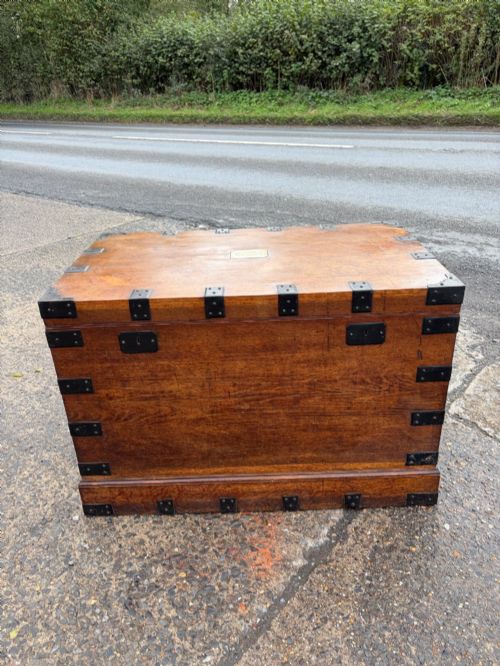
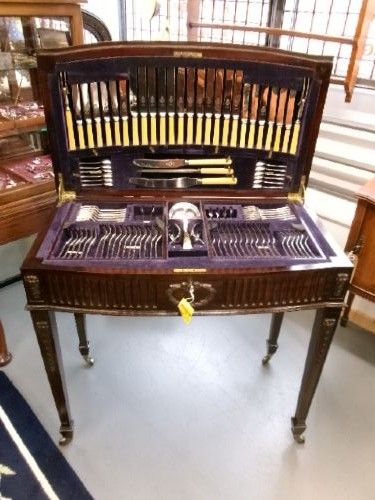
A fitted silver chest is a sturdy box designed to hold and protect flatware, cutlery, or dressing items within custom-shaped compartments. When you search for a fitted silver chest, you encounter heavy oak trunks, smaller canteens, and travelling cases dating from the nineteenth and early twentieth centuries. These pieces reflect the domestic storage needs of period households, where silver and valuables required secure containment.
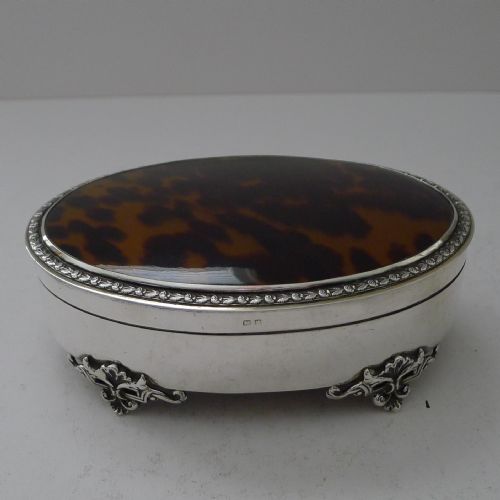
The objects on this page range from massive iron-bound travel trunks to refined canteen tables and delicate dressing boxes. Oak serves as the primary timber for the larger chests, while smaller vanity cases utilise walnut, coromandel, and mahogany. Interiors feature specialised fittings lined in velvet or felt to hold individual spoons, forks, and glass containers securely during transit.
Victorian and Edwardian examples dominate the selection, alongside items from the Art Deco period and earlier centuries. Makers and retailers such as Elkington, Mappin & Webb, and Walker & Hall often stamped their work into the timber or hardware. Buyers choose these chests for their robust construction, functional internal layouts, and the rich grain of the period hardwoods.
Materials and construction
Makers built heavy silver chests using dense domestic timber, predominantly oak, reinforced with iron straps and corner brackets for transit durability. The external metalwork often included flush drop handles and robust locking mechanisms to withstand the rigours of travel. Inside, precision carpentry created modular tiers and custom slots tailored to specific flatware patterns.
Interior surfaces received careful lining with felt, velvet, or silk to prevent friction damage to sterling silver and silver plate. Finer dressing boxes incorporated glass jars with silver lids alongside mirrors and hidden compartments. Exterior finishes relied on natural wax polish to protect the timber while highlighting the grain.
Fitted Silver Chest Retail Price Guide 2026
Typical asking prices for fitted silver chest among the pieces listed under this phrase on Sellingantiques today, from the lower quarter to the upper quarter. They describe what is for sale here now, not the wider market.
One tiny Victorian leather binocular case safely harbours two solid silver thimbles.
Factors determining quality
The distinction between standard utility boxes and exceptional pieces lies in the precision of the internal carpentry and the grade of exterior hardware. Superior chests feature dovetailed joinery, substantial cast iron bindings, and original working locks with matching keys. The quality of the internal lining and the intactness of the original fitted compartments further elevate a piece.
Retained maker signatures, whether stamped on the lock plate or papered inside the lid, significantly affect distinction. Chests bearing retailer marks from prominent Bond Street silversmiths demonstrate a higher standard of original commissioning. Furthermore, the selection of figured timber, such as burr walnut or golden oak, marks the difference between basic storage and high-status craftsmanship.
Elkington·Walker & Hall·Mappin & Webb·Parkins and Gotto·Charles Horner
The Fitted Silver Chest Glossary
- Canteen
- A fitted box, chest, or cabinet designed specifically to hold a complete set of cutlery or flatware. These containers use slotted trays and separators to keep each piece from scratching its neighbour.
- Campaign
- A style of furniture and storage built to be easily packed and transported for military use or travel. These pieces typically feature recessed brass handles and reinforced corners.
- Fiddle pattern
- A traditional nineteenth century flatware design featuring a stem that widens gradually towards a notched shoulder before flattening out at the terminal. It appears frequently in complete canteens of the period.
- Coromandel
- A dense, heavily grained exotic timber from Asia used for luxury Victorian dressing boxes and small chests. Its dark brown colour and striking black stripes made it a favourite for high-end decorative objects.
- Sterling silver
- An alloy containing a high proportion of pure silver, standard in British flatware and fitted box hardware. Pieces made from this metal usually bear hallmarks indicating the assay office and year of manufacture.
Fitted Silver Chest: Frequently Asked Questions
What fits inside a silver chest?
These chests typically contain fitted trays and compartments designed for sets of forks, spoons, knives, and serving pieces. Some variants house dressing table items, glass bottles, and jewellery.
Larger trunk-style versions accommodate extensive flatware services running to over a hundred pieces. Smaller cases focus on personal valuables and vanity accessories.
How do I identify the age of a chest?
Dating relies on timber choice, construction methods, lock types, and any maker stamps found on the hardware or interior lining. Victorian pieces often feature heavy iron bindings and oak construction, while Edwardian versions introduce lighter woods and refined internal layouts.
Design styles referenced in the listings, such as Queen Anne revival or Art Deco, provide additional chronological markers. Hallmarks on any fitted silver components offer precise dates of manufacture.
Were these chests meant for travel?
Many larger oak examples functioned as shipping trunks or campaign chests used by travellers to transport household silver safely. Iron straps and robust locks protected the contents during maritime and rail journeys.
Smaller velvet-lined boxes served as stationary dressing cases or domestic storage rather than rugged travel luggage. Their construction prioritised refined internal organisation over external armour.
How should I maintain the wood and metal?
Keep the timber conditioned with traditional beeswax applied sparingly to preserve the grain and prevent drying out. Avoid harsh chemical cleaners on the iron bindings and brass hardware to retain their natural patination.
Ensure the interior linings remain dry to protect stored metalware from tarnishing or moisture damage. Gentle dusting of the fitted compartments preserves the original velvet or felt fabrics.