


Vintage Silver Flatware Box
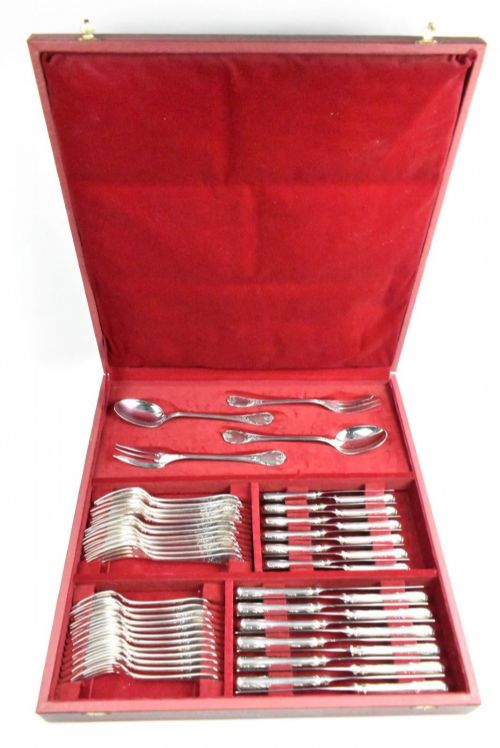
A vintage silver flatware box organises fine cutlery safely within fitted wood and fabric compartments.
Vintage Silver Flatware Box
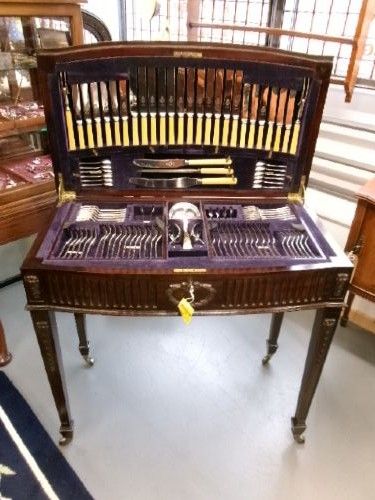
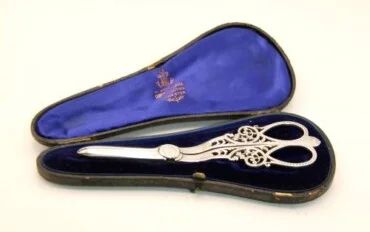
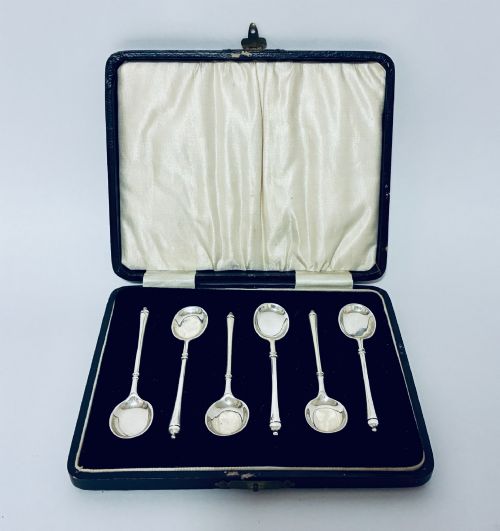
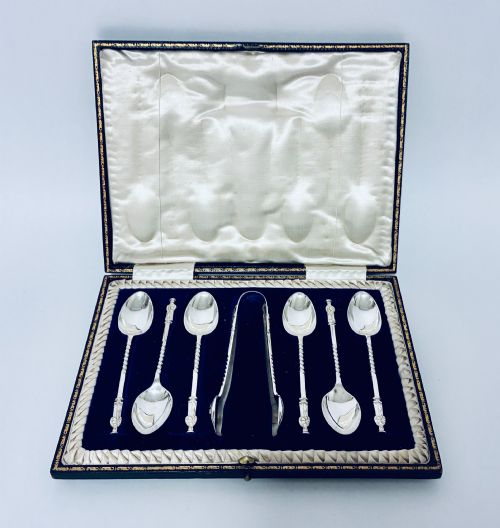
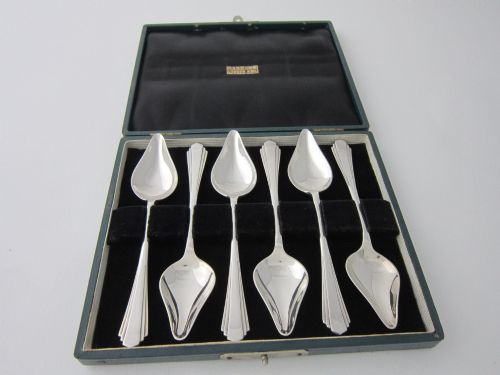
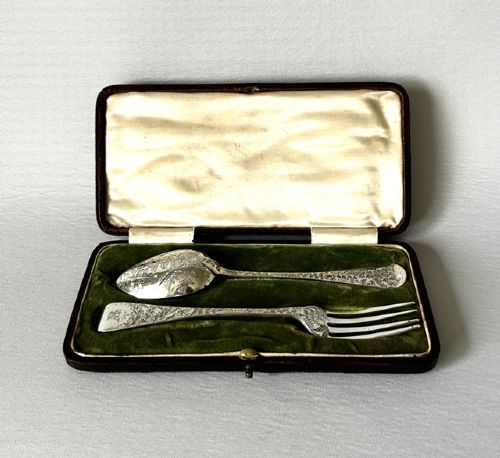
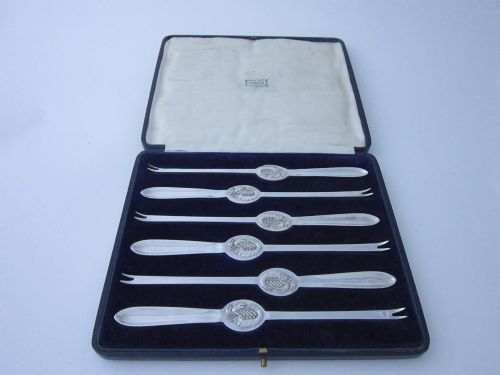
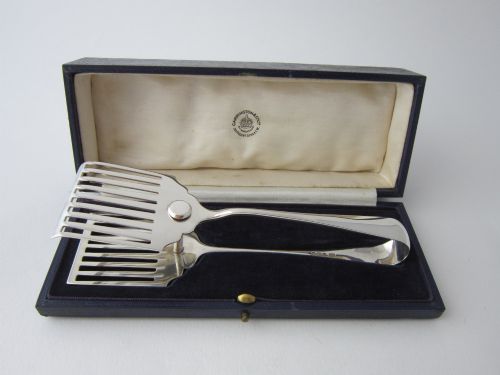
A vintage silver flatware box protects complete dining services or individual cased items like spoons and fish servers. These pieces combine fitted wooden chests or smaller cases with dedicated storage for specific cutlery forms.
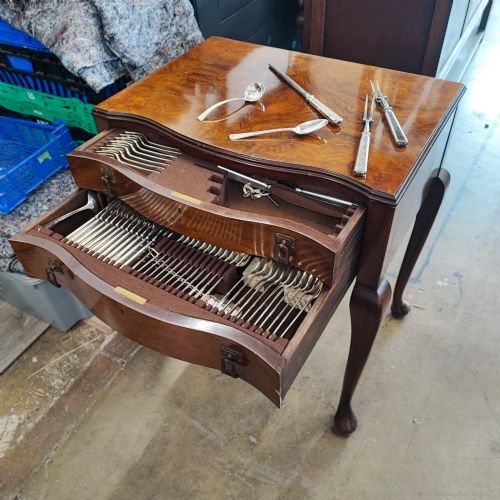
Most examples found here date from the Edwardian era, the Art Deco period, and the broader Victorian and twentieth-century decades. They appear as mahogany, oak, or walnut cabinets alongside smaller cased sets lined in silk, velvet, or satin.
The contents range from large canteens on stands holding over one hundred pieces to modest boxed sets of coffee spoons, butter knives, and fruit forks.
Materials and construction
The exterior cabinets utilise solid hardwoods and veneers like oak, mahogany, and walnut, constructed to withstand heavy daily use. Interiors rely on soft textile linings such as velvet, silk, satin, and leatherette to cushion sterling silver, silver plate, and steel components.
Metal elements combine cast silver blades, sterling silver handles, and silver-plated surfaces, often paired with mother-of-pearl or enamel details. Fitted compartments use precise internal carpentry to keep individual spoons, forks, and servers secure during transit and storage.
Some Edwardian canteens include hidden locking mechanisms tucked beneath clever wooden panels to guard the family dessert spoons.
Assessing quality and craftsmanship
Quality rests in the precision of the internal carpentry and the durability of the exterior timber housing. Superior cabinets feature robust locking mechanisms, clean joints, and well-preserved wood surfaces that show careful seasoning.
The interior lining dictates how well the contents have survived over decades of storage. High-grade sets retain original, unblemished velvet, silk, or satin inserts that fit each specific spoon or fork snugly without excessive movement.
Christofle·Walker & Hall·Mappin & Webb·Georg Jensen·Robert Stebbings·Cooper Brothers and Sons
The Vintage Silver Flatware Box Glossary
- Canteen
- A fitted box, chest, or cabinet designed specifically to hold a complete set of cutlery. These containers often feature multiple tiers or baize-lined slots.
- Sterling silver
- A silver alloy containing ninety-two point five percent pure silver by mass, with the remainder composed of other metals for strength. This standard is frequently stamped with distinct hallmarks.
- Silver plate
- A layer of pure silver fused to a base metal, commonly nickel silver or steel. This technique offered a durable and accessible alternative to solid silver services.
- Flatware
- Dining utensils used for eating, such as forks, spoons, and knives. The term encompasses both small serving pieces and large multi-place dining sets.
- Silver gilt
- Silver that has been coated with a thin layer of gold on its surface. This finish provides a warm golden tone over the underlying silver structure.
Vintage Silver Flatware Box: Frequently Asked Questions
What is a vintage silver flatware box?
A vintage silver flatware box is a fitted container designed to store and protect dining cutlery, serving sets, or specialised spoons.
These pieces range from large oak or mahogany canteens on stands to compact velvet-lined cases for teaspoons and fish servers.
How are different periods identified?
Periods are identified through cabinet styles, lining materials, and official hallmarks stamped onto the silver components inside.
Edwardian and Victorian pieces often feature heavy mahogany or walnut cabinets, whilst Art Deco examples show geometric lines and enamel detailing.
How do I care for the interior lining?
Protect the silk, velvet, or satin lining by keeping the case in a dry environment away from direct sunlight.
Gentle dusting with a soft brush helps maintain the fabric without disturbing the fitted wooden dividers.
Were these boxes meant for travel?
Most canteens and larger chests were designed for static home storage in dining rooms or butler pantries rather than frequent travel.
Smaller cased sets of spoons or fruit knives were occasionally built for gifting or portable dining use.