


Mahogany Bureau with Bookcase
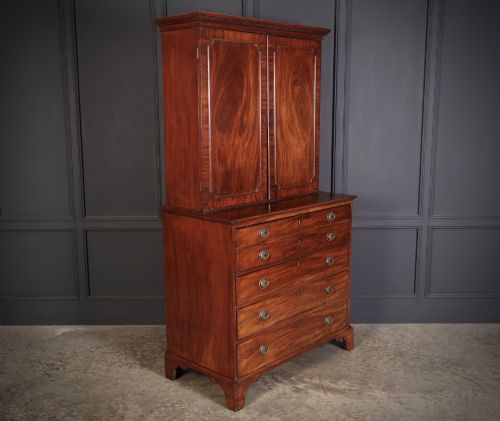
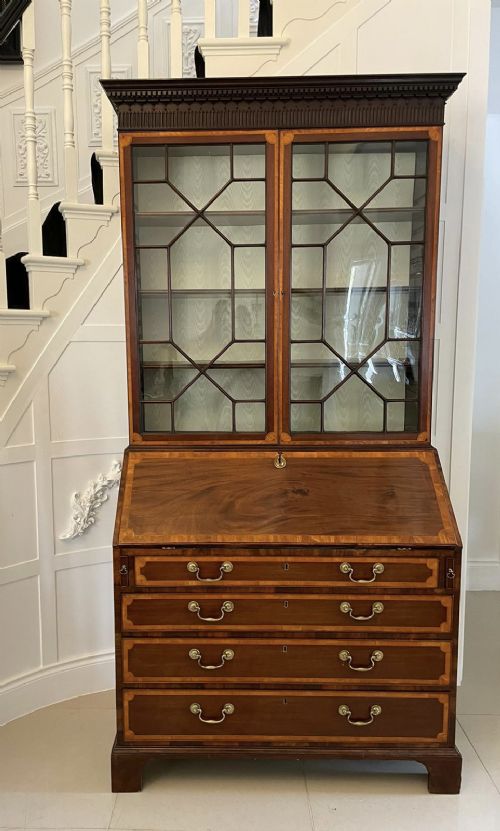
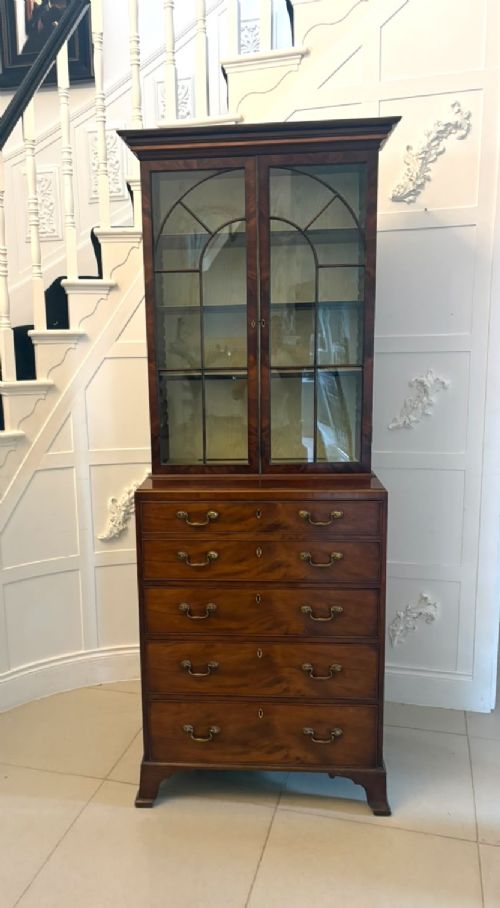
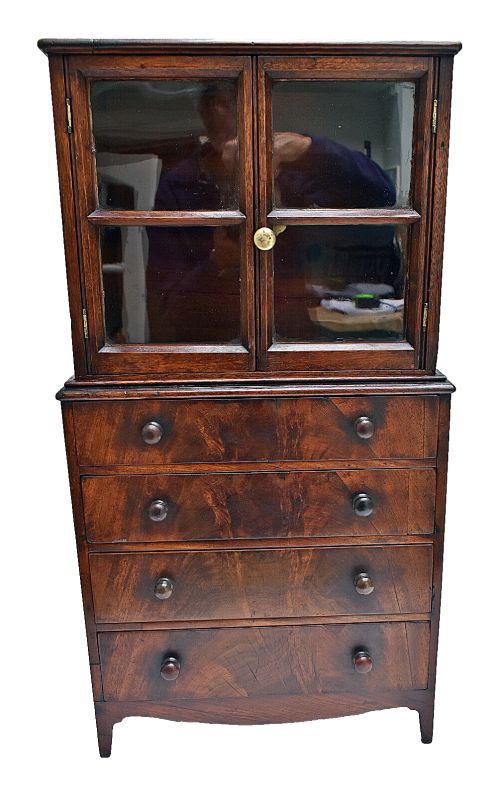
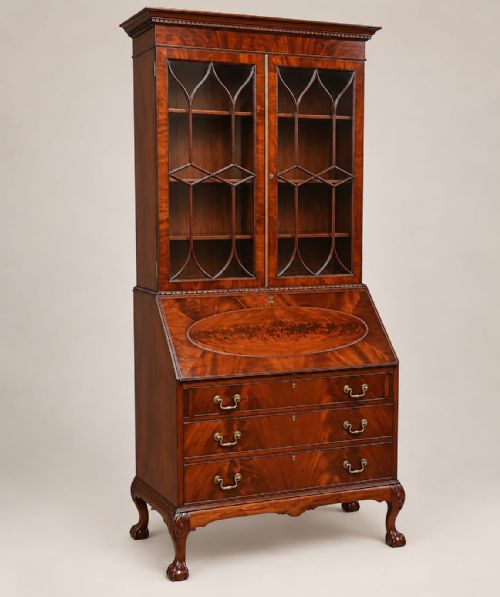
A mahogany bureau with bookcase combines a working writing slope and a shelved cabinet, bringing timber depth and practical storage into a room.
Mahogany Bureau with Bookcase
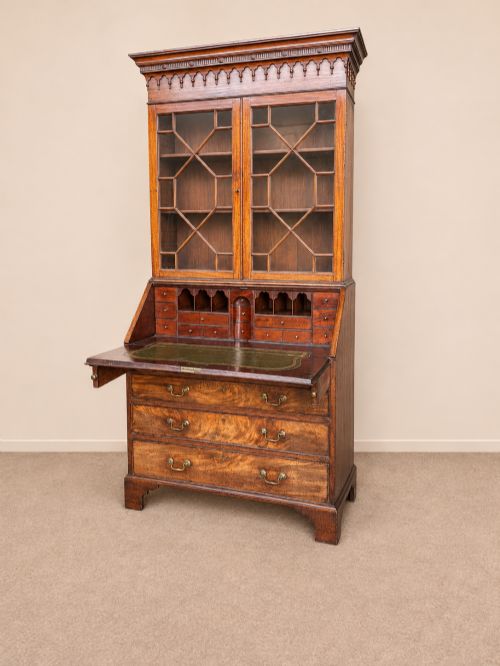
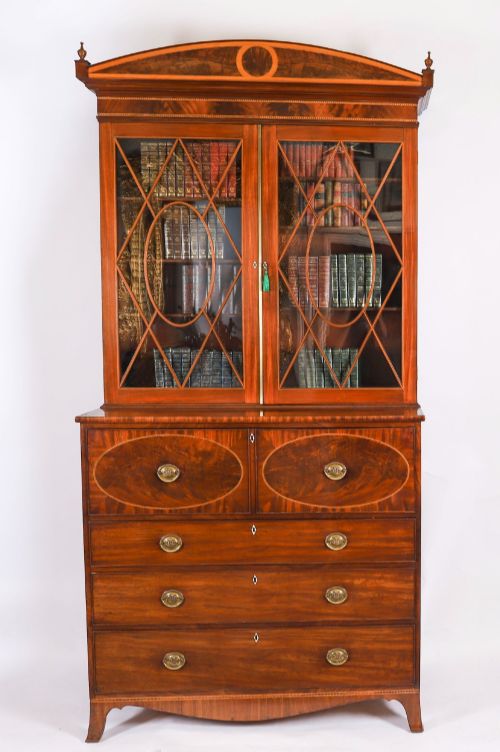
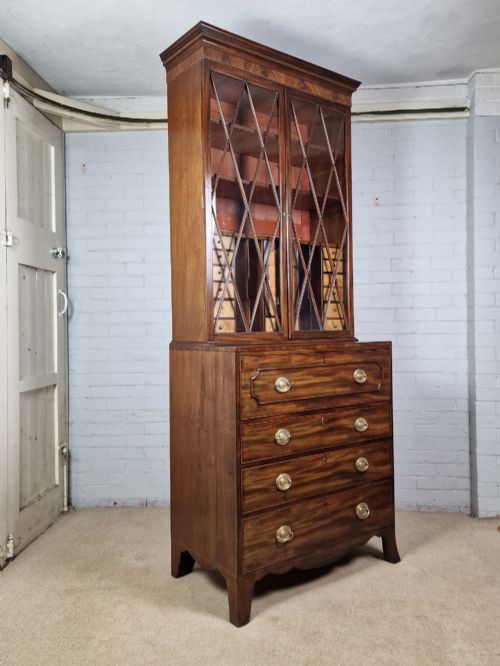
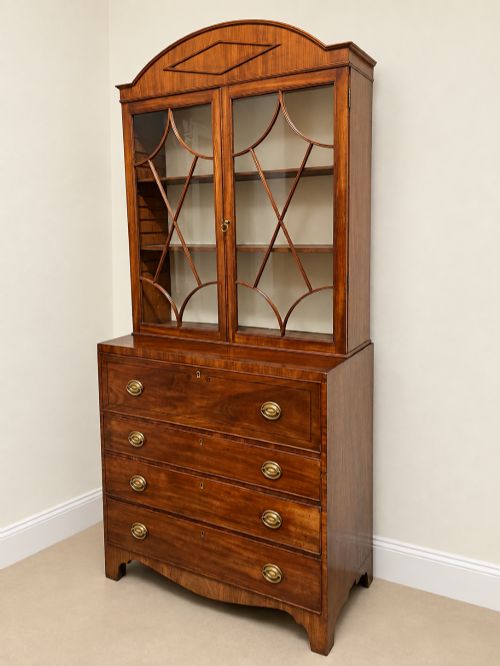
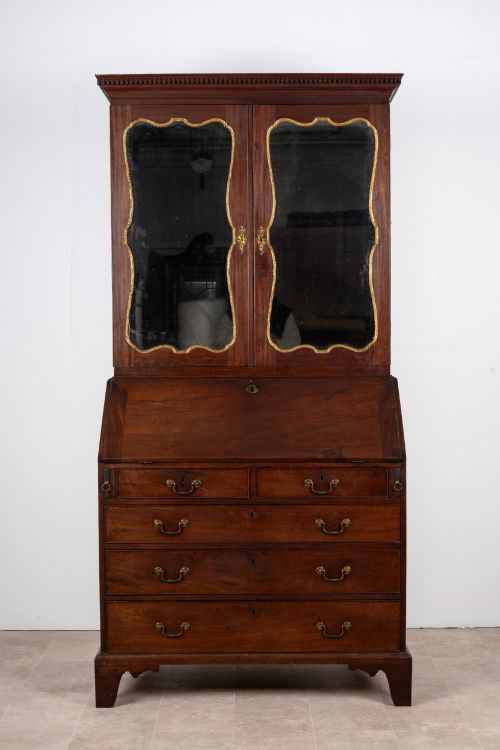
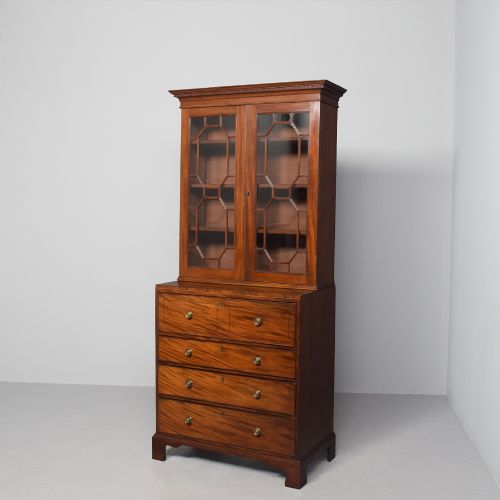
A mahogany bureau with bookcase brings together a fitted writing compartment and upper shelving enclosed by glazed doors, spanning periods from the eighteenth century through to the Edwardian era. You will frequently encounter Georgian pieces featuring fall-front writing sections alongside later Victorian and Regency examples.
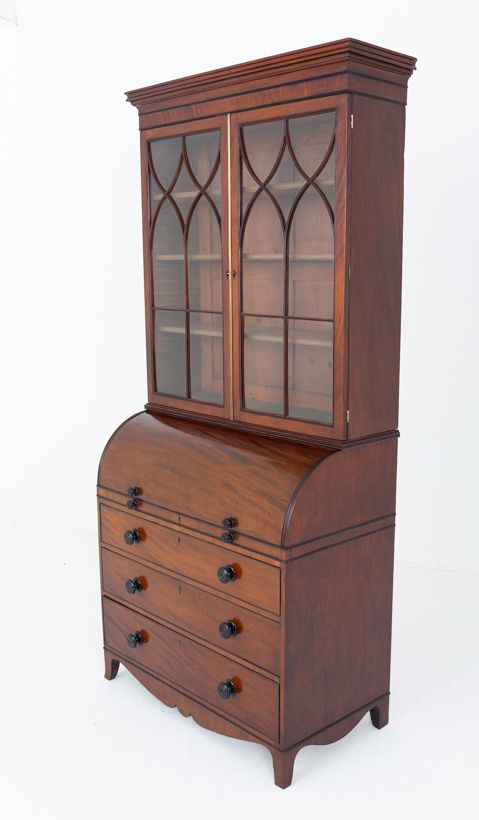
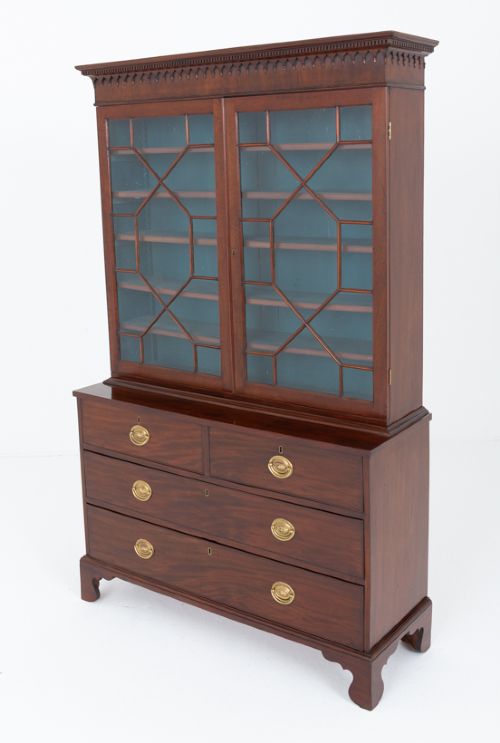
The lower section generally houses drawers or a drop-front desk surface concealing pigeonholes and small drawers, while the upper bookcase displays books or porcelain behind glass panels. These combinations served as the administrative centre of the home or library.
Materials and construction
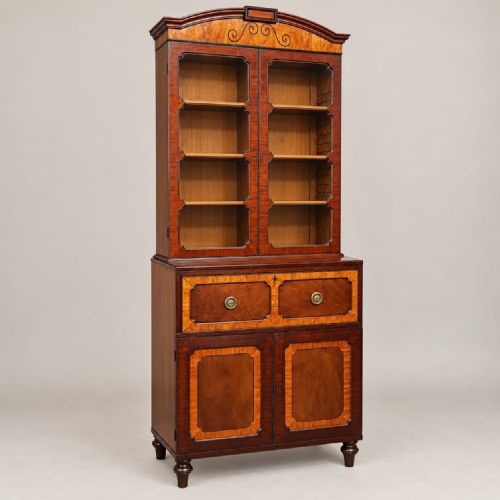
Cabinet makers built these pieces using solid mahogany and figured veneers, frequently incorporating Cuban mahogany for dense grain patterns and rich colour. Secondary timbers such as satinwood and various wood inlays appear on drawer fronts and cornices to create linear contrast.
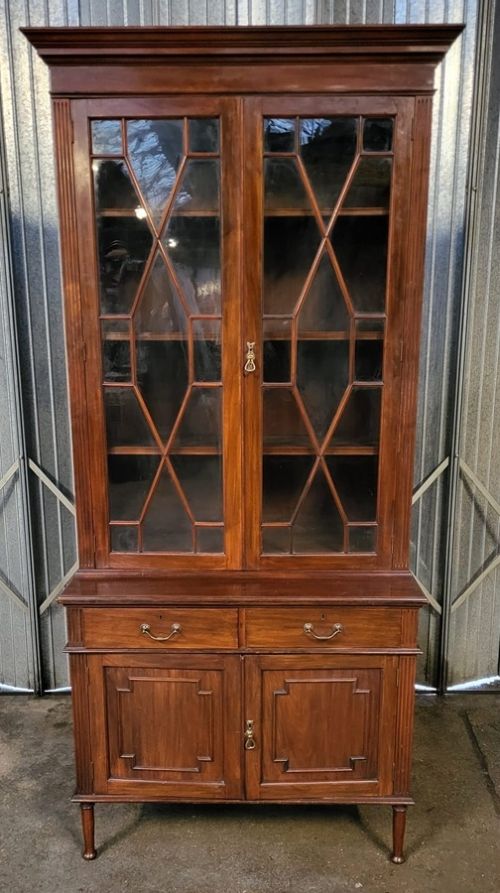
Glazing bars divide the upper cabinet glass into astragal patterns, while brass handles and escutcheons furnish the drawer pulls and keyholes. Fitted interiors rely on small-scale pigeonholes, secret compartments and drawers constructed with traditional dovetail joints.
Mahogany Bureau with Bookcase Retail Price Guide 2026
Typical asking prices for mahogany bureau with bookcase among the pieces listed under this phrase on Sellingantiques today, from the lower quarter to the upper quarter. They describe what is for sale here now, not the wider market.
Listings feature mahogany bureau bookcases spanning the Georgian, Regency, Victorian, and Edwardian periods, utilising satinwood inlay and brass hardware.
Judging the work
Quality rests upon the selection of timber figure, particularly how well the mahogany grain matches across the fall-front flap and drawer facades. Crispness in the inlay work and the delicacy of the astragal glazing bars distinguish superior pieces from heavier, plain production.
Internal arrangement complexity also marks out better examples, seen in properly fitted secret drawers and finely turned ivory or bone pulls within the desk section. The integrity of the original brass hardware and the smooth drop of the fall-front mechanism complete the assessment.
Gillows·Tudor and Burrey
The Mahogany Bureau with Bookcase Glossary
- Fall-front
- A hinged writing flap that pulls down to form a horizontal desk surface. It conceals the internal pigeonholes and small drawers when closed.
- Astragal
- Moulding bars that divide a glass door into smaller glazed panes. They form geometric or curved lattice patterns across the bookcase front.
- Secretaire
- A piece of furniture containing a drawer or drop-front desk fitted for writing. It often combines with a bookcase or chest.
- Satinwood
- A pale, hard timber used for contrasting stringing and decorative inlay work on mahogany surfaces. It provides a bright yellow-brown accent.
- Cuban mahogany
- A dense, heavy variety of mahogany prized for its dark rich tone and strong figuring. It was widely imported during the eighteenth and early nineteenth centuries.
Mahogany Bureau with Bookcase: Frequently Asked Questions
How do I date a mahogany bureau bookcase?
Dating relies on observing construction methods, timber choice, and stylistic details such as bracket feet, plinth bases, or inlay motifs.
Georgian examples generally show simpler astragal glazing and solid construction, whereas Edwardian and Sheraton Revival pieces often display lighter satinwood banding.
Where were these pieces used?
These cabinets stood in libraries, parlours, and country house studies where families managed correspondence and housed private book collections.
The upper shelves displayed prized volumes, while the lower desk held stationery and account books.
How do I care for mahogany furniture?
Mahogany requires stable room humidity and protection from direct sunlight to prevent timber splitting and fading of the polished surface.
Applying microcrystalline wax periodically helps nourish the wood and maintain its natural lustre.