
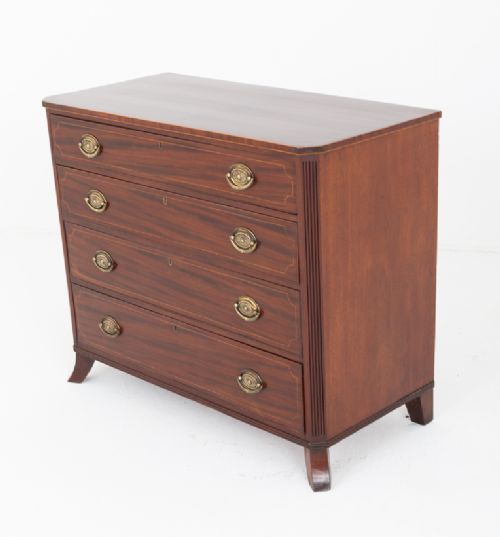
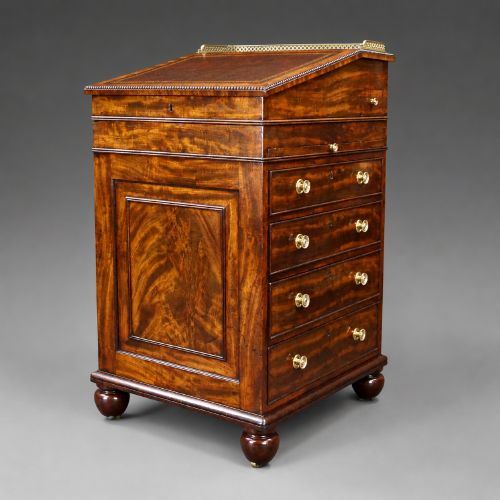

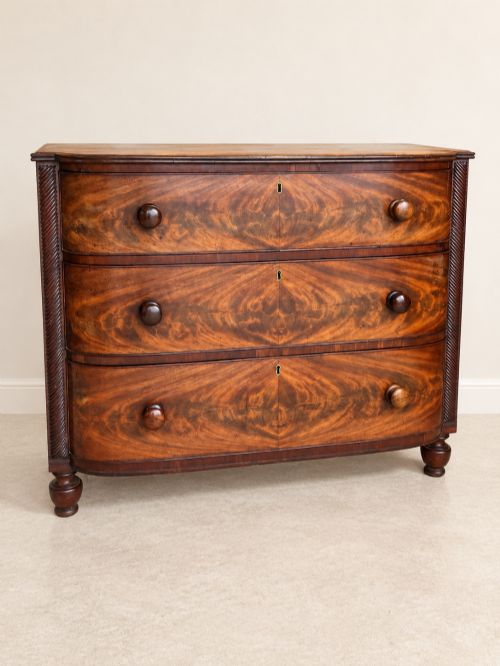


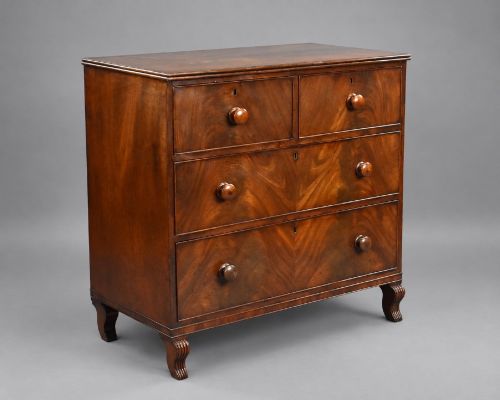
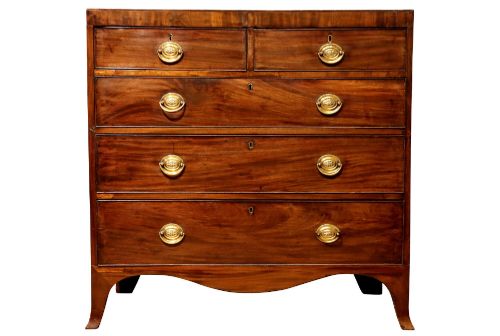
Mahogany Bureau Drawers
Mahogany bureau drawers bring together solid timber and fitted writing compartments, offering practical storage alongside dedicated writing surfaces from Georgian and Regency workshops.
Mahogany Bureau Drawers
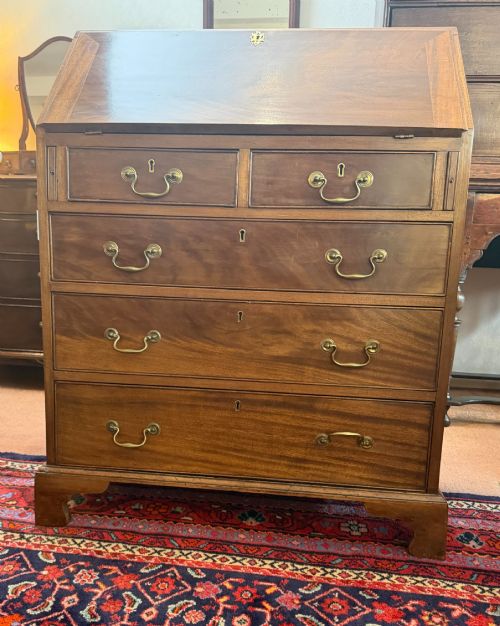
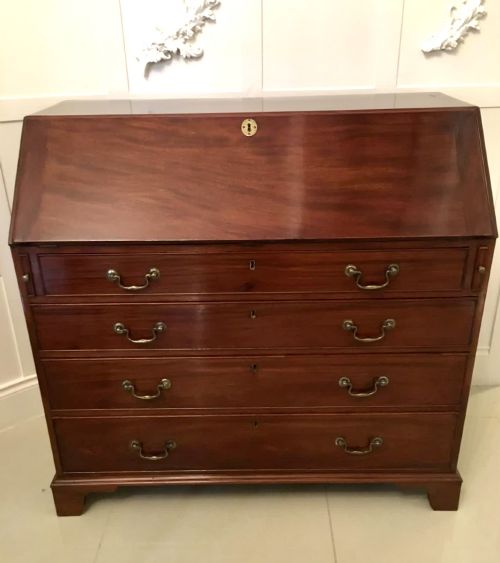
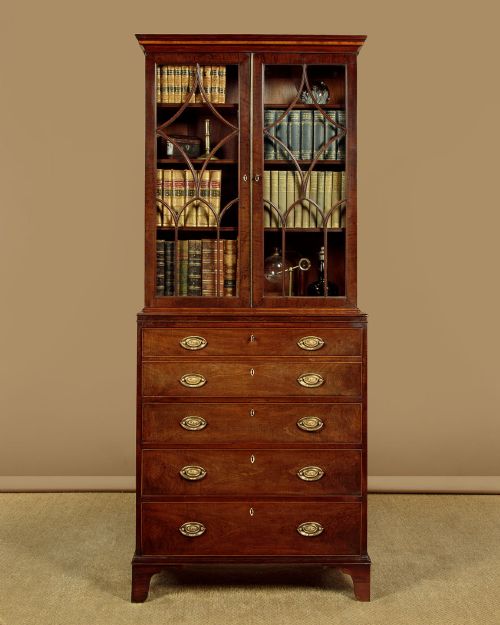
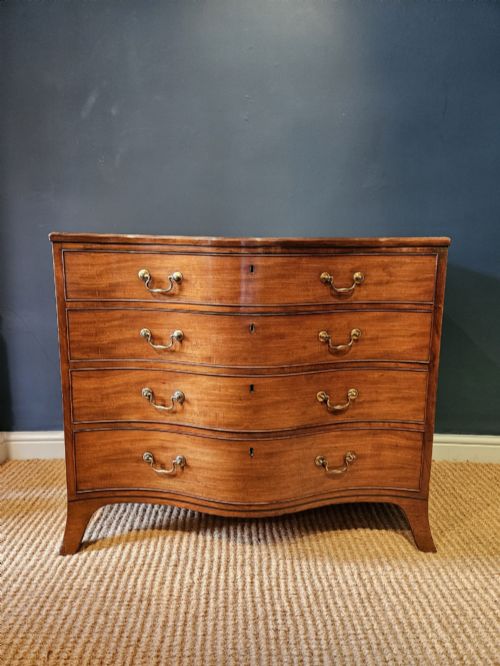
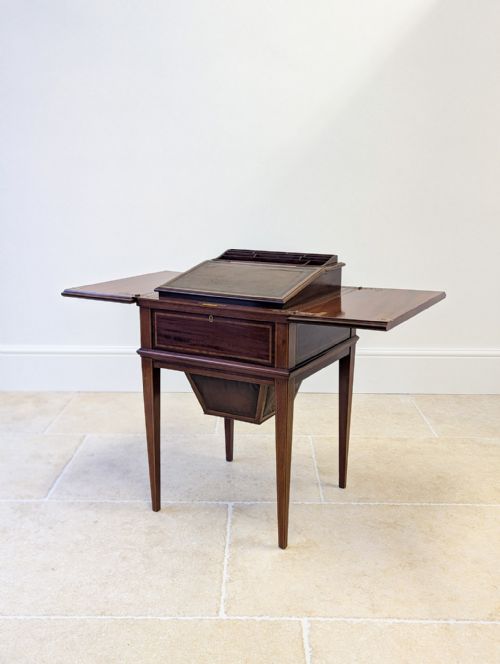
When buyers search for mahogany bureau drawers, they encounter forms that bridge the gap between traditional chest of drawers and private writing desks. These pieces span periods from the 18th century through to the Edwardian era, taking the shape of chests with secretaire drawers, fitted slant-front bureaux, and tall bureau bookcases.
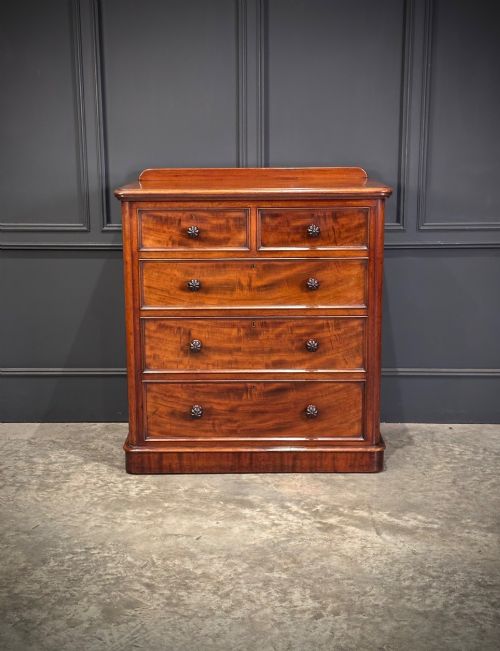
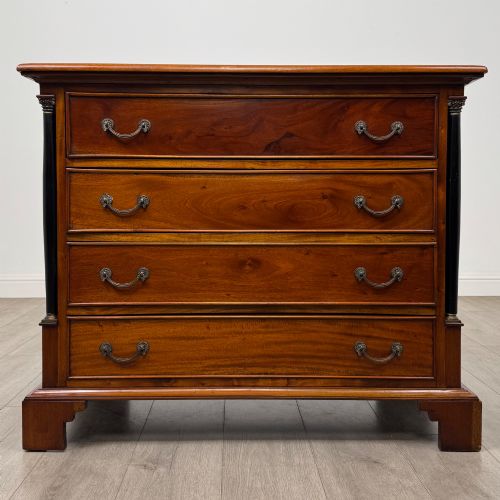
The most common examples on this page are Georgian and Regency chests of drawers featuring integrated writing slides or drop-front desks, alongside larger Victorian and Edwardian variations built with multiple internal compartments. They range from compact country pieces to grand townhouse secretaire bookcases.
Originating primarily from British workshops, these items serve as working furniture that combines deep drawer storage with functional writing spaces. Their forms reflect the changing domestic requirements of the 18th, 19th, and early 20th centuries.
How they were made
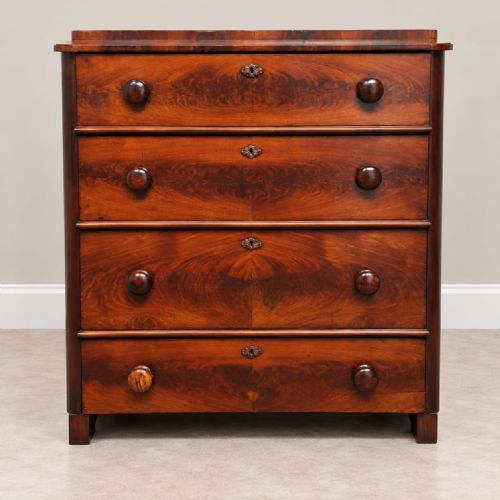
Cabinetmakers utilised specialised joining techniques to accommodate the movement of timber, incorporating secondary woods like oak for drawer linings to ensure durability. Exterior surfaces often display figured flame mahogany veneers chosen for their striking grain patterns.
Internal components, including secret compartments and pigeonholes within secretaire drawers, demonstrate meticulous joinery and hidden mechanical releases designed to keep correspondence secure.
Mahogany Bureau Drawers Retail Price Guide 2026
Typical asking prices for mahogany bureau drawers among the pieces listed under this phrase on Sellingantiques today, from the lower quarter to the upper quarter. They describe what is for sale here now, not the wider market.
The listings on this page span the 18th, 19th, and 20th centuries, featuring styles from George III through to Edwardian.
What varies in quality
Quality rests upon the selection of timber figures, particularly the intensity and depth of the flame mahogany veneer used across the drawer fronts and fall flaps. Superior examples exhibit continuous grain matching across multiple drawers, showing forethought by the cabinetmaker.
The refinement of internal secondary woods and the precision of the joinery within fitted desk interiors separate standard production items from exceptional workshop creations. Oak-lined drawers and hand-cut dovetails indicate higher standards of construction.
Proportion and hardware integrity also dictate grade, with original brass handles and well-balanced bracket or ogee feet retaining the piece's structural harmony.
Gillows
The Mahogany Bureau Drawers Glossary
- Secretaire
- A drawer designed to pull out and drop open, revealing a fitted writing surface and pigeonholes. This innovation allows a standard chest of drawers to function as a writing desk without sacrificing floor space.
- Flame mahogany
- A veneer cut from the fork of the mahogany tree where the branch meets the trunk. It creates a distinctive, fiery grain pattern highly prized by 18th and 19th-century cabinetmakers.
- Brushing slide
- A pull-out shelf located just beneath the top surface of a chest of drawers. Originally used for dusting garments or as a temporary writing ledge.
- Dovetail
- A joint formed by interlocking wedge-shaped fingers, used extensively in period drawer construction. Hand-cut dovetails are a primary indicator of traditional cabinetmaking skill.
- Ogee feet
- An S-shaped bracket foot used on Georgian furniture that curves outward at the top and inward at the bottom. This profile gives heavy case pieces a lighter visual footing.
Mahogany Bureau Drawers: Frequently Asked Questions
What is an oak-lined drawer?
An oak-lined drawer is one where the sides and backs of the drawer box are constructed from solid oak rather than a secondary softwood like pine. This indicates a higher grade of furniture construction commonly found in Georgian and Regency pieces.
Cabinetmakers used oak for its strength and stability, which helped prevent the drawer structure from warping over centuries of use.
How do I care for mahogany furniture?
Mahogany benefits from consistent indoor humidity and protection from direct sunlight, which can fade the rich reddish-brown tones of the timber over time. Regular dusting with a dry, soft cloth prevents particulate buildup on the polished surface.
Applying a traditional beeswax polish occasionally helps nourish the wood and maintain its natural lustre without sealing the grain with synthetic films.
What does George III style mean?
George III style refers to furniture produced during the reign of King George III, spanning the second half of the 18th century and into the early 19th century. Pieces from this period are characterised by refined proportions, classical architectural influences, and the prominent use of solid mahogany.
Items described as Georgian style may also include later revival pieces built in the 20th century that emulate these earlier 18th-century design principles.
Are secret drawers common in these desks?
Secret drawers appear frequently in Georgian and Regency bureaux and secretaire chests, often concealed behind decorative pigeonhole partitions or sliding panels. Cabinetmakers designed these hidden compartments to store valuables, private letters, or currency.
Accessing them usually requires lifting a false bottom or releasing a small spring-loaded wooden peg within the interior desk fitment.