
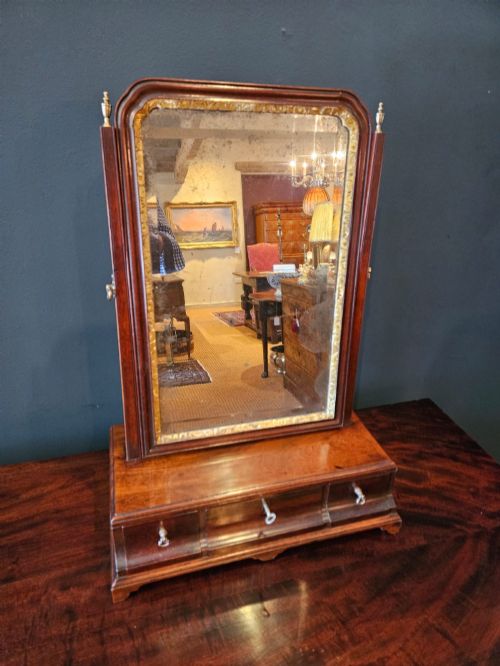
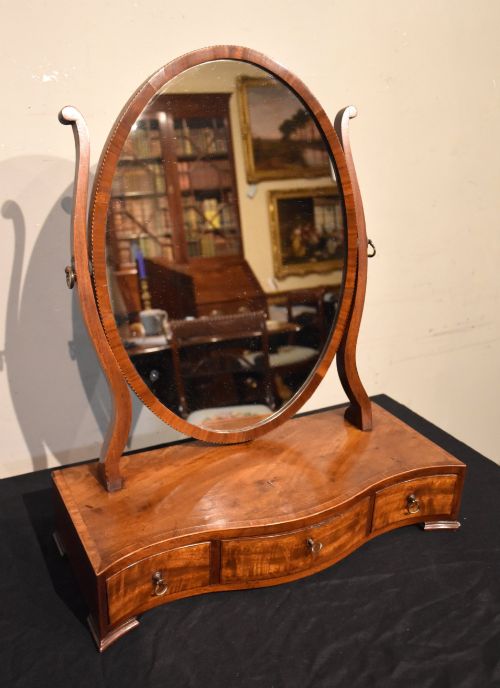
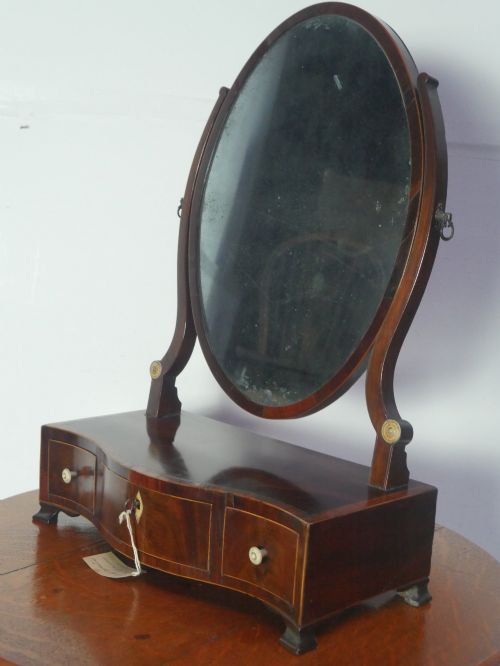
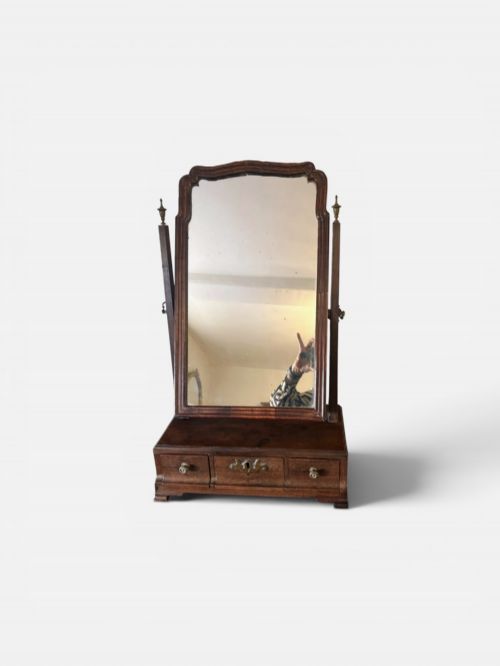
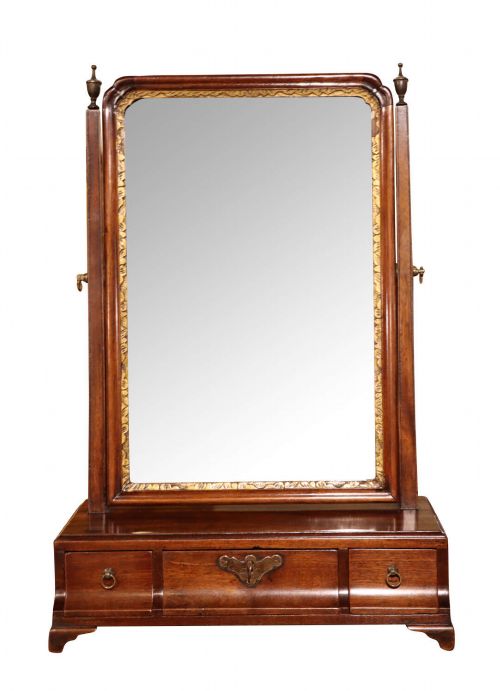


Mahogany Box Toilet Mirror
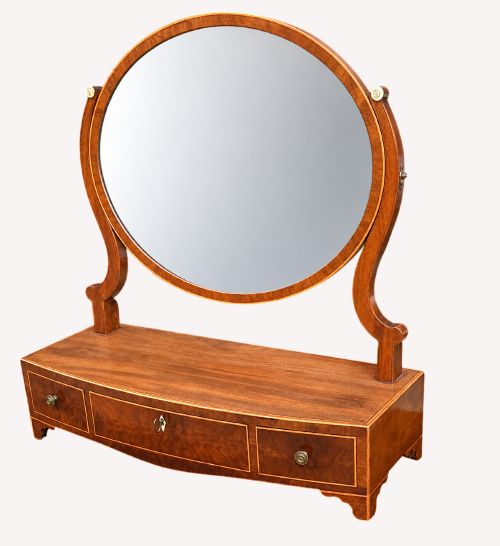
A mahogany box toilet mirror sits properly on a chest or dressing table, offering a clear reflection and useful storage beneath.
Understanding the mahogany box toilet mirror
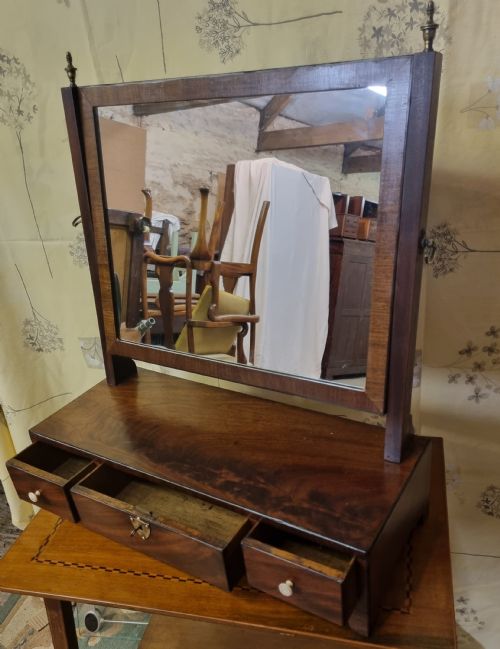
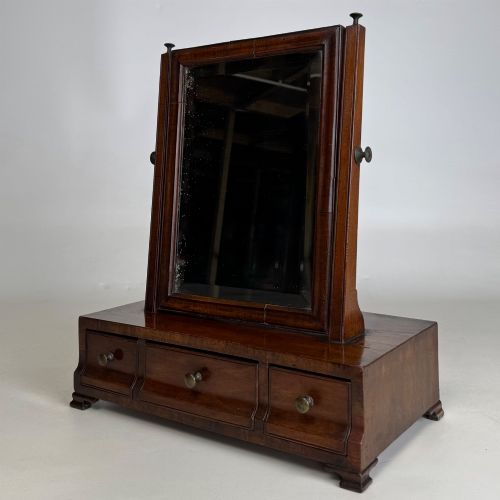
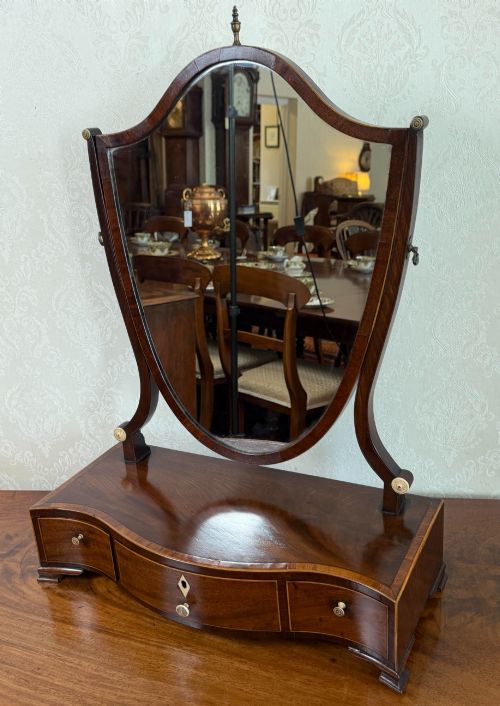
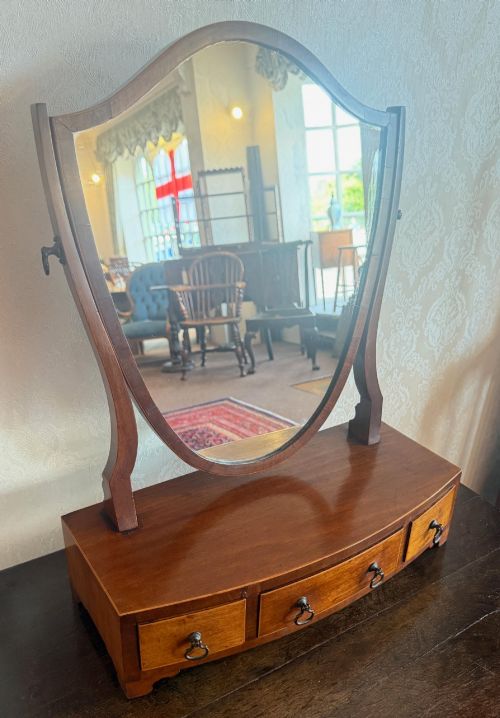
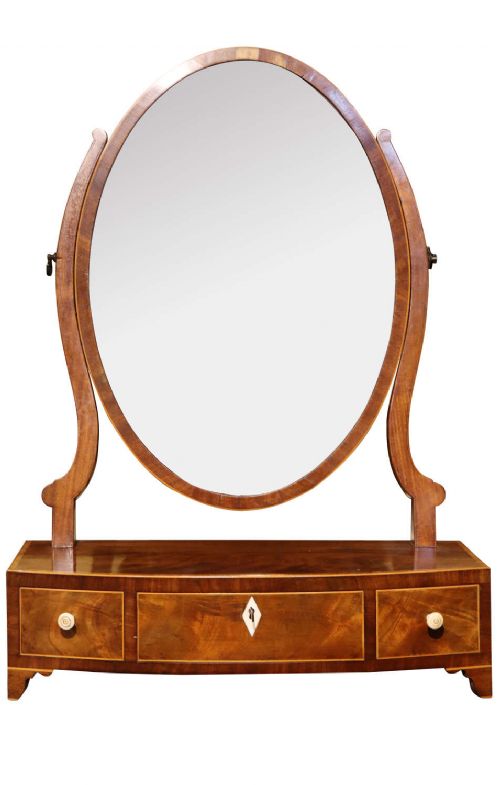
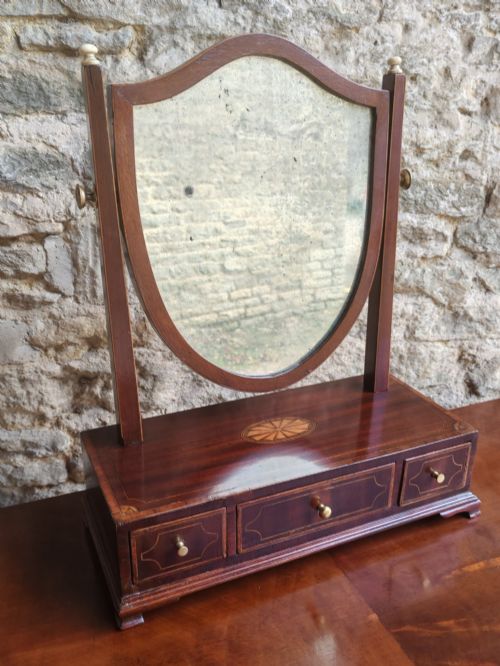
A mahogany box toilet mirror combines a tilting plate glass set within upright arms upon a small box base containing drawers. These pieces served bedrooms and dressing rooms for daily grooming throughout the eighteenth and nineteenth centuries.
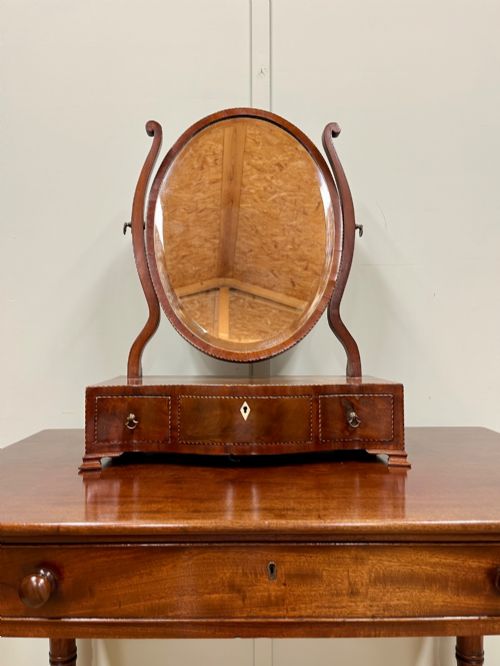
The format ranges from simple rectangular box bases to serpentine fronts and three-drawer arrangements, reflecting evolving tastes across the Georgian, Regency and Victorian periods.
Buyers encounter examples spanning the eighteenth century through to the mid-nineteenth century, including both classical proportions and later revival styles.
Construction and materials
Cabinet makers utilised solid and veneered mahogany for the main frames and box bases, often incorporating secondary timbers such as oak for drawer linings. Decorative details include boxwood stringing and inlay work to accentuate the box edges and upright supports.
Hardware typically comprises brass fittings, such as adjustment knobs, escutcheons and small supporting feet. The glass is held in a slender wood frame that pivots between shaped arms rising from the box.
Retail Price Guide 2026
Typical UK retail prices for mahogany box toilet mirror, calculated from the Sellingantiques database of over a million retail prices indexed since 2003. This retail price guide relies exclusively on Sellingantiques data; no external sources or auction records are used, so the figures do not describe the wider market.
A shaving mirror ready for campaign use.
Factors of quality
Quality rests upon the selection of timber figure, the crispness of boxwood stringing and the elegance of the upright supports. Finer pieces demonstrate careful dovetailing in the drawer construction and well-proportioned ogee or serpentine fronts.
The refinement of the brass adjustment screws and the retention of original mirror glass distinguish superior examples from plain utility pieces made in later decades.
The Mahogany Box Toilet Mirror Glossary
- Serpentine front
- A curved furniture front with a convex centre flanked by concave sides. This shape adds visual movement to the box base.
- Stringing
- Thin inlay of a contrasting wood, such as boxwood, used to outline panels and drawers. It creates a neat linear border.
- Box base
- The enclosed rectangular compartment beneath the mirror plate containing one or more small drawers. It provides stability and storage for small personal items.
- Dressing mirror
- A portable table mirror designed for personal grooming. These items rest on a chest of drawers or dressing table rather than standing independently on the floor.
- Oak lined
- Drawer interiors constructed using oak timber. This indicates traditional cabinet-making standards.
Frequently Asked Questions
How do I date a mahogany box toilet mirror?
Dating relies on observing the overall form, timber characteristics and construction methods such as dovetailing. Georgian pieces often feature simpler box proportions, while Regency and Victorian examples introduce varied drawer layouts and decorative stringing.
Changes in brass hardware styles and mirror plate bevelling also provide helpful indicators for narrowing down the period of manufacture.
Were these mirrors used for shaving?
Certain variations served specifically for shaving, particularly campaign versions designed for travel or compact spaces. The adjustable plate allowed the user to angle the reflection as needed.
Most domestic examples functioned as general dressing mirrors placed upon bedroom chests or dedicated tables.
How do I care for the mirror glass?
Maintenance requires gentle cleaning with a soft cloth and mild glass cleaner applied sparingly. Avoid letting moisture seep behind the glass plate into the old backing.
Keeping the piece away from direct sunlight and excessive humidity preserves both the mahogany finish and the historic mirror silvering.
What is the difference between Georgian and Victorian styles?
Georgian pieces generally emphasise clean architectural lines, balanced proportions and restrained use of inlay like boxwood. Victorian examples often incorporate heavier mouldings, differing drawer configurations and alternative wood combinations.
Examining the foot forms and upright supports helps clarify the stylistic transition across the nineteenth century.