
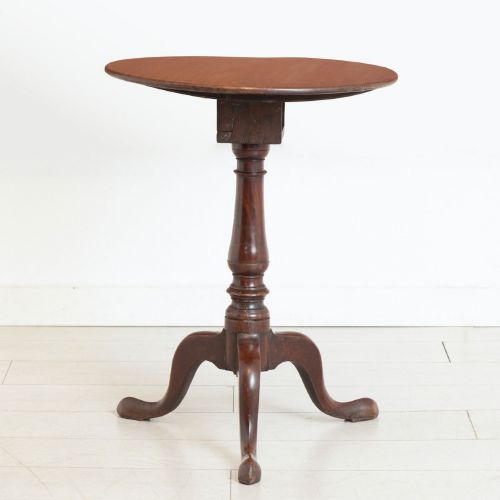


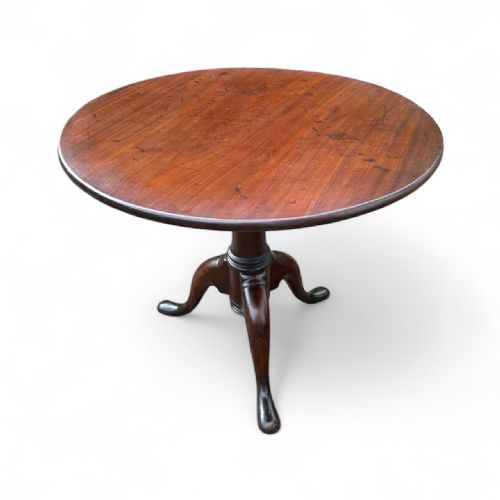
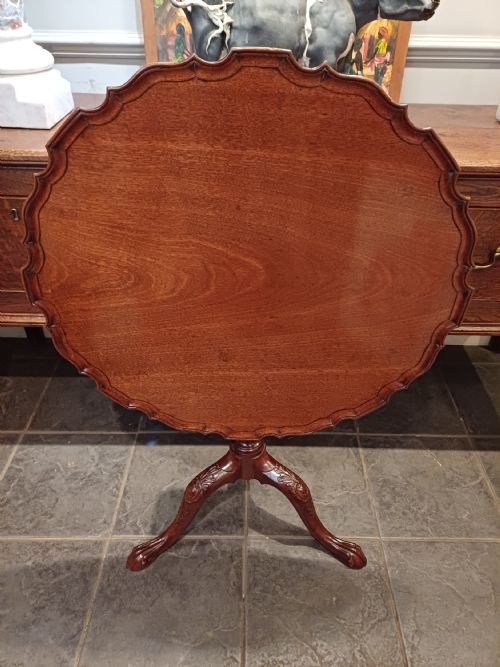


Mahogany Birdcage Table
A mahogany birdcage table combines a pivoting top with a clever wooden lattice mechanism, offering period elegance and practical versatility for the modern home.
Mahogany Birdcage Table
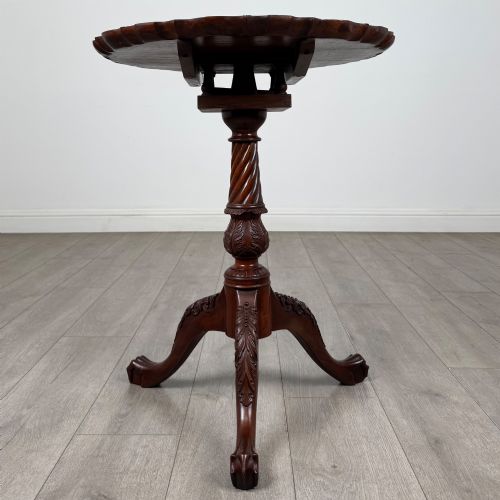
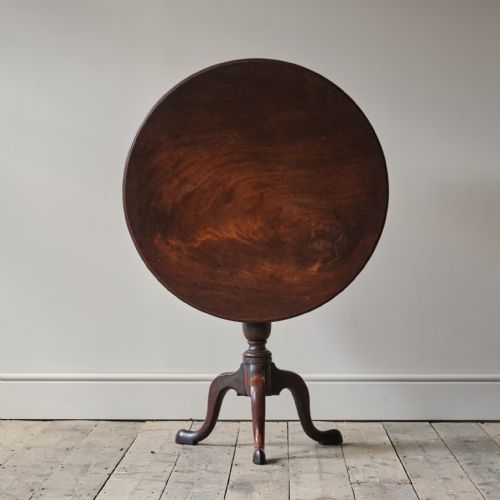
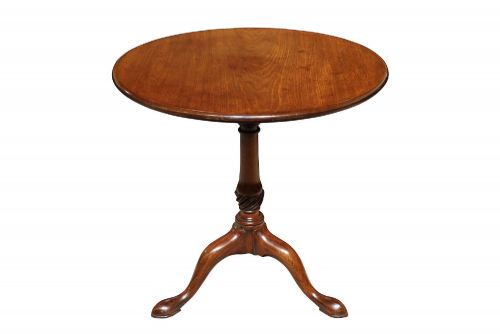
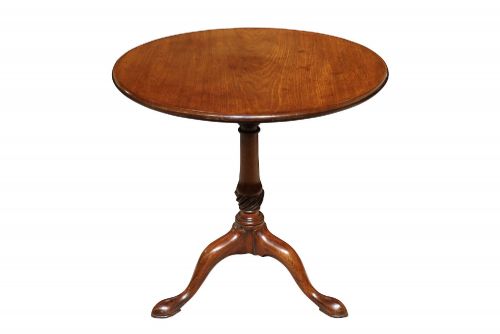
A mahogany birdcage table is a tripod piece featuring a rotating wooden frame beneath the surface that allows the top to tilt flat when not in use. These versatile surfaces appear primarily as wine tables, supper tables, and occasional tables spanning the Georgian era through to the Edwardian period, with eighteenth-century examples forming the majority of the selection.
The form typically rests on a central pillar supported by three legs, often terminating in pad or claw and ball feet. Makers utilised circular, octagonal, dish, and piecrust edges for the timber tops, creating flexible furniture designed to be moved easily around a room or stored against a wall.
How they were made
Cabinet makers constructed these pieces using dense timbers such as solid mahogany and Cuban mahogany, frequently selecting a single wide plank for the table surface. The birdcage mechanism itself relies on precise small-scale joinery, pairing parallel wooden uprights with a revolving frame that connects the top to the central column.
Secondary metals appear selectively, with brass fastenings or hinges integrated into the movement, and occasional pieces incorporate iron elements or brass inlay along the top. Traditional carving adorns the tripod legs and borders of finer examples, ranging from subtle moulded edges to elaborate piecrust profiles.
The object forms recorded on this page include wine tables, occasional tables, side tables, and supper tables with revolving tops.
What varies in quality
Quality in a mahogany birdcage table rests on the selection of the timber and the integrity of the rotating movement. Superior examples exhibit finely figured single-piece mahogany tops paired with crisp, hand-carved tripod bases that operate smoothly without excessive play in the central axis.
Proportion and detail separate standard pieces from exceptional ones, particularly where makers incorporated pierced galleries, lobed edges, or detailed claw and ball feet. The precision of the birdcage mechanism and the weight of the timber dictate how solidly the table stands when the top is locked horizontal.
John Bivins
The Mahogany Birdcage Table Glossary
- Birdcage mechanism
- A rotating wooden frame situated beneath the table top that permits both tilting and revolving actions. This lattice structure connects the top to the central pillar.
- Tilt top
- A tabletop design that pivots on a horizontal axis to store vertically against a base. This function saved valuable floor space in historic interiors.
- Tripod base
- A supporting stand comprising three radiating legs attached to a central column. This configuration ensures stability on uneven floors.
- Piecrust edge
- A raised, decorative carved border shaped in undulating curves resembling pastry work. This detail is typically found on mid-eighteenth-century supper tables.
- Cuban mahogany
- A dense, richly grained hardwood imported from the Caribbean used extensively in eighteenth-century cabinet making. It possesses a deep natural colour and high polish.
Mahogany Birdcage Table: Frequently Asked Questions
What is a birdcage mechanism?
The birdcage is a small wooden framework fitted beneath the table top, containing a set of parallel uprights and a pivot. This assembly allows the surface to rotate fully and tilt vertically when needed.
Historically, this dual movement made the furniture easy to clear away after dining or entertaining guests in cramped quarters.
How were these tables used?
Georgian households utilised these versatile pieces for serving wine, holding tea service, or acting as moveable lamp tables. The tilt top meant they could line the perimeter of a room as decorative accents until needed.
Their sturdy tripod design kept them stable during gatherings, while the small footprint suited various entertaining spaces.
How do I date a mahogany table?
Dating relies on observing construction methods, timber selection, and decorative styles such as early Georgian dish tops or later Edwardian adaptations. Eighteenth-century pieces frequently feature single-plank solid tops and hand-turned pillars.
Comparing the turning of the tripod base and the style of the feet against known period traits clarifies the approximate decade of manufacture.
Can I use a tilt top table daily?
These tables adapt well to daily modern living as occasional surfaces for lamps, drinks, or books. Their compact proportions fit easily beside seating areas or in hallways.
Care should be taken when operating the pivot mechanism to preserve the original wooden joints and brass fittings over time.