

Tilted Round Table
A tilted round table serves multiple domestic roles, pivoting from a compact edge-of-room stance to a functional dining surface.
Tilted Round Table
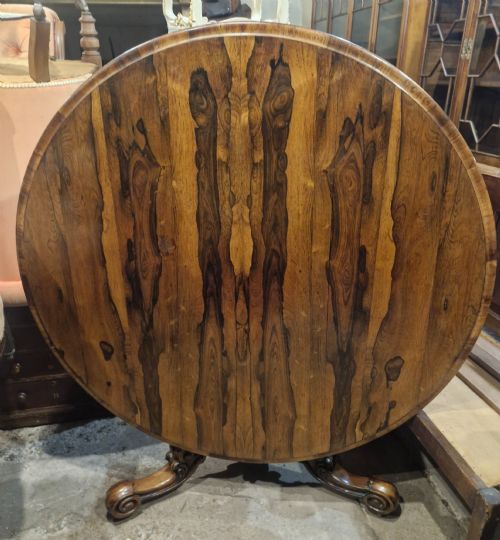
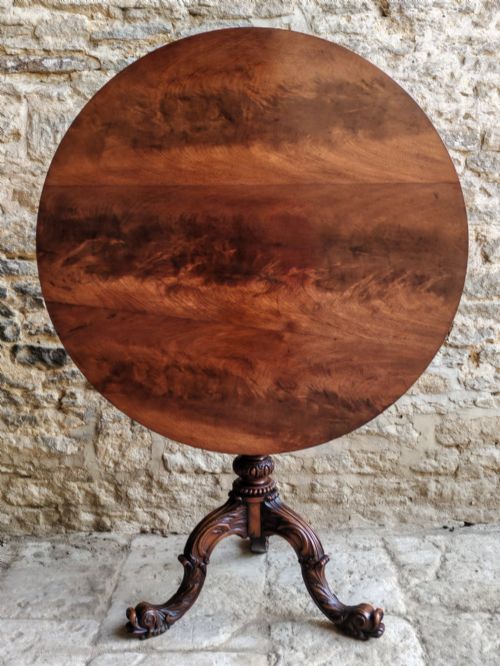
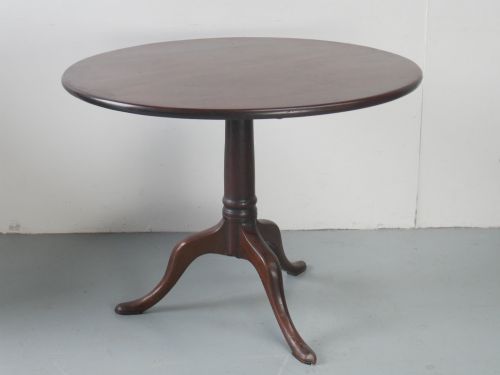
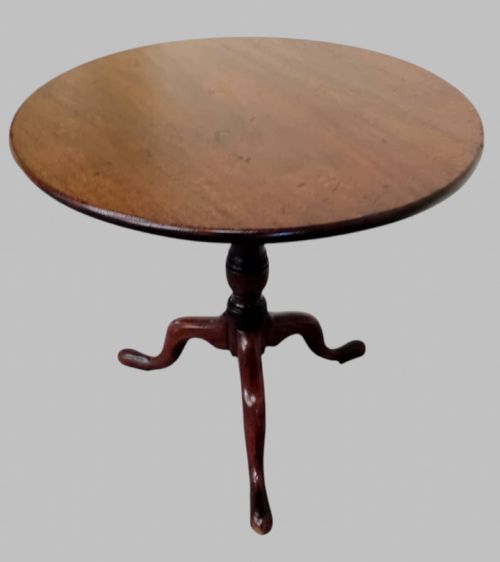
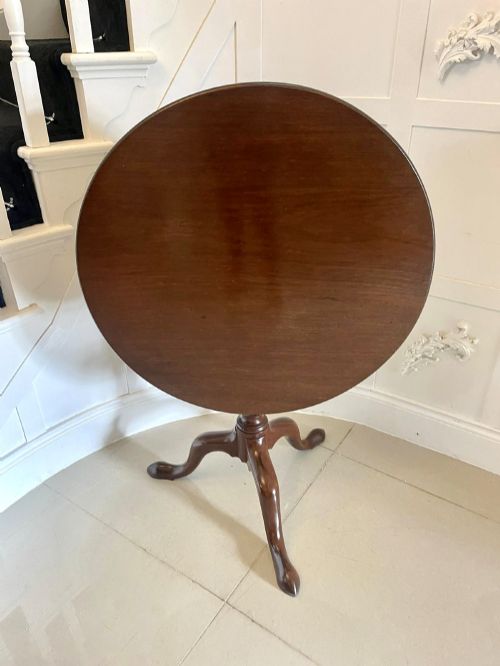
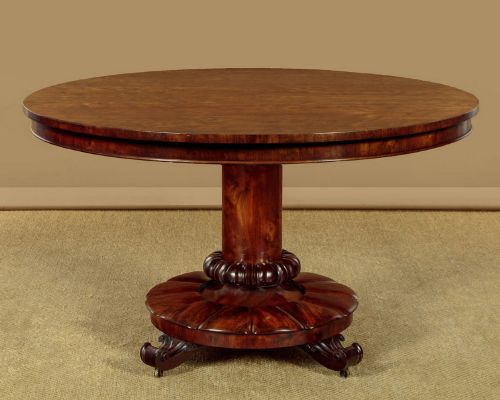
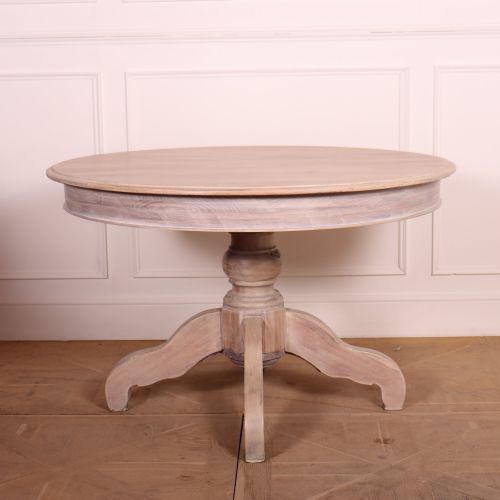
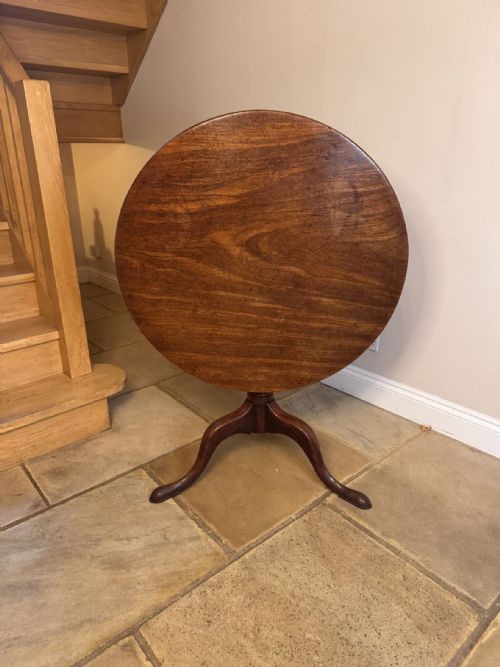
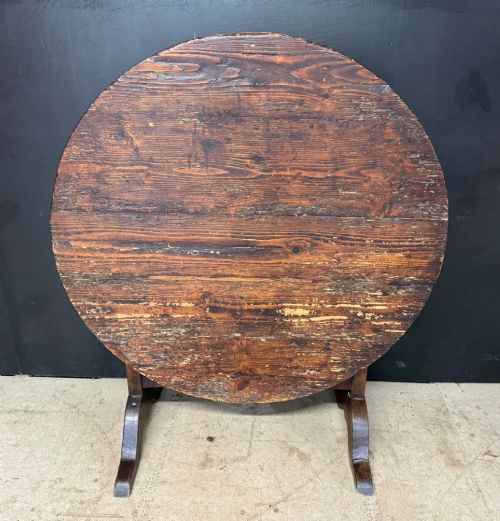
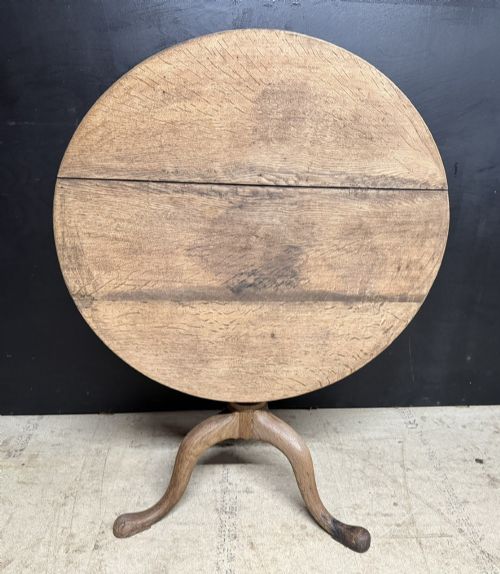
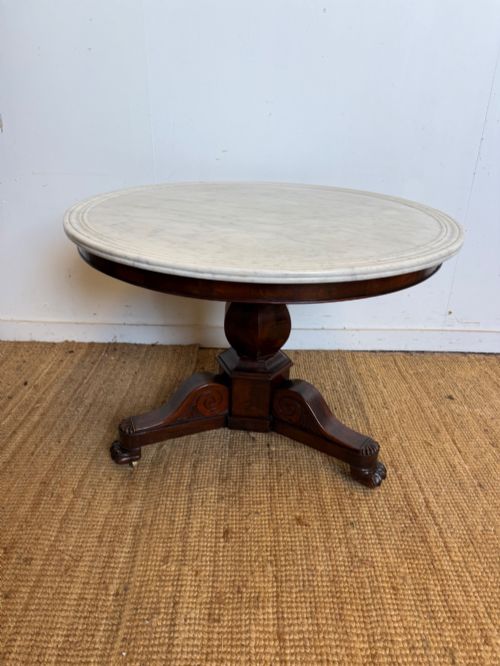
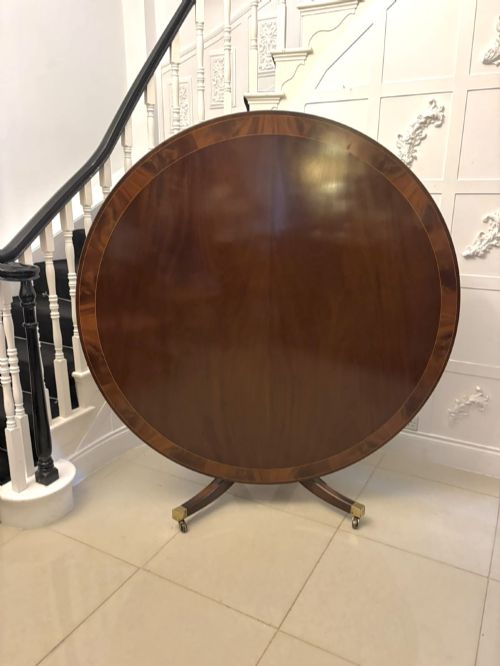
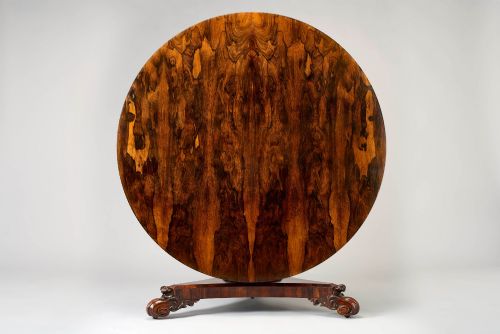
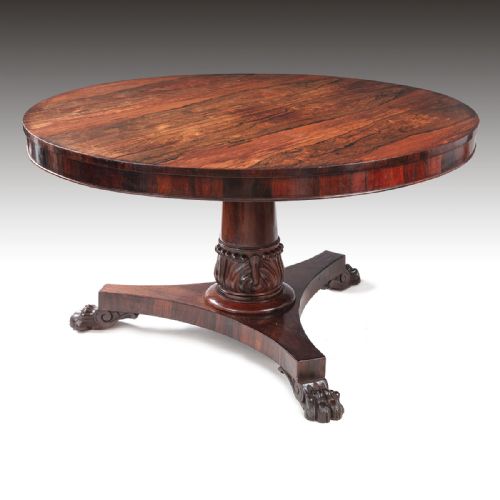
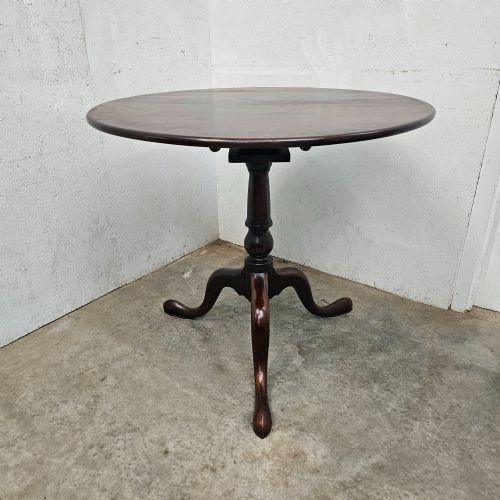
A tilted round table appears in forms ranging from compact wine and lamp tables on tripod bases to larger breakfast and centre tables from the Georgian, Regency, and Victorian periods. The smaller tripod versions often feature tilt-top or snap-top mechanisms designed to save space when pushed against a wall.
The materials span native timbers like oak, mahogany, and walnut alongside exotic woods such as rosewood and satin birch, often supported on central pedestals or three-legged bases with brass fittings or marble tops.
Materials and construction methods
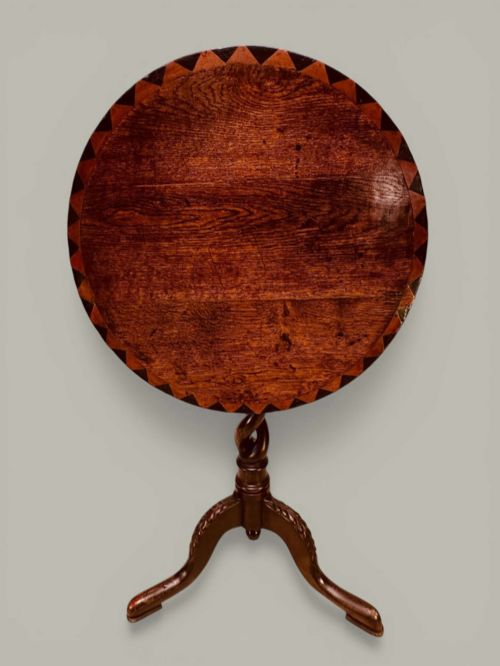
Cabinet makers utilised dense hardwoods including mahogany, rosewood, and oak for stability, frequently employing figured veneers and crossbanding on circular tops. Turning, carving, and brass inlay define the pillar supports and tripod legs.
The pivoting mechanism relies on a bird cage or catch block fixed beneath the circular top, allowing the surface to tilt vertically or lock horizontally for daily use.
Tilted Round Table Retail Price Guide 2026
Typical asking prices for tilted round table among the pieces listed under this phrase on Sellingantiques today, from the lower quarter to the upper quarter. They describe what is for sale here now, not the wider market.
French vendange and wine tasting tables were built with pivoting tops so tired grape harvesters could clear space in the barn.
Distinctions in construction and finish
Quality rests on the integrity of the timber selection, such as highly figured mahogany or burr walnut, and the precision of the tilt mechanism beneath the top. Finer examples display crisp hand-carved tripod legs and seamless joint work rather than plain secondary woods or loose fittings.
Peters of Genoa·Gillows
The Tilted Round Table Glossary
- Tilt top
- A circular table top hinged to pivot upright when not in use. This mechanism allowed tables to be stored against room perimeters.
- Tripod base
- A three-legged support structure commonly found on smaller lamp and wine tables. It provides stable footing on uneven floors.
- Bird cage
- A framework of small wooden spindles beneath the table top that enables both rotation and tilting. It sits atop the central pillar.
- Crossbanding
- A border of veneer laid around the edge of the circular top with the grain running perpendicular to the centre. This decorative technique frames the main timber.
Tilted Round Table: Frequently Asked Questions
How do you operate the tilt mechanism?
The mechanism typically involves releasing a brass catch or wooden wedge beneath the circular top. This action lets the surface pivot on its hinge so it rests flat against the central pillar.
Securing the top back to the horizontal position engages the catch again, locking the surface for service.
Where were these tables placed in historic homes?
Smaller tripod examples stood in parlours and drawing rooms to hold lamps or wine glasses. Their tilting function meant staff could move them out of the way easily.
Larger breakfast and centre tables occupied the middle of dining rooms or libraries, serving meals or displaying decorative objects.
What is the difference between a wine table and a breakfast table?
Wine tables are smaller occasional pieces designed for single cups or glasses, usually supported by a slender tripod base. They occupy minimal floor space.
Breakfast tables possess larger circular tops intended for dining and rest on heavy central pedestals with robust feet.
How do you date a mahogany round table?
Dating relies on timber characteristics, leg design, and the complexity of the pedestal. Georgian examples often feature slender tripod legs and simple bird cage pivots.
Victorian pieces tend to show heavier pillar turnings, rosewood veneers, or marquetry inlay reflecting later revival tastes.