

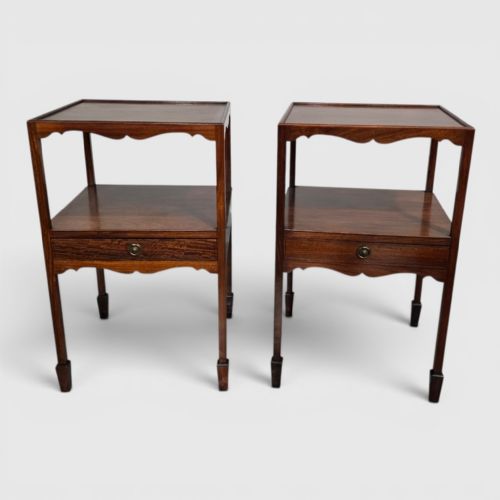


Mahogany Bedside Stand
When you search for a mahogany bedside stand, you are looking at practical timber furniture built to hold a chamber pot, lamp, or night watch.
Mahogany Bedside Stand
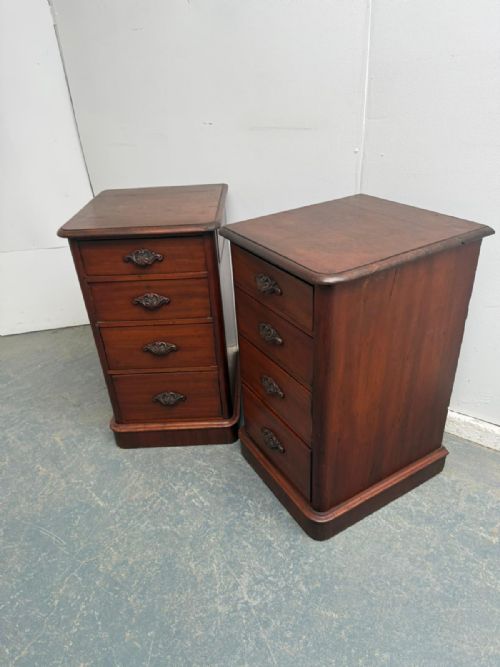
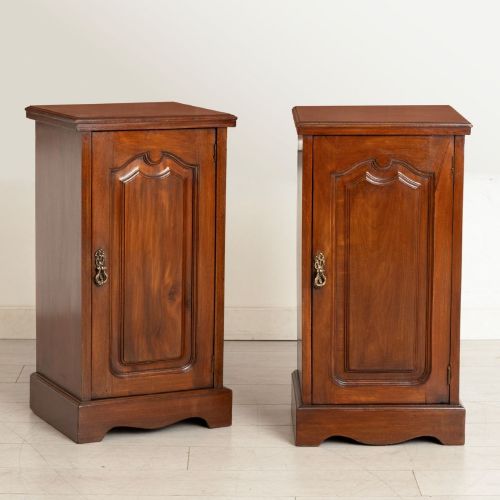
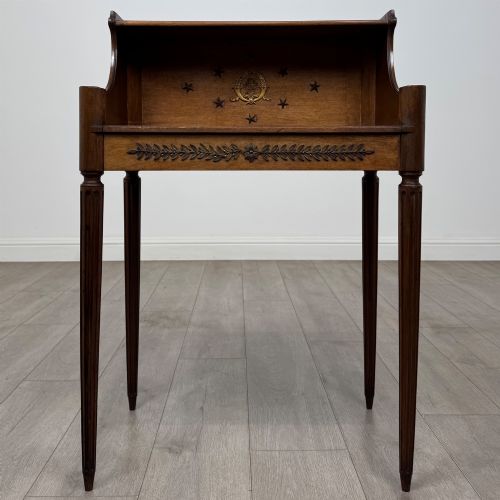
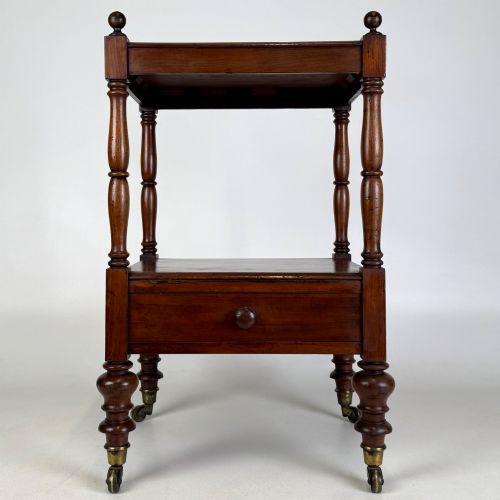
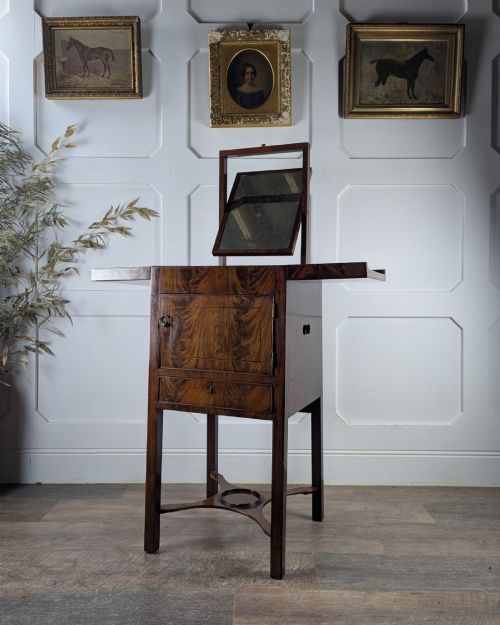
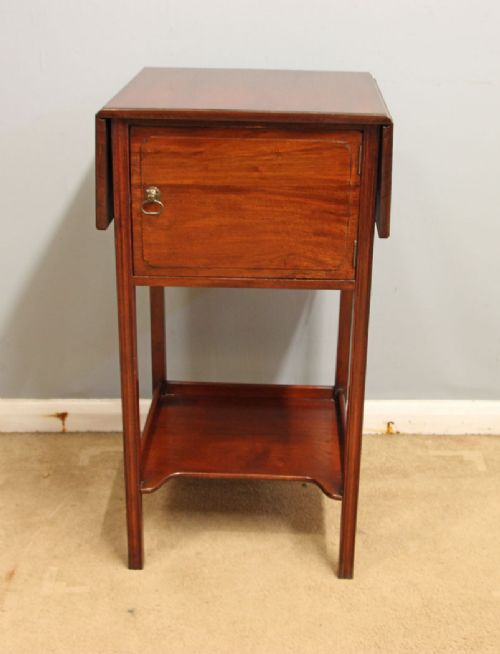
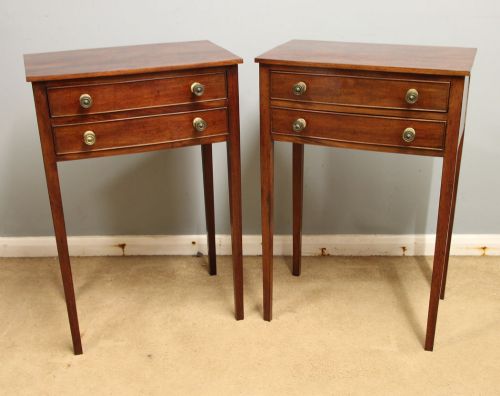
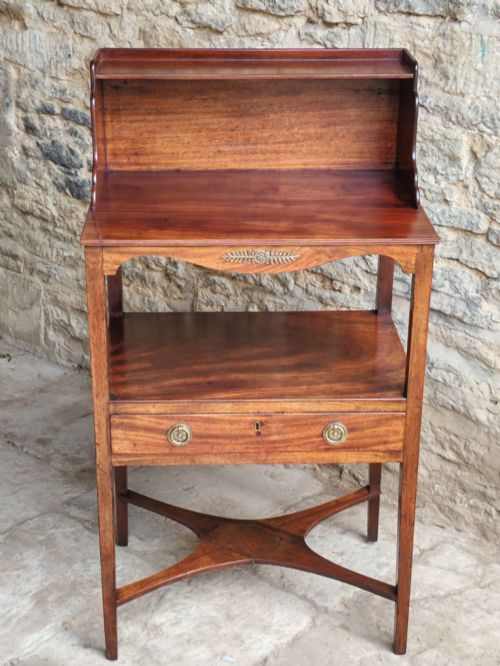
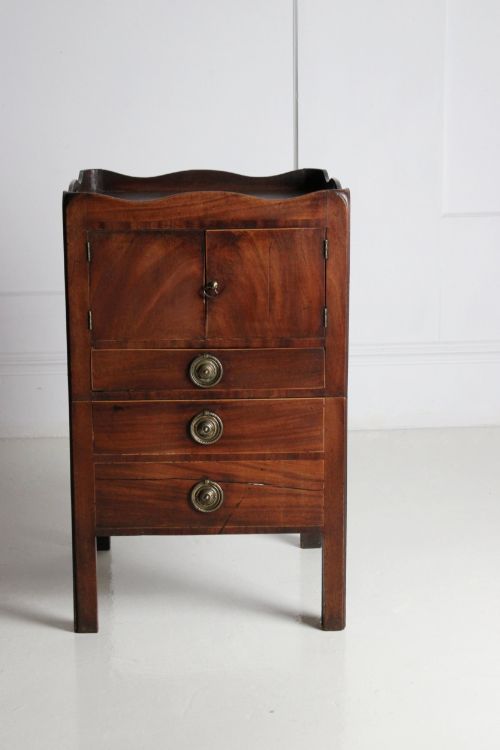
A mahogany bedside stand serves as a compact piece of bedroom furniture designed during the Georgian, Victorian, and Edwardian periods. These items appear primarily as enclosed cupboards, open pot stands, or small drawer chests.
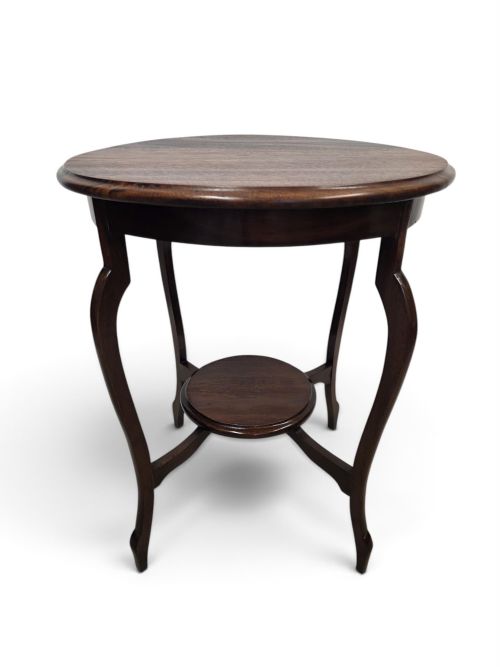
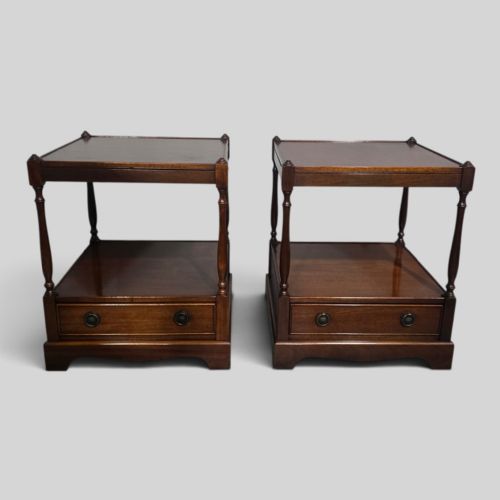
The form evolved from utilitarian eighteenth-century nightstands and washstands into decorative nineteenth and twentieth-century lamp tables. Buyers on this page will frequently encounter enclosed pot cupboards alongside compact side tables from the Georgian and Edwardian eras.
How They Were Made
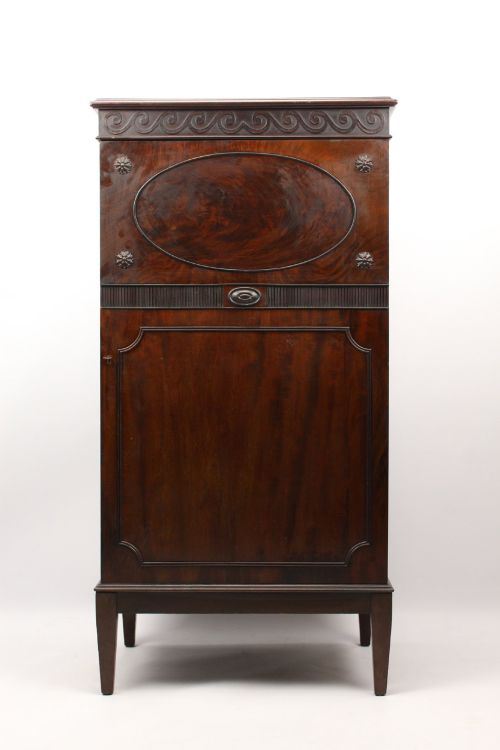
Cabinet makers utilised solid mahogany and figured veneers over secondary timbers, frequently incorporating boxwood stringing and marquetry inlay for surface decoration. Structural hardware often included brass handles, hinges, and occasional gallery rails.
Joinery techniques relied on dovetailed drawer construction and framed panels to ensure stability in daily use. Some specialised forms featured tambour shutters or fold-away compartments engineered to conceal wash basins and night storage.
What Varies in Quality
The selection of timber grain largely distinguishes simpler utilitarian pieces from finer examples, with highly figured mahogany and intricate marquetry marking the upper tier. Master craftsmanship shows in the precise fit of doors, drawers, and tambour mechanisms.
Originality of brass hardware, intact internal fittings, and well-preserved wax finishes elevate a piece's standing. Proportion and restraint in decorative inlay separate workshop output built for polite domestic interiors from plain commercial stock.
Denby & Spinks·Howard & Sons
The Mahogany Bedside Stand Glossary
- Pot cupboard
- A small bedside cabinet originally built to enclose a chamber pot behind a single panelled door. These pieces often feature a tray top to contain spills.
- Tambour
- A flexible sliding shutter formed from narrow vertical strips of mahogany glued to a canvas backing. This mechanism allows smooth closure on curved or tight cabinet fronts.
- Washstand
- A dedicated piece of chamber furniture designed with a recessed top or folding flaps to hold a basin and jug. Many surviving examples have been subsequently adapted for general bedside use.
- Marquetry
- Decorative veneer work created by fitting together thin pieces of exotic hardwoods and contrasting materials like boxwood. This technique produces pictorial or geometric surface patterns.
- Tray top
- A raised moulded edge surrounding the upper surface of a nightstand designed to prevent items from rolling off. This feature is particularly common on Georgian pieces.
Mahogany Bedside Stand: Frequently Asked Questions
How were antique nightstands used?
In historical bedchambers, these stands concealed chamber pots, held washing water, or kept nighttime reading materials secure. Their enclosed cupboards kept odours contained and private items out of sight.
Today, the same enclosed spaces and drawer tiers function neatly to store modern bedside clutter while serving as stable surfaces for lamps.
How do I date a mahogany bedside stand?
Dating relies on observing structural characteristics, timber selection, and overall furniture style. Georgian pieces often display clean lines and tray tops, while Victorian variants incorporate rich marquetry or deeper mouldings.
Edwardian items frequently show lighter inlaid satinwood details and slender Edwardian proportions that reflect changing tastes at the turn of the twentieth century.
Are these bedside stands practical today?
Their modest footprints make these stands exceptionally well-suited for placing beside contemporary bed heights. Enclosed cupboards and drawers provide concealed storage for phones, books, and chargers.
Solid mahogany construction ensures they remain durable daily furniture items capable of supporting modern lamps and accessories.