


Brass Campaign Stand
A brass campaign stand brings portable historical craftsmanship into a room, offering adaptable surfaces and distinct military heritage.
Brass Campaign Stand
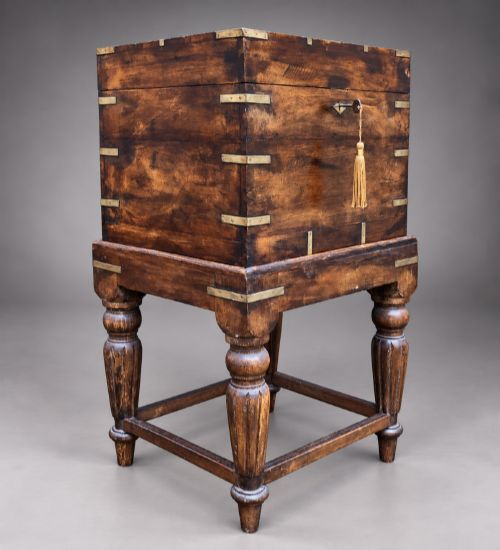
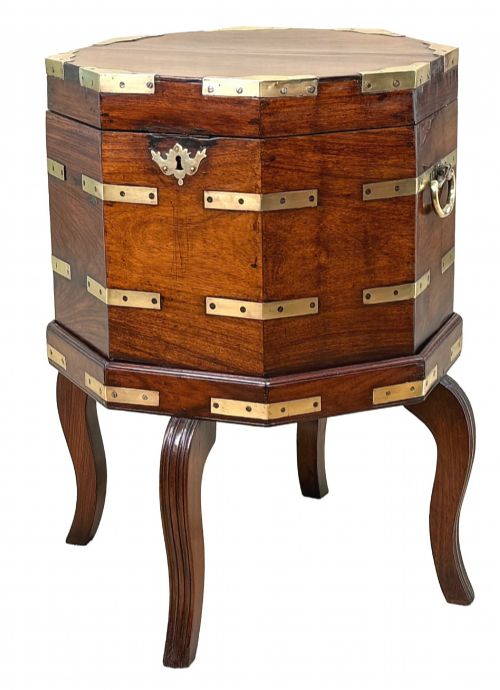
A brass campaign stand encompasses portable furnishings designed for travel, most frequently appearing as folding tray tables, washstands, and cellarettes on stands. These pieces span periods from the Georgian and Regency eras through the Victorian and Edwardian periods, reflecting utilitarian design made for officers on the move.
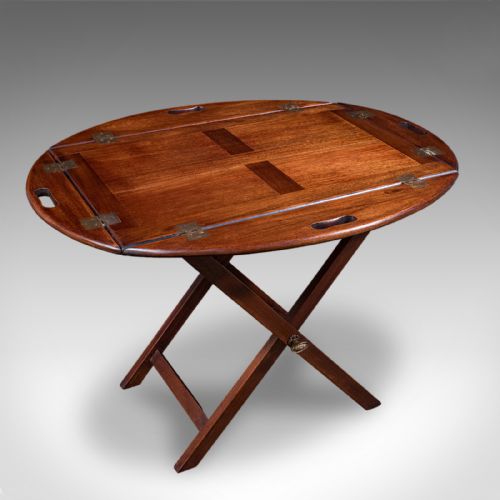
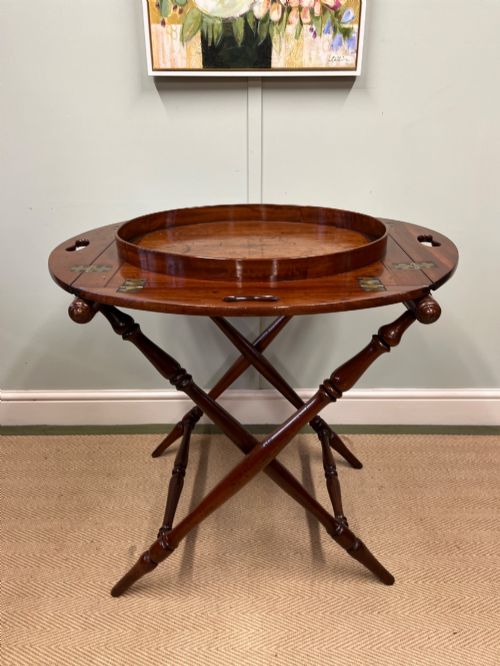
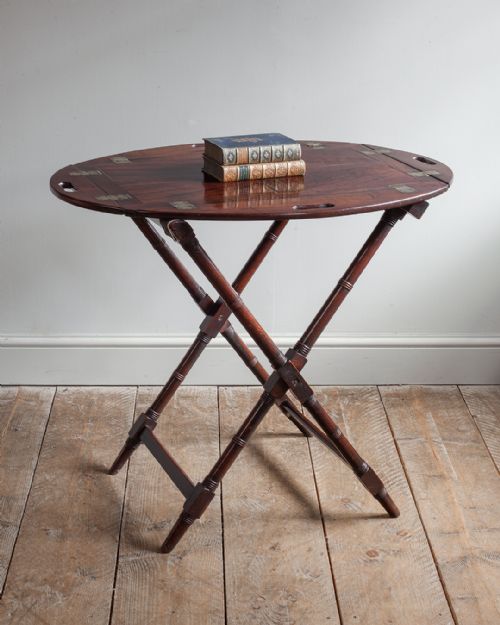
The version most commonly met on this page is the butler's tray table, which pairs a detachable wooden tray with a folding X-frame stand. Other recurrent forms include brass-mounted washstands and occasional tables constructed for officers requiring functional furniture abroad.
Originating in British military history, these items combine solid timbers with brass corner mounts and carrying handles. Buyers find them valued for their space-saving proportions and versatile deployment as modern side or serving tables.
How they were made
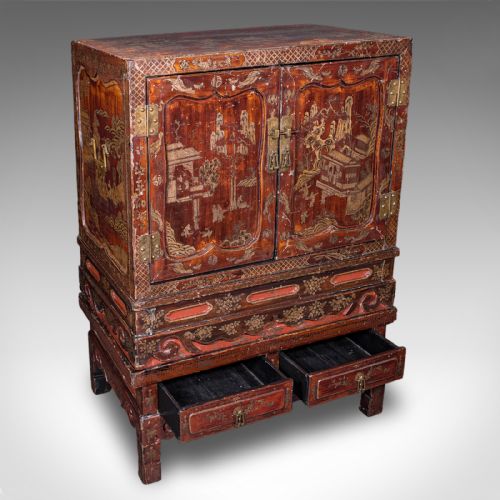
Construction relies on durable tropical and domestic hardwoods such as mahogany, teak, padouk, walnut, and occasional lacquer or rosewood. These timbers were selected to withstand travel, resisting humidity and heavy daily use.
Brass fittings, including corner brackets, hinges, and carrying handles, reinforce the structural joints and protect the edges from impact. Folding mechanisms allow stands to collapse flat, utilising clever hinges and webbing straps for rapid packing.
Some washstands hide compartments once designed to hold shaving bowls and soap away from stray cannon smoke.
What varies in quality
Quality depends upon the selection of timber grain and the precision of the brass work integrated into the frame. Superior examples display carefully fitted joints and heavy gauge brass mounts rather than thin decorative plating.
The integrity of the folding mechanism and the retention of original surfaces distinguish finer pieces from later iterations. Original hardware and untouched timber patination elevate the standing of a piece within the range.
The Brass Campaign Stand Glossary
- Campaign stand
- A portable piece of furniture engineered with folding frames or demountable components for military transport. These stands often support trays, washbasins, or writing desks.
- Butler's tray
- A rectangular wooden tray with hinged or panelled sides that lift to serve items, typically resting on a separate folding X-frame stand. It forms a staple of portable dining furniture.
- Cellarette
- A lockable container designed for holding bottles of wine or spirits, frequently mounted upon a dedicated stand. They often feature robust brass bindings and internal divisions.
- Padouk
- A dense tropical hardwood displaying rich red-brown tones, utilised in Anglo-Indian and Georgian campaign furniture for its strength. It resists warping during transport.
- X-frame
- A folding structural base formed of intersecting wooden members that pivot to allow flat storage. This design underpins many portable tables and washstands.
Brass Campaign Stand: Frequently Asked Questions
What is a campaign stand used for today?
These pieces serve as versatile side tables, serving surfaces, or washstands in modern interiors. Their folding designs make them practical for flexible living spaces.
Collectors appreciate their dual nature as historical artefacts and functional furniture that adapts easily to contemporary rooms.
How do I identify a Georgian campaign stand?
Georgian and Regency examples typically feature dense Cuban mahogany, hand-cut dovetail joints, and restrained brass corner reinforcement. The timber patination and cabinetmaking techniques reflect eighteenth and early nineteenth-century standards.
Later Victorian and Edwardian pieces often incorporate softer woods or machine-cut components while retaining the original folding portability of earlier models.
Are campaign stands sturdy?
The original military engineering prioritised durability, employing robust timbers and interlocking brass brackets to withstand travel. Well-maintained folding frames lock securely into position for stable daily use.
Over time, folding hinges may require careful handling, but sound construction ensures they remain reliable surfaces for household items.
What woods are common in campaign furniture?
Mahogany is the predominant timber found across these listings, alongside teak, walnut, padouk, and rosewood. Anglo-Indian pieces frequently utilise exotic hardwoods suited to colonial service.
Each wood offers distinct grain patterns and weight characteristics, influencing the overall colour and visual presence of the stand.
Can I fold the stand easily?
Most stands utilise hinged X-frames or removable tray tops designed to collapse flat without complex tools. This mechanism allowed officers to pack belongings quickly during relocation.
Checking the pivot points ensures the folding action operates smoothly without straining historical timber or brass pins.