
Mahogany Armoire Cabinet
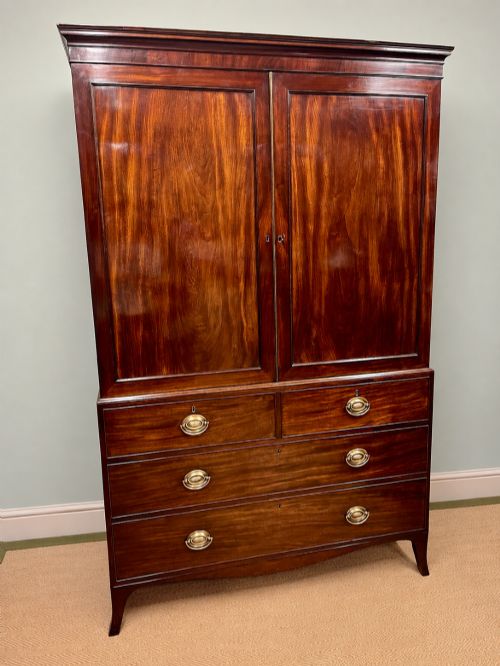
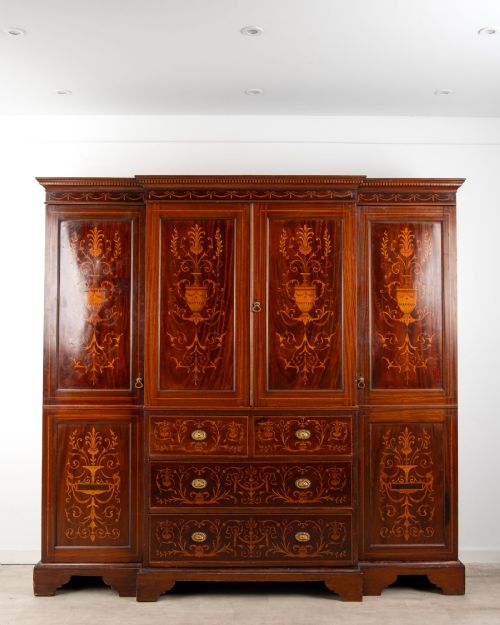
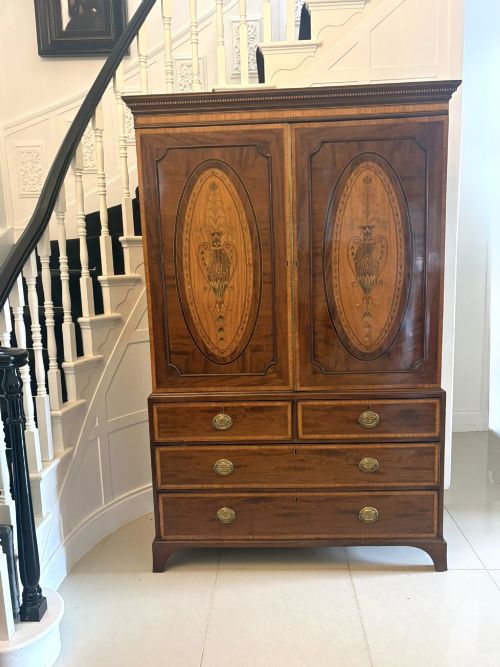
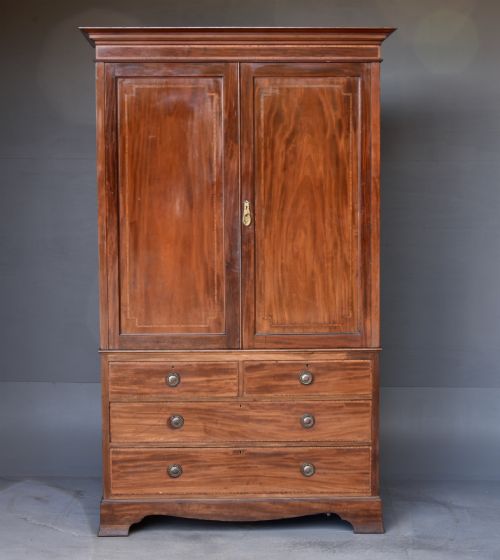
A mahogany armoire cabinet offers exceptional timber depth and commanding presence, making it the premier choice for serious bedroom storage.

Understanding the Pieces
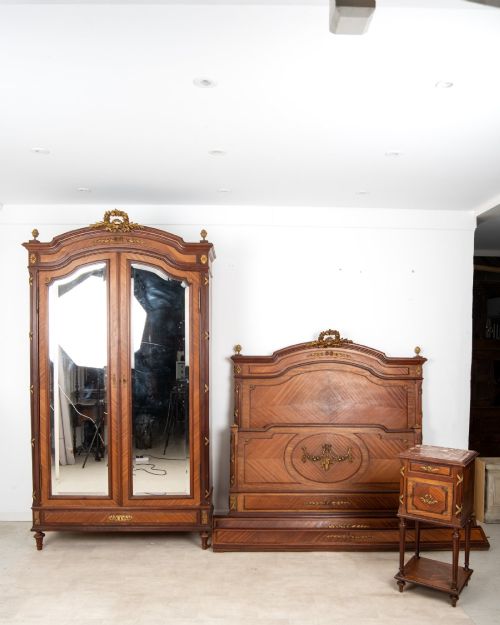
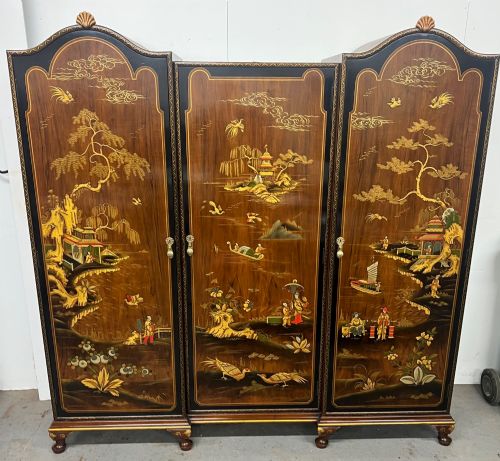
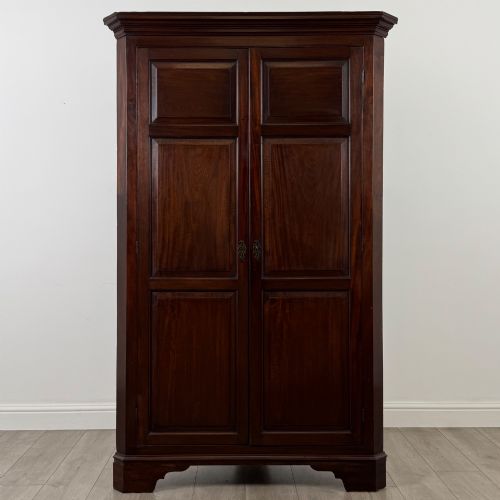
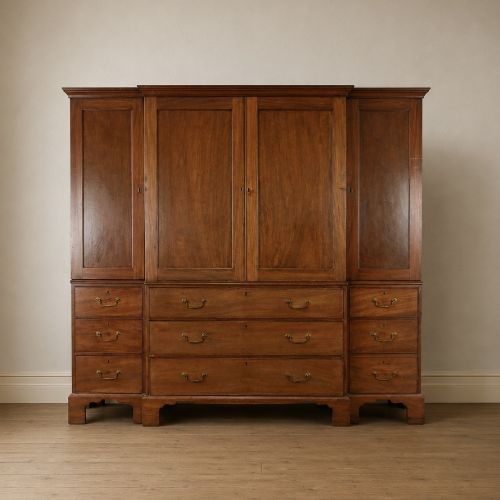
A mahogany armoire cabinet encompasses grand freestanding bedroom storage units, including gentleman's wardrobes, linen presses, and double wardrobes. These pieces emerge primarily from the Georgian, Regency, Victorian, and Edwardian periods, alongside the late nineteenth century.
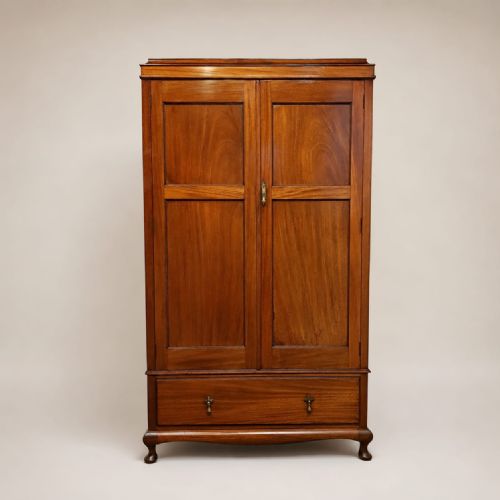
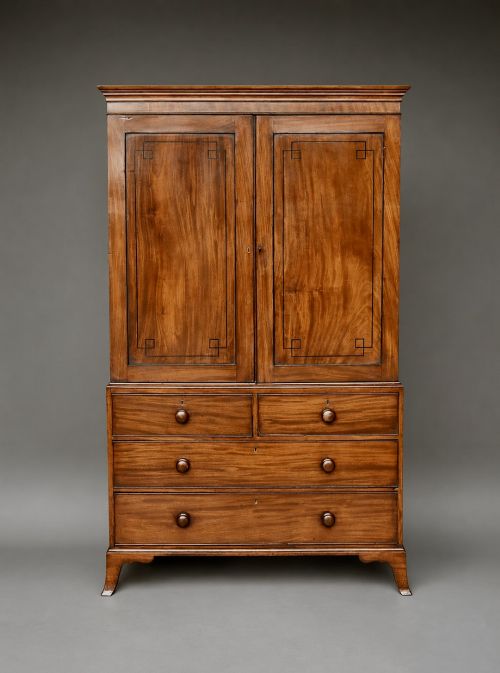
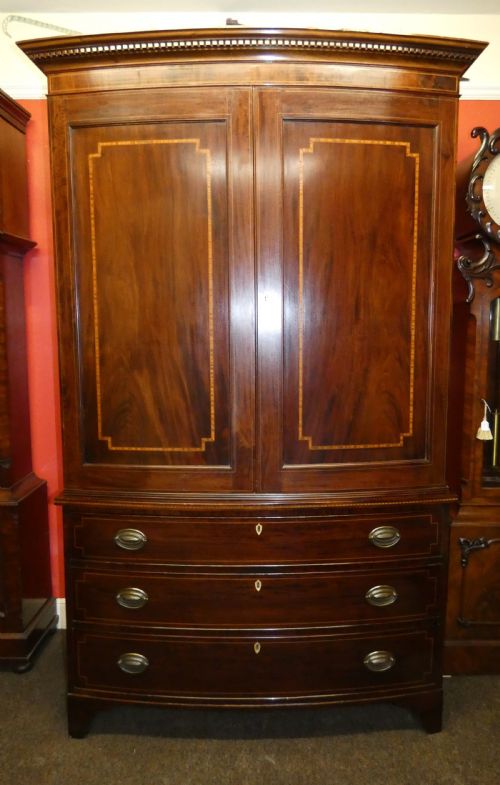
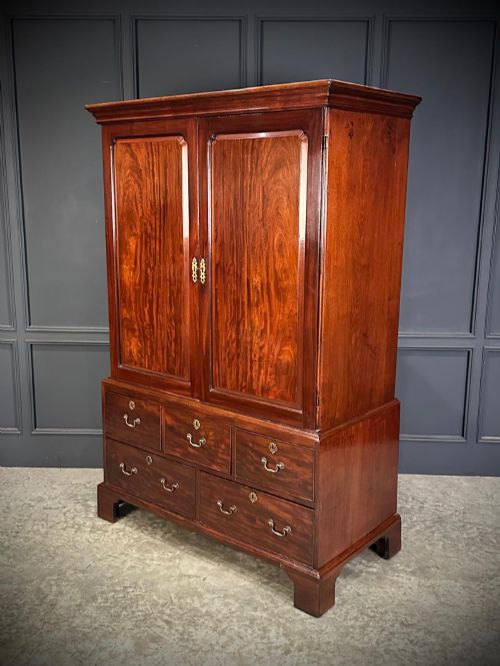
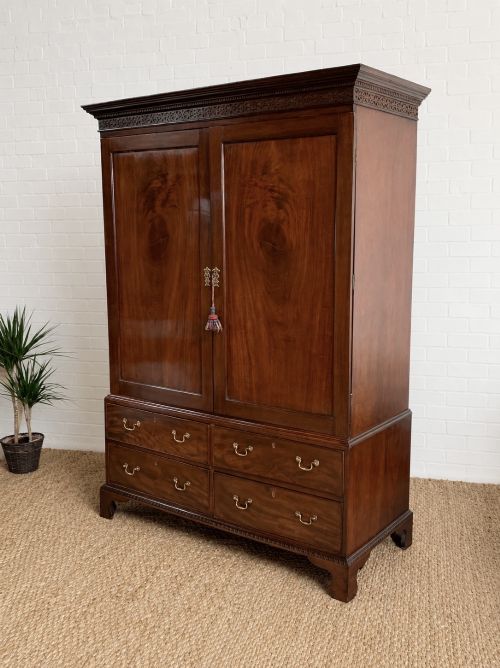
The most common formats on this page are double wardrobes and linen presses, which combine hanging space or sliding trays behind heavy panelled doors. Makers during the Georgian and Regency eras designed these to anchor substantial rooms, while later Edwardian and Sheraton Revival examples refine the proportions.
Makers such as Gillows and Maples & Co produced variations spanning George III designs through to the Austrian and French armoires seen in the archive. Each period brings distinct architectural characteristics, from austere Georgian cornices to decorative Regency brass details.

Materials and Technique
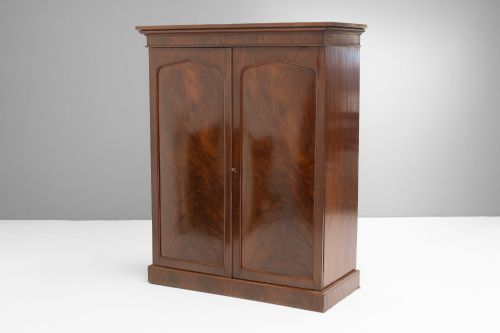
These pieces rely on solid mahogany and flame mahogany veneer applied over stable secondary timbers like pine, creating rich grain movement across large expanses. Cabinet makers selected figured veneers for primary display surfaces to catch the light.
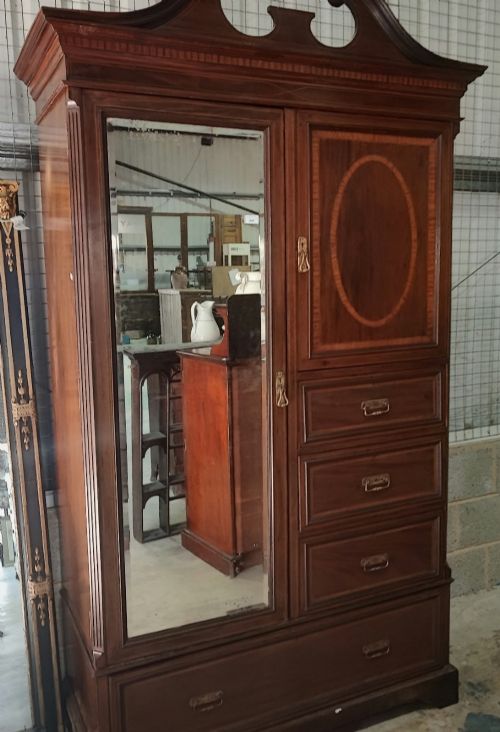
Structural integrity depends on traditional joinery, housing heavy panelled doors and internal linen slides without warping. Brass hardware, including escutcheons and drop handles, provides functional contrast to the dark timber.
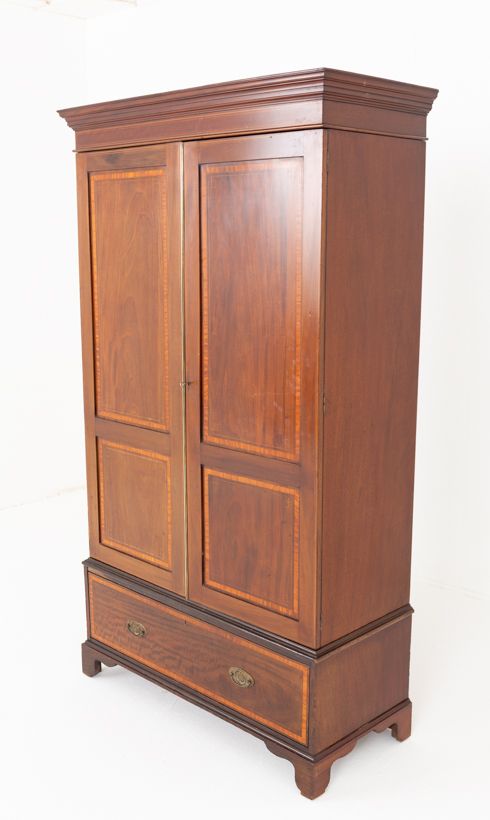
Satinwood stringing appears on later Sheraton Revival iterations, introducing pale contrasting inlay lines that accentuate the architectural borders of the doors and cornices.
Retail Price Guide 2026
Typical UK retail prices for mahogany armoire cabinet, calculated from the Sellingantiques database of over a million retail prices indexed since 2003. This retail price guide relies exclusively on Sellingantiques data; no external sources or auction records are used, so the figures do not describe the wider market.
Some Victorian housekeepers stored extra linen so securely inside these presses that family ghosts are occasionally blamed for misplaced pillowcases.
Assessing Quality
Quality rests in the selection of the timber and the handling of the flame mahogany veneer, where matched grain patterns create a harmonious facade across multiple doors. Lesser examples rely on plain timber boards with minimal figure.
The refinement of the internal configuration separates standard pieces from workshop-attributed items, such as those associated with Gillows. Superior pieces feature finely dovetailed linen trays and meticulously fitted hanging compartments that operate smoothly within the carcase.
Gillows·Maples & Co
The Mahogany Armoire Cabinet Glossary
- Linen press
- A tall storage piece featuring upper sliding trays for folded textiles above a chest of lower drawers. This form dominated Georgian and Victorian house interiors before modern wardrobes took precedence.
- Gentleman's wardrobe
- A specialised storage cabinet designed for men's attire, typically combining shirt drawers, sliding shelves, and hanging space behind large panelled doors. Edwardian makers continued this specialised room function.
- Flame mahogany veneer
- A prized cut of timber displaying a distinctive flickering flame pattern achieved by slicing across the bough where branches join the trunk. Cabinet makers laid these veneers symmetrically to create striking visual symmetry.
- Sheraton Revival
- A late nineteenth-century design movement inspired by the lightness and classical motifs of eighteenth-century designer Thomas Sheraton. Pieces from this revival often incorporate satinwood stringing and refined classical proportions.
- Cornice
- The moulded architectural projection crowning the top of the cabinet. Georgian and Regency pieces feature deep, heavy cornices that define the silhouette against a high ceiling.
Frequently Asked Questions
What is a linen press?
A linen press is a tall storage cabinet designed with sliding shelves in the upper section for folded textiles, paired with drawers below. These pieces served as the primary storage before hanging clothes became standard.
Cabinet makers during the Georgian and Victorian eras built these units to store household linens safely away from dust and light.
How do I date a mahogany wardrobe?
Dating relies on architectural proportions, secondary timbers, and decorative details like brass hardware or stringing. Georgian and Regency pieces show heavier architectural cornices and fine flame mahogany veneers.
Later Edwardian and Sheraton Revival examples introduce lighter satinwood stringing and refined proportions that suit more domestic bedroom scales.
Are these cabinets easy to move?
Most of these large pieces are heavy and often built as single substantial carcases that require professional handling. Some regional variations or French and Austrian armoires dismantle into sections for transport.
Checking the construction reveals whether the cornice and base separate from the main wardrobe body.
What is flame mahogany?
Flame mahogany is a highly figured veneer cut from the fork of the tree where branches meet the main trunk. This cutting method produces a distinct flickering pattern resembling flames across the timber surface.
Cabinet makers utilised this veneer on primary door panels to create striking visual movement and depth.