


Low Seat Chair
When you search for low seat chair, you find low-slung nineteenth-century nursing chairs, slipper chairs, and deep armchairs designed for fireside comfort.
Low Seat Chair
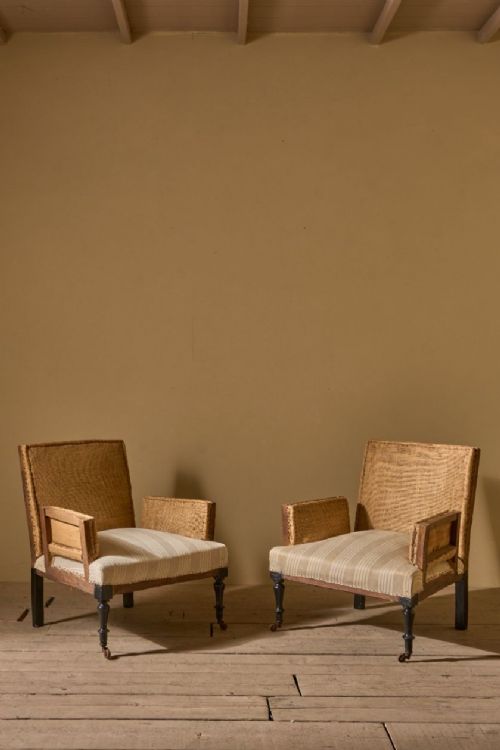
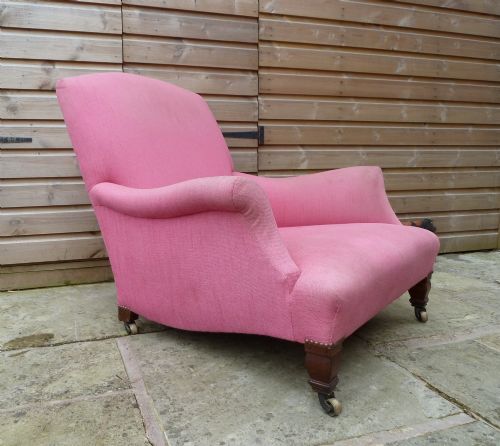
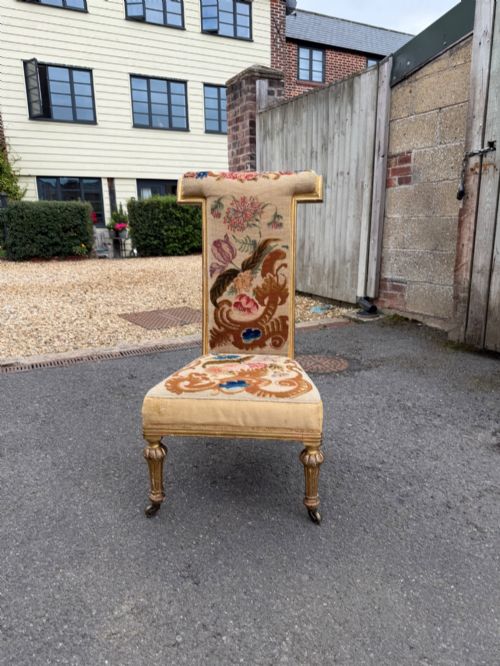
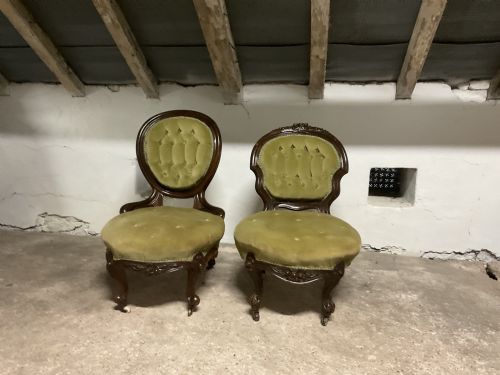
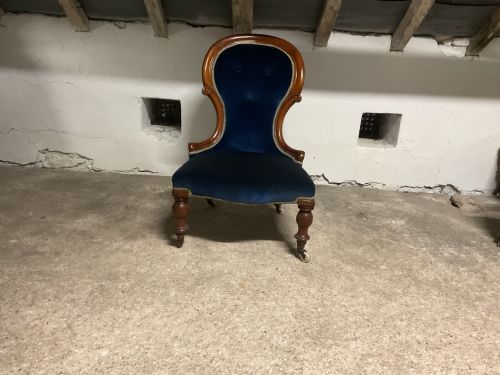
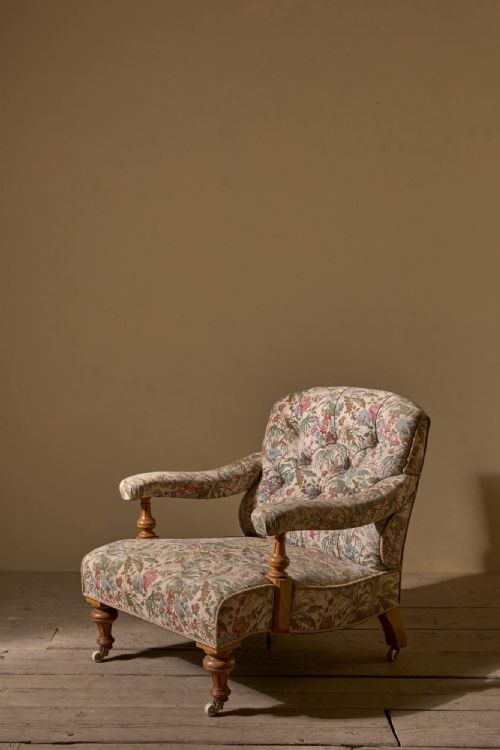
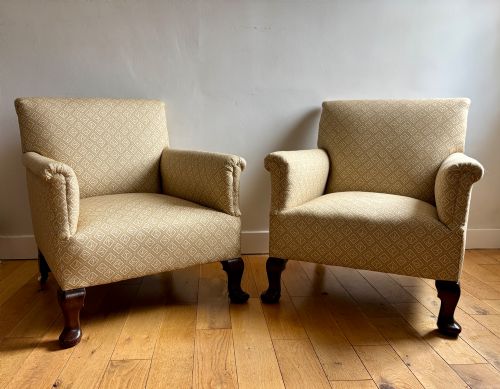
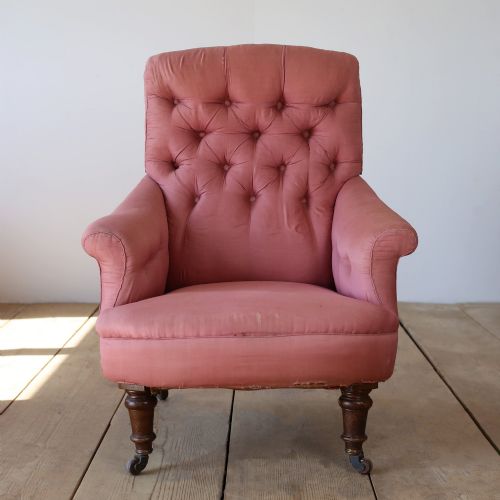
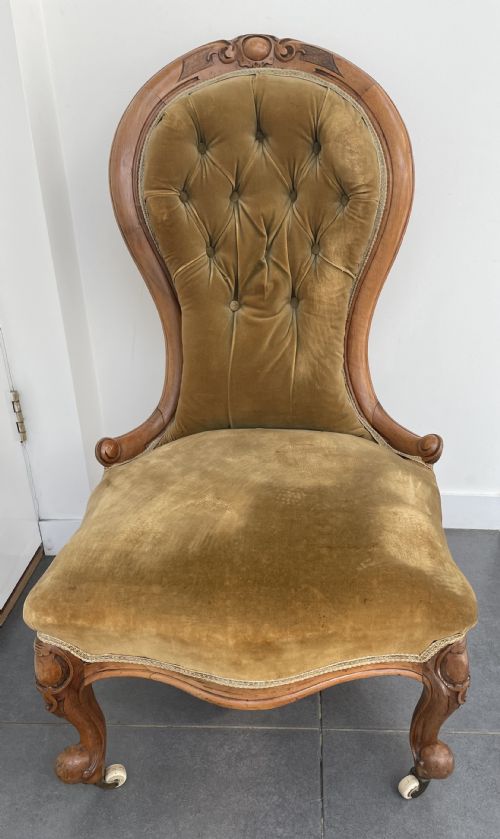
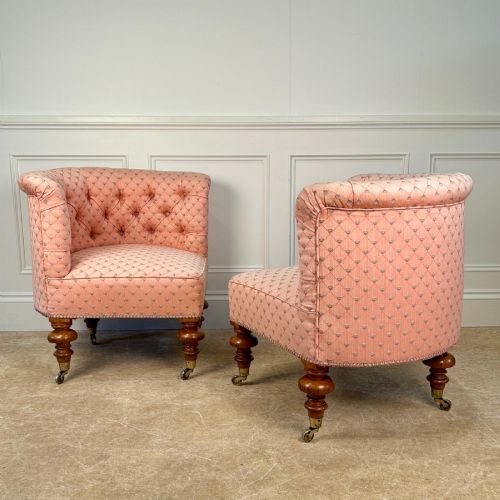
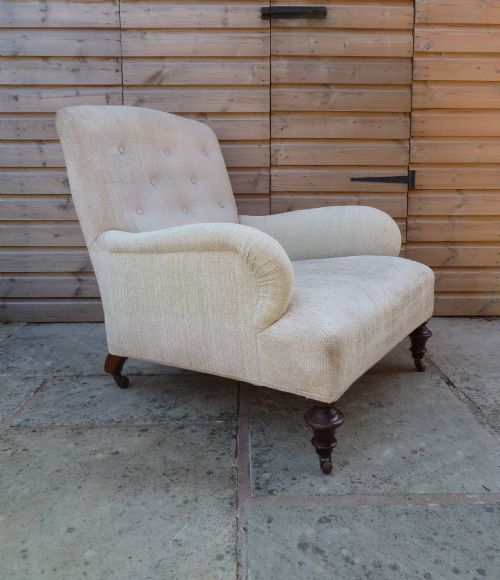
A low seat chair brings together Victorian and Edwardian seating designed with a reduced seat height for comfort near the hearth or in the bedroom. You will frequently encounter nineteenth-century walnut nursing chairs and slipper chairs alongside upholstered armchairs in the Howard style.
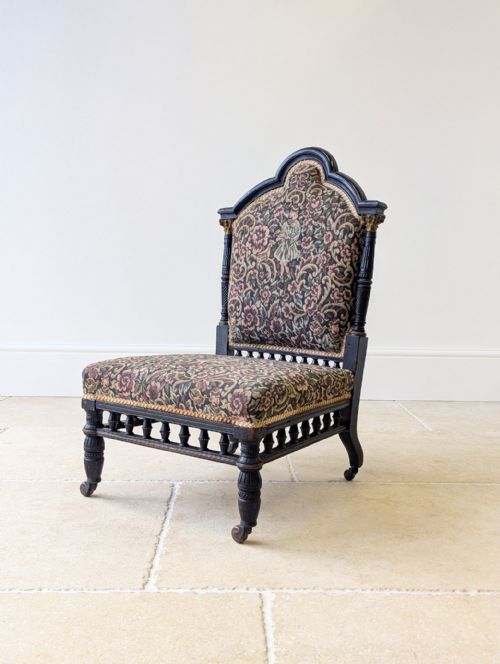
The form spans various nineteenth-century and early twentieth-century expressions, including Aesthetic Movement ebonised frames, rush-seated Arts and Crafts designs, and low-backed Windsor country chairs in elm and ash. These pieces served domestic spaces ranging from grand country houses to modest rural cottages.
Makers and retailers such as Liberty, Gillows, and Howard and Sons frequently shaped this tradition, producing low upholstered seating upholstered in velvet, calico, or antique tapestry. The surviving pieces on this page reflect both formal salon seating and relaxed country house furniture.
Materials and Construction
Frames rely predominantly on native and imported timbers, utilising walnut, mahogany, oak, beech, and elm shaped into turned, bobbin, or barley twist supports. Exposed woodwork often complements upholstered elements in wool, velvet, leather, and calico.
Upholstery methods involve deep buttoning, sprung interiors, and hand-tied coil springs covered in traditional stuffings. Rush seating also appears on vernacular ladder-back and low armchair variants from the nineteenth century.
Listings feature nineteen-century walnut, mahogany, and oak frames upholstered in velvet, calico, and leather across Victorian and Edwardian periods.
Assessing Quality
Quality rests upon the structural integrity of the timber frame and the sympathetic retention of original upholstery lines. Finer examples display crisp hand-carving on walnut or mahogany frames, balanced proportions, and maker marks from established workshops.
The distinction between ordinary and exceptional pieces lies in the subtlety of the turnings, the density of the frame timbers, and whether the seating retains its original configuration or secondary layers of period fabric.
Howard and Sons·Liberty and Co·Whytock and Reid·Harry and Lou Epstein·Gillows
The Low Seat Chair Glossary
- Nursing chair
- A low-seated Victorian chair designed without arms to accommodate the voluminous skirts of the period. These pieces frequently feature button-backed upholstery and turned walnut legs.
- Slipper chair
- An upholstered chair with a low seat, originally used in bedrooms for changing shoes or dressing. They appear widely across nineteenth-century Victorian listings.
- Howard style
- A deep-seated, generously proportioned armchair design originating from the nineteenth-century firm Howard and Sons. They are known for exceptional comfort and low profiles.
- Bergère
- An enclosed upholstered armchair with cane or wicker work panels set into the wooden frame. This technique appears on Edwardian and nineteenth-century low seating.
- Rush seat
- A traditional woven seat made from marsh rushes twisted into cords. This method is common on Arts and Crafts and country ladder-back chairs.
Low Seat Chair: Frequently Asked Questions
What is a low seat chair used for?
These chairs were traditionally placed in bedrooms, dressing rooms, or near hearths for relaxed seating. Their reduced height made them practical for specific domestic tasks in Victorian and Edwardian homes.
Today, they function well as accent seating in living rooms or bedrooms, offering a compact footprint combined with deep-seated comfort.
How do I identify a Victorian nursing chair?
Victorian nursing chairs typically feature a notably low seat, a high padded back, and no arms to allow room for nineteenth-century dress fashions. They often rest on turned wooden legs with castors.
Walnut and mahogany are the most common frame materials from this period, frequently accompanied by button-backed upholstery.
What is the Howard style?
The Howard style refers to deep, comfortable armchairs with low profiles and turned wooden front legs terminating in brass castors. The design originated with the nineteenth-century maker Howard and Sons.
These pieces are sought after for their exceptional build quality and deep sprung comfort, influencing many later armchair designs.
Are these chairs suitable for modern daily use?
Many low seat chairs offer robust construction and comfortable sprung upholstery that suits contemporary living spaces. Antique frames in walnut, oak, and mahogany remain structurally sound after generations of use.
Some pieces require reupholstery to match modern interiors, while others retain usable period fabric, calico, or leather.