
Low Padded Ottoman
A low padded ottoman provides a resting place for weary feet, bringing traditional comfort and rich woodwork into the room.
Low Padded Ottoman
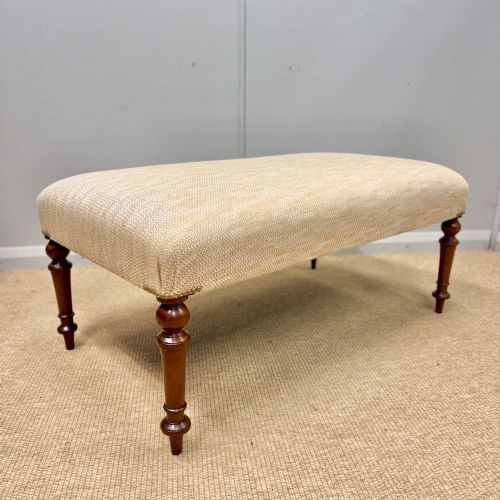
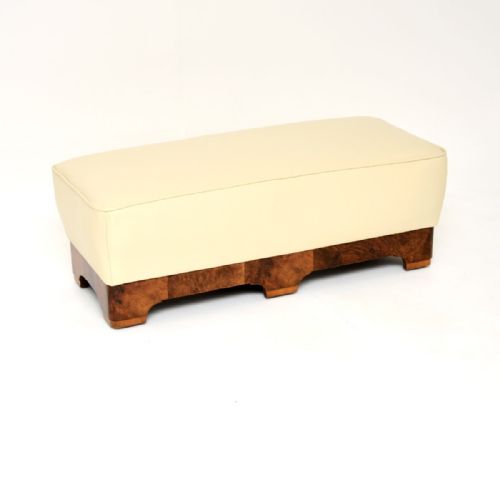
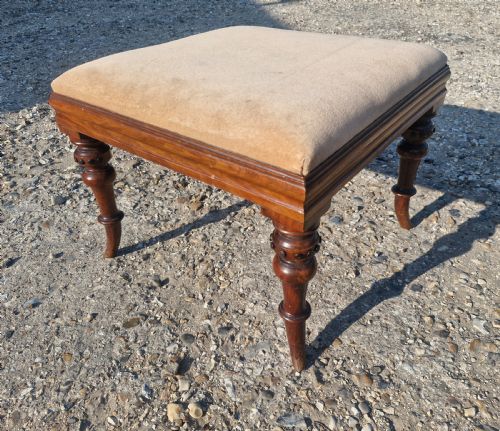
A low padded ottoman serves primarily as a footstool or centre stool, designed to sit close to the floor for fireside use or dressing table seating. These pieces appear across multiple eras, including the Victorian period, the Edwardian era, and the 1930s.
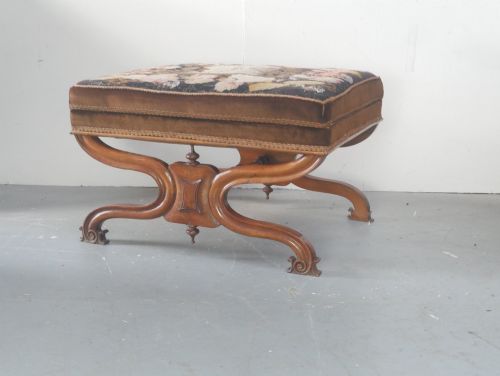
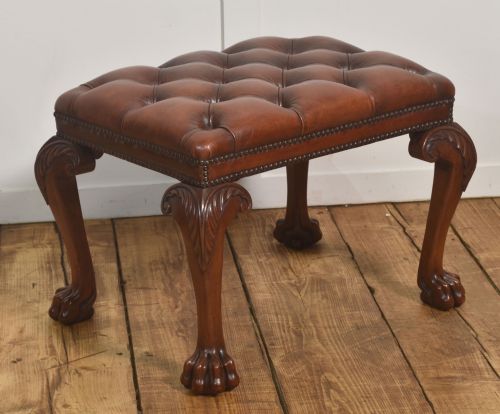
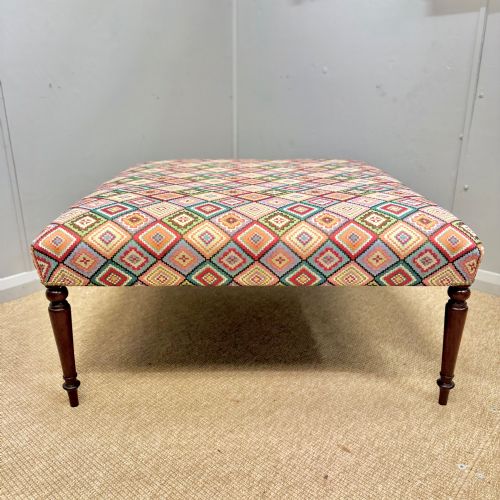
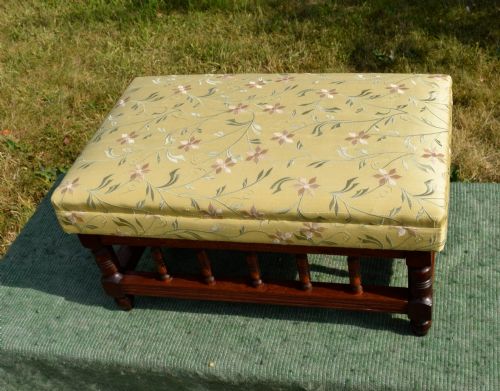
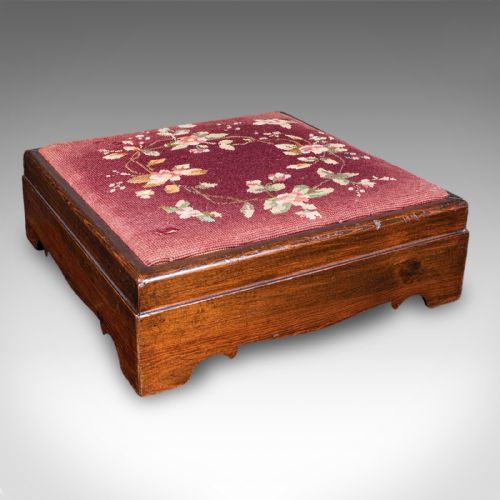
The most common variants encountered on this page combine a wooden frame with a textile, leather, or tapestry top. Forms range from compact single footstools to large rectangular library pieces and grand scale designs.
How they were made
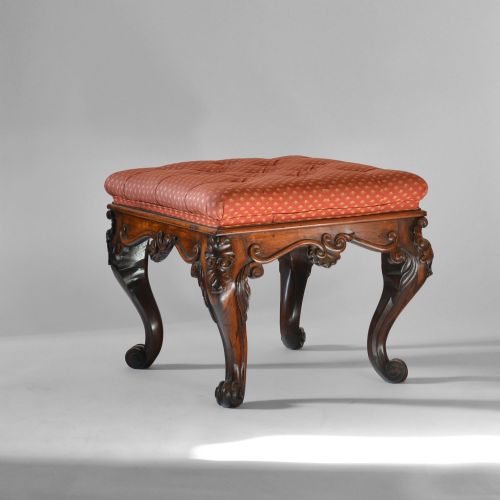
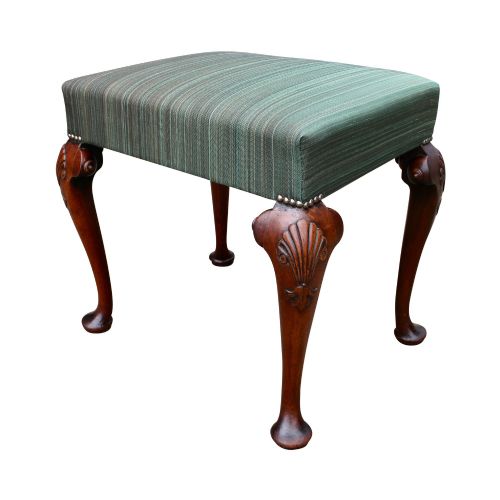
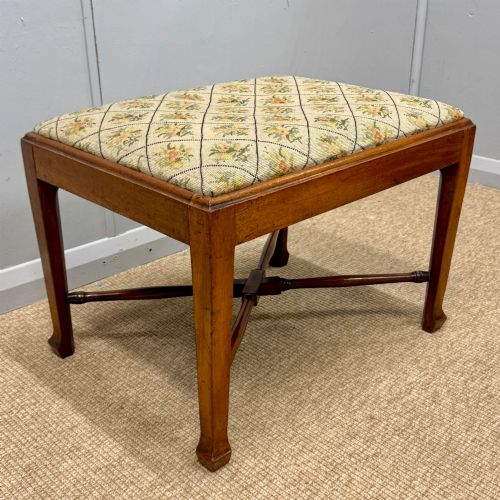
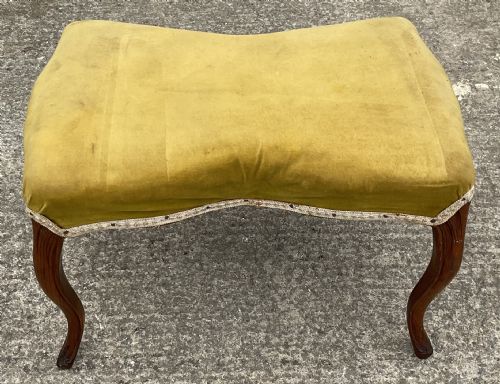
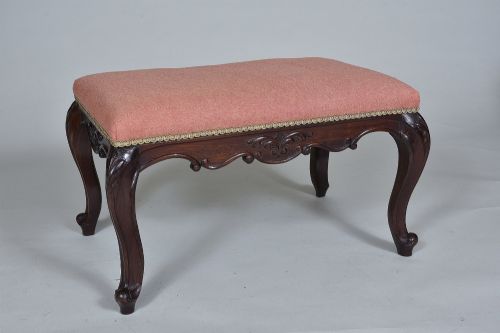
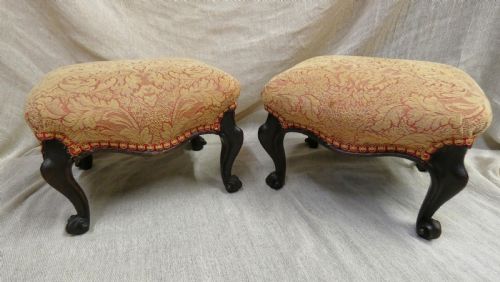
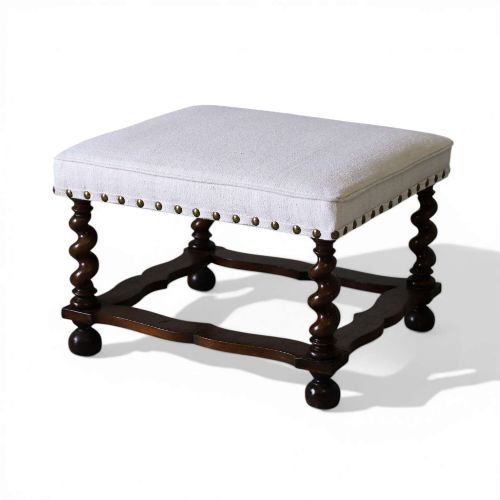
Frames rely on cabinet timbers such as mahogany, walnut, rosewood, pitch pine, and teak, shaped into cabriole legs, barley-sugar turnings, or cross stretchers. Some examples incorporate carved giltwood, parcel gilt accents, or black lacquered chinoiserie.
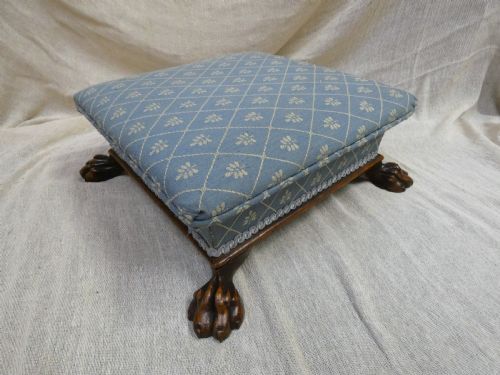
Upholstery involves padding secured beneath top layers of fabric, velvet, tapestry, or leather. Brass castors occasionally support the base of larger nineteenth-century examples.
Listings feature frames in mahogany, walnut, rosewood, and teak, spanning the Victorian, Edwardian, and Art Deco periods.
What varies in quality
The distinction between ordinary and superior pieces rests in the carving work of the wooden frame and the precision of the joinery. Finer examples display detailed hand-carved ornamentation, such as scroll tops or intricate stretcher arrangements, rather than plain structural supports.
The choice of primary timber and the execution of the upholstery also dictate the character of the piece. Dense hardwoods like walnut and rosewood elevate the stature of an ottoman compared to simpler utility timbers.
Howard and Sons·Mathew Gregson·Loidrault Freres Paris
The Low Padded Ottoman Glossary
- Centre stool
- A large freestanding stool intended to sit in the middle of a room rather than against a wall. These pieces often match the scale of large drawing room furniture.
- Cross stretcher
- An intersecting wooden brace connecting the legs of a stool near the floor to add stability. This structural feature frequently incorporates decorative turnings.
- Cabriole leg
- A furniture leg that curves outward at the knee and tapers inward toward the foot, echoing animal limb forms. This shape appears commonly on nineteenth-century walnut frames.
- Barley-sugar leg
- A column turned in a spiral twist resembling a rope or confectionery stick. This decorative turning is characteristic of seventeenth-century revivals and later periods.
- Parcel gilt
- Partially gilded with gold leaf or paint to highlight specific carved details on a wooden frame. This technique emphasises decorative motifs against a darker wood or painted ground.
Low Padded Ottoman: Frequently Asked Questions
What is a low padded ottoman used for?
These pieces function primarily as footstools before firesides or as low seating near dressing tables. Larger variants also serve as centre stools in drawing rooms.
Their compact height allows them to tuck easily beneath other furniture or sit comfortably in front of armchairs and sofas.
How do I identify a Victorian ottoman?
Victorian examples frequently utilise walnut or rosewood frames paired with newly upholstered fabric, leather, or tapestry tops. Look for traditional proportions and structural elements like cabriole legs.
Many pieces from this period also incorporate brass castors on the feet for ease of movement across carpets.
What woods are common in these stools?
Makers relied heavily on dense cabinet timbers including mahogany, walnut, and rosewood for durable frames. Pitch pine, teak, and burr walnut also appear across various nineteenth and twentieth-century pieces.
Some decorative variants feature giltwood, painted surfaces, or black lacquer finishes.
Are these ottomans suitable for daily use?
Solid hardwood frames and sturdy joinery make these pieces well-suited for everyday seating or resting feet. Many antique frames benefit from modern upholstery updates while retaining their original structure.
Placing them in living rooms or studies adds both practical utility and traditional character to the space.