
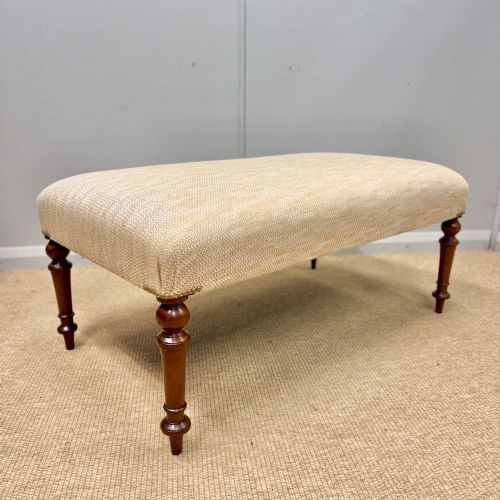
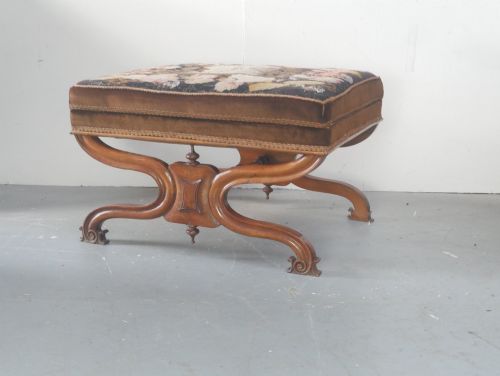
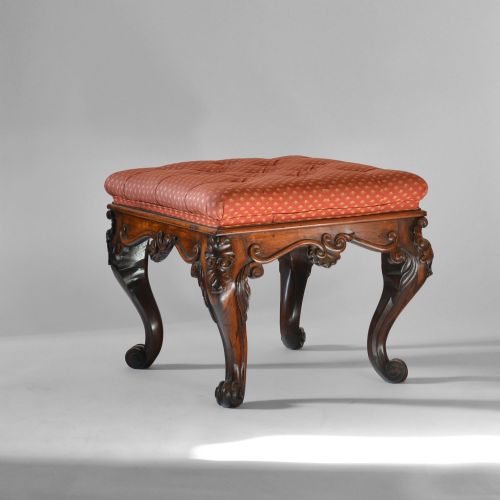
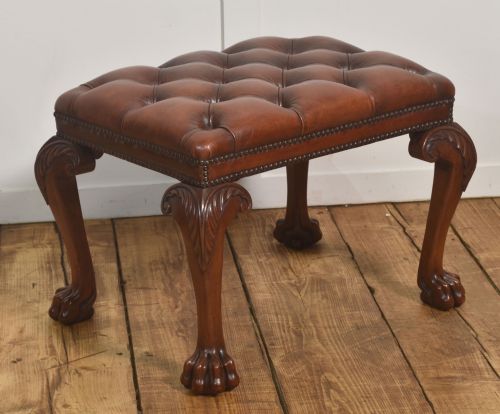
Low Padded Footstool
A low padded footstool brings practical comfort and period character to a room, offering a versatile seat or rest that fits neatly beside firesides and armchairs.
Low Padded Footstool
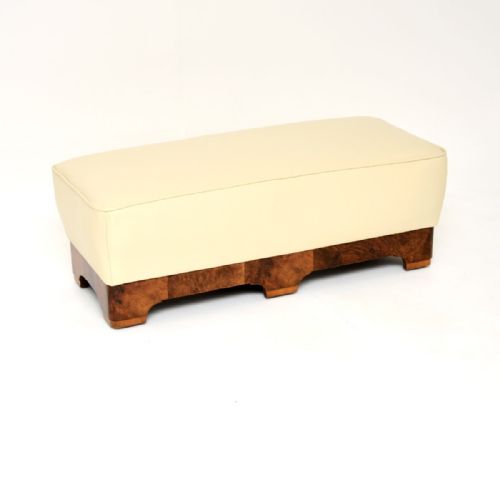
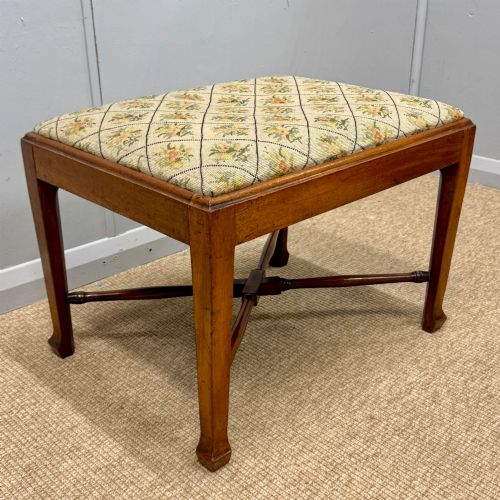
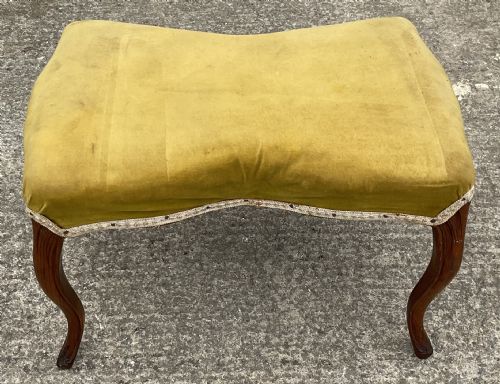
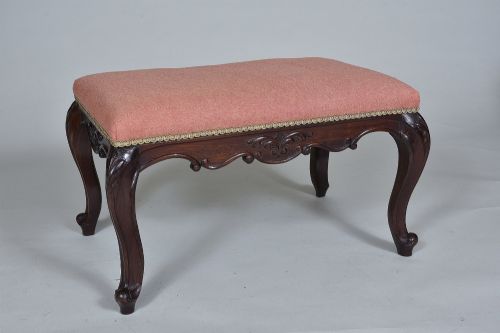
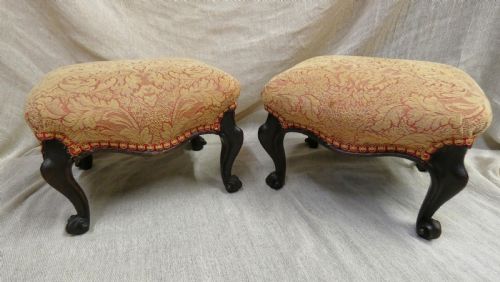
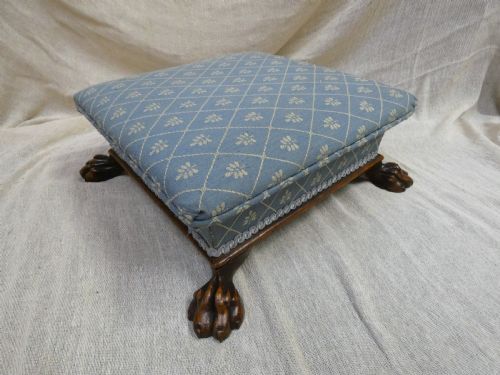
When you search for a low padded footstool, you encounter a variety of traditional forms designed for resting feet or sitting near dressing tables and firesides. These pieces span the 18th, 19th, and early 20th centuries, taking shapes from simple oblong frames to large Scottish baronial designs.
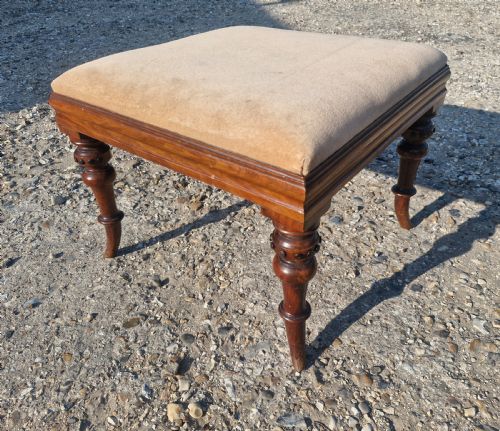
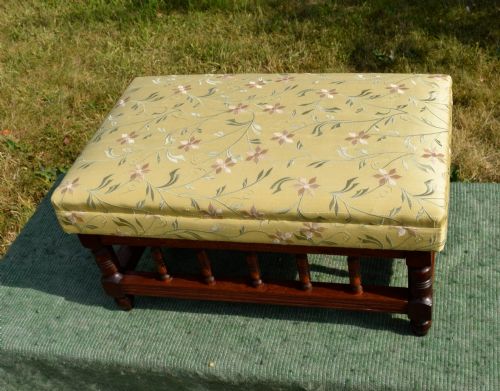
The versions most common on this page date from the Victorian and Edwardian eras, frequently featuring upholstered tops paired with timber frames. They appear in styles ranging from plain mahogany to elaborate revival forms like Queen Anne and Chippendale.
Materials and construction
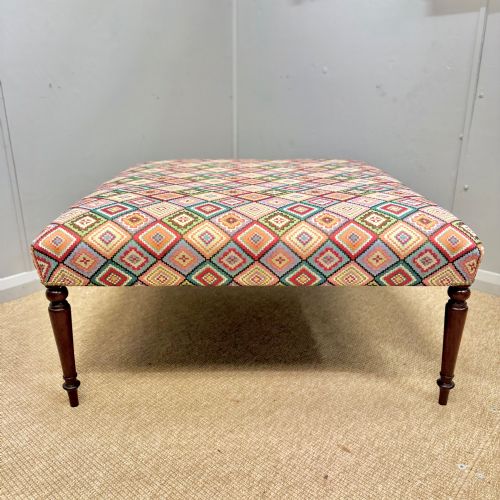
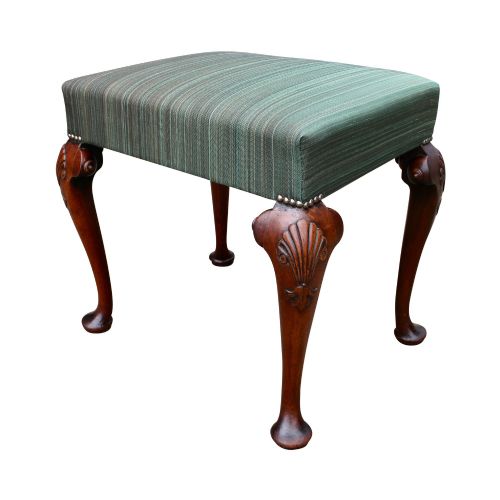
Cabinetmakers built these frames using dense timbers such as mahogany, walnut, rosewood, pitch pine, and teak. Joinery often included turned legs, cabriole supports, and cross stretchers for stability under daily use.
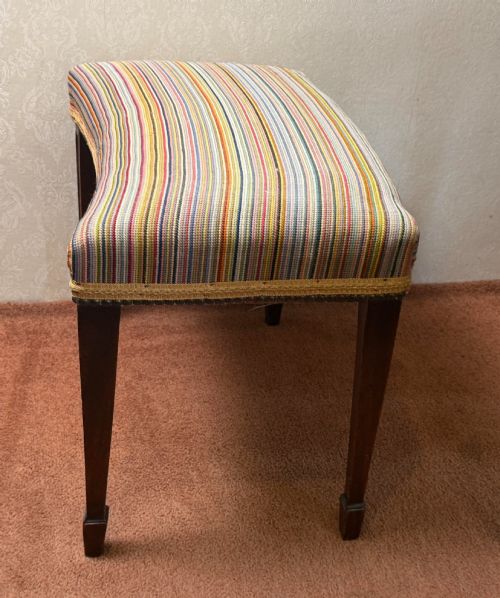
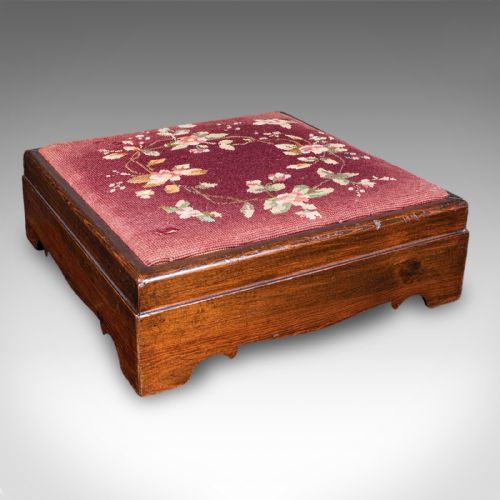
Top surfaces relied on textile padding, incorporating fabrics, leather, velvet, tapestry, and needlepoint. Brass castors occasionally added mobility to larger formats.
Low Padded Footstool Retail Price Guide 2026
Typical asking prices for low padded footstool among the pieces listed under this phrase on Sellingantiques today, from the lower quarter to the upper quarter. They describe what is for sale here now, not the wider market.
Stool forms on this page include French giltwood salon pieces, Anglo-Indian rosewood items, and heavy Scottish baronial designs.
What separates the tiers
Quality rests upon the crispness of the timber carving and the architectural proportion of the frame. Superior examples display carefully chosen wood veneers, robust joinery, and well-balanced legs that support the padded seat without clumsiness.
The character of the upholstery contributes significantly to the visual weight of the piece. Traditional needlework, quality leather, or well-executed textile coverings elevate simple wooden frames into distinguished furnishing accents.
LOIDRAULT FRERES PARIS·Mathew Gregson
The Low Padded Footstool Glossary
- Cabriole leg
- A furniture leg that curves outward at the knee and inward at the ankle, mimicking an animal's leg. This shape appears frequently on walnut and mahogany stools from the Victorian period.
- Cross stretcher
- A system of intersecting wooden rods connecting the lower legs of a stool to provide structural rigidity. These often feature central turnings or decorative bosses.
- Giltwood
- Wood that has been coated with a thin layer of gold leaf or gold paint. French and Victorian salon stools often utilised this finish for decorative effect.
- Needlepoint
- A type of counted thread embroidery stitched onto a stiff canvas mesh. It provides durable, patterned seat coverings on period dressing table stools.
Low Padded Footstool: Frequently Asked Questions
Where should I place a low padded footstool?
These compact seats sit comfortably beside armchairs, sofas, or dressing tables where an extra tier of seating or a surface for tired feet is useful.
Their modest proportions allow them to slide beneath consoles or remain tucked beside a fireplace when not in active use.
How do I identify a Victorian footstool?
Victorian examples typically rely on dark timbers like mahogany or walnut, often featuring turned legs or cabriole supports.
Upholstery on these pieces ranges from original needlepoint to newly applied fabrics that match historical formats.
Can these stools support adult weight?
Period frames were constructed from solid hardwoods such as oak, mahogany, and walnut to handle everyday domestic demands.
While robust, the internal webbing and padding may depend on modern reinforcement if intended for regular heavy sitting.
What is the difference between an ottoman and a footstool?
Footstools generally measure smaller and lower, designed primarily to support legs or serve as occasional fireside seats.
Ottomans often present a larger scale and can double as low coffee tables or central room furniture.