






Low Leather Bench
A low leather bench brings grounded character to a room, offering tactile seating or a sturdy surface crafted from timber and hide.
Low Leather Bench
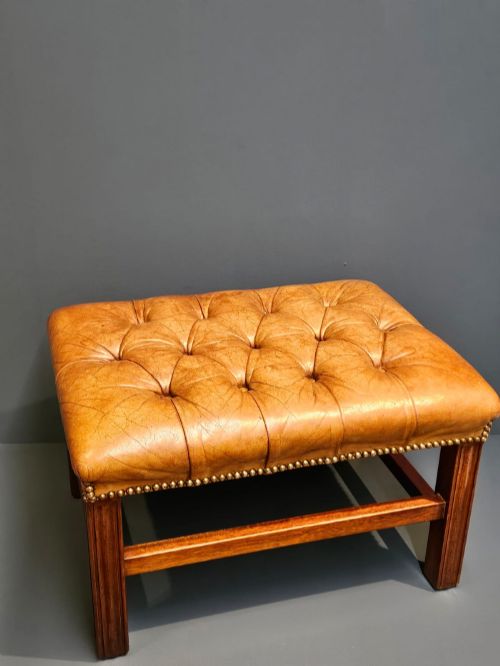
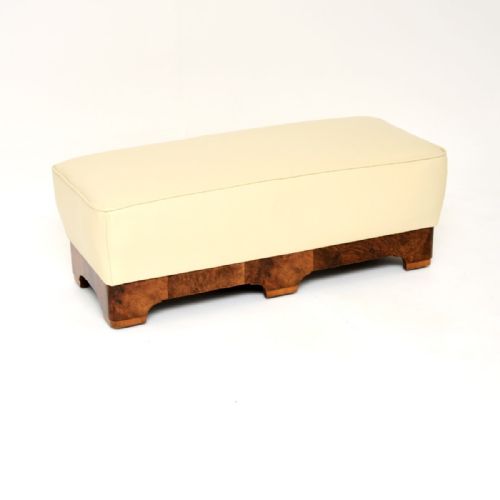
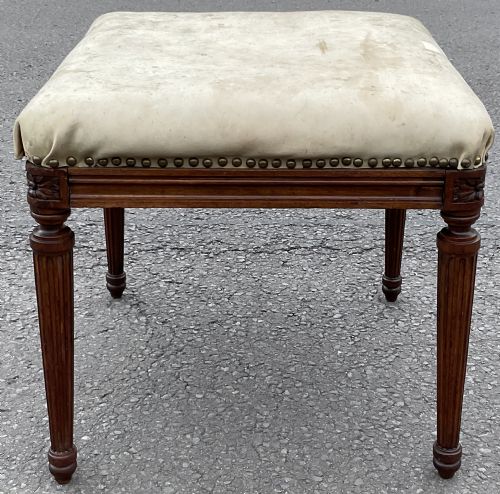
When you search for a low leather bench, you encounter a selection of seating forms spanning the nineteenth century through the Art Deco era and the nineteen-thirties. The pieces appearing here comprise footstools, ottomans, low hall seats, and coffee tables that combine low wooden frames with leather upholstery.
You are most likely to meet low leather bench variations originating from the Edwardian period, the Victorian era, and nineteen-thirty Art Deco workshops. These encompass buttoned footstools, carved oak frames with lion heads, and burr walnut stools designed for domestic utility.
The assortment includes traditional English styles alongside Spanish Revival and Regency interpretations, reflecting varied historical revivals. Each object functions either as a low seat or a resting place for feet, distinguished by timber frames and taut leather surfaces.
How they were made
The framework of a low leather bench relies on solid hardwoods such as mahogany, oak, walnut, and burr walnut, shaped into carved legs, turned supports, and low stretchers. Cabinetmakers utilised traditional joinery to construct stable bases capable of bearing weight.
Upholstery techniques involved stretching leather across padded foundations, frequently secured with hand-dyed finishes and brass detailing. Buttoning provides structural tension and decorative relief on the hide surfaces of nineteenth-century and early twentieth-century examples.
Low Leather Bench Retail Price Guide 2026
Typical asking prices for low leather bench among the pieces listed under this phrase on Sellingantiques today, from the lower quarter to the upper quarter. They describe what is for sale here now, not the wider market.
A solitary Victorian dressing stool quietly awaits someone to rest weary ankles after a long day of navigating antique fairs.
What varies in quality
The distinction between tiers rests upon the choice of timber and the complexity of the frame construction, moving from plain hardwood foundations to figured burr walnut veneers. Master joiners expended greater labour on carved ornamentation, such as the lion head details found on Edwardian oak examples.
Leather quality and upholstery execution further separate the work, where hand-dyed hides and precise buttoning maintain their form and character over decades. Simpler footstools present straightforward utilitarian construction, whereas pieces attributed to specific makers demonstrate refined proportion and material selection.
Harry and Lou Epstein
The Low Leather Bench Glossary
- Burr walnut
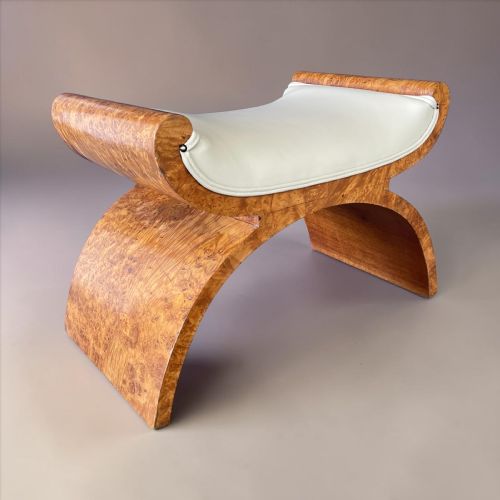
- A prized timber veneer obtained from the knotty growths of walnut trees, valued for its swirling, highly figured grain patterns. It appears frequently on Art Deco low stools.
- Buttoned
- An upholstery method where deep gathers are formed in leather by pulling tufting threads through to the frame, securing the padding beneath. This technique provides both visual texture and structural firmness.
- Carolean Style
- A decorative aesthetic reviving the ornamental carved woodwork and high-backed forms of the reign of King Charles II. It manifests in seventeenth-century revival low hall seats.
- Regency Style
- A classical design movement drawing inspiration from ancient Greek and Roman forms, characterised by restrained lines and elegant proportions. It influences the silhouettes of select low benches.
- Spanish Revival
- An architectural and decorative style incorporating heavy timber construction, ornate metalwork, and rich leather elements. It informs certain traditional low stool designs.
Low Leather Bench: Frequently Asked Questions
What is a low leather bench?
A low leather bench is a piece of furniture designed for seating or resting feet, combining a timber frame with a leather-upholstered top. These items range from compact footstools to extended hall seats.
They bridge the gap between decorative furnishings and practical domestic objects, utilising materials like mahogany, oak, walnut, and brass.
How were low leather benches used historically?
Historically, these low benches served varied purposes across domestic spaces, functioning as fireside seating, dressing stools, or supportive footrests. Their low profile made them easily movable around a room.
Larger variations also acted as low hall seats or coffee tables, adapting to the shifting social habits of the Victorian and Edwardian eras.
How do I style a low leather bench at home?
A low leather bench integrates effectively into living rooms, hallways, and bedrooms as an accent piece or functional seat. Its low height allows it to sit comfortably beneath windows or beside larger armchairs.
The combination of wood and leather complements both traditional interiors and Art Deco schemes, providing a tactile focal point.
How do I tell different periods apart?
Distinguishing periods involves examining the timber selection, decorative carving, and overall upholstery style of the bench. Victorian and Edwardian examples often feature turned mahogany frames or carved oak details.
Nineteen-thirty pieces typically display Art Deco geometry and burr walnut veneers, while nineteenth-century items lean towards heavy buttoning and traditional revival forms.