


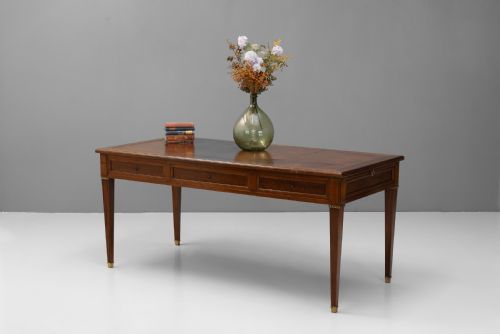

Louis XVI Writing Table
A louis xvi writing table brings neoclassical proportion and restrained French elegance into a room through precise geometry and refined metal mounts.

Louis XVI Writing Table
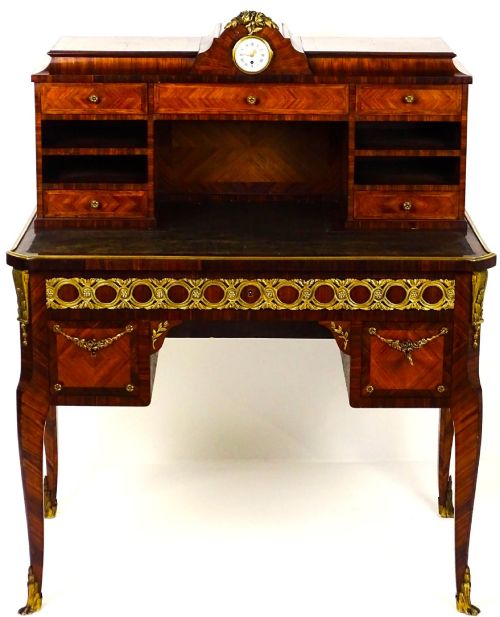
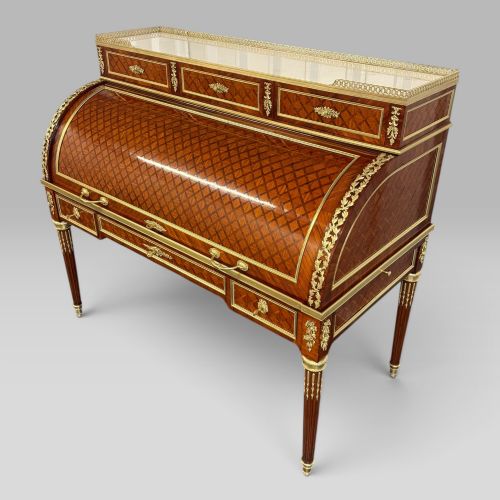
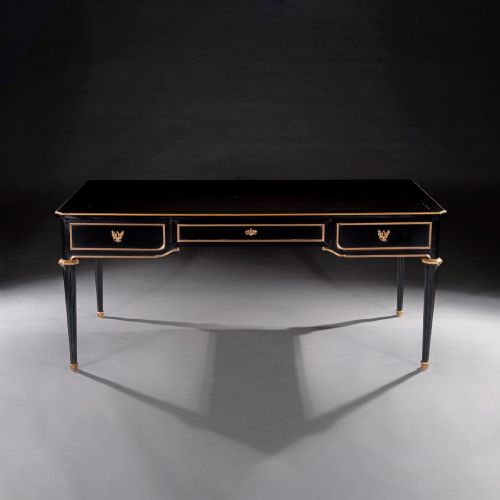
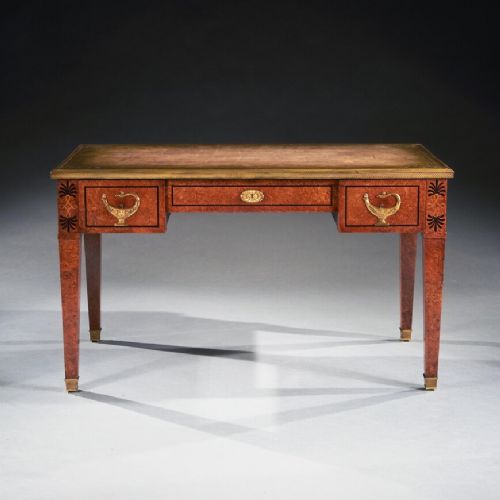
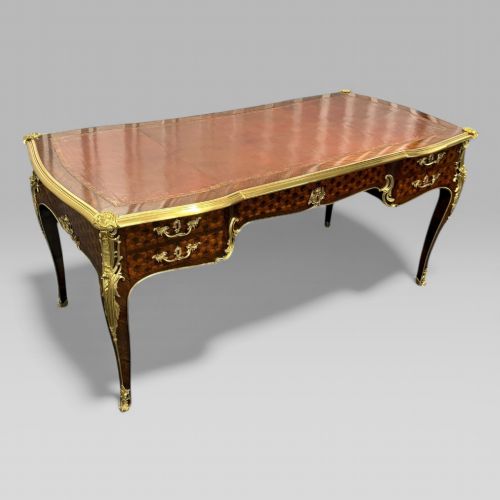
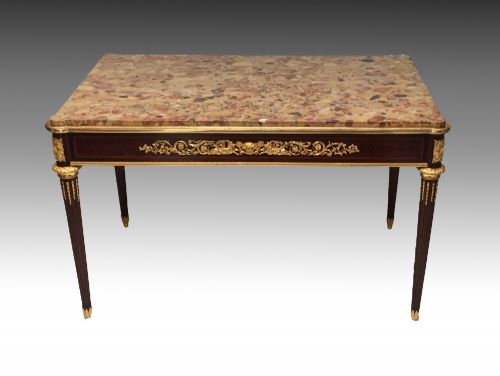
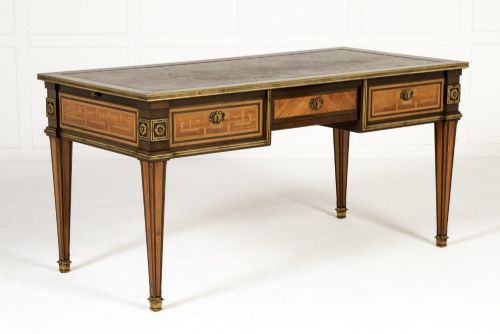
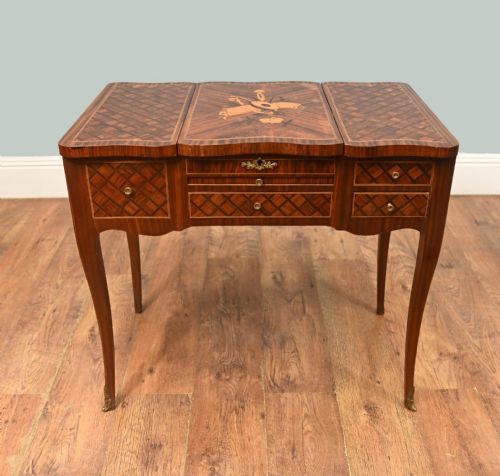
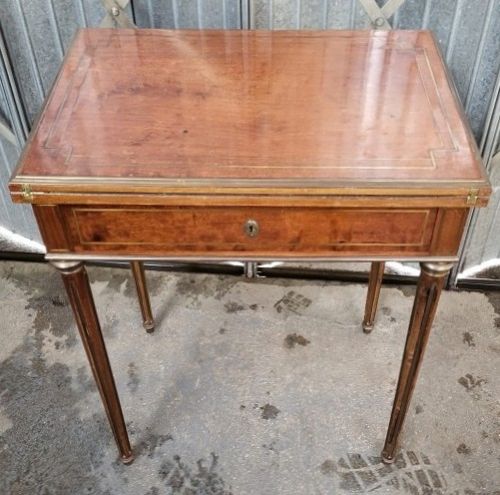
A louis xvi writing table takes several distinct forms, most commonly appearing as a freestanding bureau plat, a compact cylinder desk, or a refined bonheur du jour with upper compartments. These pieces emerge predominantly from nineteenth-century revival workshops, spanning decades from the eighteen-eighties to nineteen-ten alongside occasional Victorian and Edwardian interpretations.
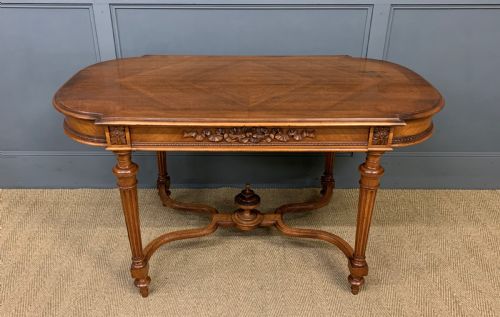
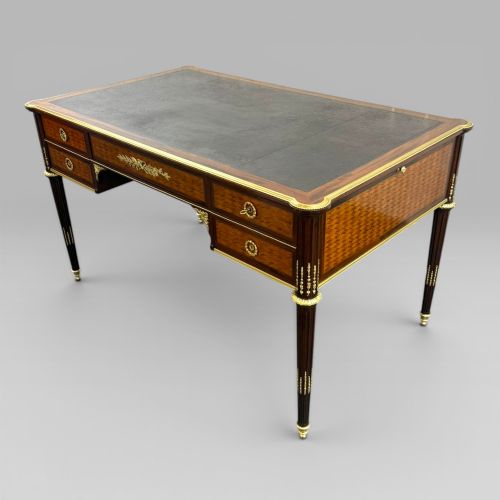
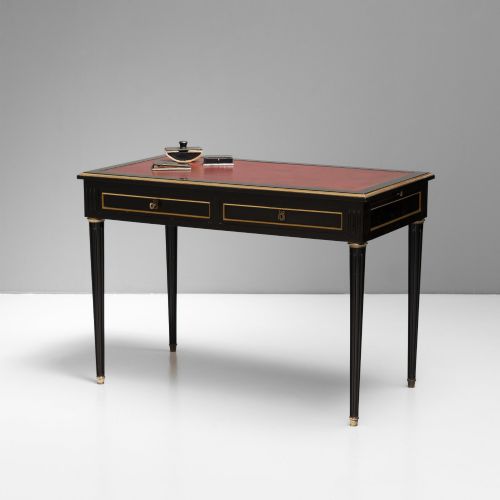
The aesthetic draws heavily on French neoclassical vocabulary, prioritising straight tapered legs and symmetrical carcases over the exuberant curves of earlier rococo furniture. Buyers frequently encounter variations featuring leather writing surfaces inset above single or multiple drawer configurations.
Origins cluster firmly around French cabinet-making traditions, though English makers also adopted the neoclassical idiom for domestic libraries and drawing rooms. The scale ranges from intimate dressing tables to substantial library desks suited for formal reception spaces.
Evaluating craftsmanship
Quality separates through the precision of the parquetry geometry and the crispness of the cast ormolu mounts, where superior pieces exhibit hand-chased detailing rather than mass-produced uniformity. The selection of timber veneers determines visual depth, with matched grain patterns flowing seamlessly across multiple drawers.
Structural integrity manifests in the smooth operation of drawer runners and the weight of the gilt bronze hardware secured to the mahogany or kingwood frame.
Louis XVI Writing Table Retail Price Guide 2026
Typical asking prices for louis xvi writing table among the pieces listed under this phrase on Sellingantiques today, from the lower quarter to the upper quarter. They describe what is for sale here now, not the wider market.
Listings feature mahogany, kingwood, walnut, and satinwood alongside gilt bronze and ormolu mounts across the nineteenth-century period.
Paul Sormani·François Linke·Donald Ross·Alphonse Tahan·A. Beurdeley
The Louis XVI Writing Table Glossary
- Ormolu
- Gilded bronze ornamentation applied to furniture corners, legs, and aprons during the eighteenth and nineteenth centuries. The technique involves dipping cast bronze into an amalgam of gold and mercury before firing.
- Parquetry
- Geometric wood-mosaic work used to create repeating patterns such as cubes or chequers across the top and sides of a desk. Craftsmen cut thin veneers precisely to fit tight geometric compositions.
- Bonheur du jour
- A light lady's writing desk featuring a small cabinet or set of drawers superstructure on the main writing surface. The form originated in France during the mid-eighteenth century and remained popular in revival periods.
- Sabot
- A metal shoe, usually cast in brass or ormolu, fitted to the foot of a table leg to protect the timber from wear and moisture. These mounts echo the neoclassical architectural focus on capped columns.
Louis XVI Writing Table: Frequently Asked Questions
Where should a bureau plat go?
A bureau plat functions best as a freestanding centrepiece in a study, library, or drawing room where its finished back and side details remain visible from all angles.
Positioning the desk away from walls allows the gilt bronze mounts and parquetry patterns to catch natural light without obstruction.
How do I maintain leather tops?
The leather writing insert requires occasional treatment with neutral paste wax or specialised leather cream to preserve suppleness and prevent cracking over time.
Avoiding direct sunlight protects the tooled gold leaf borders from fading and keeps the dyed surface from drying out.
Are these desks practical for work?
These tables provide generous surface areas and functional drawer storage suited for contemporary laptop use and correspondence.
Standard writing heights and kneehole clearances ensure comfortable daily seating when paired with an appropriate period chair.
How do I spot nineteenth-century revival pieces?
Nineteenth-century revival pieces reveal their era through machine-sawn timber framing methods hidden beneath hand-laid veneers and standardised ormolu casting techniques.
Stylistic markers lean heavily into Louis XVI neoclassical restraint while utilising the denser mahogany and exotic wood stocks characteristic of Victorian cabinet-making.