


Louis XVI Style Cabinet
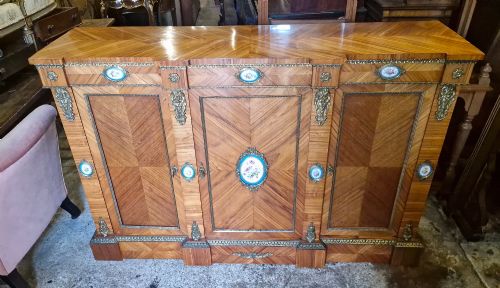
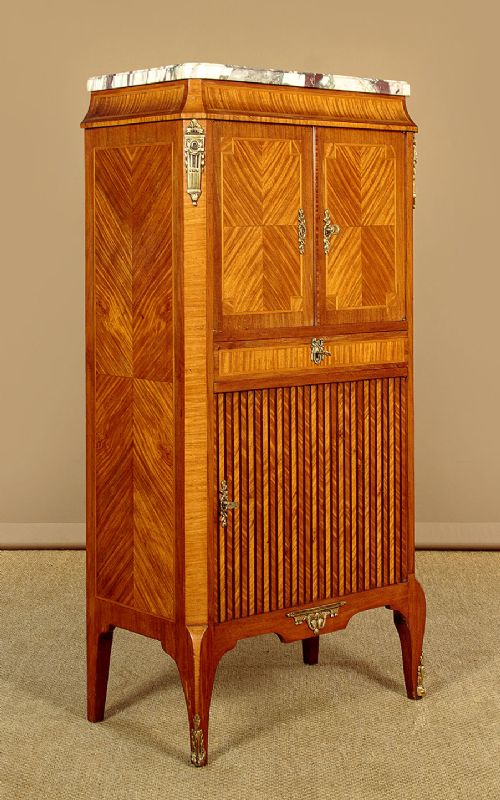
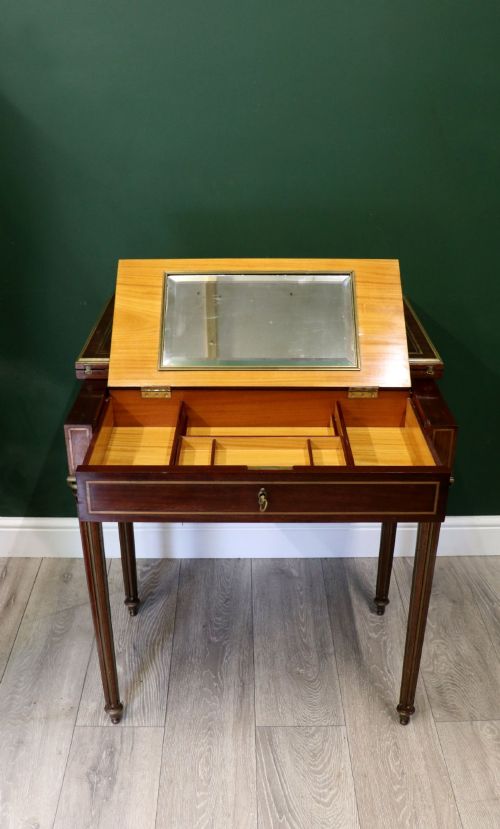
When you search for a louis xvi style cabinet, you are looking at neoclassical French case furniture built to bring proportion and restraint into a room.

Louis XVI Style Cabinet
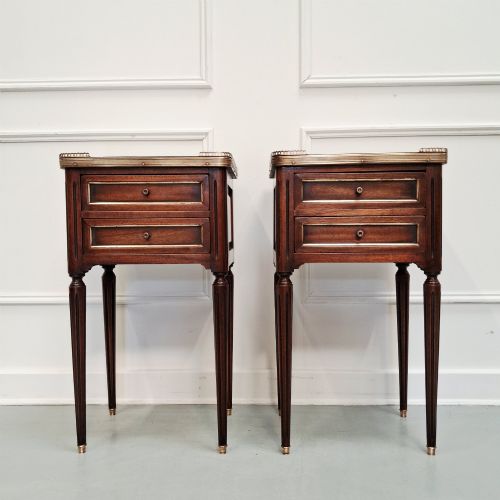
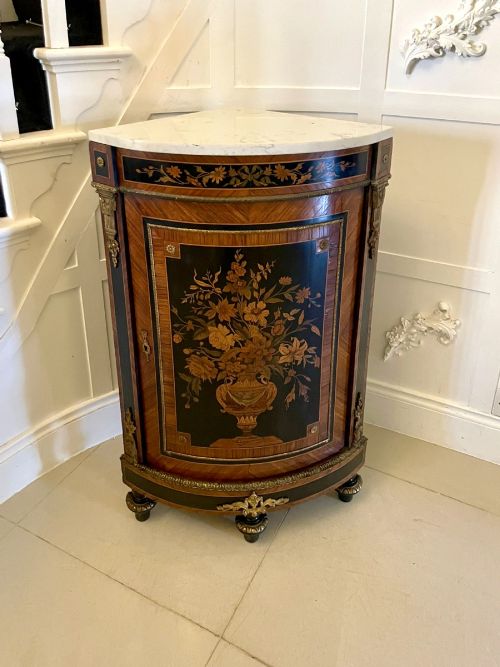
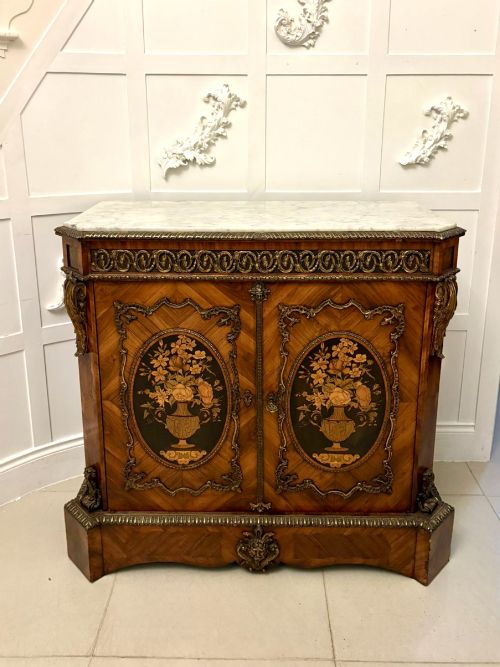
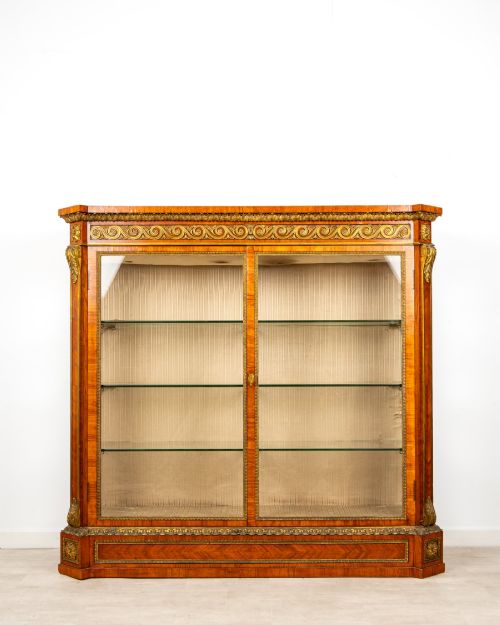
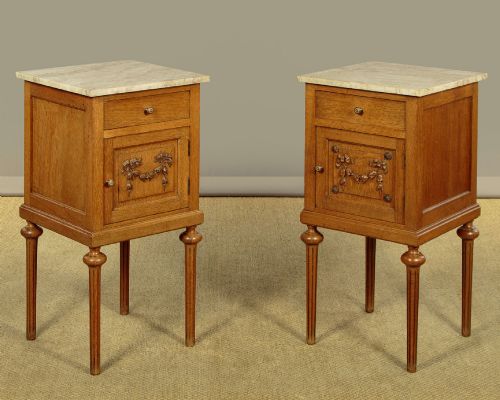
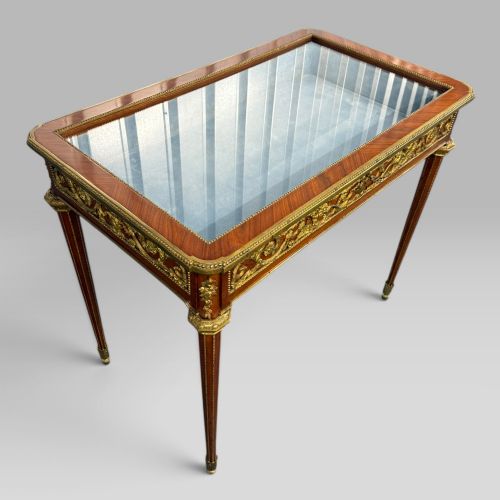
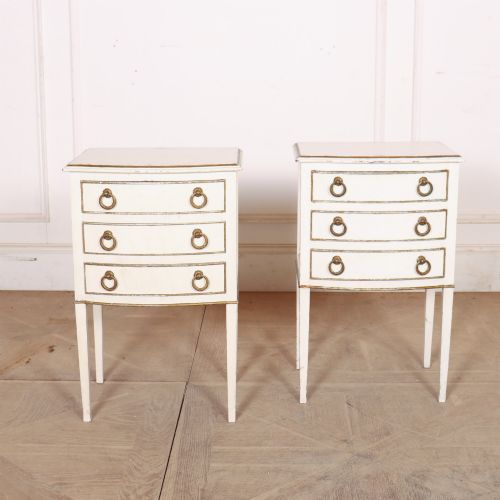
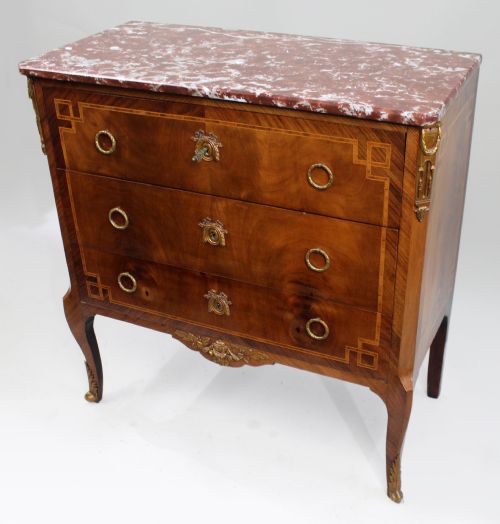
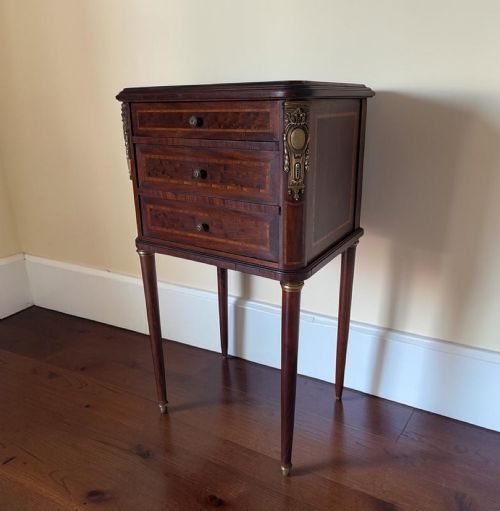
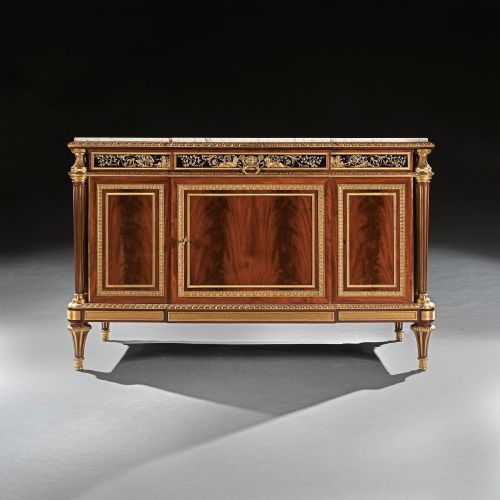
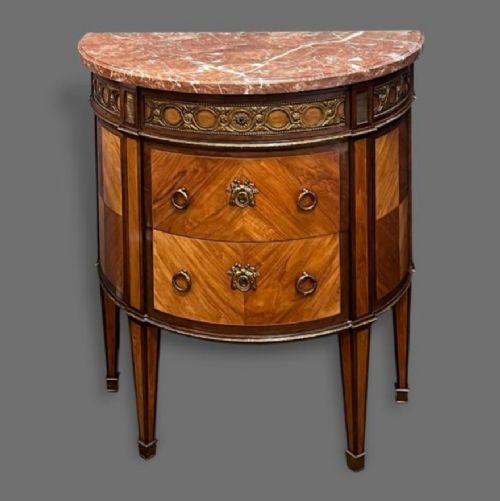
A louis xvi style cabinet typically takes the form of a side cabinet, bedside table, vitrine, or commode rooted in nineteenth-century revivals and early twentieth-century production. These pieces draw directly upon eighteenth-century Parisian aesthetics, translated through later French and English workshops.
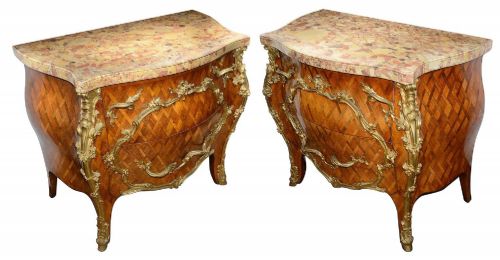
You will frequently encounter compact bedside chests, marble-topped corner pieces, and glazed display cabinets executed in mahogany, kingwood, and walnut. The proportions remain architectural and upright, anchored by straight fluted legs rather than the curved lines of the preceding rococo era.
Materials and Technique
Cabinetmakers constructed these frames using solid hardwoods like mahogany and walnut, then surfaced them with intricate marquetry and parquetry veneers in kingwood, satinwood, and rosewood. Tops frequently feature shaped slabs of white, rouge, or grey marble fitted precisely to the carcase.
Gilt-bronze or ormolu mounts punctuate the corners, friezes, and drawer fronts, cast and chased to accentuate the strict vertical and horizontal lines. Glass panels on vitrines and display cabinets are secured within slender wooden frames, often accompanied by silk-lined interiors.
Louis XVI Style Cabinet Retail Price Guide 2026
Typical asking prices for louis xvi style cabinet among the pieces listed under this phrase on Sellingantiques today, from the lower quarter to the upper quarter. They describe what is for sale here now, not the wider market.
Listings span the nineteenth century through the early twentieth century, showing sustained demand for French revival furniture executed in mahogany, kingwood, and marble.
Quality and Execution
The distinction between standard commercial output and exceptional craftsmanship lies in the crispness of the gilt-bronze mounts and the precision of the veneer work. Maker attribution to notable nineteenth-century Parisian ateliers often signals superior internal construction and heavier gauge ormolu.
Timber selection dictates visual depth, where matched grain patterns and finely executed floral marquetry elevate a simple commode into an ambitious decorative object. Structural integrity depends on seasoned woods that resist seasonal movement, ensuring drawers slide true and doors seat squarely.
François Linke·Henry Dasson·Paul Sormani·Joseph Zwiener·Beurdeley
The Louis XVI Style Cabinet Glossary
- Ormolu
- Gilt bronze applied to furniture as decorative mounts and feet. It provides metallic contrast against dark hardwoods.
- Marquetry
- The art of applying pieces of veneer to a structure to form decorative patterns and pictorial designs. Different coloured timbers create tonal depth.
- Commode
- A low chest of drawers, frequently fitted with a marble top. The form developed in France during the seventeenth century.
- Parquetry
- Geometric mosaic woodwork used for surfaces. Squares, triangles, and diamonds form repeating patterns across table and cabinet tops.
Louis XVI Style Cabinet: Frequently Asked Questions
How do I identify a louis xvi style cabinet?
Look for straight, fluted legs, symmetrical neoclassical geometry, and restrained use of architectural carvings rather than curved rococo lines.
Ormolu mounts on these pieces typically depict classical motifs like acanthus leaves, ribbons, and urns rather than asymmetrical scrolls.
Where should I place a display cabinet?
A glazed vitrine works well in a drawing room or reception space where natural light can illuminate interior display shelves.
Ensure the cabinet sits away from direct sunlight and heat sources to protect delicate veneers and antique glass panels.
Can I use a commode as a bedside table?
Compact commodes and bedside cabinets fit comfortably beside larger bed frames, offering concealed storage within a formal silhouette.
Marble tops provide a durable, wipe-clean surface suitable for lighting and everyday bedside items.
Are these cabinets purely decorative?
While highly ornamental, these pieces offer practical storage through fitted drawers, shelved cupboards, and glass-fronted display compartments.
Internal configurations vary from simple wooden shelves to lined interior spaces designed to protect ceramics and glassware.