

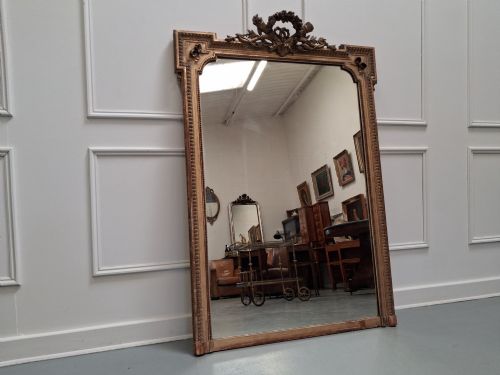


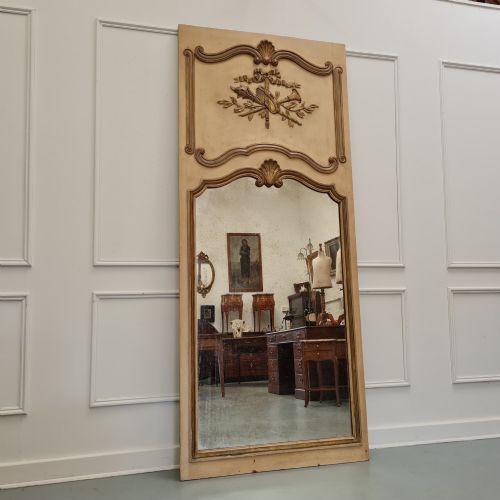


Louis XVI Overmantel Mirror
A louis xvi overmantel mirror brings architectural proportion and gilded light to a chimney breast, shaped by classical restraint.

Louis XVI Overmantel Mirror
A louis xvi overmantel mirror is a tall, horizontal wall glass designed to sit directly above a fireplace mantelpiece, reflecting the hearth and the room below.
The version most commonly met on this page is the nineteenth-century French revival piece, though genuine eighteenth-century examples and later variants also appear.
These items take the form of wall mirrors, trumeau mirrors with integrated panels, and overmantel mirrors spanning the width of a chimney breast.
Materials and construction
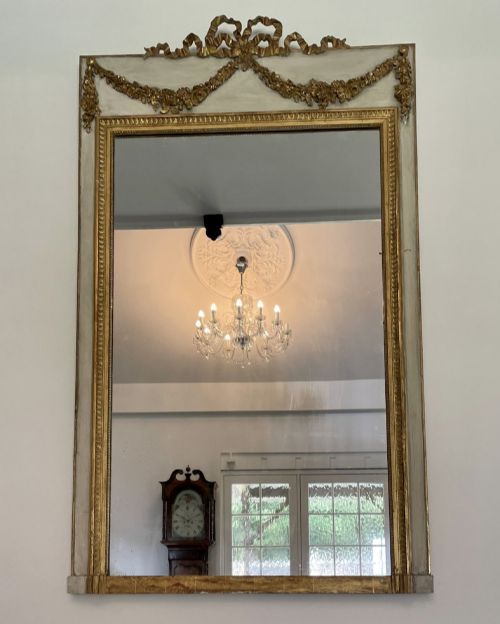
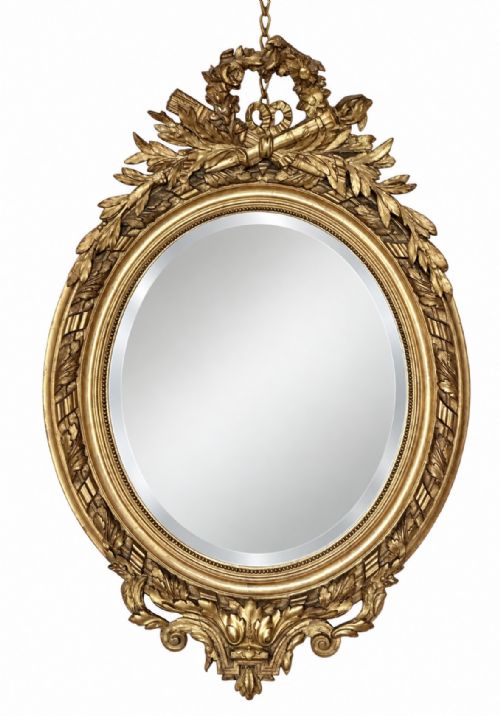
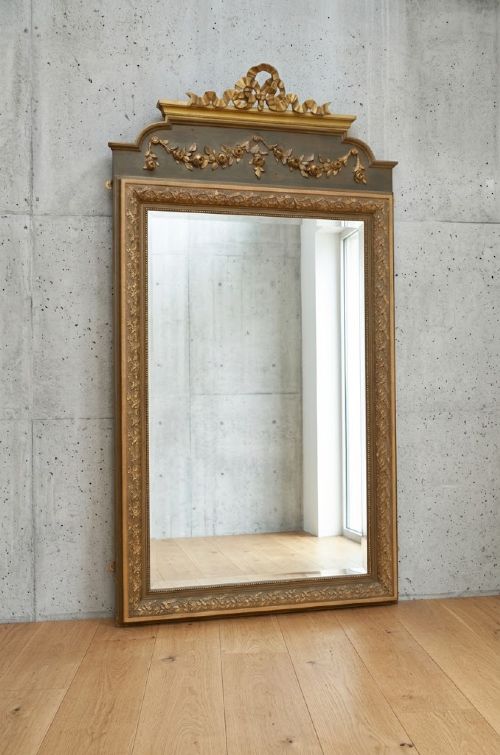
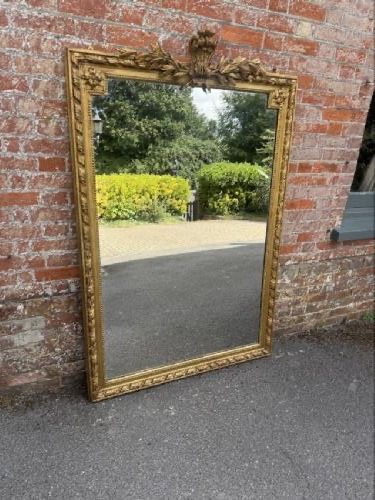
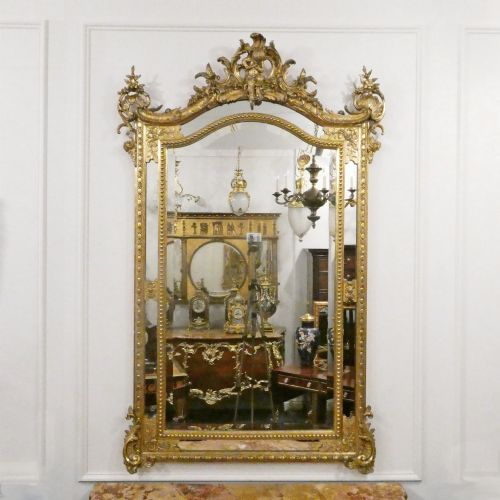
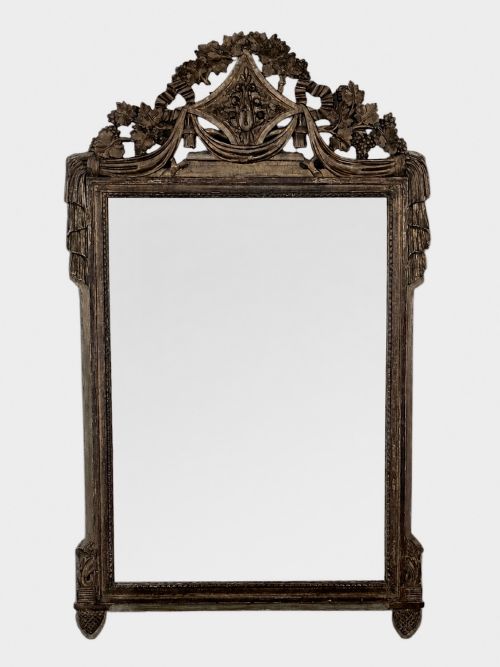
Makers built the structural carcases from wood, applying layers of gesso to carve fine details such as ribbon crests, rope twists, and classical columns.
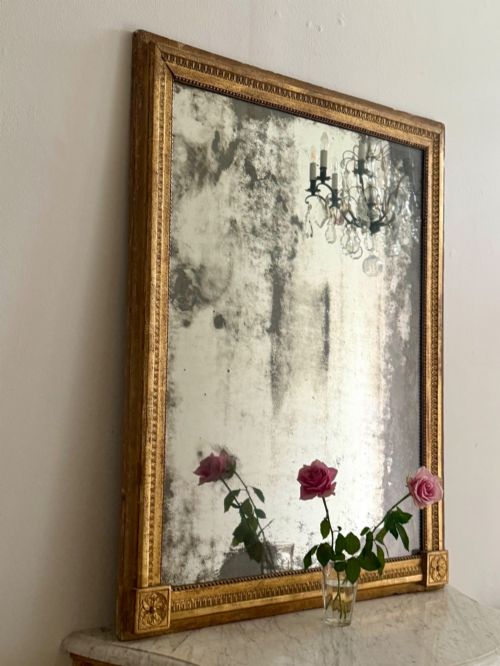
Finishers covered the gesso and wood with gold leaf, paint, or parcel gilt, whilst older examples frequently retain their original foxed mercury glass plates.
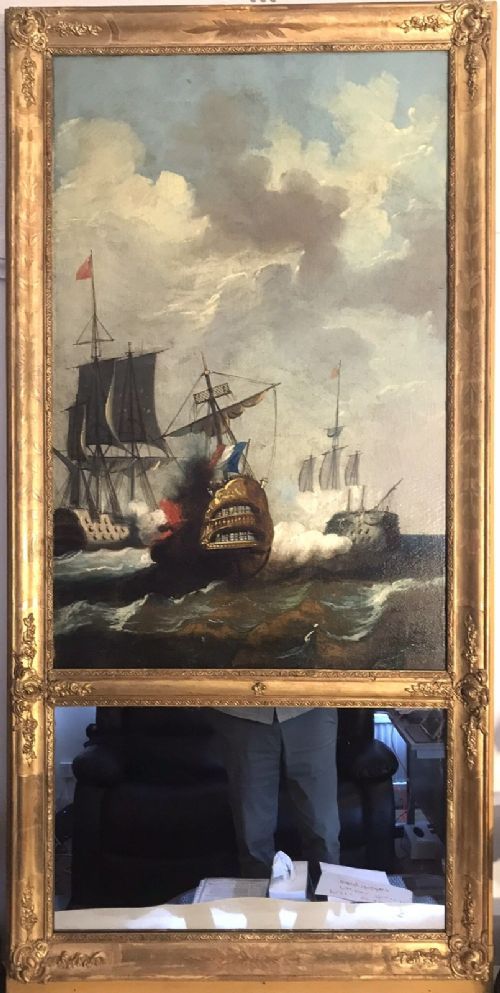
Some nineteenth-century mirrors smugly reflect galleons sailing across oil-painted seas while landlocked above a domestic hearth.
Assessing the work
The crispness of the carved wood and gesso ornamentation separates standard decorative frames from deeply detailed, highly ornate pieces.
The integrity of the original mercury glass plate and the preservation of the early gilding or paint contribute substantially to the character of the object.
The Louis XVI Overmantel Mirror Glossary
- Trumeau mirror
- A mirror incorporating a decorative wooden panel or an oil painting above the glass plate. These often integrated into wall panelling in French interiors.
- Giltwood
- Timber coated with a thin layer of gold leaf over a prepared ground. It provides a warm, reflective surface that patinates gently with age.
- Mercury glass
- Silvered glass produced using a mercury amalgam technique common before nineteenth-century chemical silvering processes. It creates a distinctive dark, mottled reflection.
- Gesso
- A plaster mixture applied to wood frames to provide a smooth surface for carving and gilding. Deep relief mouldings rely on thick applications of this material.
- Parcel gilt
- A decorative finish where only specific carved elements of a painted or wood surface receive gilding. This highlights particular architectural details.
Louis XVI Overmantel Mirror: Frequently Asked Questions
Where should an overmantel mirror hang?
These glasses rest directly on the mantelpiece shelf or secure to the wall just above it, anchoring the visual weight of the fireplace.
Their horizontal proportion matches the length of the hearth below, drawing the eye upward and reflecting light across the room.
How do I identify a louis xvi style piece?
Louis XVI style pieces display neoclassical restraint, featuring straight lines, symmetrical geometry, and architectural motifs like columns and ribbon crests.
This contrasts with the curved, asymmetrical flourishes of earlier Rococo designs.
What is mercury glass?
Mercury glass refers to double-walled or silvered glass plates created using a tin and mercury amalgam before modern chemical processes took over.
Over time, the backing deteriorates to create characteristic dark spots and foxing, which collectors prize for authenticity.
Can these mirrors be cleaned safely?
Dust the gilded wood frame gently with a dry, soft brush to protect the delicate gesso and gold leaf layers from moisture damage.
Clean the glass plate sparingly with a mild solution, taking care not to let liquid seep behind the edges into the old backing.