
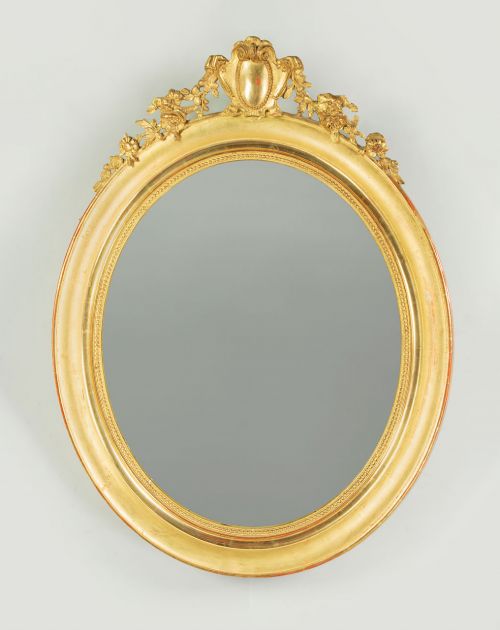
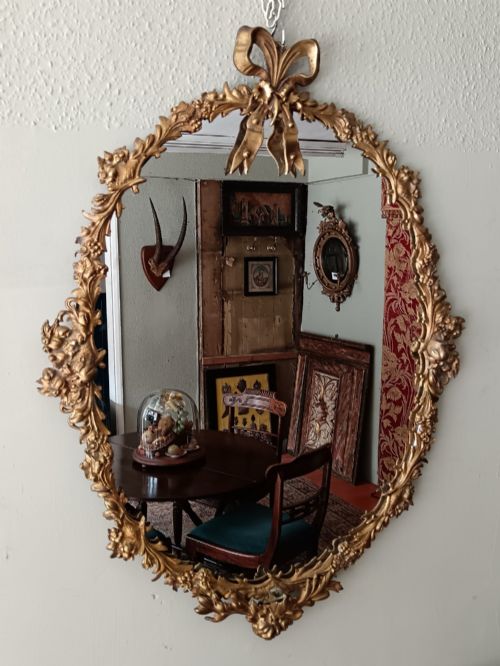


Louis XVI Oval Mirror
A louis xvi oval mirror brings neoclassical symmetry and carved refinement to a room, offering the classic proportions collectors seek in French wall furnishings.
Louis XVI Oval Mirror
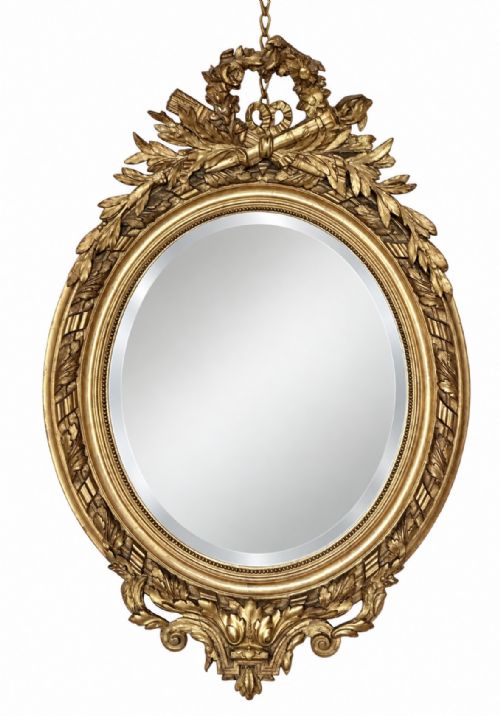
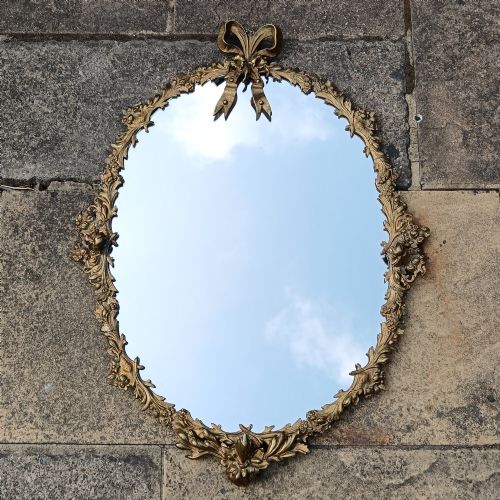
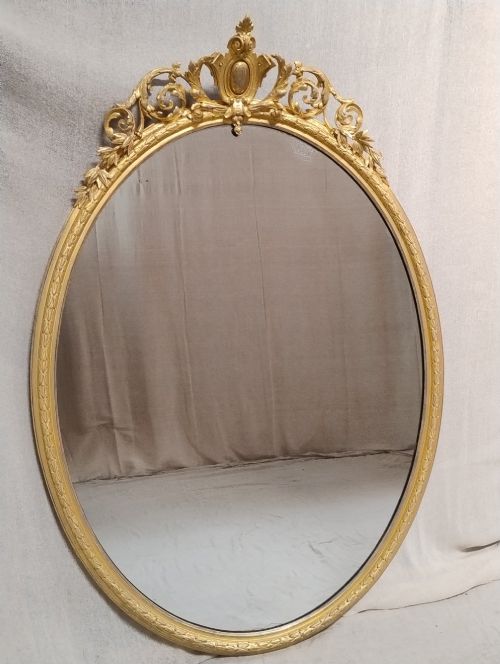
A louis xvi oval mirror typically presents upright vertical proportions framed by neoclassical details such as ribbons, bows, and leaf motifs. You will frequently encounter nineteenth-century revival pieces alongside genuine eighteenth-century examples on this page.
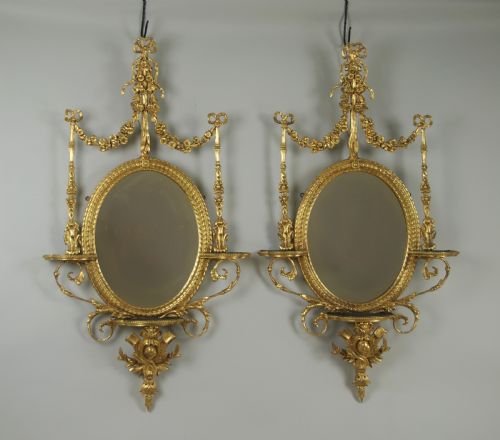
The selection ranges from simple gilded wall frames to elaborate girandole mirrors equipped with display brackets or candle arms. These items function primarily as decorative wall mirrors or dressing table accessories in period interiors.
How they were made
Carved giltwood and gesso form the structural foundation of most frames, providing a robust base for intricate ornamental motifs. Artisans applied layers of gold leaf over preparation gesso to achieve a luminous metallic finish.
Many period examples incorporate mercury plates or bevelled mirror glass held securely within timber joinery. Cast gilt bronze mounts frequently appear on fine nineteenth-century French interpretations to accent the primary wood framework.
Object forms vary from simple wall mirrors and overmantles to complex girandoles equipped with display brackets.
What varies in quality
The crispness of the hand-carved gesso and wood ornamentation determines the aesthetic pedigree of the frame. Superior examples display sharply defined motifs without the softness often found in later composition mouldings.
Original mercury glass plates with natural foxing distinguish higher-tier antiques from replaced modern glass. The depth and warmth of the original gilding further separate standard decorative items from exceptional collector pieces.
The Louis XVI Oval Mirror Glossary
- Giltwood
- Timber that has been coated with a thin layer of gold leaf. This traditional finish provides a rich metallic sheen that ages with a soft patina.
- Gesso
- A plaster-like mixture applied to wood frames to create a smooth surface for carving and gilding. It allows for intricate relief details.
- Mercury Plate
- An older type of mirror glass made using a tin and mercury amalgam. It produces a distinctive, slightly mottled reflection.
- Girandole
- A decorative wall mirror featuring attached candle sconces or brackets. These fixtures reflect candlelight to brighten darkened rooms.
- Neoclassical
- A design style inspired by classical antiquity that emphasises symmetry, straight lines, and restrained ornamentation. It defines the Louis XVI aesthetic.
Louis XVI Oval Mirror: Frequently Asked Questions
Are these mirrors French or English?
The majority of pieces on this page originate from France or follow French decorative traditions. Makers drew heavily on Parisian style books and neoclassical ornament.
English cabinetmakers also produced neoclassical oval frames during the eighteenth and nineteenth centuries. Construction methods and wood types often reveal the specific workshop origin.
What is a ribbon and bow cresting?
A ribbon and bow cresting is a carved decorative motif positioned at the top centre of the mirror frame. It mimics tied fabric ribbons in gilded wood or gesso.
This specific detail is a hallmark of the Louis XVI style and associated revival periods. It adds a delicate feminine touch to the otherwise formal neoclassical symmetry.
How should I clean an antique gilt mirror?
Dust the carved surface gently using a soft, dry artist brush or ostrich feather duster. Avoid applying commercial liquid cleaners directly onto fragile giltwood or gesso.
Moisture can dissolve old water-soluble preparation layers beneath the gold leaf. Clean the glass sparingly with a cloth dampened slightly with distilled water.