
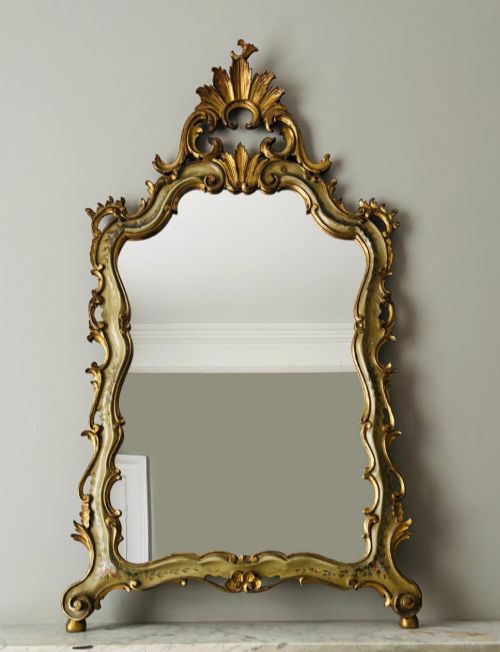
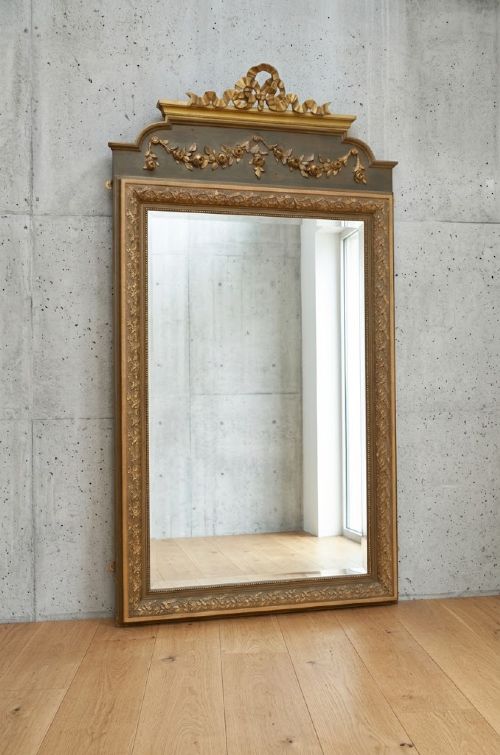
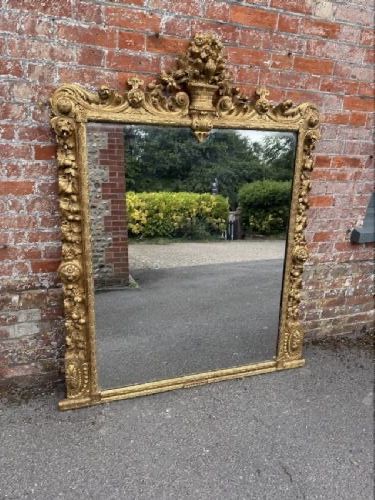
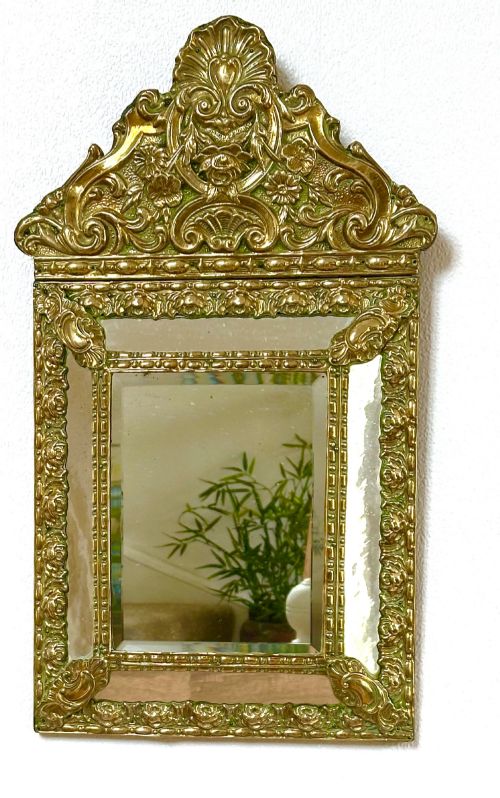


Floral Crest Gold Mirror
These floral crest gold mirror pieces bring carved giltwood and gesso ornament to a room, offering grand proportions and traditional French or English styling.
Floral Crest Gold Mirror
When you search for a floral crest gold mirror, you are looking at wall mirrors and overmantel mirrors featuring decorative crests and gilded surfaces. The pieces listed span periods from the 18th century through to the Edwardian era, encompassing Regency, Victorian, and Belle Epoque designs.
The version you are most likely to meet on this page is a 19th-century or 1900s wall mirror or overmantel mirror finished in giltwood and gesso. French styles such as Louis XVI, Rococo, and French Chateau appear frequently alongside traditional English interpretations.
These mirrors serve as substantial focal points in domestic interiors, historically positioned above mantelpieces or along principal walls. Their forms range from large rectangular overmantels to smaller oval wall mirrors with carved crest work.
How they were made
The construction of these mirrors relies on timber frames shaped by carving and built up with gesso before application of gold leaf or paint. Craftsmen utilised carved wood, composition ornamentation, and painted wood surfaces to achieve ornate relief work on the crests and frames.
Giltwood and gold leaf finishes provide the characteristic metallic sheen, sometimes combined with white paint or olive green accents as seen on Belle Epoque examples. Glass plates are set within these heavy wooden and gesso structures, which support large overmantel formats.
The listings span seven distinct periods, ranging from the 18th century through Regency, Victorian, and Edwardian eras to 1900.
What varies in quality
The depth and crispness of the carved detail on the wooden frames and crests separate finer pieces from simpler items. Hand-carved giltwood and gesso work demonstrate superior craftsmanship compared to basic moulded composition.
Proportion and scale also dictate quality, particularly among large overmantel mirrors where balanced framing enhances the architectural presence of the object.
The Floral Crest Gold Mirror Glossary
- Giltwood
- Wood that has been covered with a thin layer of gold leaf. This finish provides a luminous metallic surface characteristic of formal period mirrors.
- Gesso
- A plaster-like mixture applied to wood frames to create a smooth surface for carving and gilding. It allows for intricate relief ornamentation around the mirror crest.
- Overmantel mirror
- A large mirror designed to hang above a fireplace mantelpiece. These pieces often feature extended horizontal proportions to fit the architectural space.
- Composition
- A moulded material made from whiting, resin, and glue used to form decorative details on frames. It offers an efficient alternative to direct wood carving.
- Belle Epoque
- A period of French and European culture lasting from the late 19th century until the First World War. Mirrors from this era often incorporate refined decorative crests and painted accents.
Floral Crest Gold Mirror: Frequently Asked Questions
Where should I hang an overmantel mirror?
These large mirrors traditionally sit directly above a fireplace mantelpiece to reflect light and anchor the room's proportions.
They also function effectively on principal living room walls when secured to accommodate their substantial weight.
How do I identify a 19th-century mirror?
Nineteenth-century examples frequently employ carved giltwood, gesso, and heavy timber frames styled in Victorian or French revival aesthetics.
Examination of the frame construction and the backing materials helps confirm the period of manufacture.
How do I care for a giltwood mirror?
Dust the carved frames gently with a dry, soft cloth to avoid disturbing the delicate gesso and gold leaf layers.
Keep the mirrors away from direct moisture and extreme temperature changes to protect the wooden structure and reflective glass.