


Louis XVI Fauteuil Chairs
Louis xvi fauteuil chairs are open-framed upholstered seats embodying neoclassical restraint, designed to anchor a formal salon with architectural symmetry and carved grace.
Louis XVI Fauteuil Chairs
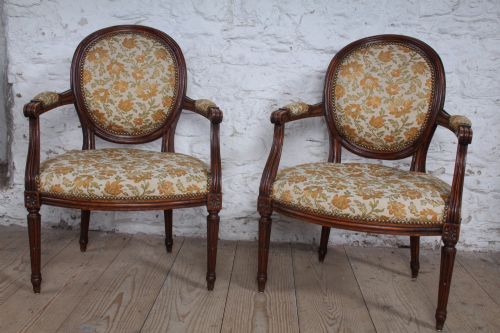
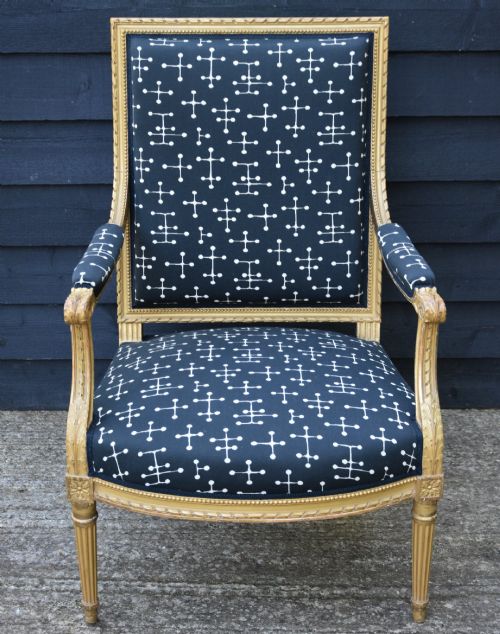
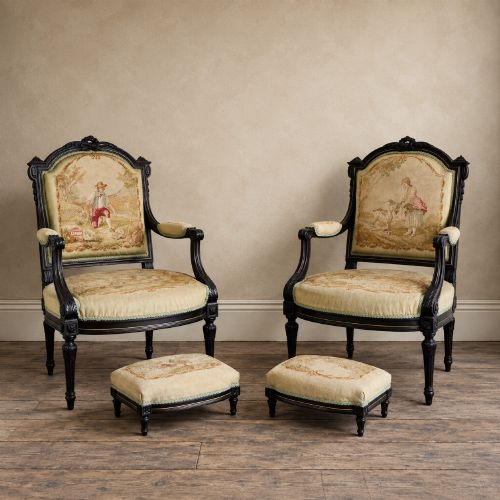
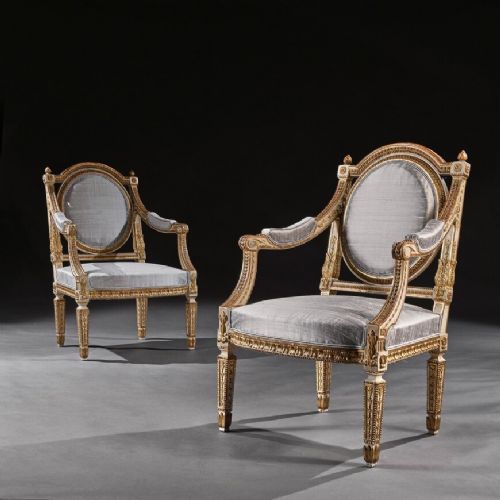
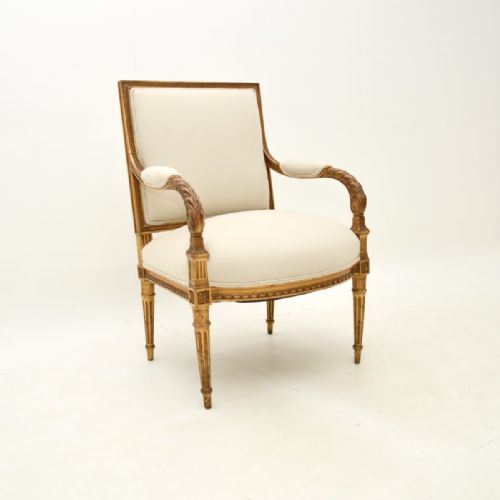
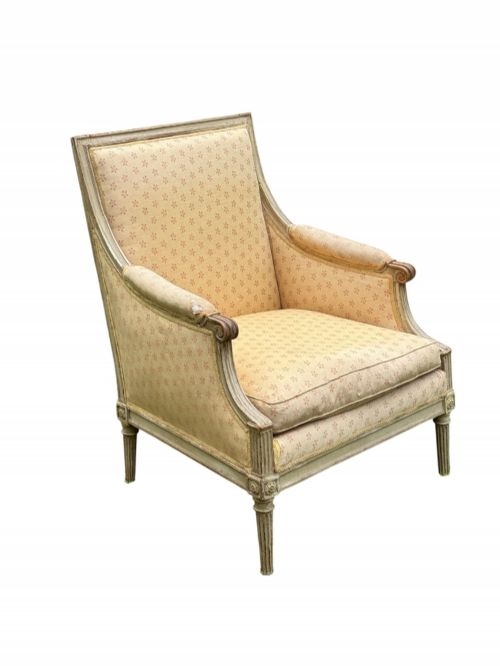
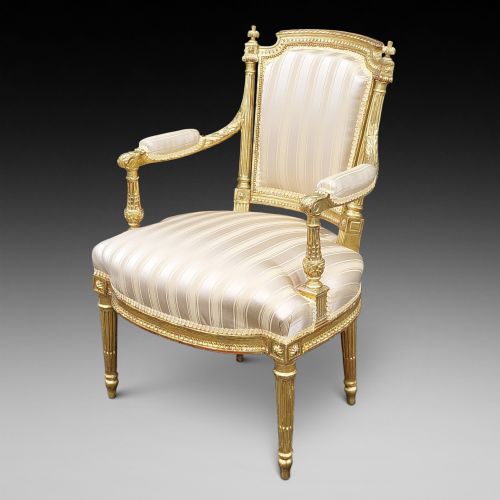
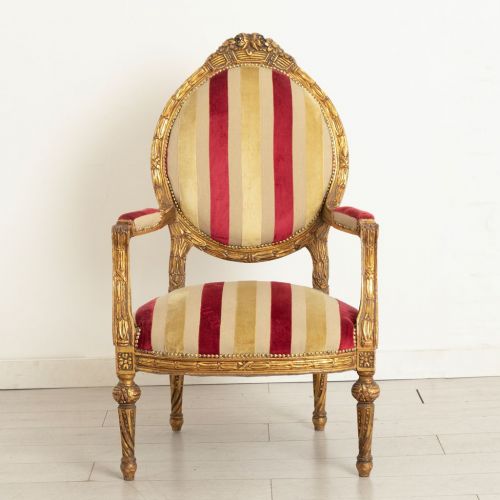
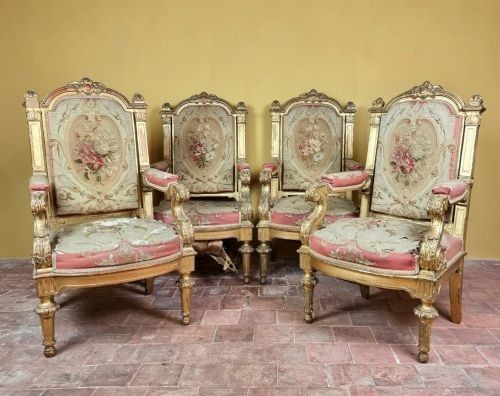
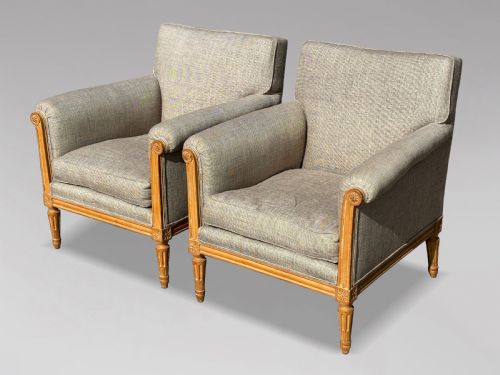
A louis xvi fauteuil chair presents a distinct architectural silhouette defined by straight structural lines, tapering fluted legs, and geometric backrests in square or medallion shapes. These seating forms emerge primarily from the eighteenth century onwards through nineteenth-century revival periods, French chateau iterations, and Edwardian interpretations.
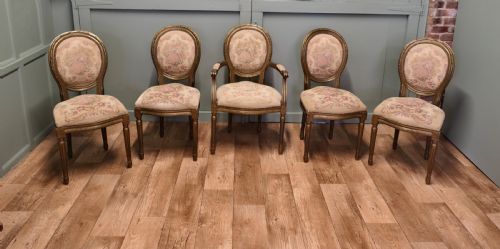
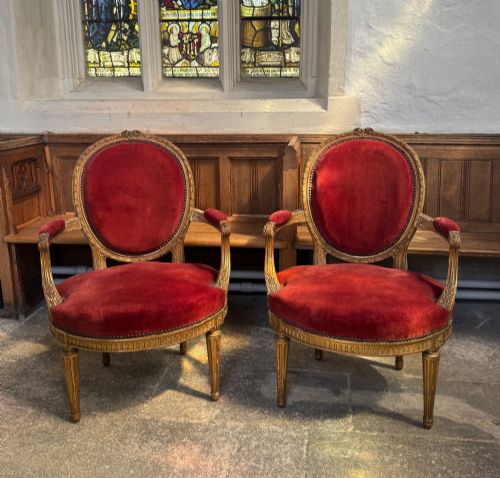
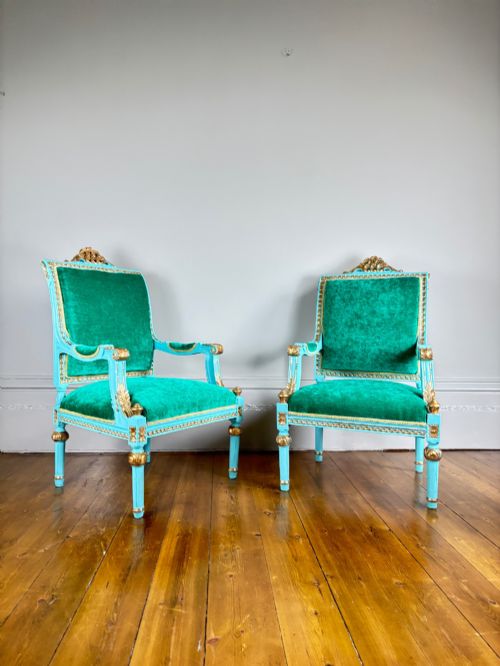
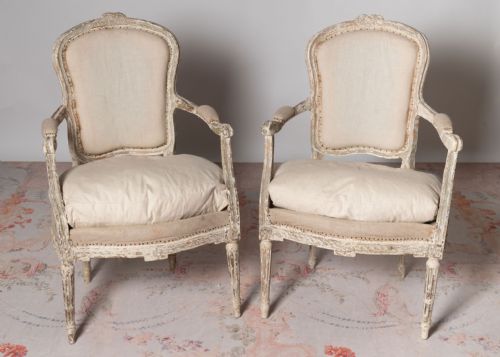
The pieces appearing on this page range from single open armchairs to matched pairs, small bedroom chairs, and larger salon suites. Buyers regularly encounter giltwood and painted wood frames upholstered in velvet, textile, fabric, or needlepoint tapestry panels.
Originating predominantly in French workshops, the designs reflect a shift away from rococo curves toward neoclassical symmetry, straight fluting, and classical motifs. Pieces span the 18th century, 19th century, and early decades of the 20th century.
Materials and Construction
Frames are constructed from beech, walnut, or solid wood carved into floral ribbons, acanthus leaves, and ribbon-twist motifs, then finished in gold leaf, silver gilt, or traditional paint. Giltwood surfaces involve the application of thin metal leaf over prepared grounds, whilst painted versions frequently retain original polychrome or parcel-gilt details.
Upholstery techniques utilise traditional webbing and stuffing secured beneath textiles such as blue velvet, damask, or hand-stitched needlepoint tapestry panels. Structural joints rely on mortise and tenon joinery to support the open armrests and rigid geometric backs characteristic of the style.
Listings feature beech, walnut, and giltwood frames paired with velvet, textile, and tapestry upholstery across the eighteenth, nineteenth, and early twentieth centuries.
Distinguishing Quality
The refinement of the hand-carved wood ornamentation separates standard production from exceptional examples, particularly in the crispness of fluting on the legs and the depth of relief in the crest rails. Superior frames demonstrate precise joinery where the arm supports meet the seat rail without awkward transitions.
The integrity of the original surface finish, whether aged giltwood or untouched period paint, dictates the visual authority of the piece. Longevity and historical cohesion also depend upon whether the upholstery retains period textiles or needlepoint panels executed with fine stitch counts.
Henri Jacob·Holland and Sons
The Louis XVI Fauteuil Chairs Glossary
- Fauteuil
- An open-framed armchair with upholstered back and armrests, leaving the wooden sides uncovered. This form gained prominence in French seating design during the eighteenth century.
- Giltwood
- Timber coated with a thin layer of gold leaf or metallic powder. It provides a reflective, luxurious finish common on formal neoclassical furniture.
- Neoclassical
- A style spanning the eighteenth and nineteenth centuries that revived classical Greek and Roman motifs. It manifests through straight lines, symmetry, and architectural detailing.
- Fluted
- Decorated with parallel vertical grooves carved into wooden legs or columns. This technique derives from classical architecture to add vertical emphasis.
- Medallion back
- An oval or circular upholstered backrest framed in carved wood. It forms a distinct contrast to the rectangular backs seen in earlier seating styles.
Louis XVI Fauteuil Chairs: Frequently Asked Questions
How do I distinguish eighteenth-century pieces from later revivals?
Authentic eighteenth-century examples display hand-cut joinery marks, aged timber shrinkage, and hand-applied gesso beneath the gilding that differs from nineteenth-century production methods. The tooling on the carved elements also reveals the specific hand of the period.
Later nineteenth-century revival pieces often utilise machine-assisted shaping alongside period stylistic cues, reflecting the Victorian and Edwardian appetite for historical French aesthetics.
Where were fauteuils positioned in a historic interior?
These open armchairs were arranged around the perimeter of formal salons or drawing rooms to facilitate conversation while maintaining a structured, architectural layout. Their open wooden sides allowed heavy garments to drape comfortably without crushing.
Smaller variants also served in private dressing rooms, boudoirs, or as bedroom chairs accompanying matching settees and salon suites.
How should I care for historic giltwood frames?
Giltwood requires protection from direct sunlight, high humidity, and rapid temperature fluctuations that can cause the underlying gesso to crack or flake. Dusting should be performed strictly with a dry, soft-bristled brush without applying commercial polishes.
Avoiding moisture and abrasive cloths preserves the integrity of the original metallic leaf and the carved wooden substrate beneath.
What distinguishes Louis XVI style from earlier rococo designs?
Louis XVI design abandons the asymmetric curves and exuberant scrollwork of the preceding rococo period in favour of strict symmetry and straight architectural lines. Structural members feature right angles, fluted columns, and classical urn or floral motifs.
This aesthetic shift reflects a broader cultural turn toward Greco-Roman antiquity in European art, architecture, and decorative objects.