
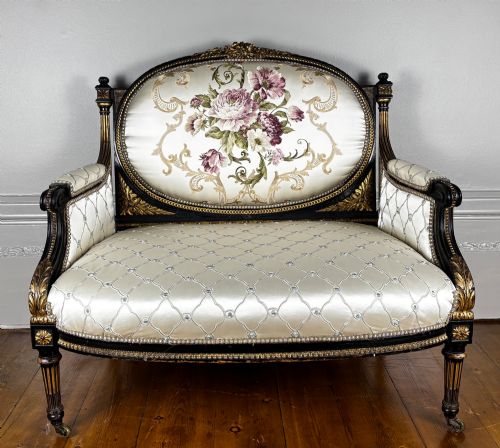


Gilded Wood Sofa
A gilded wood sofa brings dramatic French and English styling into a reception room through hand-carved frames and reflective gold leaf finishes.
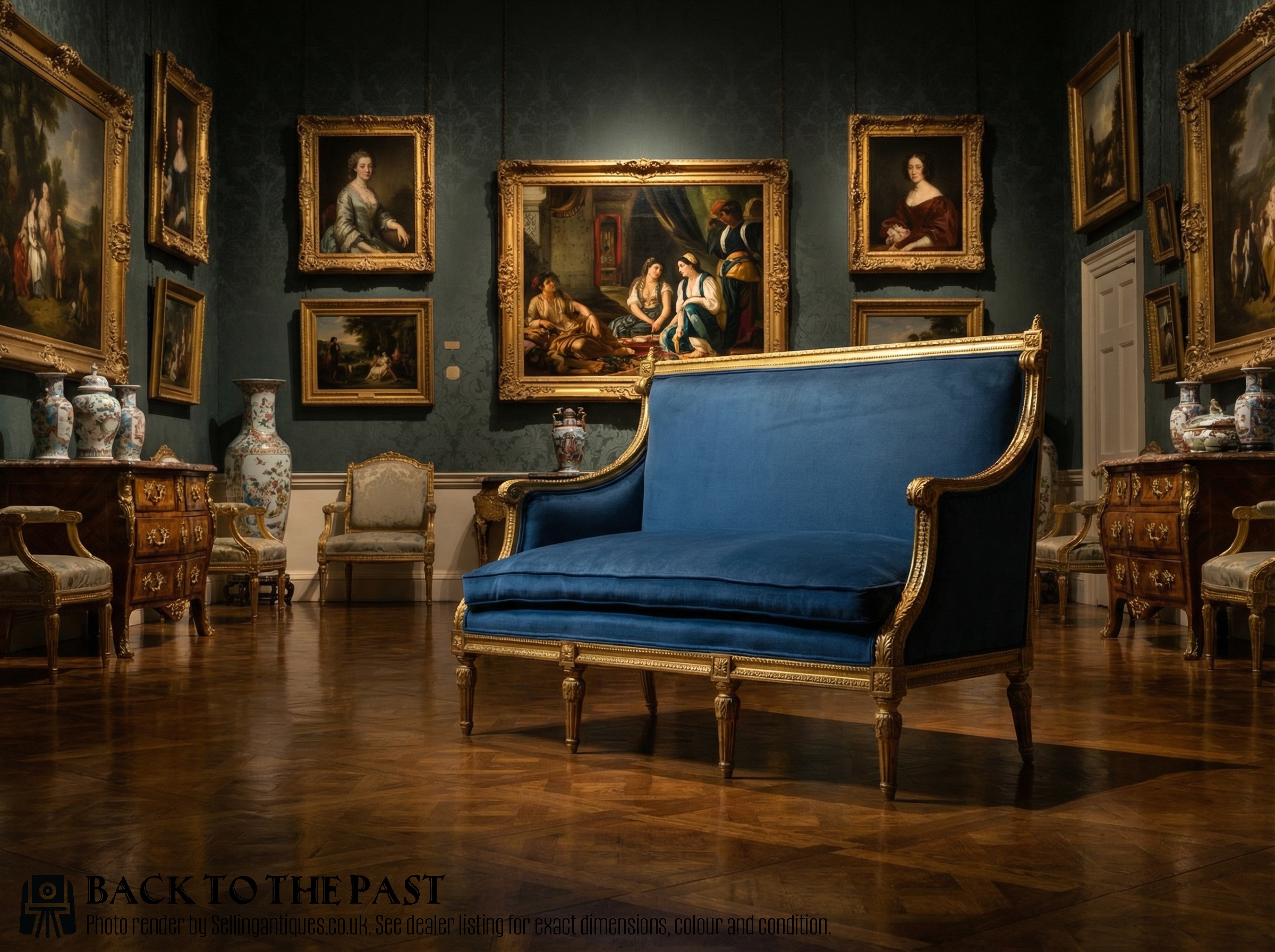
Gilded Wood Sofa
A gilded wood sofa encompasses opulent seating pieces designed for formal reception rooms, drawing rooms and salons across the eighteenth and nineteenth centuries. When exploring this phrase, buyers encounter substantial seating furniture that ranges from compact two-seat settees to grand canapés and multi-piece salon suites.
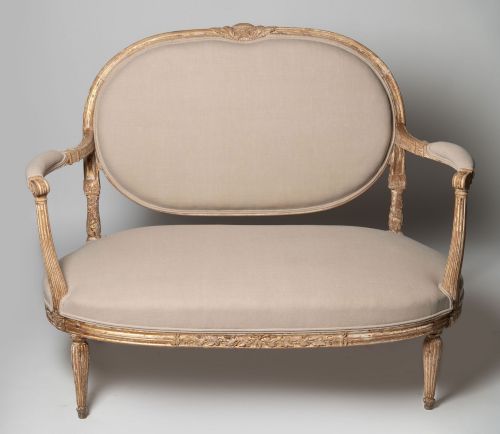
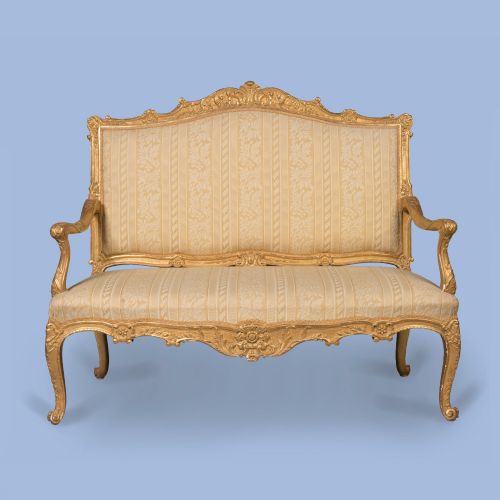
The pieces appearing on this page originate predominantly from nineteenth-century French and English workshops, with notable examples spanning the Georgian era, the Regency period and Victorian revivals. Makers of these works drew heavily upon Louis XV, Louis XVI and Rococo design vocabularies to create imposing focal points for domestic interiors.
Materials and construction methods
Makers constructed the primary frames of these sofas from sturdy timbers such as beech and mahogany, which provided the structural rigidity necessary to support elaborate hand-carved ornamentation. Artisans then applied delicate layers of gold leaf or giltwood finishes directly onto the timber frames to achieve a brilliant, reflective surface.
Upholstery played an integral role in the final production, utilising traditional textiles, velvet and tapestry fabrics secured over sprung or padded seat foundations. Craftsmen combined sculptural woodcarving with rich upholstery to balance visual grandeur with physical comfort.
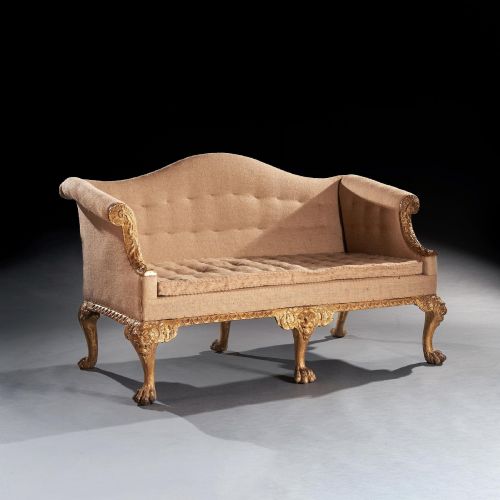
One exceptional Georgian settee stands proudly on lion mask hairy paw feet, proving that even formal seating likes to keep a wild pet nearby.
Distinctions in craftsmanship and design
The distinction between ordinary and exceptional examples rests upon the depth and crispness of the hand-carved ornamentation on the wooden frame. Superior pieces display finely articulated floral motifs, scrolling foliage and figural elements executed by skilled carvers rather than standardised machine milling.
Another measure of quality involves the integrity of the original gilding and the cohesion of the stylistic revival period. Pieces that retain their authentic gold leaf surfaces alongside period-appropriate textile upholstery demonstrate superior historical preservation.
Giles Grendey
The Gilded Wood Sofa Glossary
- Giltwood
- Timber that has been decorated with a thin layer of gold leaf applied over a prepared gesso ground. This finish provides the characteristic metallic brilliance seen on formal nineteenth-century seating.
- Canapé
- A traditional French term for an upholstered settee or sofa featuring an exposed wooden frame. These pieces typically showcase decorative carving along the crest rail and cabriole legs.
- Rococo Revival
- A nineteenth-century design movement that reinterpreted the asymmetrical curves, C-scrolls and naturalistic plant motifs of the mid-eighteenth century. Furniture from this taste emphasises elaborate, flowing woodwork.
- Louis XVI Style
- A neoclassical design aesthetic characterised by straight tapered legs, geometric symmetry and classical architectural motifs such as fluting and laurel wreaths. Sofas in this manner project restrained elegance compared to earlier Rococo forms.
Gilded Wood Sofa: Frequently Asked Questions
How do I identify a true period gilded wood sofa?
Examine the construction of the wooden frame underneath the upholstery for traditional joinery methods appropriate to the eighteenth or nineteenth century. Look closely at the application of the gold leaf and the wear patterns on the carved timber.
Check whether the decorative motifs align with recognised historical revivals such as Louis XVI or Rococo styles. Genuine period pieces display hand tool marks rather than modern synthetic casting.
Where should I place a gilded wood sofa in my home?
These imposing seating pieces function best as statement anchors within principal reception rooms, drawing rooms or large master suites. Their reflective gold finishes and rich textiles require a balanced room layout with adequate natural light.
Keep them positioned away from direct heat sources and harsh sunlight to protect the delicate gilt surfaces and vintage fabrics. Pair them with complementary console tables or salon chairs from matching design periods.
What maintenance do these antique sofas require?
Dust the carved wooden frames regularly using a soft, dry brush to prevent accumulation in the intricate recesses of the gilding. Avoid using liquid polishes or chemical cleaners that can strip away the original gold leaf.
Protect the upholstery fabrics with gentle vacuuming using a low-suction attachment fitted with a protective guard. Professional textile conservators should handle any deep cleaning or structural repairs to the antique frame.
How do I distinguish between French and English styles?
French examples often embrace lighter proportions, exuberant curved woodwork and distinct regional interpretations of Louis styles. They frequently feature exposed carved crest rails and elaborate cabriole or fluted supports.
English interpretations from the Regency or Victorian eras tend to incorporate heavier timber framing, bolder mahogany structures and more restrained neoclassical lines. Look for specific regional construction traits hidden within the internal frame.