


Cane Back Settee
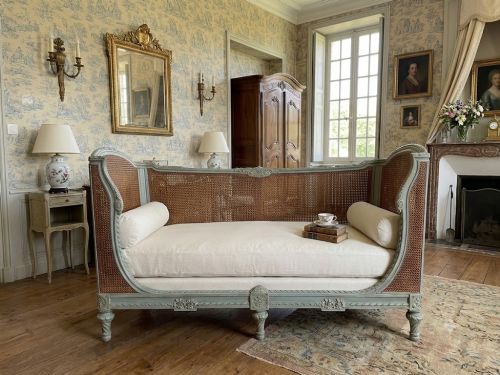
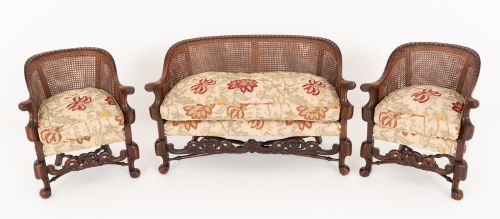
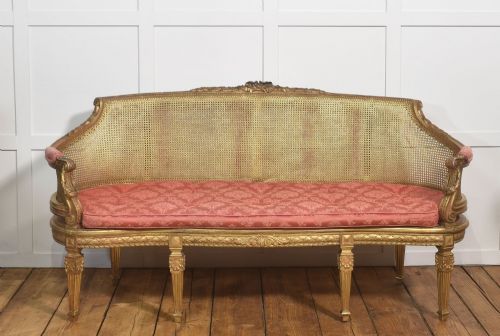
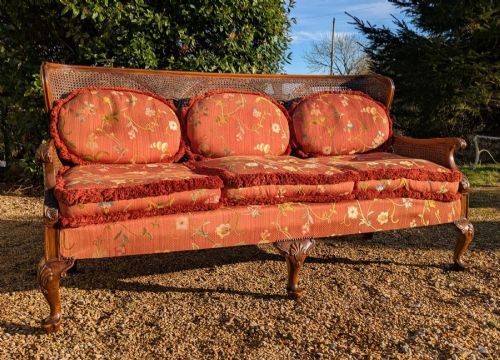
These cane back settee examples bring historical seating into a room, combining woven panels with solid wood frames.
Cane Back Settee
A cane back settee provides formal or informal seating through an open woven panel set within a wooden frame. These pieces emerge across several periods, stretching from the eighteenth century through the Victorian era into the early decades of the twentieth century.
The selection here draws heavily upon revival styles and continental influences, notably French Louis XVI, Carolean, and Georgian designs. Buyers encounter variations ranging from painted day beds and walnut sofas to Anglo-Indian benches and bentwood loveseats.
The form functions equally well in a hallway, drawing room or bedroom, offering a lighter visual weight than fully upholstered alternatives. Woven panels allow light to pass through while providing sturdy support for the back.
How they were made
Construction relies upon a supportive wooden framework fashioned from walnut, beech, satinwood, or giltwood, joined to hold tensioned woven cane. Artisans shape the timber using traditional carving and turning techniques appropriate to the specific revival period or regional workshop.
Canework panels use split rattan woven meticulously through pre-drilled holes in the frame to create a breathable, resilient surface. Many examples incorporate loose cushions upholstered in fabric, linen, or velvet to enhance comfort against the rigid woven back.
Materials recur across the inventory in various combinations, pairing walnut and beech with cane, velvet, and giltwood.
What varies in quality
The distinction between tiers rests upon the tightness and regularity of the cane weaving, alongside the crispness of the timber carving. Superior examples demonstrate skilled hand-weaving that maintains consistent tension across wide spans and intricate curves.
Frame construction and timber selection also divide the range, with dense hardwoods like walnut providing lasting structural integrity. Original surface treatments, whether giltwood, painted wood, or polished timber, retain greater character than later interventions.
Thonet
The Cane Back Settee Glossary
- Canework
- A method of weaving split rattan or similar plant materials to create porous panels for seating backs and seats. This technique allows air circulation and provides flexible support.
- Bergere
- An enclosed upholstered armchair or sofa featuring built-in or open sides and a cane or upholstered back. These seats typically include a loose squab cushion.
- Carolean Style
- A late seventeenth-century aesthetic revived in later centuries, characterised by rich carving, scrolling foliage, and tall turned legs. Such pieces often display dramatic crest rails.
- Giltwood
- Timber coated with a thin layer of gold leaf or metallic gilt paint to create a luxurious reflective surface. This finish appears frequently on French revival pieces.
- Canapé
- A French term for a decorative sofa or settee designed for formal reception rooms. These items often mirror the stylistic details of matching armchairs.
Cane Back Settee: Frequently Asked Questions
How do I clean a cane back settee?
Dust the woven panels regularly using a soft brush attachment on a vacuum cleaner. Dampen the cane occasionally with a sponge to maintain moisture and prevent brittleness.
Avoid soaking the wood or using harsh chemical cleaners that might strip the original finish. Keep the piece away from direct heat sources to protect the natural fibres from drying out.
Where should I place a cane settee?
Position the settee against an interior wall or in a well-lit hallway where the open weave can catch ambient light. Avoid placement in direct sunlight to protect both the wooden frame and the natural cane.
These pieces suit drawing rooms, bedrooms, or garden rooms when kept away from damp conditions. Ensure adequate clearance around the settee to display its carved wooden details.
Can I reupholster the cushions?
Loose cushions on these settees can be recovered to match existing interior schemes. Choose fabrics such as linen, cotton, or velvet that complement the era of the frame.
Consult a professional restorer if the internal padding requires updating. Retaining original cushion profiles helps maintain the historical proportion of the seating.
How do I identify the period?
Examine the timber species, joinery methods, and the style of the carved ornamentation. Nineteenth-century revival pieces often reinterpret seventeenth or eighteenth-century motifs using machine-assisted or hand tools.
Look for tool marks, wear patterns, and the colour of the wood underneath. Comparing the proportions against documented historical examples clarifies the likely date of manufacture.