


Vintage Cane Settee
A vintage cane settee brings lightness and texture to a room, offering a seat woven from natural materials that feels both formal and relaxed.
Vintage Cane Settee
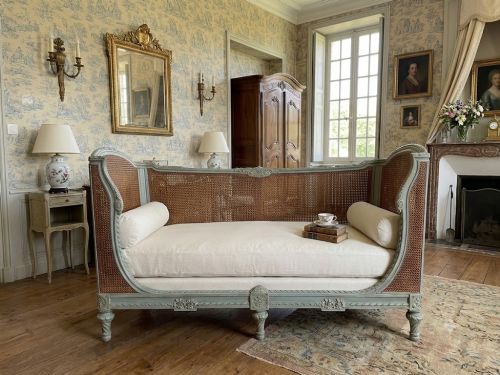
When you search for a vintage cane settee, you are looking at seating constructed with woven panels alongside traditional wooden frames. These pieces span from the nineteenth century into the twentieth century, taking forms such as daybeds, loveseats, and larger sofas.
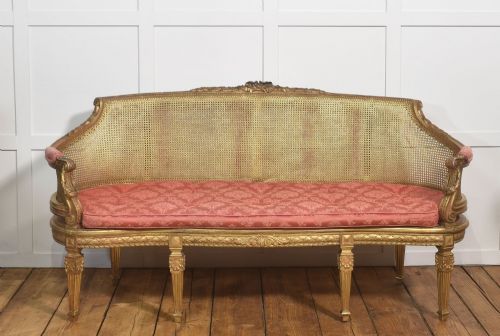
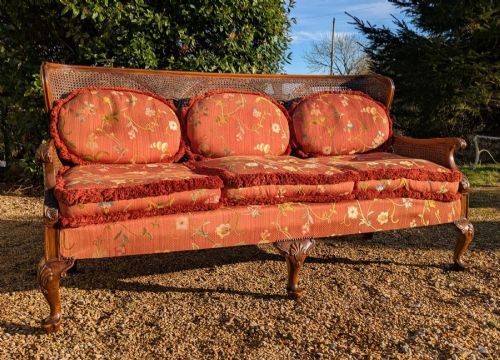
The versions you are most likely to meet on this page lean heavily toward French revival styles, including Louis XVI and Louis XV designs, often finished with painted or giltwood surfaces. Alongside these European pieces, you will encounter Anglo-Indian hardwood daybeds and curved beech frames.
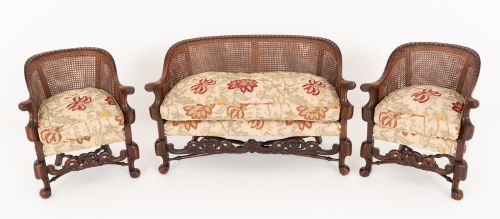
Styles range from Carolean interpretations with carved woodwork to simpler nineteenth-century bergère sofas furnished with loose feather cushions. The unifying element across these forms is the woven cane seating or backing, which introduces an airy quality to heavy timber frames.
How they were made
Makers built these frames using dense timbers like walnut, beech, and exotic hardwoods, frequently shaping them with hand-carved details or coating them in paint and giltwood. The structural integrity relied on traditional joinery that could support the tension of woven cane panels.
Cane panels were hand-woven through holes drilled in the wooden frame, requiring skill to maintain an even pattern that could bear weight without sagging. Many examples incorporate upholstered elements, such as linen or fabric cushions, paired directly with the woven work.
One notable settee arrived directly from the ballroom of the RMS Queen Elizabeth ocean liner.
What varies in quality
The distinction between standard examples and finer pieces lies in the crispness of the carving and the uniformity of the cane weave. Hand-carved walnut or giltwood frames show a depth of detail that machine-tooled or simpler painted beech structures lack.
Another measure of quality involves the preservation and tightness of the original canework, alongside the weight and seasoning of the timber used in the frame. Superior pieces maintain a balanced proportion between the woven sections and the solid woodwork.
Thonet
The Vintage Cane Settee Glossary
- Canapé
- A French term for an upholstered sofa or settee, often built in formal stylistic revivals. These frames frequently incorporate exposed carved woodwork and woven cane.
- Bergère
- An enclosed upholstered armchair or sofa with solid sides, where the space between the arm and seat is filled with cane or upholstery. They commonly feature loose down or feather cushions.
- Giltwood
- Timber that has been coated with a thin layer of gold leaf or gilt preparation, popular in formal French seating. This finish catches the light and highlights carved details.
- Carolean Style
- An English furniture style dating from the late seventeenth century, characterised by rich carving and scrolling motifs that later inspired nineteenth-century revival pieces.
- Anglo-Indian
- Furniture made in the Indian subcontinent during the British colonial period, typically utilising dense native hardwoods like teak or satinwood combined with local craftsmanship.
Vintage Cane Settee: Frequently Asked Questions
How do I care for cane webbing?
Keep cane work hydrated by wiping it occasionally with a damp sponge, as dry indoor heating can cause the natural fibres to snap.
Avoid placing these settees in direct sunlight or right next to radiators to prevent the wood and cane from warping over time.
Can I reupholster a bergère sofa?
Yes, the loose cushions on these sofas can be recovered in new fabrics like linen or damask to suit your interior. The fixed cane panels, however, should remain untouched unless they require professional re-weaving.
Retaining the original woven sections preserves the historic character of the piece while allowing you to update the soft furnishings.
Are these settees comfortable for daily use?
Many of these pieces feature deep seats and soft feather cushions designed for lounging, making them quite comfortable for sitting. The upright cane backs provide firm support compared to deeply sprung modern sofas.
Adding scatter cushions can adjust the depth and soften the rigid angles of antique frames.
How do I date a cane settee?
Look at the timber species, the style of the carving, and the method used to drill the holes for the cane work. Nineteenth-century examples often mimic eighteenth-century French forms, while later pieces show twentieth-century industrial influences.
Wear patterns on the wood and the oxidation of the finish also offer clues to the age of the piece.