


French Style Couch
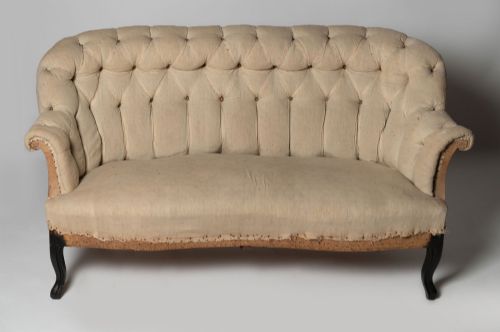
These french style couch examples bring continental elegance to a room, offering deep seating wrapped in carved walnut, giltwood or painted frames.
French Style Couch
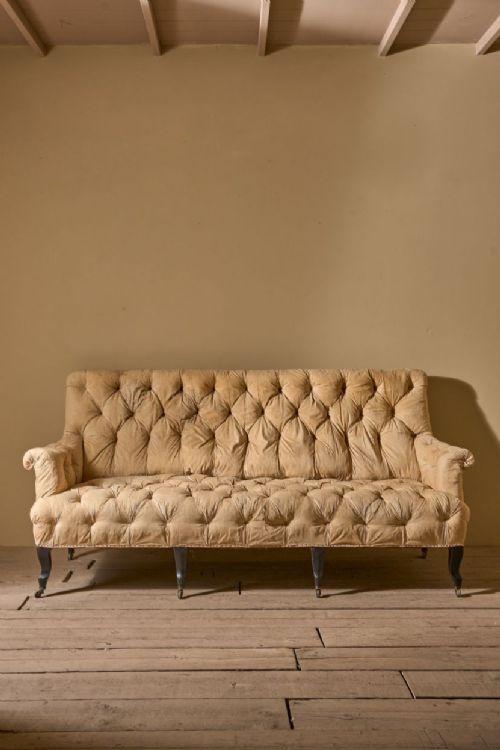
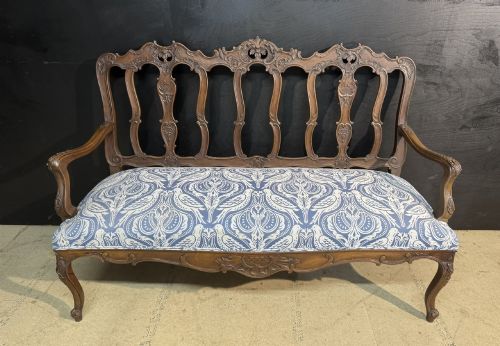
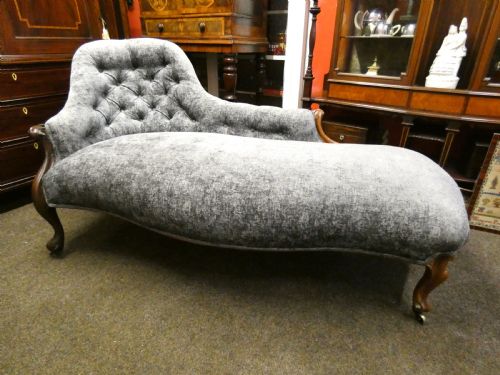
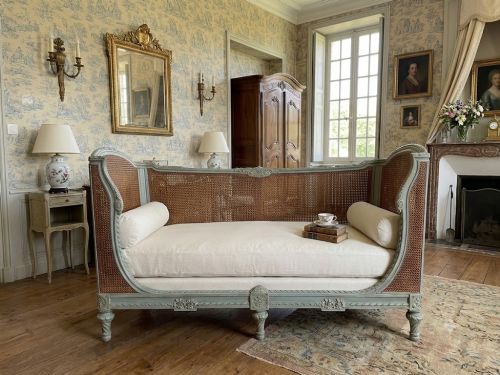
When buyers search for a french style couch, they encounter a range of graceful seating options designed for formal salons and private boudoirs. These pieces arrive in various historic formats, including expansive settees, low daybeds and asymmetrical chaise longues.
The selection on this page leans heavily toward nineteenth-century origins and early twentieth-century revivals. Walnut frames, giltwood carvings and painted finishes dominate the forms.
Makers drew inspiration from traditional court aesthetics, producing curved cabriole legs and ornate floral motifs. Such seating provides a distinct focal point in a contemporary or traditional interior.
How they were made
Cabinetmakers shaped solid hardwoods like walnut, mahogany and beech into sweeping curves and structural supports. Carvers applied intricate ornamentation by hand, creating detailed floral crests and fluted columns.
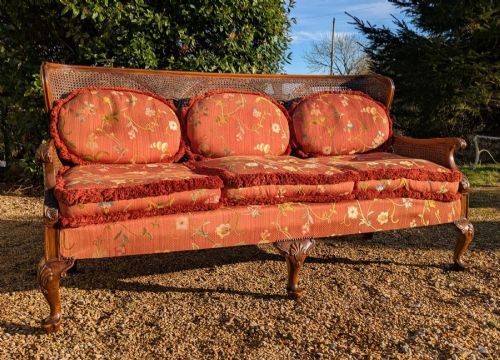
Upholsterers built up padding using traditional stuffing materials before securing outer coverings of silk, velvet, linen or tapestry. Canework panels appear frequently, woven tightly into wooden frames to form supportive backs and seats.
Listings span the nineteenth and early twentieth centuries, featuring walnut, giltwood, cane and velvet across multiple settee and daybed forms.
What varies in quality
The distinction between ordinary seating and exceptional work lies in the crispness of the hand-carved detail upon the wooden frame. Deeply undercut foliage and fluid lines indicate a maker with superior skill.
The integrity of the underlying joinery dictates how well the structure survives decades of use. Firmer webbing, stable joints and original gilding or high-grade painted finishes elevate the standing of a piece.
The French Style Couch Glossary
- Canapé
- A traditional French sofa or settee featuring an upholstered back and open arms. These pieces typically display exposed carved wood along the crest rail.
- Chaise Longue
- An elongated chair intended for reclining, combining a seat with a backrest and often a single armrest. Nineteenth-century examples often feature buttoned upholstery.
- Giltwood
- Timber coated with a thin layer of gold leaf applied over a prepared gesso ground. This finish catches candlelight and daylight in formal reception rooms.
- Bergere
- An enclosed upholstered armchair or sofa featuring wooden sides filled with cane or upholstery. Feather cushions frequently add softness to the seat.
- Ormolu
- Gilded bronze mounts applied to furniture for decorative enrichment. These metallic ornaments accent neoclassical and revival salon pieces.
French Style Couch: Frequently Asked Questions
Where should I place a french style couch?
These settees fit naturally into formal drawing rooms, spacious bedrooms or grand hallway settings where their decorative frames remain visible from multiple angles.
Position the seating away from direct sunlight to protect delicate silk or velvet textiles from fading over time.
How do I care for antique upholstery?
Vacuum textile surfaces gently using a soft brush attachment to remove dust without pulling at delicate threads or tassel trims.
Consult a professional textile conservator for deep cleaning rather than attempting wet treatments on antique silk or velvet.
Can I use a daybed for daily sitting?
Many nineteenth-century daybeds and canpâes offer robust wooden construction suitable for everyday relaxation in a domestic living space.
Check that the internal webbing and frame joints remain stable before putting older seating into heavy daily service.
How do I identify a revival piece?
Revival furniture borrows stylistic vocabulary from earlier monarchs, utilising Louis XV or Louis XVI scrollwork and proportions built during the nineteenth or twentieth century.
Look closely at the timber ageing, tool marks and construction methods to distinguish a period revival from an eighteenth-century original.