
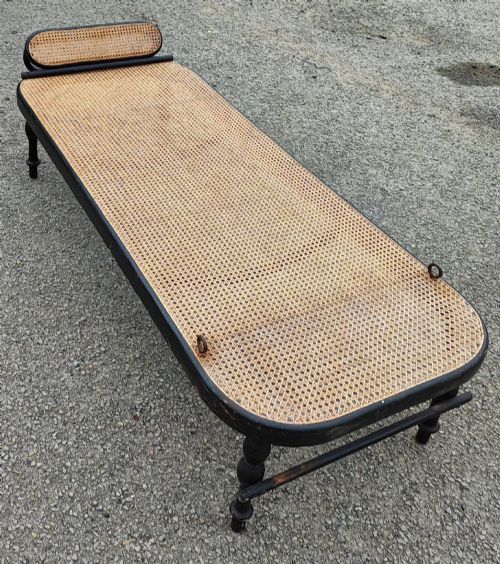


French Caned Bench
These french caned bench options are seating pieces defined by woven cane panels and timber frames, offering classic elegance and light utility for interior spaces.
French Caned Bench
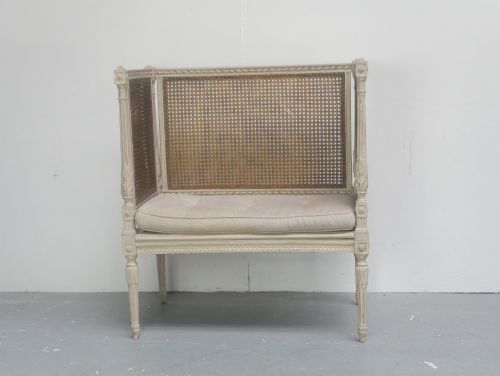
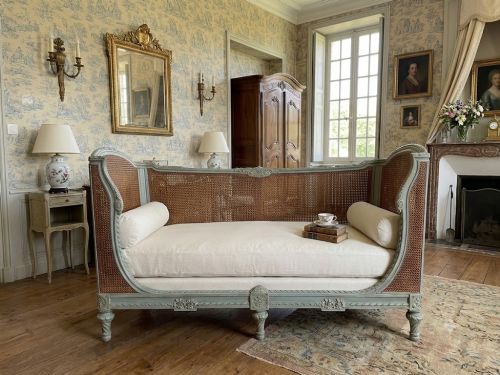
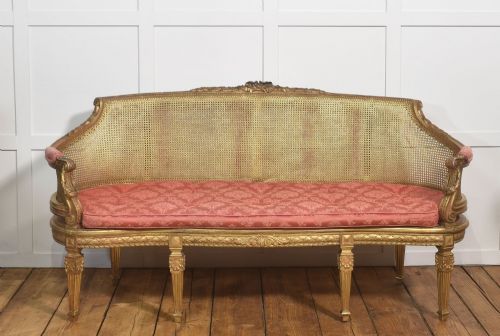
When you search for a french caned bench, you look at seating forms such as settees, daybeds, window seats, and banquettes framed in timber and woven with natural cane. The versions you are most likely to meet on this page hail from the nineteenth and early twentieth centuries, spanning revival tastes from Louis XV to Louis XVI styles.
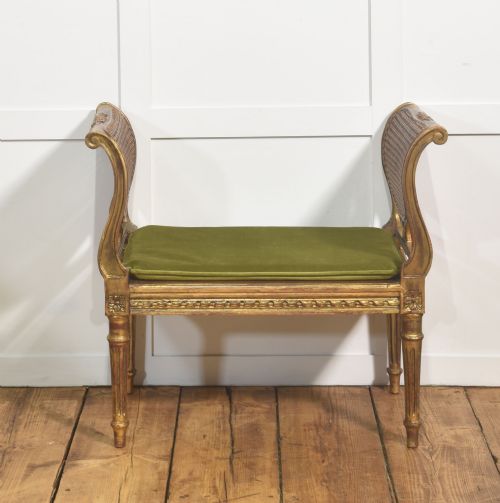
The objects take many shapes, from long stools and window seats to larger sofas and love seats. Many reflect classic French chateau aesthetics, while others bring painted or giltwood finishes to compact seating forms designed for bedrooms and drawing rooms.
How they were made
Frames are constructed from hardwoods like beech and walnut, frequently shaped with carved details before receiving paint, ebonised coatings, or layers of giltwood. These timber skeletons provide the structural rigidity needed to support the woven seating areas.
Cane panels are hand-woven directly into drilled channels along the seat rails or back frames, creating a resilient and breathable surface. Some pieces incorporate fabric upholstery on cushions or companion day beds alongside the exposed canework.
Several window seats double quietly as coffee tables, proving that antique day furniture adapts readily to modern living spaces.
What varies in quality
The fineness of the hand-woven cane work and the tightness of its pattern separate standard examples from finer outputs. Consistent tension across the woven panels indicates careful craftsmanship by the original artisan.
The crispness of the carved woodwork on beech and walnut frames marks the distinction between basic production and superior decorative pieces. Original surface treatments, whether historic paint or gilding, hold more merit than later interventions.
The French Caned Bench Glossary
- Canapé
- A French upholstered sofa or settee, often built with an exposed wooden frame and caned back or seat panels. This form is common in formal nineteenth-century French seating.
- Banquette
- A long upholstered bench or stool designed for seating multiple people, frequently seen in window recesses. Nineteenth-century examples often pair carved beech frames with woven cane.
- Giltwood
- Timber covered with a thin layer of gold leaf or gold paint to create a lustrous decorative surface. It appears frequently on formal Louis XVI style frames.
- Bergère
- An enclosed upholstered armchair or sofa with solid sides, sometimes adapted with caned panels. These pieces date across the eighteenth and nineteenth centuries.
- Gustavian
- A Swedish neoclassical style originating in the late eighteenth century, known for pale painted finishes and restrained classical proportions. Pieces in this aesthetic lean towards lighter colour palettes.
French Caned Bench: Frequently Asked Questions
How do I clean a caned seat?
Dust the cane regularly with a soft brush and wipe gently with a damp cloth to maintain moisture in the natural material.
Avoid soaking the cane, and keep the pieces away from direct heat sources to prevent the organic fibres from becoming brittle.
Can I use these benches daily?
Most antique caned seating handles normal daily use when treated with reasonable care. Adding loose cushions can reduce direct wear on historic cane panels.
For heavier daily sitting, check that the underlying cane weave remains tight and well-supported across the frame.
What is a French daybed?
A daybed combines the functions of a chair and a bed, featuring raised ends and a long seat base for reclining. Nineteenth-century versions often include caned backs and side panels.
These pieces served historically in private chambers for daytime rest and reading.