
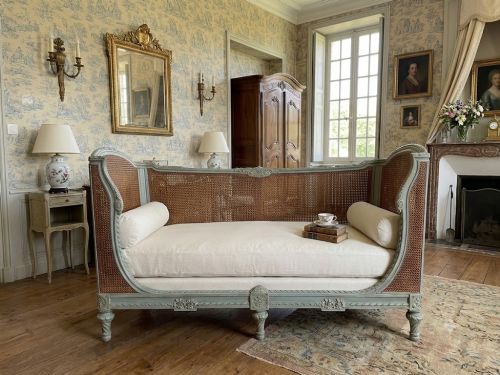
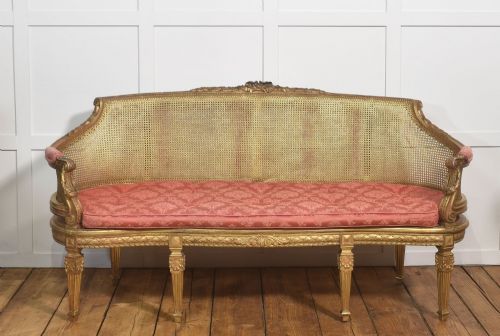
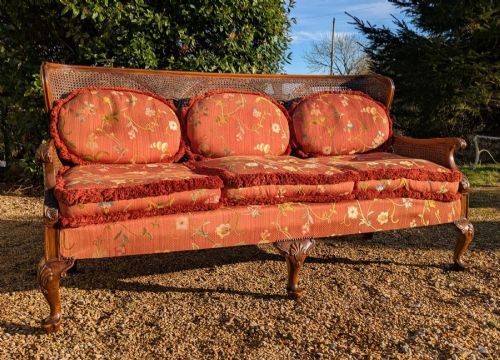


French Cane Sofa
A french cane sofa brings lightness and texture to a room, pairing woven panels with carved wood frames.
French Cane Sofa
When searching for a french cane sofa, you encounter seating built across several centuries, from the eighteenth century to the twentieth century. The selection includes daybeds, settees, and window seats that reflect historical design revivals.
Most examples align with the Louis XV style, Louis XVI style, or their later revivals. Walnut and beech frames frequently appear alongside painted or giltwood finishes.
Makers drew on classical forms to create twin and three-seater configurations. These pieces function as decorative seating in living spaces and bedrooms.
Construction and Materials
Frames rely on hardwoods such as beech and walnut, chosen for their strength in supporting carved details. Giltwood and painted wood finishes are applied to the timber surfaces.
Canework panels are woven into the backrests and armrests, creating a light, open structure. Fabric upholstery often supplements the cane work on seat cushions.
Some nineteenth century daybeds double as generous window seats designed for quiet afternoon reading.
Evaluating Quality
The precision of the wood carving separates standard frames from finer works. Crisp lines on walnut and beech indicate skilled hand-tooling.
The integrity of the woven cane work dictates the condition and longevity of the piece. Tight, uniform weaving without breaks shows higher craftsmanship.
The French Cane Sofa Glossary
- Cane
- Woven material made from rattan or similar plant stems, utilised for breathable chair backs and seat panels.
- Canapé
- The French term for a sofa or settee, often featuring an upholstered seat and exposed wooden frame.
- Bergère
- An enclosed armchair or sofa with upholstered sides and a padded seat cushion, popular in French seating design.
- Giltwood
- Wood that has been coated with a thin layer of gold leaf or gilt paint for a decorative metallic finish.
French Cane Sofa: Frequently Asked Questions
How do I clean cane panels?
Dust the woven cane gently using a soft brush to remove debris from the interstices.
Wipe the surface occasionally with a damp cloth, ensuring the material dries completely to prevent warping.
Are these sofas comfortable?
Many pieces include feather cushions or upholstered pads to provide a soft seating surface.
The woven backrest offers firm support while maintaining a breathable structure for daily use.
How do I date a settee?
Examine the timber joints, hand-carving techniques, and overall silhouette to identify the stylistic period.
Stylistic markers point toward specific revivals like Louis XVI or earlier eighteenth century origins.
Can I replace damaged cane?
Traditional hand-caning can be repaired or entirely rewoven by a skilled specialist.
Matching the weave pattern maintains the structural integrity and historical appearance of the frame.