
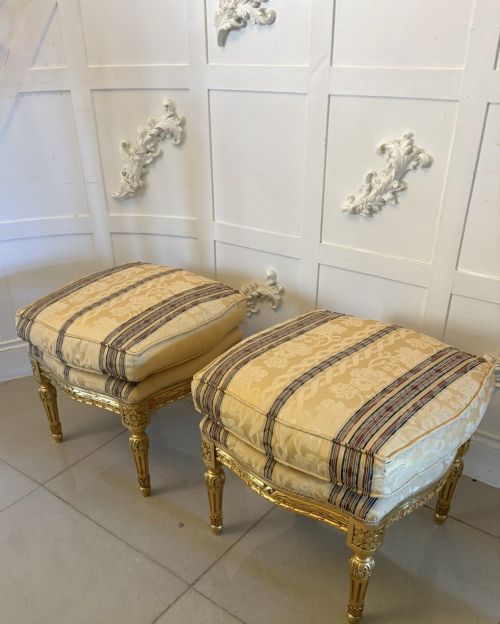
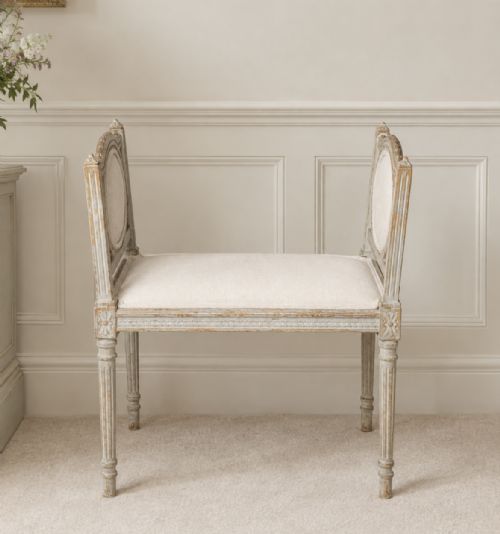
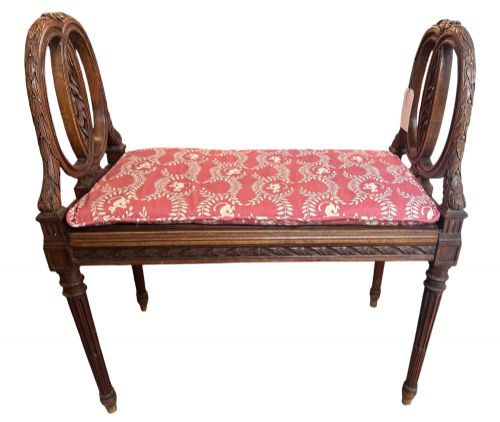


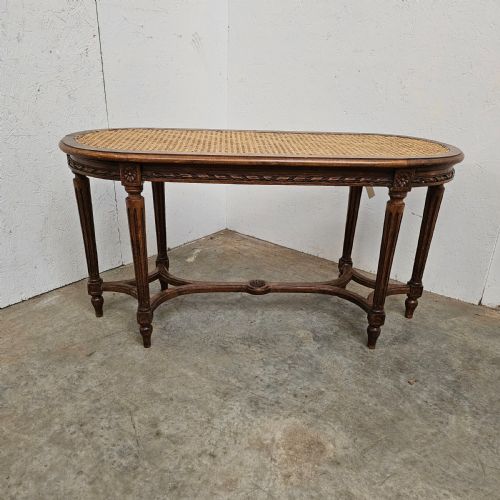


Louis XVI Carved Stools
These louis xvi carved stools bring formal French Neoclassical elegance to a room through gilded woodwork and traditional upholstery.
Louis XVI Carved Stools
When buyers search for louis xvi carved stools, they encounter French-inspired seating spanning the nineteenth century and the early twentieth century. The selections on this page encompass various forms including footstools, duet stools, circular boudoir stools, and window seats.
Most items on this page adopt the Louis XVI style, French Neoclassical design, or Gustavian aesthetics. These pieces often feature carved wood frames finished in gilt or paint, paired with textile coverings such as damask and linen upholstery.
How they were made
Carpenters shaped these frames from walnut, beech, and general timber before applying intricate carved wood ornamentation. Workshops then finished the surfaces with gilding, paint, or polish to highlight the classical motifs.
Upholsterers completed the frames using traditional textiles including damask, linen, and standard fabric. Caning also appears on selected bench frames for a lighter decorative texture.
Materials recorded across the inventory include giltwood, painted wood, carved wood, damask fabric, and brass.
What varies in quality
The standard of carving dictates much of the visual distinction across these pieces, ranging from simple mouldings to deeply sculpted botanical details. Crisp execution in the woodwork separates standard joinery from finer decorative seating.
Surface treatments also drive variation, where deeply burnished giltwood retains a different presence compared to simpler painted finishes. The choice of original or period-appropriate upholstery fabrics further influences the overall character of each item.
The Louis XVI Carved Stools Glossary
- Giltwood
- Wood coated with gold leaf or a metallic substitute. This finish defines many formal French and neoclassical seating items.
- Neoclassical
- A style drawing inspiration from classical antiquity. It emphasises straight lines, symmetry, and restrained classical ornament.
- Gustavian
- The Swedish interpretation of French Louis XVI style. It typically employs lighter painted finishes and simpler neoclassical detailing.
- Damask
- A reversible figured fabric traditionally woven on a jacquard loom. It frequently appears as upholstery on period French stools.
- Banquette
- An upholstered bench or long seat. These often feature carved wooden frames and cane or fabric panels.
Louis XVI Carved Stools: Frequently Asked Questions
Where should I place a stool?
These stools suit bedrooms, dressing rooms, and formal living spaces. They function well at the foot of a bed or beside a vanity table.
Window seats and longer benches fit naturally beneath windows or along hallway walls. Their compact proportions allow them to be moved easily between rooms as needed.
How do I identify the style?
Louis XVI style pieces typically feature straight tapered legs, fluting, and classical geometric motifs. They contrast with the curved lines of earlier rococo designs.
Gustavian pieces share this classical restraint but lean towards lighter painted surfaces. French neoclassical examples often incorporate gilded finishes and carved floral ribbons.
What materials were used?
Makers constructed the frames from woods such as walnut, beech, and other solid timbers. These frames were then finished with giltwood, paint, or left as natural carved wood.
Upholstery materials include damask fabric, linen, and standard textiles. Cane inserts also appear on specific bench designs.
How do I care for giltwood?
Giltwood surfaces require gentle dusting with a soft, dry cloth to protect the delicate metallic leaf. Avoid using liquid cleaners or polishes which can damage the finish.
Keep these pieces away from direct sunlight and moisture to preserve the wood and upholstery. Stable room temperatures prevent the wooden frames from warping over time.