
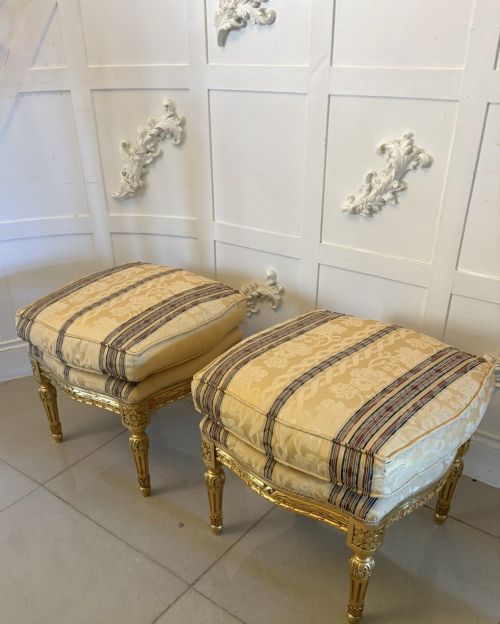
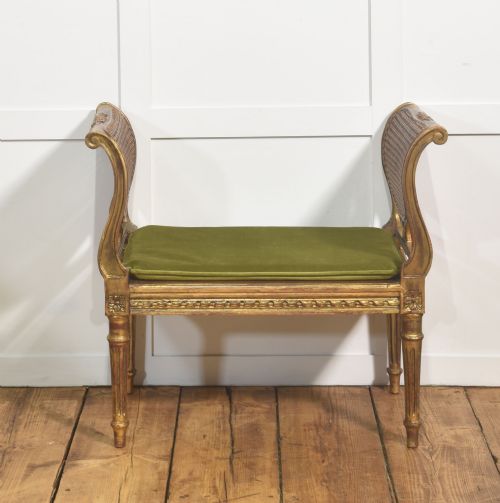
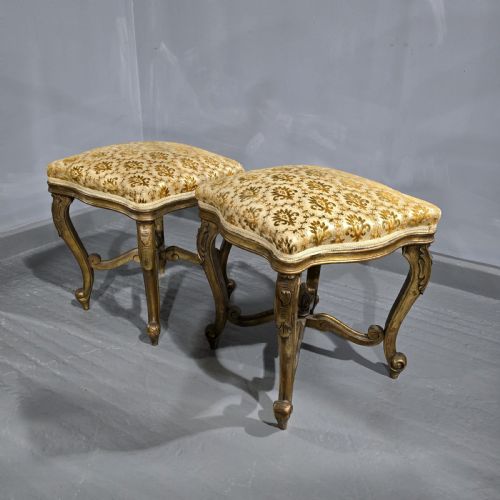
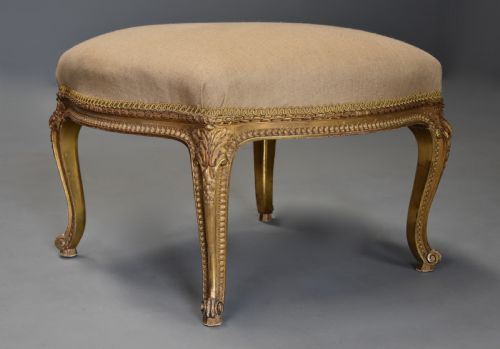


Giltwood Vanity Stool
These giltwood vanity stool pieces combine gilded frames with plush seating, offering a touch of continental elegance for a dressing room or bedroom.
Giltwood Vanity Stool
A giltwood vanity stool is a low seating piece designed for a dressing table or window placement, constructed with a gilded wooden frame. You will frequently encounter nineteenth-century examples following Louis XVI style, Louis XV Revival, and Neoclassical designs on this page.
The forms range from simple footstools and window seats to larger duet stools and adjustable piano stools. French and Italian workshops dominate the origin of these pieces, often featuring carved detail and upholstered tops.
Textiles used for the top cushions vary widely, including velvet, linen, and patterned fabrics alongside traditional cane seating. These seating pieces serve both functional dressing tasks and decorative roles within period interiors.
How they were made
Makers shaped the structural forms from wood, applying layers of gesso to prepare the carved surfaces for gilding. This traditional preparation created a smooth base for the application of gold leaf or gilt paint.
Upholstered versions secured materials like velvet, linen, and textile over padding, while other frames incorporated woven cane panels into the seat base. Structural joints relied on traditional joinery techniques suited to the specific nineteenth-century period style.
The listings span from the nineteenth century into the early twentieth century, featuring French and Italian design influences.
What varies in quality
Quality rests in the depth and crispness of the hand-carved wood and gesso ornamentation across the frame. Finer examples display fluid lines and precise botanical or classical motifs that reflect high workshop standards.
The integrity of the gilding surface and the choice of upholstery materials also distinguish pieces. Original frames showing honest wear hold a different character compared to those with later surface interventions.
LOIDRAULT FRERES PARIS·A.M.E. Fournier
The Giltwood Vanity Stool Glossary
- Giltwood
- Wood covered with a thin layer of gold leaf or gilt paint. This finish creates a bright decorative surface on the frame.
- Gesso
- A plaster mix applied to wood to create a smooth surface for carving and gilding. It allows for sharp decorative details.
- Curule stool
- An ancient Roman stool shape with X-shaped legs. Nineteenth-century revival makers adapted this form for elegant seating.
- Louis XVI style
- A neoclassical design style featuring straight tapered legs and classical symmetry. It appears frequently in nineteenth-century French seating.
- Duet stool
- A wider seating form designed for two people. These often accompany piano desks or large dressing tables.
Giltwood Vanity Stool: Frequently Asked Questions
What is a giltwood vanity stool?
A giltwood vanity stool is a small, decorative seat featuring a gilded wooden frame designed for use at a dressing table or in a bedroom.
These pieces typically date from the nineteenth century and reflect French or Italian revival styles.
How do I identify a Louis XVI style stool?
Louis XVI style stools are recognised by their straight, fluted legs and neoclassical geometric or floral carving details.
They contrast with the more curving, asymmetrical lines of earlier Rococo designs.
What materials are used for the seats?
Seating surfaces feature velvet, linen, textured fabrics, or woven cane panels supported by the wooden frame.
Upholstery varies depending on whether the piece functions as a footstool, window seat, or dressing stool.
Are these stools comfortable for daily use?
Most vanity stools provide firm, upright seating intended for short periods at a dressing table or piano.
Their primary purpose combines functional utility with decorative elegance in a bedroom setting.
How should I care for a gilded frame?
Gilded wood requires gentle dusting with a soft, dry cloth to protect the delicate gold leaf or paint layer.
Keep these pieces away from direct sunlight and moisture to preserve the nineteenth-century surface.