


French Gilt Upholstered Stool
A french gilt upholstered stool brings distinct Continental elegance to a room, offering both decorative presence and versatile seating.
French Gilt Upholstered Stool
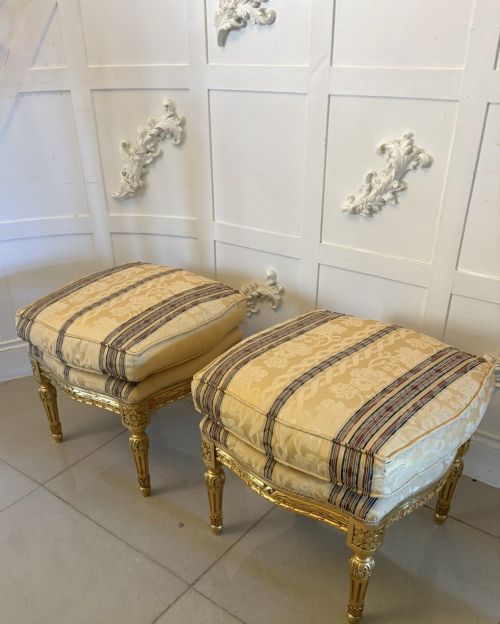
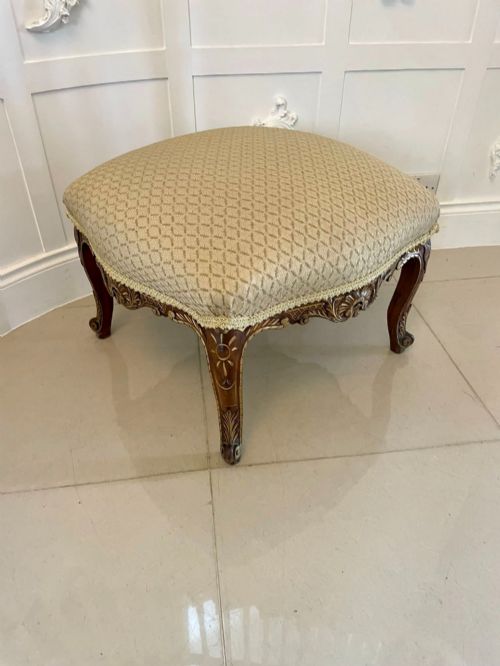
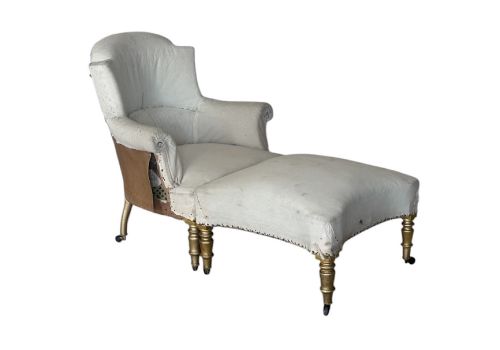
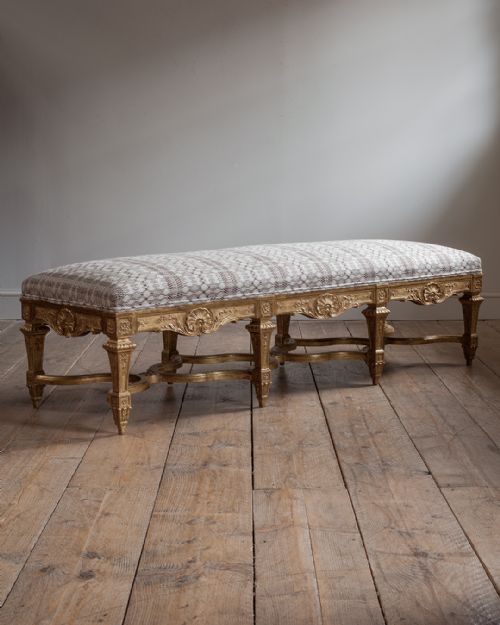
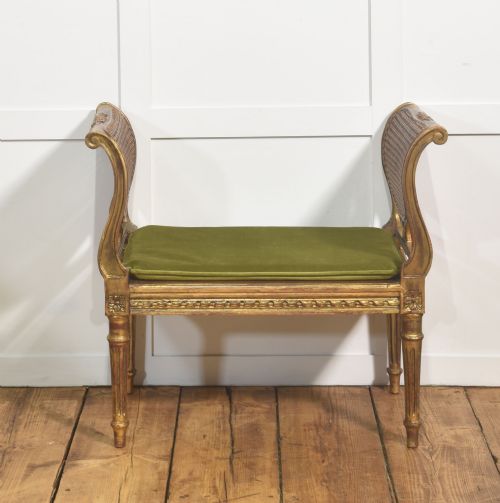
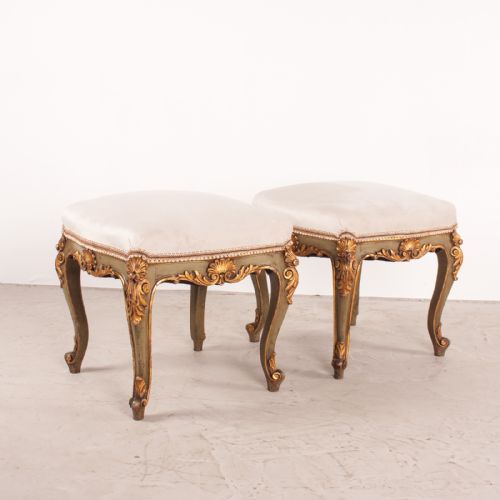
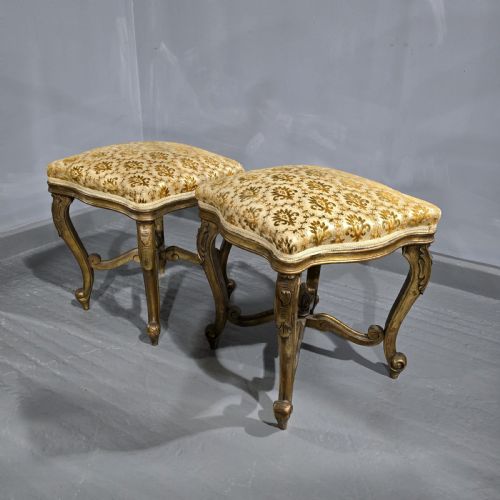
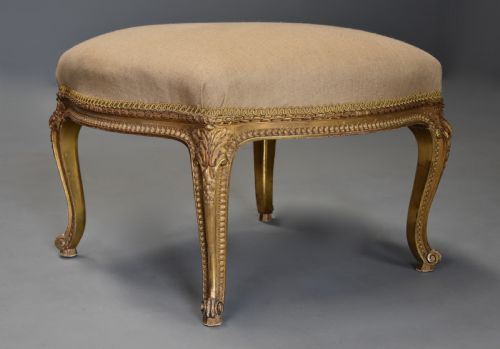
When you search for a french gilt upholstered stool, you encounter low seating designed with ornate gilded frames and soft fabric covers. These pieces range from modest footstools and window seats to grand duet stools and long benches.
The selections on this page span the nineteenth century and early twentieth century, drawing heavily on classical French design vocabularies. Louis XVI revival styles, Empire forms, and baroque influences dominate the visual landscape of these listings.
Most examples rely on carved wooden structures finished with gold leaf or paint, paired with traditional textiles like velvet, silk, or modern upholstery. They serve equally as functional footrests, window seating, or decorative accents in drawing rooms and bedrooms.
How they were made
Carpenters and joiners built the foundational frames using solid woods such as walnut or general timber, shaping them with hand-carved decorative motifs. These wooden skeletons received surface preparations including gesso before application of gold leaf, parcel gilt, or paint.
Upholstery techniques involved securing supportive webbing and stuffing directly into the frame before applying top fabrics like red silk, velvet, or patterned textiles. Details such as deep buttoning and decorative trim finished the padded upper surfaces.
Listings feature items spanning the nineteenth century alongside early twentieth-century revivals, utilising materials including giltwood, silk, velvet, and gesso.
What varies in quality
The refinement of the wood carving dictates much of the visual distinction between pieces, with crisp acanthus leaves, fluted legs, and deep relief work marking superior craftsmanship. Simpler turned supports or flat painted surfaces occupy a different tier of design ambition.
The integrity of the original gilding and the preservation of the underlying gesso layer define the surface character of each piece. Variations also emerge in the structural complexity of the frame, from straightforward rectangular forms to sophisticated X-frames, curule designs, and adjustable screw mechanisms.
LOIDRAULT FRERES PARIS·A.M.E. Fournier
The French Gilt Upholstered Stool Glossary
- Giltwood
- Wood that has been coated with thin sheets of gold leaf over a prepared gesso ground. This technique creates a luminous, reflective metallic surface that resists tarnish.
- Gesso
- A plaster mixture applied to wooden furniture frames to create a smooth surface for gilding or painting. It allows carvers to achieve sharp, detailed relief work.
- Curule stool
- An ancient Roman magistrate form of seating featuring intersecting X-shaped legs. Revival pieces adopt this dramatic folding silhouette for formal interior use.
- Duet stool
- An elongated piano seat or bench built to accommodate two players side by side. These pieces often feature upholstered tops suited for extended sitting.
- Parcel gilt
- A decorative finish where only specific carved highlights or raised portions of a wooden object are gilded, leaving the underlying wood or paint visible elsewhere.
French Gilt Upholstered Stool: Frequently Asked Questions
Where should I place a french gilt upholstered stool?
These stools fit well at the end of a bed, beneath a window, or beside a fireplace where their gilded frames catch the light. They function effectively as standalone decorative accents or functional seats.
Because of their compact size, they move easily between rooms to provide extra seating when entertaining guests.
How do I identify a Louis XVI style stool?
Louis XVI style pieces typically feature straight, tapered legs often adorned with fluting, contrasting with the curved lines of earlier rococo designs. Rectangular or oval seat frames are common in this classical revival aesthetic.
Ornamentation often includes carved bead reels, laurel wreaths, and neoclassical architectural motifs.
Are these stools suitable for daily use?
Most antique stools retain sturdy wooden frames that support everyday sitting or resting of feet. Consideration should be given to the condition of the upholstery and the stability of older joinery.
Placing them in moderate traffic areas helps preserve delicate silk or velvet coverings and gilded finishes over time.
What is an adjustable screw top stool?
An adjustable screw top stool uses a central wooden or brass threaded mechanism concealed beneath the seat. Turning the top allows the user to raise or lower the seating height.
This functional adaptation appears frequently on nineteenth-century piano stools and duet seating where customized height was necessary.