




Louis XVI Bedstead
A louis xvi bedstead brings classical French proportion and symmetry to a bedroom, offering a substantial statement piece built for daily rest.
Louis XVI Bedstead
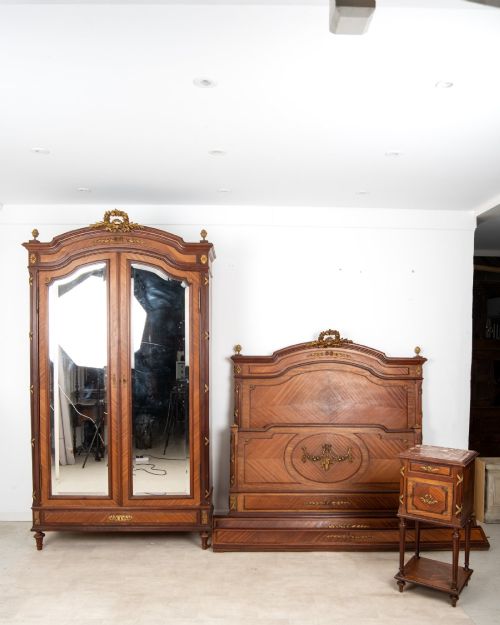
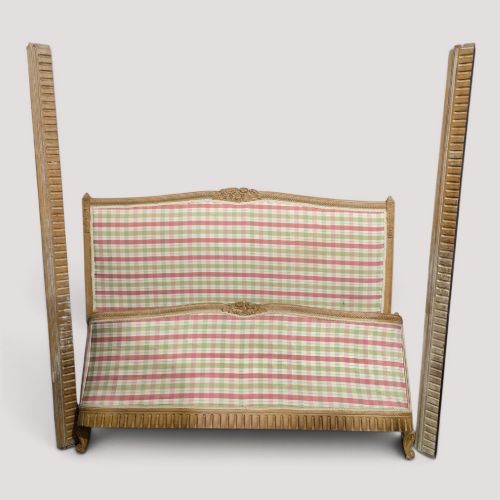
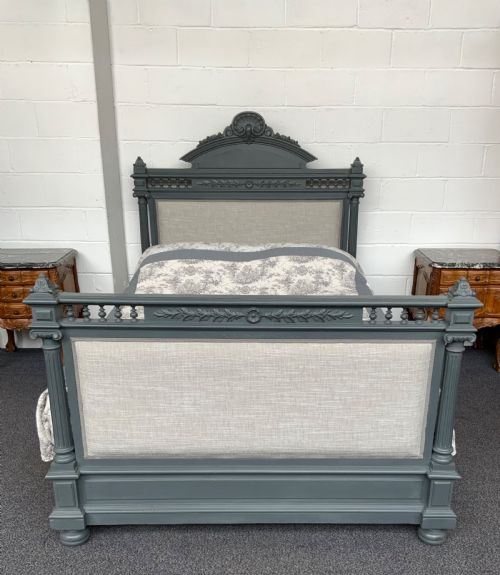
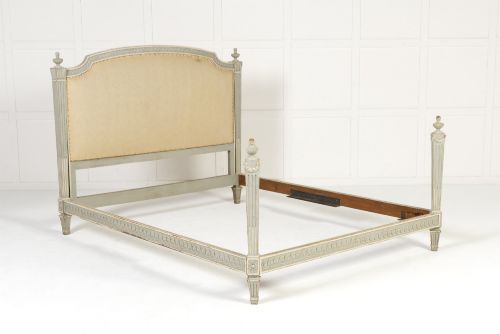
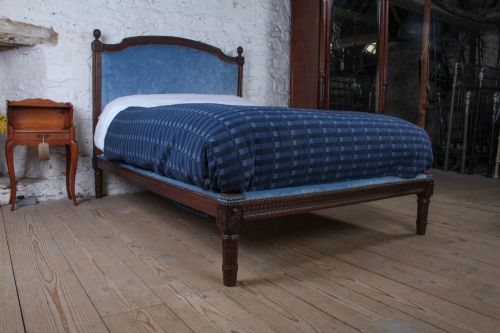
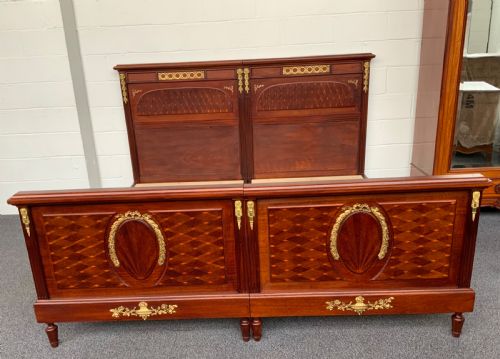
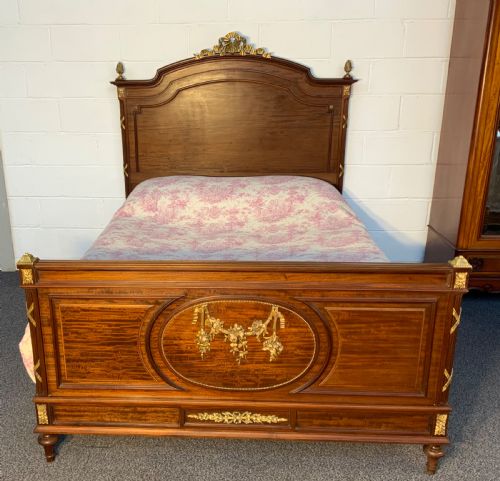
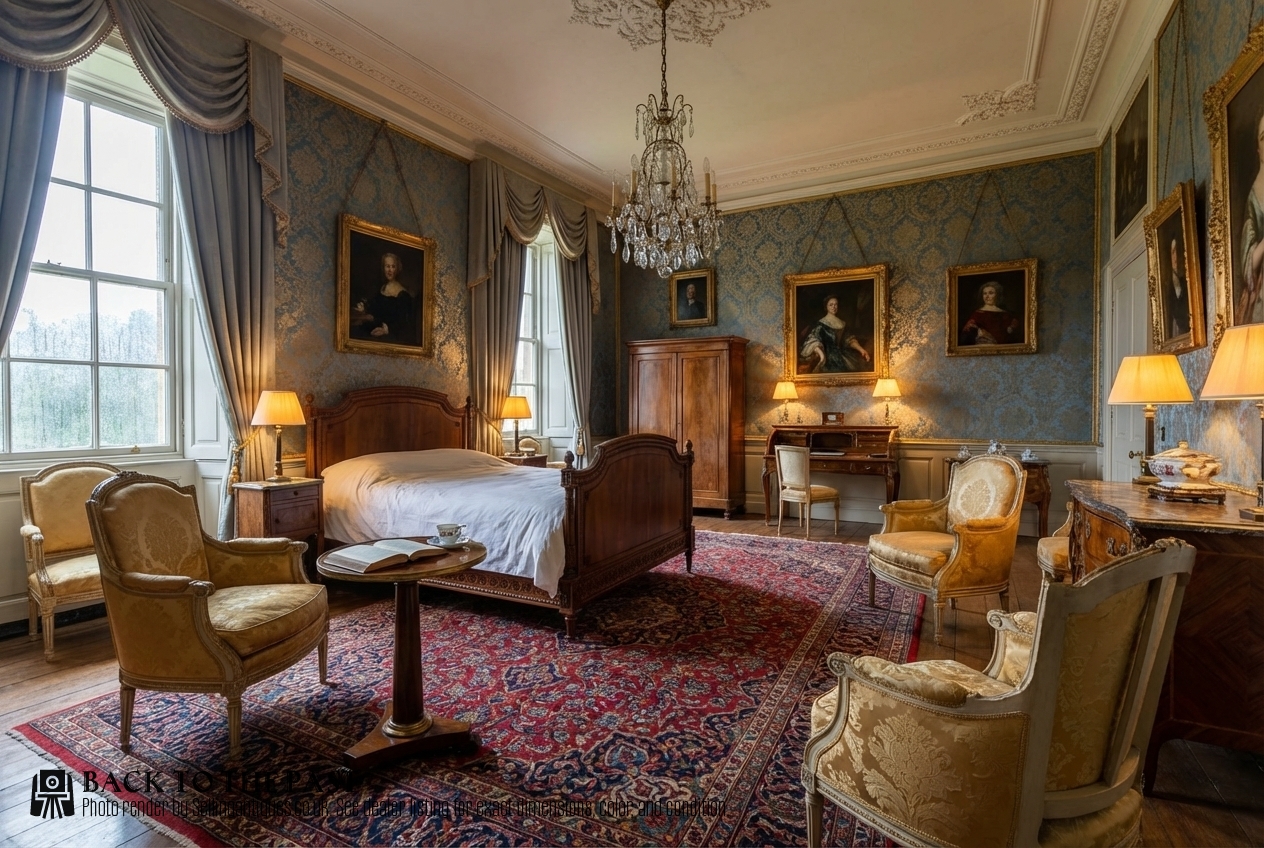
When you search for a louis xvi bedstead, you find large wooden frames shaped by classical restraint, straight lines, and balanced proportions. The examples seen on this page span several decades from the nineteenth and twentieth centuries, often adopting revival or provincial interpretations of the original eighteenth-century aesthetic. These pieces range from single proportions to grand king sizes and super king sizes, sometimes arriving alongside matching bedroom suites.
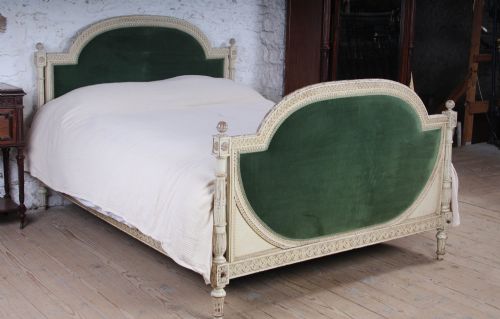
The construction typically follows familiar formats such as double beds, king sizes, and twin single options, occasionally incorporating low-end designs or corbeille shapes. Makers of the revival periods drew heavily on neoclassical vocabulary, implementing fluted columns, rectilinear panels, and restrained carving rather than the exuberant curves of earlier reigns. Buyers most frequently encounter painted wood, walnut, or mahogany versions that bridge historical character with modern mattress requirements.
Materials and Construction Methods
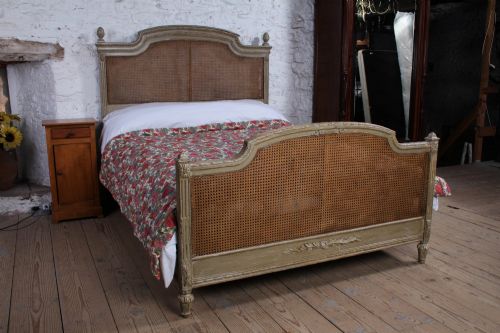
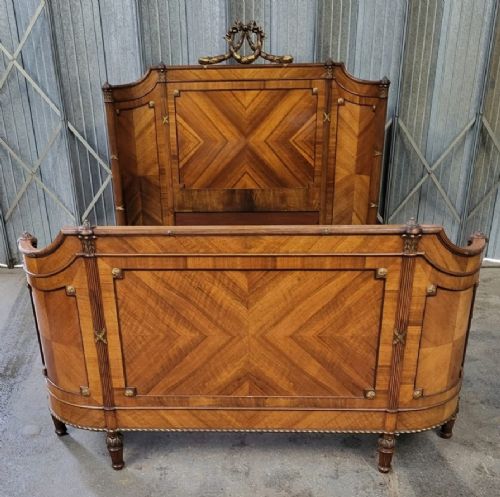
Cabinetmakers utilised dense hardwoods like mahogany, walnut, and oak as the foundational structure for these frames, often applying quarter veneers or fruitwood parquetry to flat surfaces. Painted wood finishes, sometimes accented with parcel gilding or polychrome hand-painted floral and portrait panels, altered the visual weight of the timber. Caning was frequently woven into headboards and footboards to provide a lighter, airier texture alongside the solid wood framework.
Decorative metal accents such as brass detailing and ormolu mounts added punctuation to corners, rails, and crestings. Upholstery played a central role, with fabric panels fitted to headboards and footboards, often updated in contemporary textiles while retaining the traditional wooden silhouette. Carving appeared selectively on crest rails, stiles, and posts, emphasising structural axes rather than covering every available surface.
Louis XVI Bedstead Retail Price Guide 2026
Typical asking prices for louis xvi bedstead among the pieces listed under this phrase on Sellingantiques today, from the lower quarter to the upper quarter. They describe what is for sale here now, not the wider market.
The inventory records both standalone bedsteads and complete bedroom suites incorporating matching wardrobes and bedside cabinets.
Differentiating Quality in Period Frames
The distinction between ordinary and superior pieces rests upon the crispness of the hand-carving and the integrity of the timber selection. Finer examples display meticulously matched veneers, precise parquetry patterns, and deeply articulated wooden motifs rather than shallow, mechanically cast ornaments.
Surface treatment further separates the tiers, with skilled polychrome painting, delicate gilding, and tightly woven natural cane indicating workshop investment. The weight and finish of applied brass and ormolu hardware, alongside the solidity of the primary frame joints, govern the long-term durability and visual presence of the bedstead.
Constantin Potheau
The Louis XVI Bedstead Glossary
- Louis XVI Style
- A neoclassical design vocabulary defined by straight lines, symmetry, classical columns, and rectangular geometry. It stands in contrast to the curved exuberance of the preceding Louis XV aesthetic.
- Ormolu
- Gilded bronze mounted to furniture as decorative hardware or decorative accents. It provides a bright metallic contrast against dark mahogany or walnut surfaces.
- Parquetry
- Geometric wood mosaic work formed by small veneer pieces laid into a patterned surface. It demonstrates high cabinetmaking skill on headboards and footboards.
- Corbeille
- A French bed style featuring a rounded, basket-like curved headboard and footboard enveloping the mattress. This form creates an enclosed, cocooning sleeping space.
- Caning
- Woven rattan material used to form light, semi-transparent panels within headboards and footboards. It introduces textural contrast to solid timber frames.
Louis XVI Bedstead: Frequently Asked Questions
How do I fit a modern mattress?
Many period wooden frames were built to historical French sizing standards which differ slightly from standard modern British or international dimensions. Adjustments to side rails or the inclusion of custom modern slatted bases often resolve these discrepancies.
Consulting the internal dimensions listed for each bedstead ensures your chosen mattress drops securely into the frame without altering the visible exterior woodwork.
Are these beds structurally sound?
Period frames rely on robust hardwood construction and sturdy corner brackets to support modern sleeping weights. Most examples have undergone historical restoration or bolt replacement to guarantee daily stability.
Checking the connection points between the headboard, footboard, and side rails confirms the frame remains rigid and dependable for regular use.
How do I clean painted wood?
Painted and parcel-gilt surfaces require gentle maintenance using a soft, dry cloth to remove dust without disturbing delicate pigments or metallic leaf. Moisture and chemical cleaning agents can damage aged finishes and should be strictly avoided.
Applying occasional micro-crystalline wax helps protect vulnerable painted panels from atmospheric wear while preserving the original patina.
Can I dismantle these frames easily?
Most antique wooden bedsteads utilise standard knockdown bolt systems designed for straightforward assembly and breakdown during house moves. The side rails typically detach from the headboard and footboard posts using internal metal bolts.
Keeping the original bolts and hardware organised during disassembly ensures the frame retains its alignment when re-erected in a new room.