





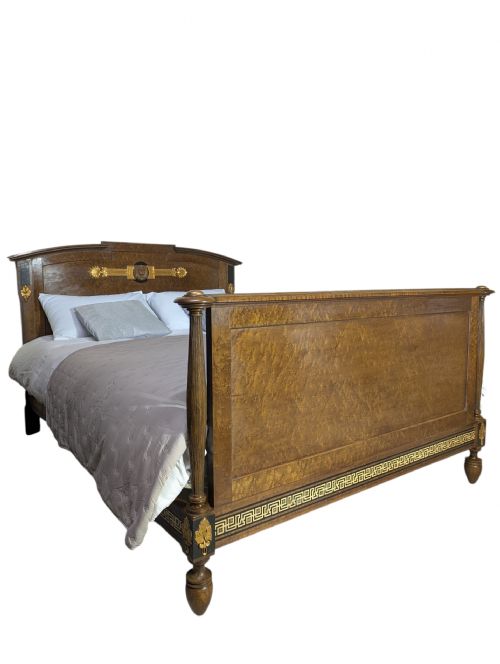


French Neoclassical Bed
When you search for a french neoclassical bed, you enter a world of structured dignity, refined symmetry and historic grandeur.
French Neoclassical Bed
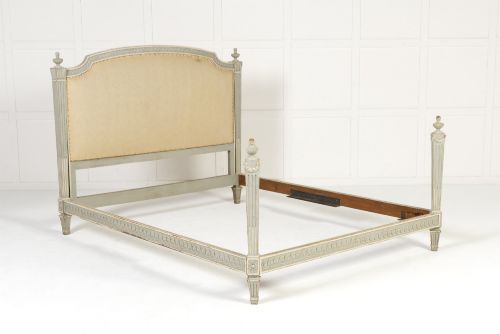
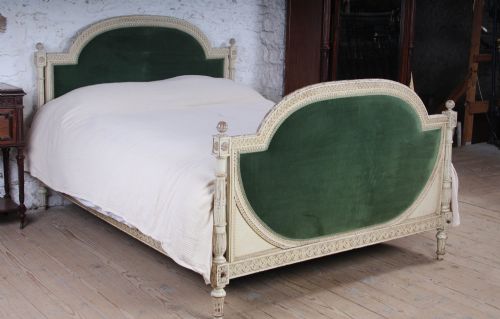
A french neoclassical bed brings architectural proportion and restrained classical ornament into the bedroom. You will most frequently encounter king size and double bedframes dating from the nineteenth and early twentieth centuries, particularly from the 1800s up to 1920. The forms draw directly on Louis XVI and Empire styles, favouring straight lines, fluted columns and balanced symmetry over exuberant curves.
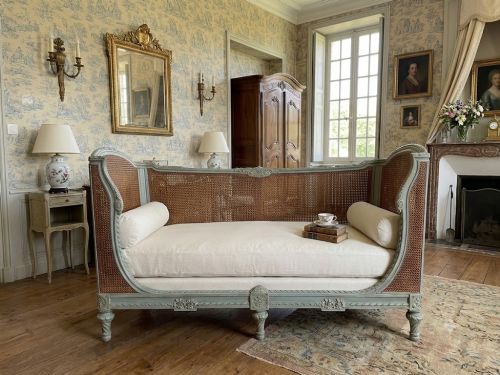
Alongside complete beds and bedsteads, the selection occasionally encompasses daybeds, canapés and related bedroom seating. These pieces often feature painted wood finishes, polished mahogany, walnut or fruitwood, reflecting the enduring appeal of classical design vocabulary across successive revivals.
How they were made
Cabinetmakers constructed these bedframes using solid timbers such as mahogany, walnut and fruitwood, frequently enhanced by decorative parquetry, marquetry or painted surfaces. Artisans applied hand-painted portrait panels or subtle polychrome details to wooden panels, creating delicate focal points on headboards and footboards.
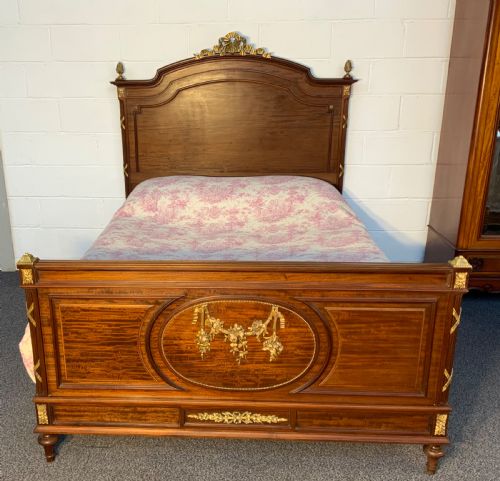
Metal enrichment played a crucial role in defining the neoclassical aesthetic. Workshops cast and chased ormolu, brass and gilt bronze mounts, applying them meticulously to accent corners, friezes and structural joints. Caning was also utilised for airy headboard and footboard inserts, combining natural woven cane with sturdy wooden frames.
What varies in quality
The distinction between standard examples and the finest pieces rests upon the precision of the joinery and the integrity of the materials. Superior beds employ finely figured timbers such as plum pudding mahogany or carefully matched fruitwood veneers, showing tight, even grain patterns across large surfaces.
Execution of ornament dictates the upper tier of quality. Hand-carved details remain crisp and deep, cast bronze and ormolu mounts display sharp chasing rather than soft, blurred edges, and painted panels exhibit accomplished portraiture or botanical artistry rather than routine decorative filler.
The French Neoclassical Bed Glossary
- Ormolu
- Gilded bronze mounts applied to furniture. This technique involves coating cast bronze with a finely ground gold-mercury amalgam and heating it to bond the gold.
- Parquetry
- Geometric wood-mosaic work used for flooring or furniture decoration. Small pieces of contrasting timber are fitted together to form repeating patterns.
- Caning
- Woven rattan material used for chair backs and bed panels. It provides a lightweight, resilient surface with a distinct textural pattern.
- Marquetry
- Elaborate veneer patterns applied to wood structures. Artisans cut various thin woods, shells or metals to picture pictorial or decorative scenes.
- Neoclassical
- A style reviving classical Roman and Greek art forms. It emphasises symmetry, straight architectural lines and classical motifs such as urns and wreaths.
French Neoclassical Bed: Frequently Asked Questions
Can standard mattresses fit these beds?
Many antique frames accommodate modern mattress dimensions, though historical proportions occasionally require custom sizing. Check internal rail measurements prior to purchase.
Wooden slats or modern base inserts can be adapted to support contemporary mattresses securely within the antique frame.
How do I care for wood and ormolu?
Maintain wooden surfaces with appropriate natural wax applied sparingly and buffed gently with a soft cloth. Avoid placing antique furniture near direct heat sources.
Dust ormolu and brass mounts with a dry, soft brush, avoiding chemical polishes that can strip the historic gilding.
How do I identify a revival piece?
Revival pieces from the late nineteenth or early twentieth centuries often combine classical motifs with construction techniques characteristic of their actual production era. Examine secondary timbers and screw types for clues.
Stylistic markers such as Louis XVI revival details indicate a deliberate historical homage rather than an original eighteenth-century creation.