
Louis XV Walnut Chest
A louis xv walnut chest brings sculptural curves and rich timber grain to an interior, whether originating in the eighteenth century or later revival periods.
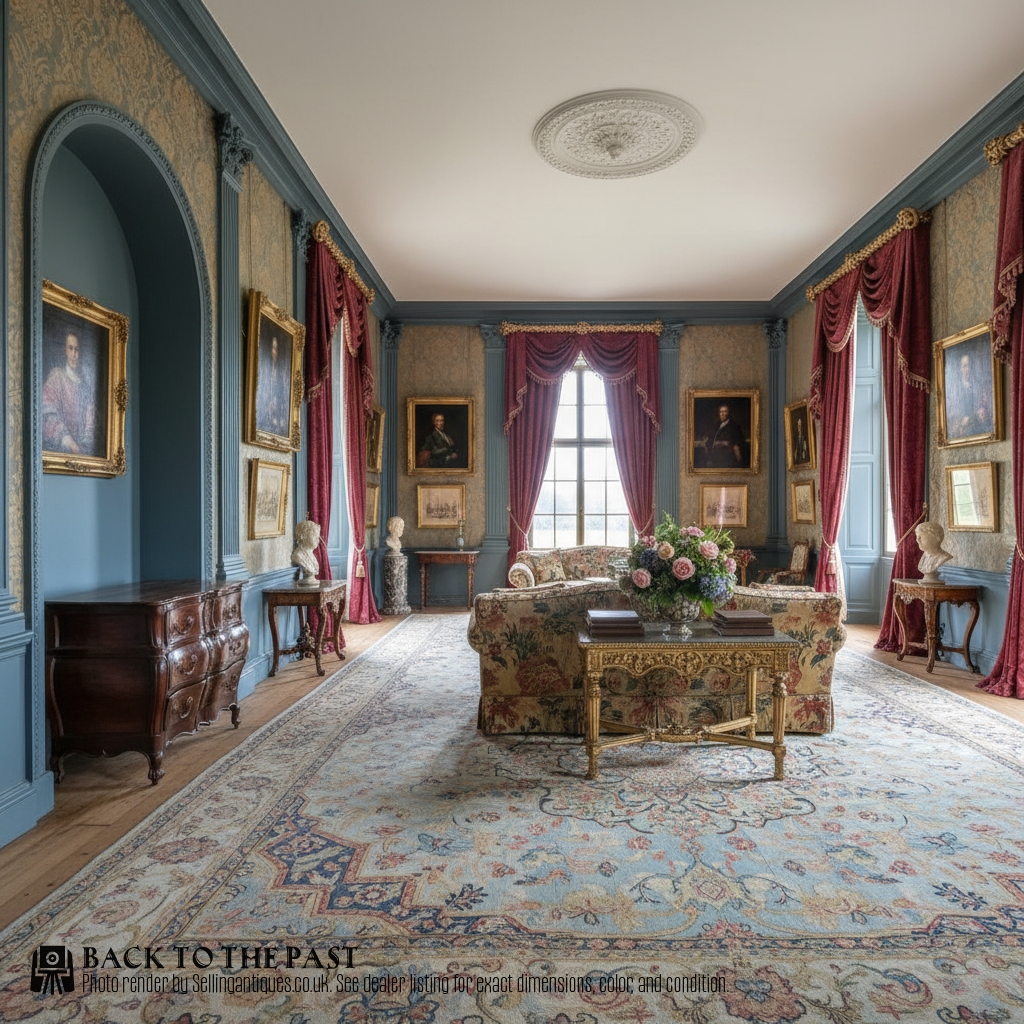
Louis XV Walnut Chest
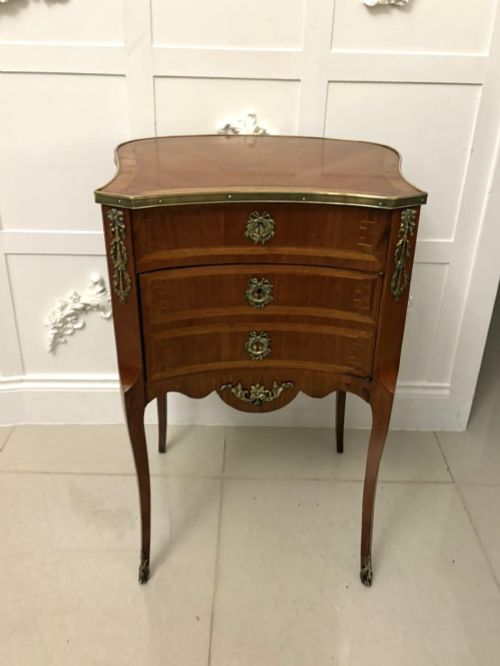
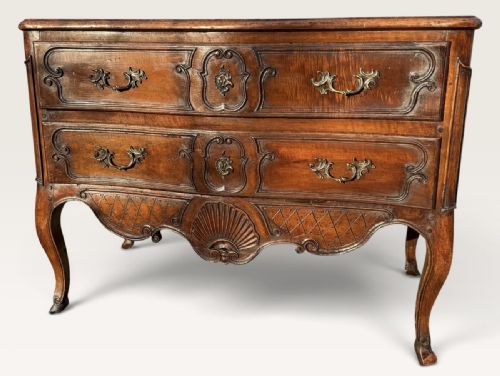
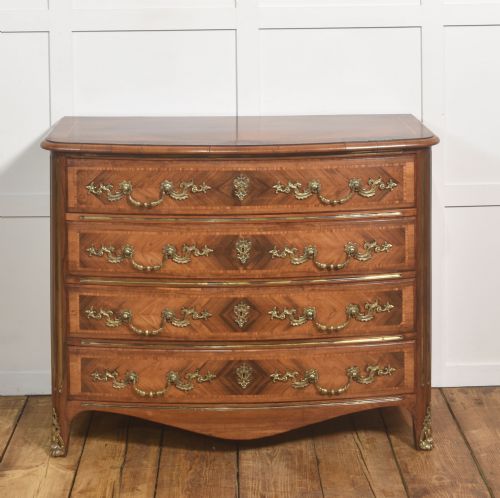
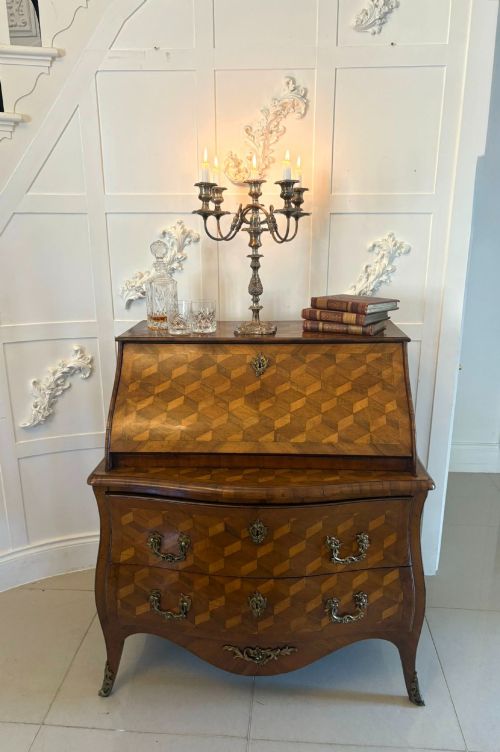
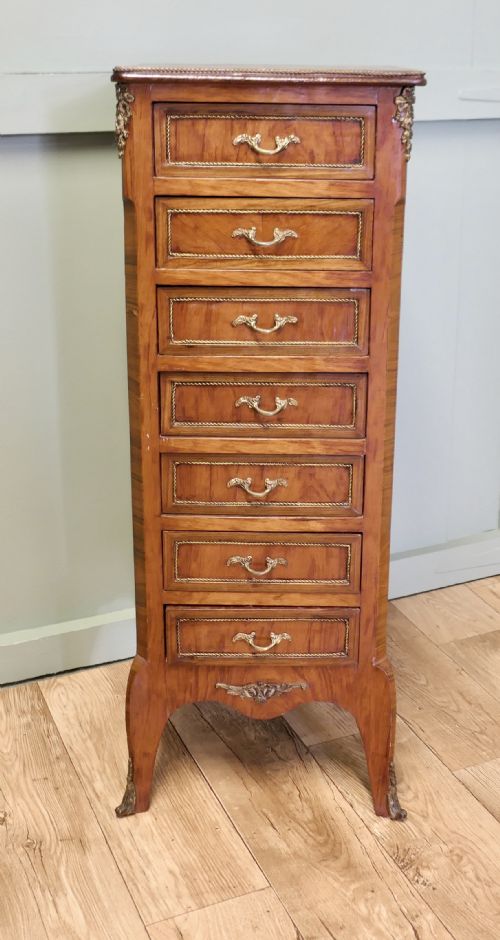
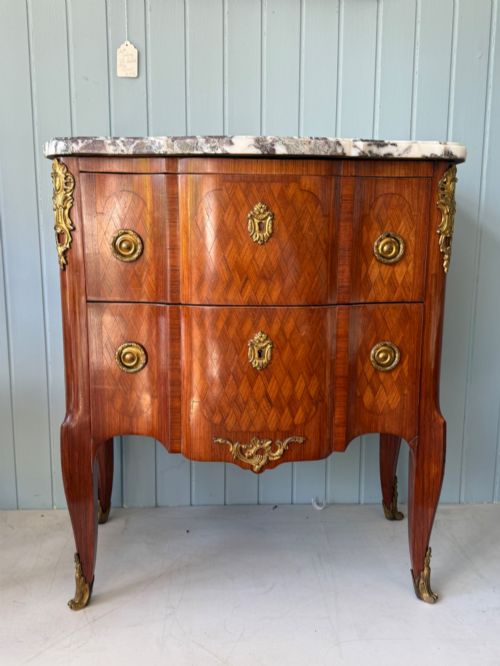
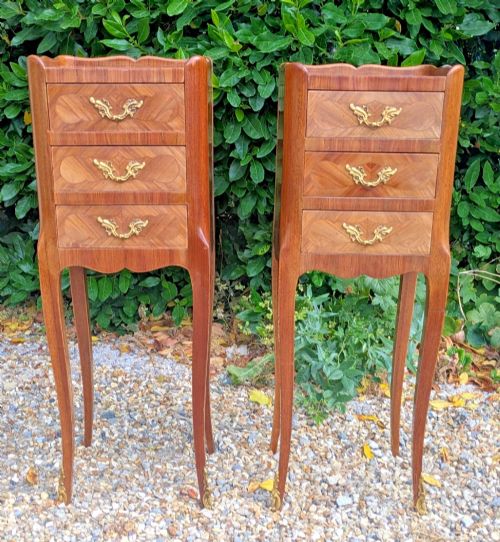
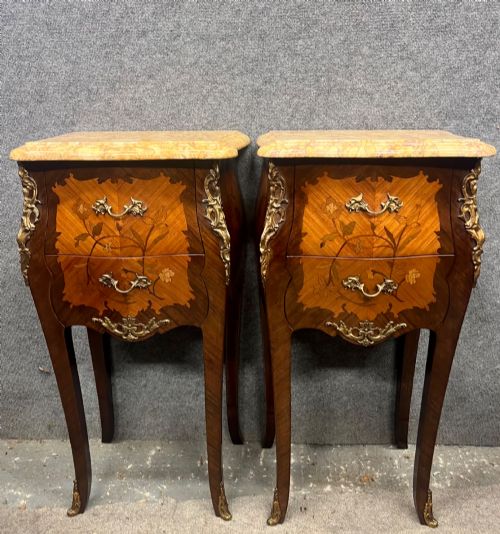
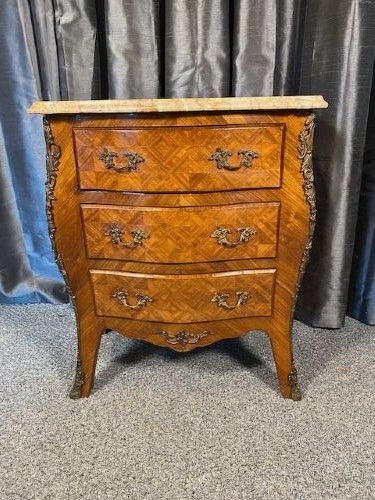
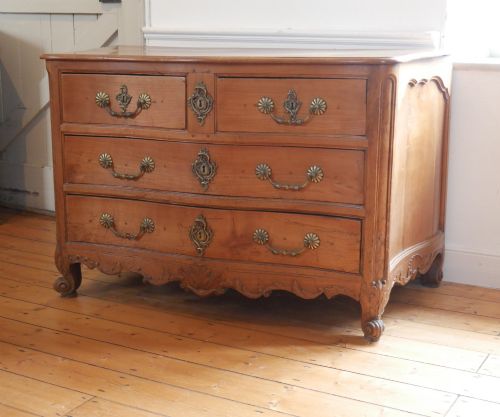
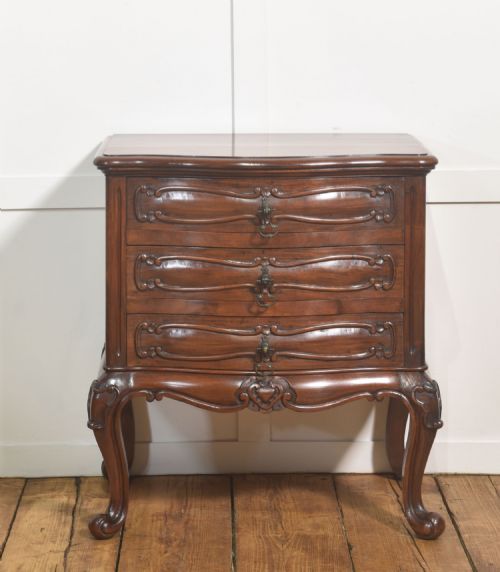
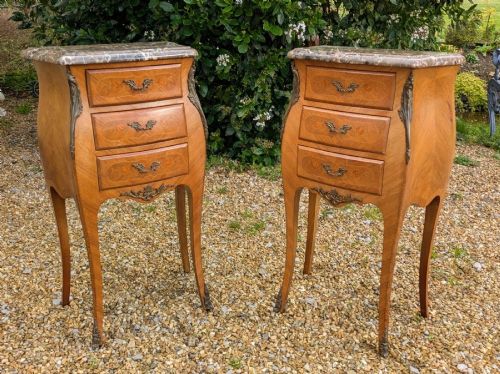
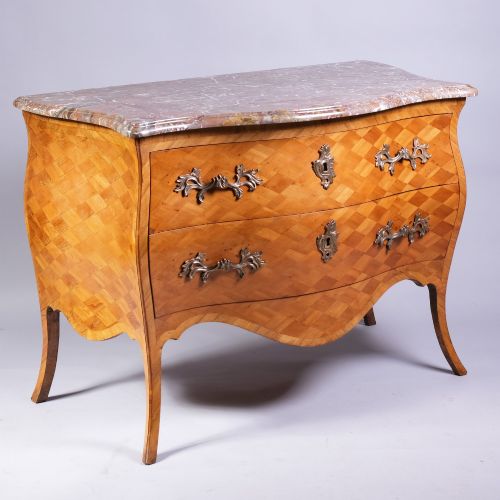
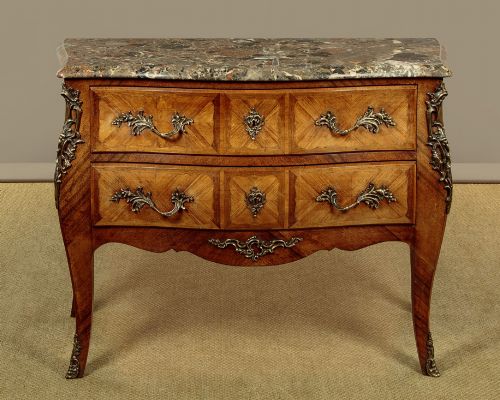
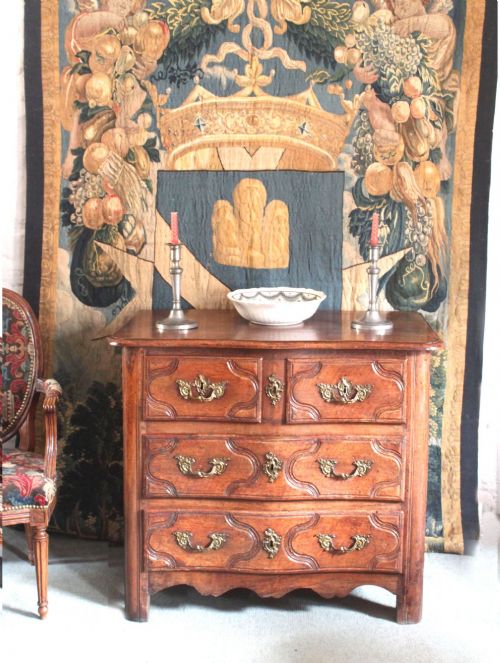
A louis xv walnut chest encompasses serpentine commodes, bedside tables, and tall drawer units rooted in French rococo design. The pieces on this page span from original eighteenth-century provincial work to revival interpretations made across the nineteenth and twentieth centuries.
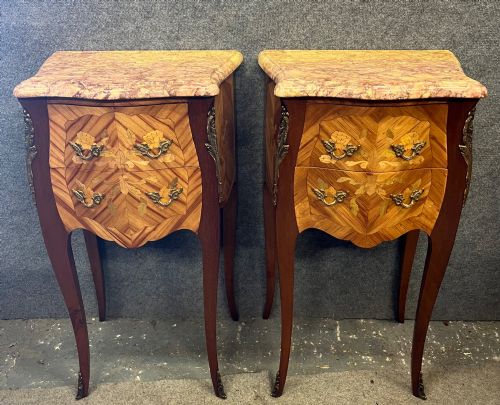
Buyers encounter substantial marble-topped commodes alongside compact bedside cabinets and bombe shapes. Walnut serves as the principal timber, often accented with lighter wood inlays or paired with marble surfaces.
Materials and construction
Cabinet makers utilised solid walnut and decorative veneers laid in marquetry or parquetry patterns, sometimes combining kingwood and rosewood. Brass, ormolu, and gilt bronze mounts decorate corners, handles, and apron centres.
Structural elements frequently include fitted marble tops in various colour tones, supported by curved carcasses built with dovetail joinery.
Materials appearing alongside primary walnut include marble, brass, ormolu, kingwood, and rosewood.
Evaluating standard and finish
Quality rests in the fluidity of the serpentine contour and the precision of the veneer work across curved surfaces. Pieces with original marble tops and intact bronze mounts demonstrate superior craftsmanship compared to later replacement elements.
The crispness of the hand-cut inlay and the structural integrity of the dovetailed drawers distinguish master workshops from standard production.
The Louis XV Walnut Chest Glossary
- Commode
- A low chest of drawers, typically featuring decorative mounts and a shaped front. These pieces originated in France as fashionable bedside or living room storage.
- Bombe
- A swelling, outwardly curved commode profile that requires advanced woodworking skill to construct. The contour creates deep sides and a rounded front.
- Marquetry
- The art of forming decorative patterns using thin veneers of different coloured woods. Craftsmen assemble these designs to depict floral motifs or geometric fields.
- Serpentine
- A curved line that waves inward and outward in a smooth 'S' shape. This profile defines the fronts and sides of many classical cabinet designs.
- Ormolu
- Gilt bronze mounted as decorative hardware on furniture. The technique involves applying finely ground gold-mercury amalgam to bronze.
Louis XV Walnut Chest: Frequently Asked Questions
How do I spot an eighteenth-century piece?
Examine the interior drawer construction for hand-cut dovetails and timber shrinkage consistent with age. Provincial walnut pieces often show tool marks and variations absent in later revival work.
Check the timber backing and secondary woods used inside the carcass, as nineteenth and twentieth-century reproductions utilise different milling techniques and standardised screws.
Are marble tops original to these chests?
Many commodes and bedside cabinets retain their original fitted marble slabs, which rest securely on the wooden frame. Edges shaped to match the serpentine contour indicate a top made specifically for that carcass.
Replacement marble surfaces often display modern machine polishing or edges that do not align precisely with the timber moulding below.
What maintenance does walnut require?
Apply traditional beeswax sparingly to nourish the timber and maintain a soft sheen without building up sticky layers. Avoid placing walnut furniture near direct heat sources that cause wood to split.
Protect marble tops from acidic liquids like citrus juice or wine, which etch the polished stone surface upon contact.