
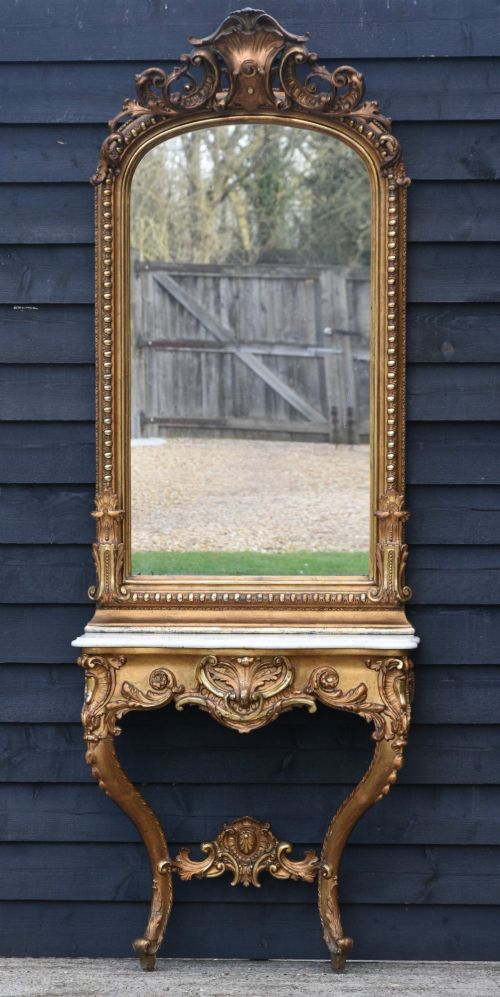
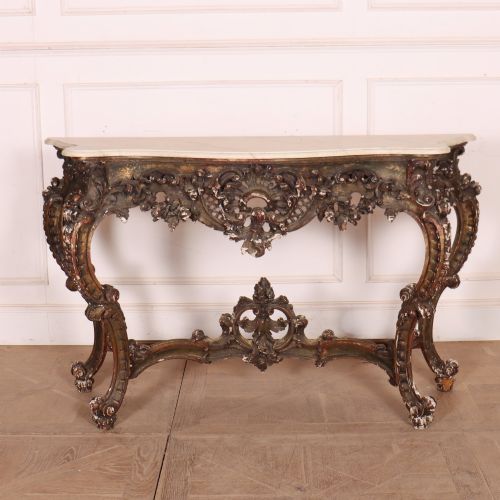
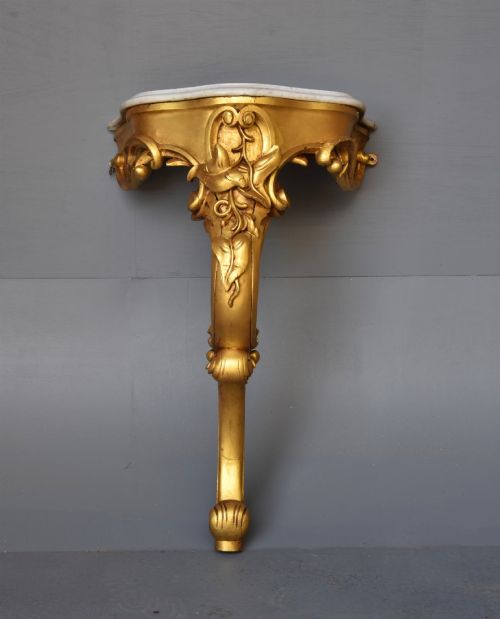
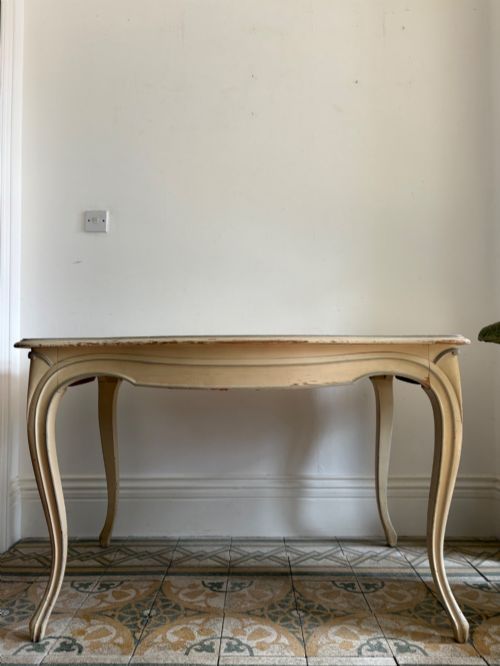


Louis XV Wall Table
A louis xv wall table brings fluid French curves and carved ornamentation into a room, serving as a striking focal point against any wall.
Louis XV Wall Table
When you search for a louis xv wall table, you encounter console tables, wall mirrors, and matching sets designed to anchor a room. These pieces originate primarily from the 18th and 19th centuries, reflecting French Rococo and revival aesthetics.
You are most likely to meet 19th-century interpretations on this page, alongside 18th-century originals and later 20th-century painted variations. Forms range from serpentine front console tables to paired side tables and pieces featuring inset marble tops.
How they were made
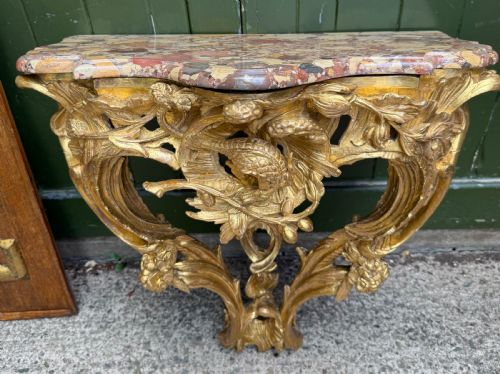
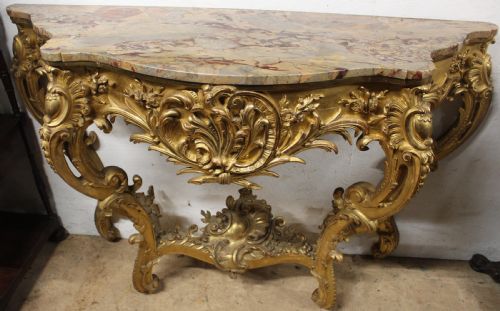
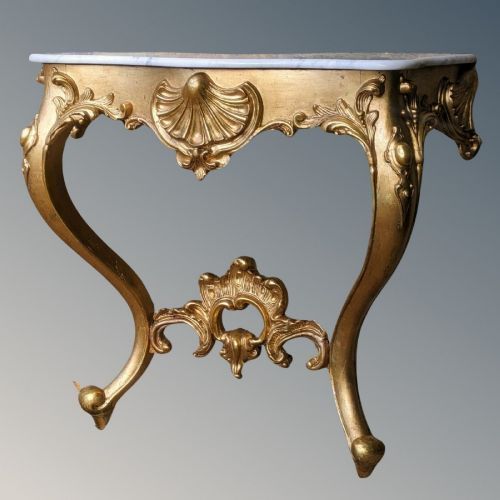
Carved wood forms the structural base of these tables, frequently finished with gesso, gold leaf, or paint to achieve a gilded or cream-finished surface. Craftsmen shaped walnut, oak, and other timbers into characteristic cabriole legs and sweeping curves.
Heavy marble tops, including figured varieties like breche d'alep and sienna marble, sit atop the wooden bases to provide a durable and cool surface. Gilding and carved detailing create the signature texture associated with French provincial and chateau styling.
Some tables arrive with marble tops so heavy that moving them requires the careful coordination of two determined people.
What varies in quality
The depth and crispness of the hand-carved wood ornamentation distinguish finer examples from simpler provincial pieces. Crisp detailing in the gesso and the purity of the applied gold leaf indicate superior workshop production.
The choice and thickness of the fitted marble top influence the overall weight and substance of the table. Solid construction of the cabriole legs and joinery determines the structural longevity of the console.
The Louis XV Wall Table Glossary
- Console table
- A table supported by wall brackets or console legs, designed to stand against a wall. These tables often feature decorative carved aprons and marble surfaces.
- Cabriole leg
- A furniture leg that curves outward and then tapers inward, mimicking the shape of an animal's leg. This form is a defining characteristic of Rococo design.
- Giltwood
- Wood that has been coated with gold leaf or a gold-coloured finish. It provides a reflective surface that catches natural light in a room.
- Breche d'alep
- A type of quarried marble featuring brecciated patterns of various earth tones. It appears frequently on the tops of period console tables.
- Trumeau mirror
- A decorative wall mirror often paired with a matching console table below it. The frame typically incorporates painted or carved wood panels.
Louis XV Wall Table: Frequently Asked Questions
Where should I place a wall table?
These tables suit hallways, living rooms, and dining spaces where floor space is limited. Positioning them against a central wall allows them to function as display surfaces.
Matching them with a wall mirror or trumeau creates a cohesive vertical arrangement that draws the eye upward.
How do I care for a marble top?
Wipe the stone surface regularly with a soft, damp cloth to remove dust and debris. Avoid acidic cleaners that can etch the polished finish.
Use coasters under glasses and protect the marble from moisture to maintain its appearance over time.
Are these tables completely wall-mounted?
Many console tables feature front legs while requiring attachment to the wall for complete stability. This construction prevents the piece from tipping forward.
Some lighter side tables and wall-mounted variants rely entirely on brackets secured directly into the wall studs.
How do I identify a revival piece?
Revival pieces from the nineteenth and early twentieth centuries adopt earlier 18th-century motifs and proportions. Examining the timber age, joinery techniques, and wear patterns helps clarify the manufacturing era.
Stylistic cues like Rococo Revival carvings point to later interpretations of the classic French aesthetic.