
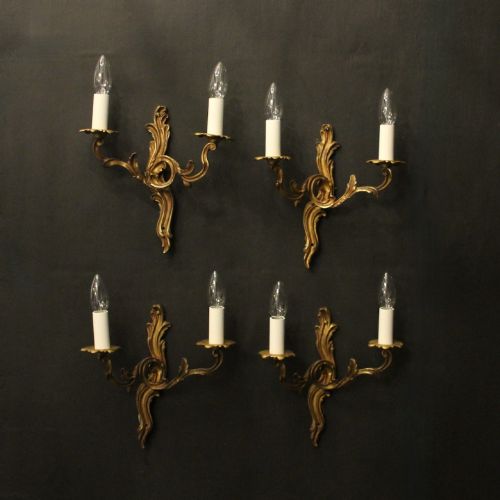
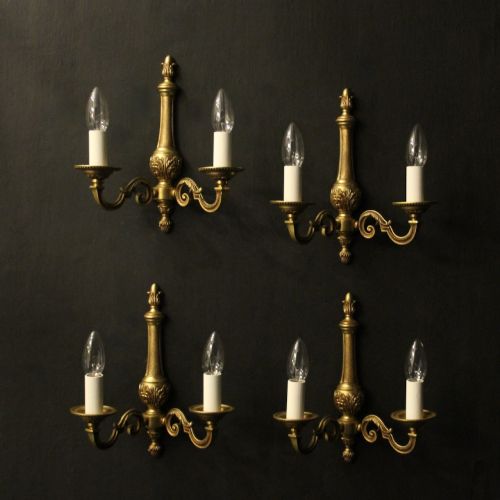
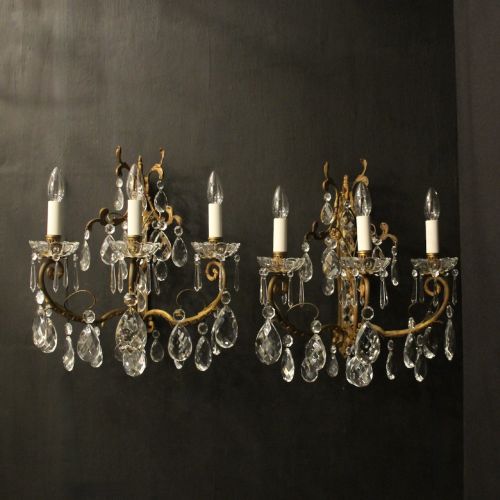
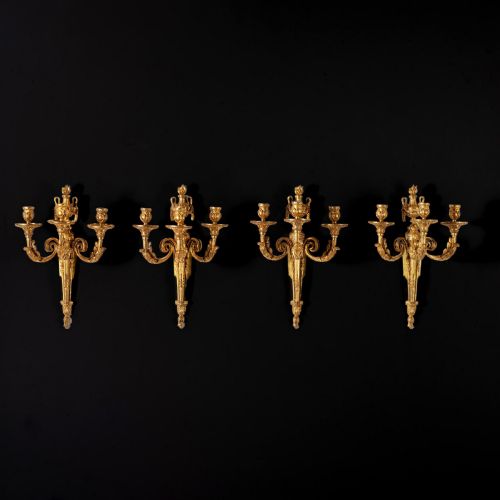
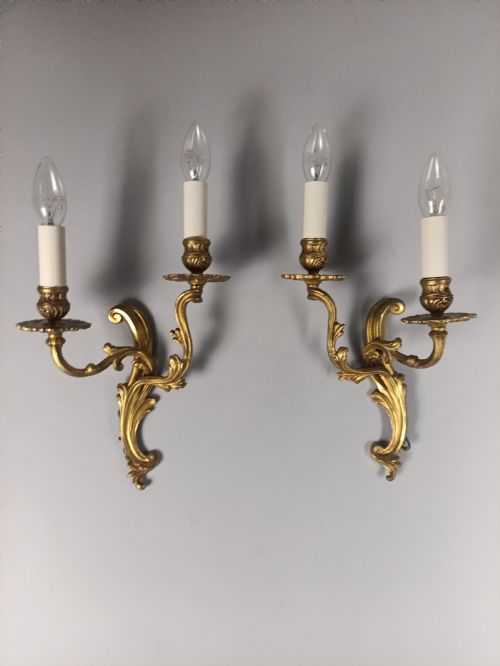
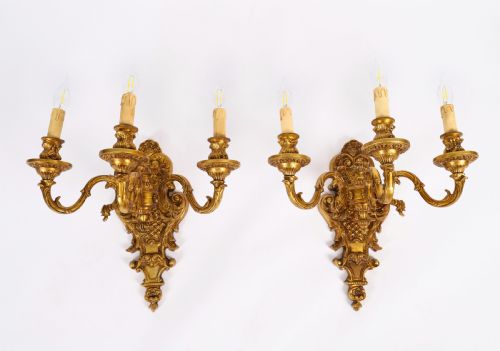

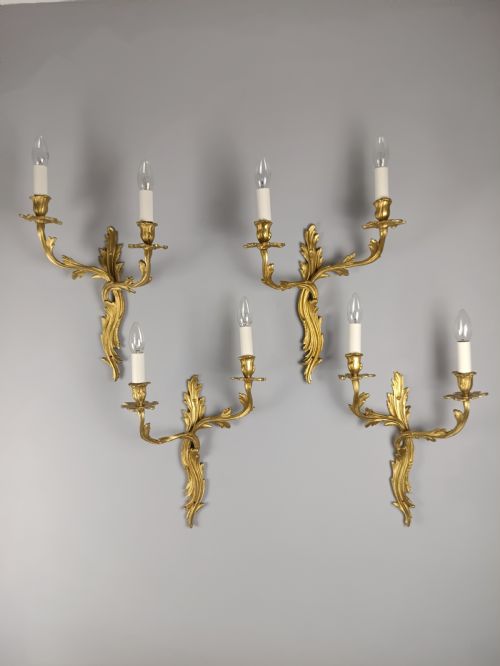
Louis XV Wall Sconce
A louis xv wall sconce brings French Rococo splendour to a room, offering organic curves and warm illumination through gilded metalwork.
Identifying louis xv wall sconces
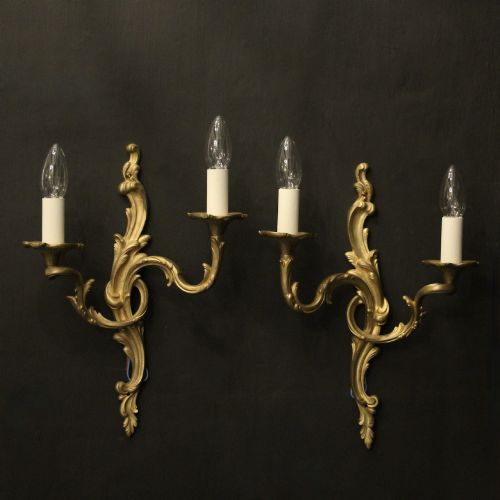
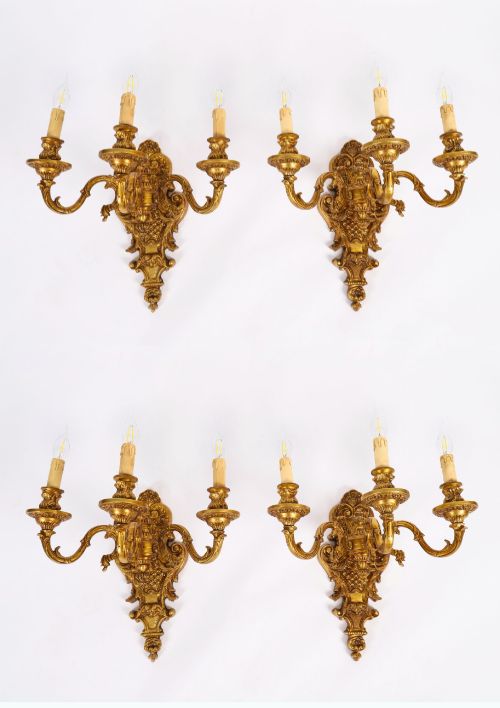
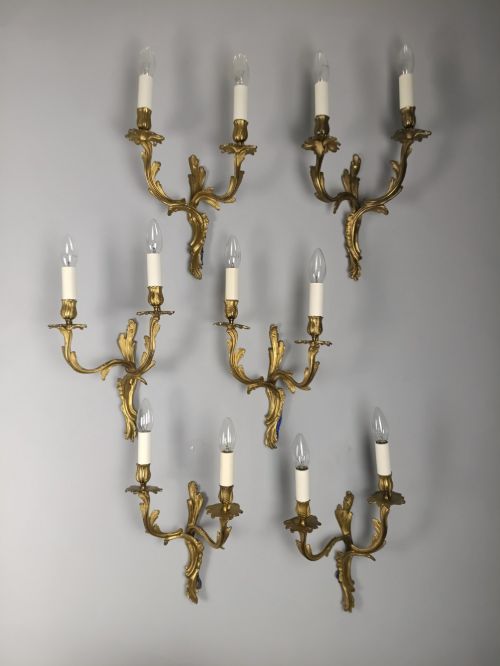
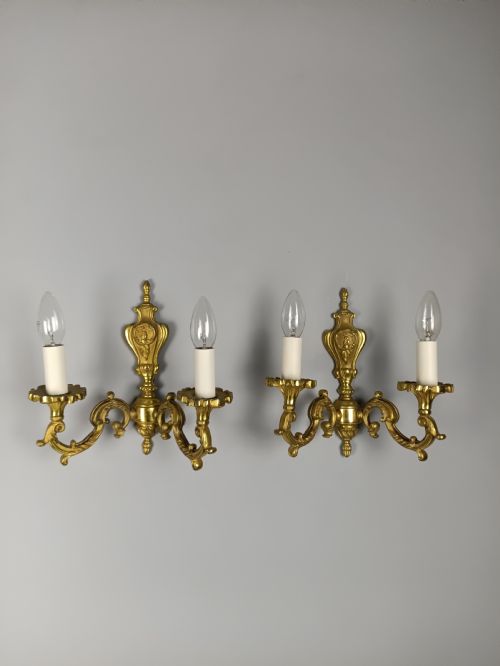
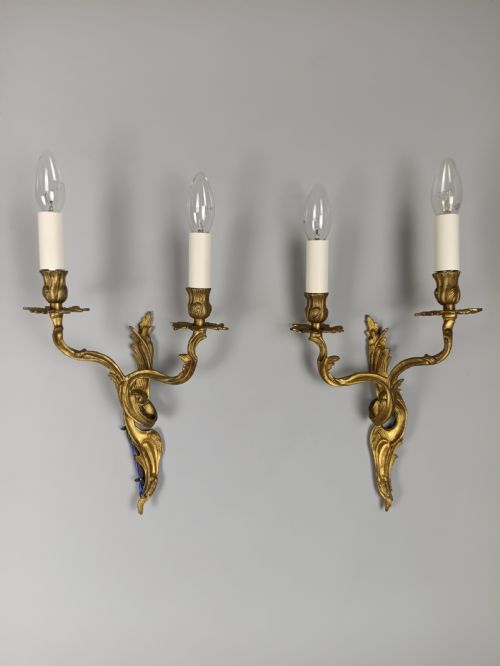
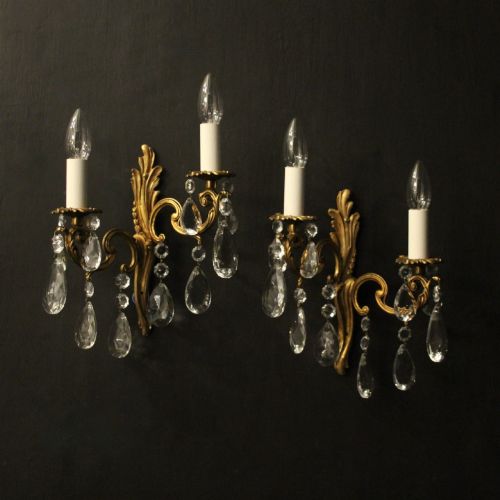
A louis xv wall sconce embodies the French Rococo style, taking the form of wall lights designed to illuminate a room with asymmetric, naturalistic grace. Buyers searching this phrase will find twin-arm sconces and multi-branch configurations that mount directly to the wall.
The pieces appearing in the evidence span the nineteenth century and the early twentieth century, specifically around nineteen-twenty and nineteen-thirty. These later examples capture the ornate aesthetic of earlier French chateau interiors through traditional metal casting methods.
Most items presented are French in origin, showcasing detailed casting and branch formations. Pairs and sets frequently appear alongside single fixtures, offering options for symmetrical interior schemes.
Materials and construction
Makers utilised metal as the primary foundation, employing brass, gilt brass, gilded bronze, and ormolu to achieve a heavy, durable structure. These metals were cast and shaped into elaborate scrollwork and floral motifs characteristic of the Rococo aesthetic.
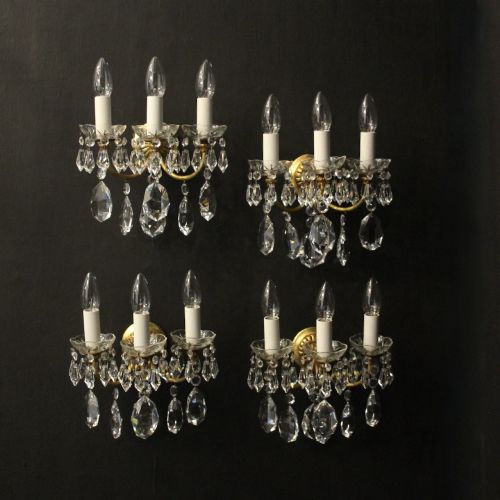
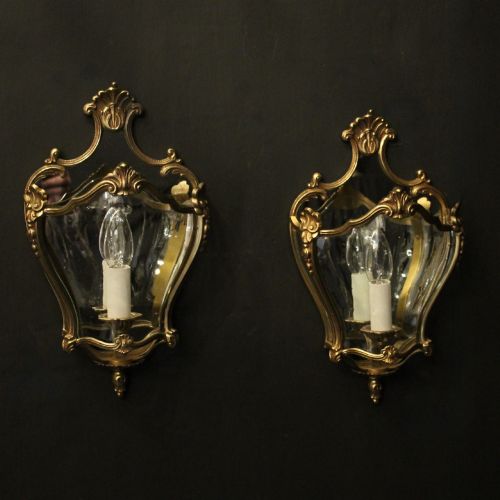
Surface finishes involved extensive gilding, lending a rich golden lustre to the bronze and brass components. Certain examples incorporate glass elements alongside the metal arms to enhance light reflection within the space.
Retail Price Guide 2026
Typical UK retail prices for louis xv wall sconce, calculated from the Sellingantiques database of over a million retail prices indexed since 2003. This retail price guide relies exclusively on Sellingantiques data; no external sources or auction records are used, so the figures do not describe the wider market.
Evaluating quality and craftsmanship
The distinction between standard and superior pieces rests upon the crispness of the casting and the depth of the chased details. Finer examples display sharp relief in their scrollwork and acanthus leaves, whereas lesser items present softer, shallower definition.
Quality also manifests in the weight of the metal and the richness of the original gilding or ormolu surface. Superior items maintain a harmonious balance across the branches, with seamless joints and precise symmetry where pairs are concerned.
The Louis XV Wall Sconce Glossary
- Ormolu
- Gilded bronze, produced by applying a finely ground high-carat gold-mercury amalgam to a bronze object before heating. This technique creates a distinctive, deep golden finish seen on finer French light fittings.
- Rococo
- An eighteenth-century artistic style characterised by asymmetry, scrollwork, and organic motifs inspired by nature. This aesthetic forms the visual foundation of the pieces discussed here.
- Sconce
- A wall-mounted light fixture designed to hold candles or electric lamps and project illumination into a room. These fixtures often feature multiple branches.
- Twin-arm
- A configuration featuring two distinct branching arms extending from a central backplate to support light sources. This layout appears frequently in the documented wall lights.
Frequently Asked Questions
How were these sconces originally lit?
These fixtures were originally designed to hold wax candles, which projected light against panelled walls and mirrors in grand interiors.
Many surviving examples have since been adapted or rewired for modern electricity while retaining their historic metal frames.
Where should I place a wall sconce?
Sconces are traditionally mounted in pairs flanking a mirror, fireplace, or doorway to create balanced illumination and visual framing.
They also function effectively along hallway walls to provide ambient lighting at eye level.
How do I distinguish brass from bronze?
Bronze is an alloy primarily of copper and tin, offering a heavier weight and a darker, richer undertone beneath surface gilding. Brass is an alloy of copper and zinc, tending to appear brighter and slightly yellower in its untreated state.
What does French Rococo style involve?
The style embraces dynamic asymmetry, C-scrolls, S-scrolls, and naturalistic plant forms rather than rigid geometric symmetry. It seeks to evoke movement and lightness through elaborate surface decoration.
This aesthetic dominated French decorative arts and heavily influenced interior lighting design.