

French Sconce Lighting
When you search for french sconce lighting, you encounter wall-mounted illumination designed to project ambient warmth through decorative metal and glass.
French Sconce Lighting
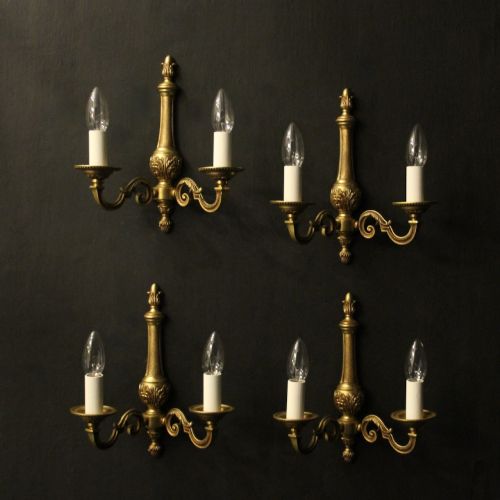
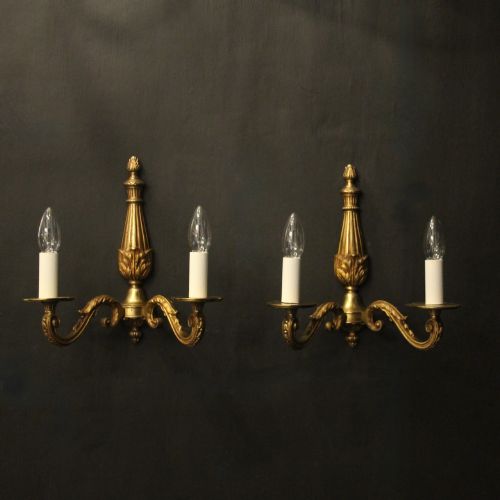
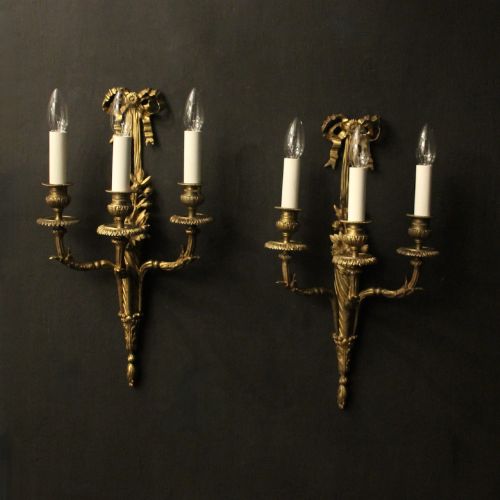
French sconce lighting encompasses wall lights, girandoles, wall lanterns, and candelabra designed to mount directly onto interior walls. These fixtures provide both functional illumination and decorative presence, utilising arms that project outwards to hold candles or electric fittings.
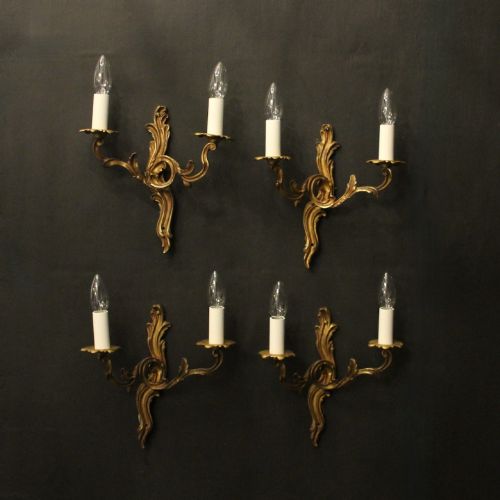
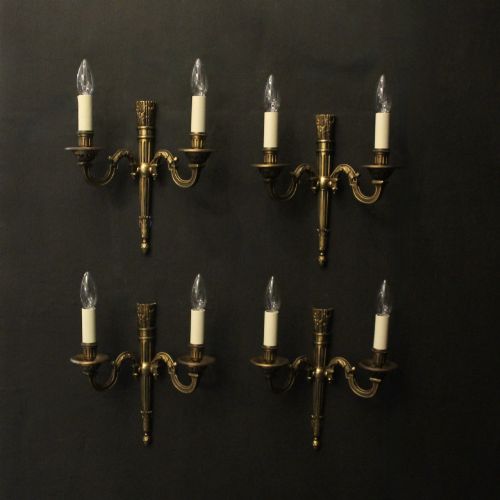
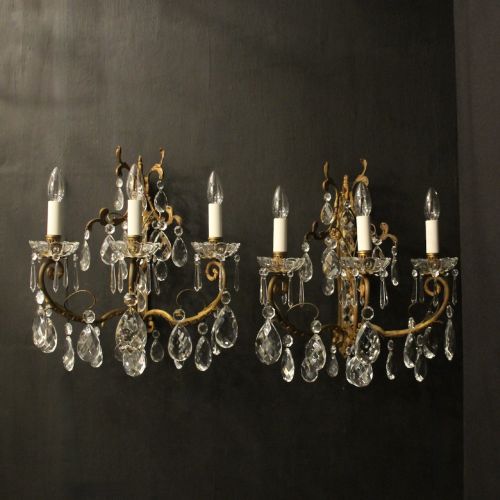
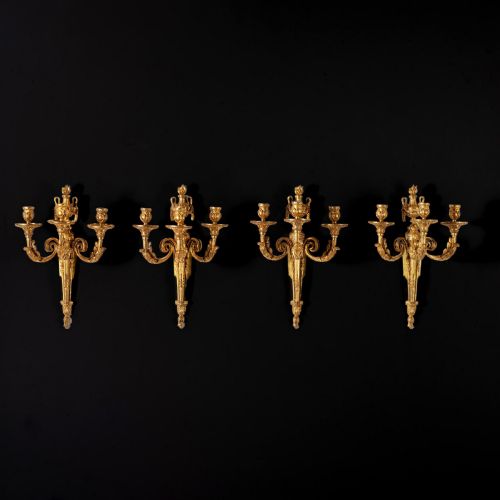
The pieces on this page span from the eighteenth century through the twentieth century, with numerous examples originating in the nineteen-twenties and nineteen-thirties. Buyers frequently encounter twin-arm or triple-arm wall lights configured in matched pairs or larger sets.
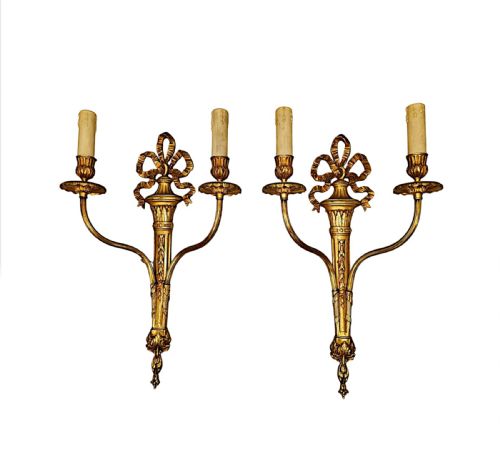
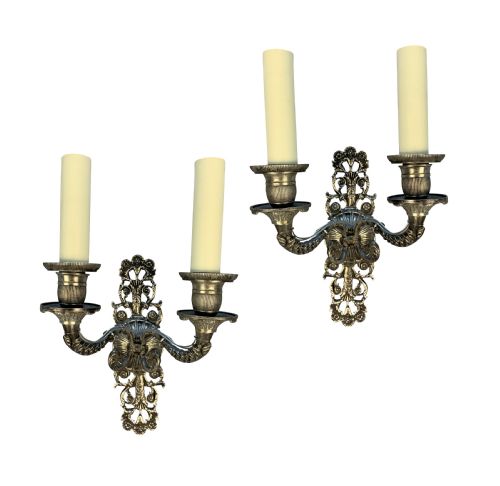
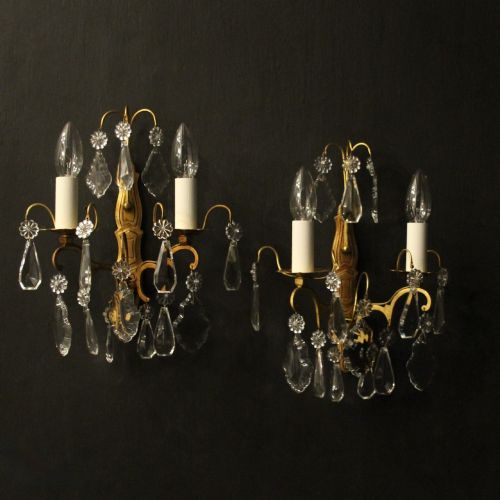
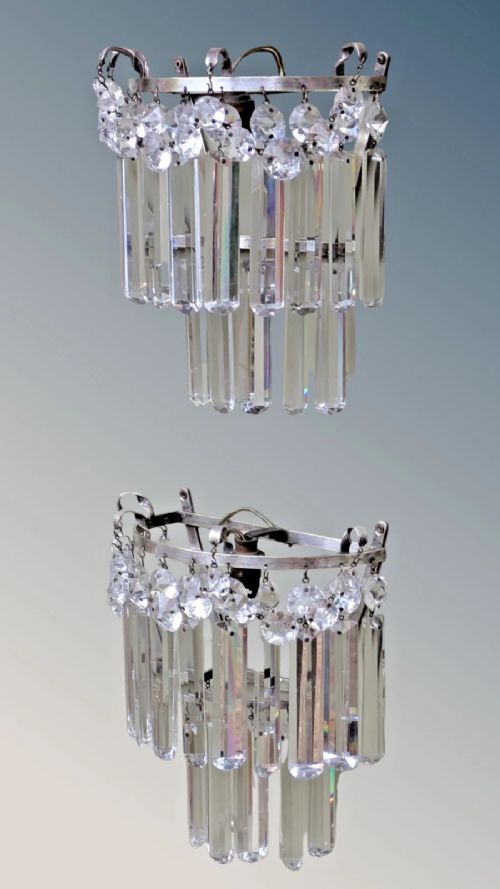
Stylistic influences across the selection draw heavily upon the Rococo, Neoclassical, Empire, and Louis XIV traditions. Common decorative motifs include ribbon bows, toleware, crystal drops, and porcelain flowers integrated into the metal framework.
Materials and Construction
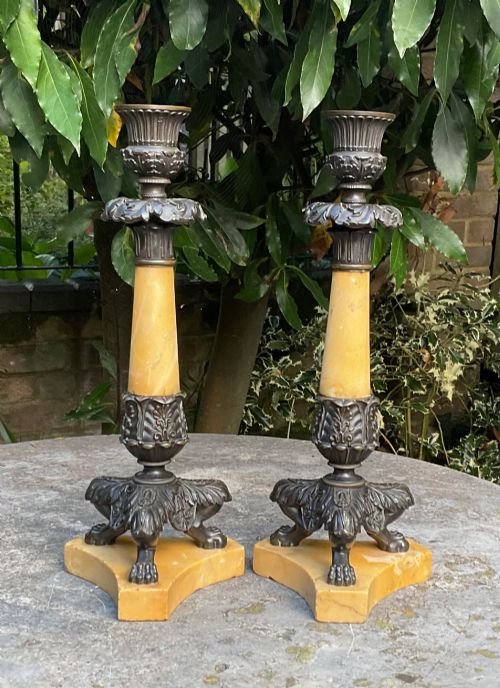
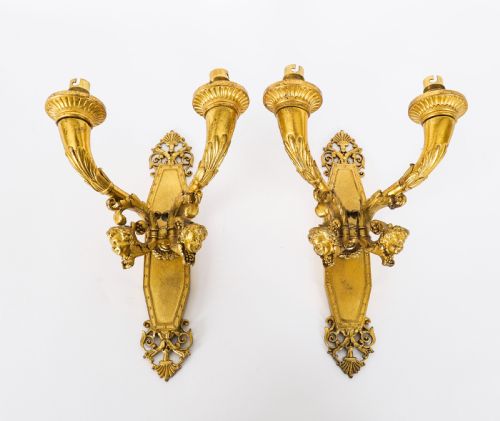
Metals form the structural foundation of these fixtures, with gilt bronze, ormolu, gilded brass, and standard brass appearing frequently across the inventory. Artisans cast these metals into elaborate scrollwork, architectural channels, and floral details.
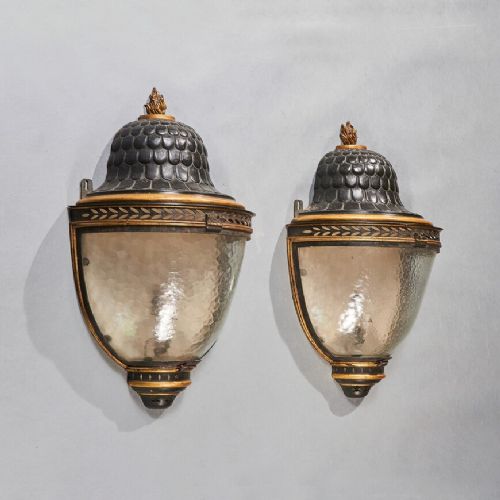
Surface decoration relies heavily on gilding, silver plating, and painted tole peinte finishes applied over bronze, brass, or iron. Glass components, including cut crystal drops and mirrored backplates, are incorporated to amplify the reflection of light.
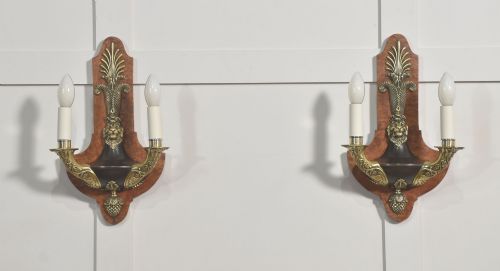
Carved wood elements, such as giltwood frames and burr walnut panels, appear alongside ceramic additions like Sevres porcelain plaques and painted porcelain flowers. Component parts are typically joined with threaded pins or secured via bronze mounts.
Several wall sconces incorporate porcelain flowers and playful cherubs that peek out from behind the candle arms.
Distinguishing Quality
The refinement of the metal casting and the crispness of the chased detail separate standard production from finer work. Superior examples exhibit sharply defined foliage, deep relief in the scrollwork, and hand-finished chasing that removes any roughness from the foundry process.
The quality of the mercury gilding or gold leaf application dictates the richness of the surface reflection and the durability of the finish over time. Heavier gauge metals provide structural rigidity to the extending arms, preventing them from bending under the weight of glass or ceramic components.
Integration of secondary materials, such as hand-cut lead crystal pendants or hand-painted porcelain elements, influences the overall harmony of the piece. Matching sets that retain their original components and unified patination demonstrate superior preservation.
Maison Baguès·Casier
The French Sconce Lighting Glossary
- Ormolu
- Gilded bronze produced by applying an amalgam of gold and mercury to a bronze base and heating it to vaporise the mercury. This technique creates a durable, golden surface common on eighteenth and nineteenth-century decorative metalwork.
- Girandole
- A branched wall-mounted light fixture incorporating a mirror on the backplate. The reflective glass serves to multiply the illumination cast by the candles.
- Tole Peinte
- Painted sheet metal, typically iron or steel, used to create decorative wall lanterns and shades. The technique allows for colourful, durable surface decoration.
- Applique
- A French term for a wall-mounted light fixture or sconce. It is frequently used interchangeably with wall light in antique descriptions.
- Candelabra
- A branched candlestick designed to hold multiple tapers. In wall lighting contexts, these fixtures attach directly to vertical surfaces rather than standing on furniture.
French Sconce Lighting: Frequently Asked Questions
How do I mount antique wall sconces?
Antique wall lights generally attach to walls via a central backplate secured with appropriate screws and wall plugs. Modern electrical wiring must be safely integrated behind the backplate by a qualified professional.
Weight distribution matters significantly with heavier bronze and crystal fixtures. Ensure the wall anchor supports the total mass of the metal and glass components.
Can these wall lights be wired for electricity?
Many period sconces have been adapted for electricity during their lifespan while retaining their original aesthetic appeal. Candle tubes and internal channels can house modern wiring without altering the exterior appearance.
When evaluating a piece, check whether the arms and drip pans accommodate standard bulb fittings or require specialist miniature lamps.
What is the difference between an applique and a sconce?
Applique is simply the traditional French term for a wall-mounted light fixture. Both words describe the same category of decorative illumination designed to fix onto vertical surfaces.
French trade descriptions frequently utilise applique for ormolu or gilt bronze wall lights dating from the eighteenth and nineteenth centuries.
How do I date an antique wall light?
Dating relies upon analysing stylistic details, casting techniques, and fastener types used in assembly. Pieces from the eighteenth century display hand-chased bronze work and organic Rococo asymmetry, whereas later nineteenth-century revivals often adopt stricter Neoclassical symmetry.
Standardised machine screws and modern wiring access points typically point towards twentieth-century production or later adaptation.