
Louis XV Style Bureau
When you search for a louis xv style bureau, you are looking at nineteenth-century interpretations of eighteenth-century French writing furniture.
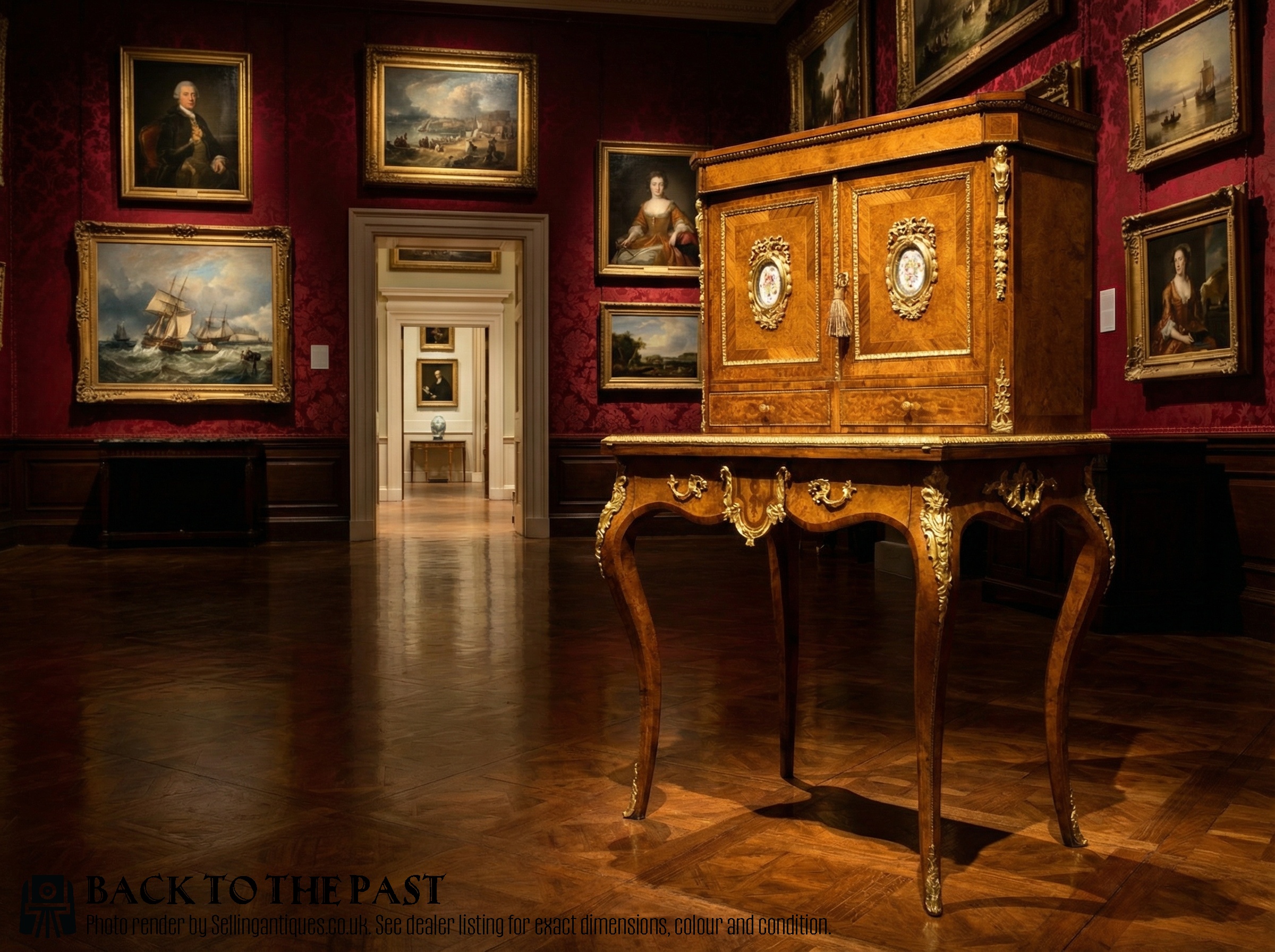
Louis XV Style Bureau
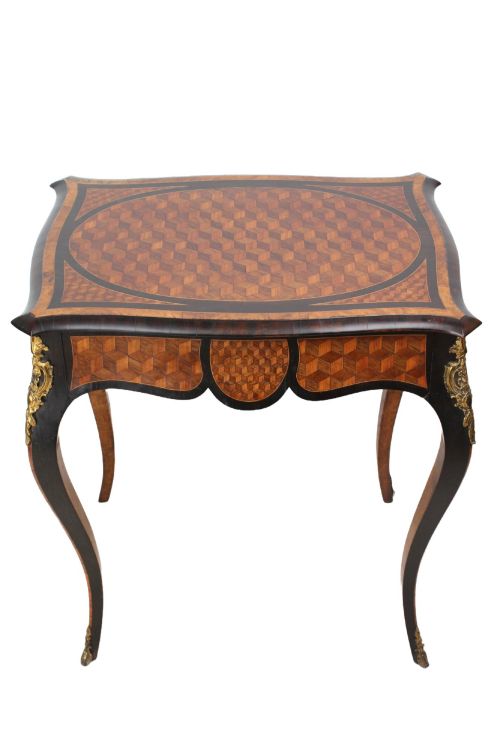
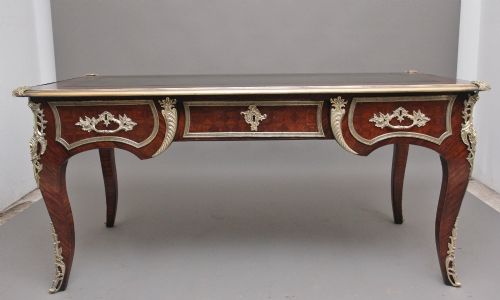
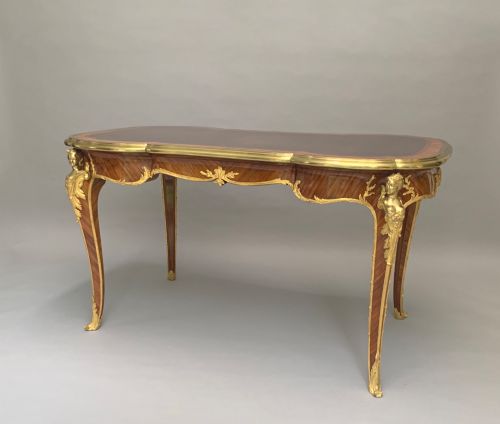
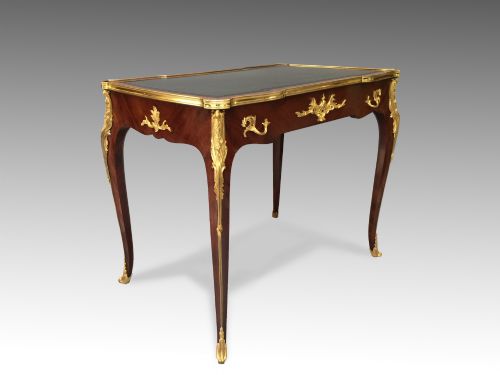
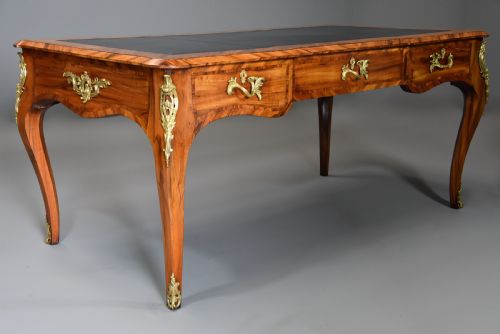
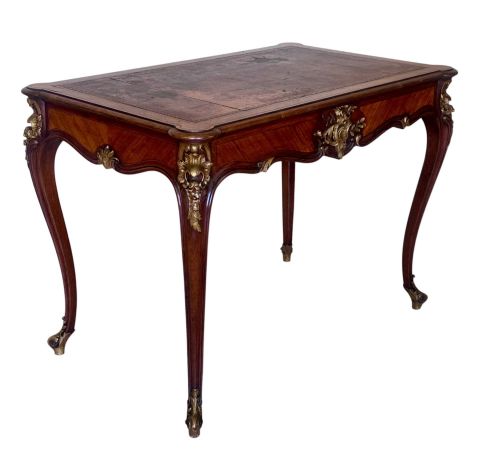
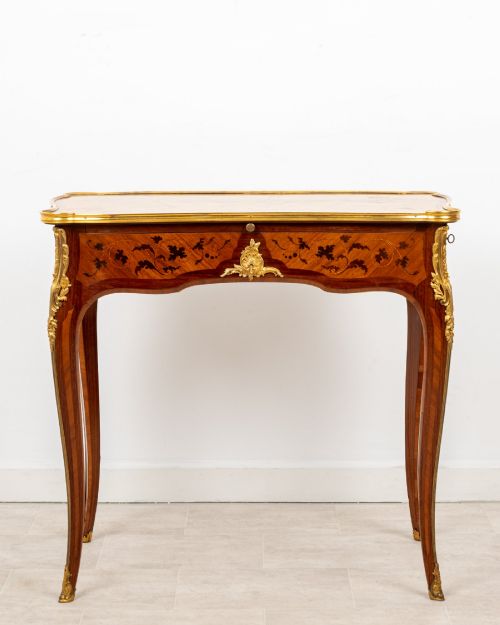
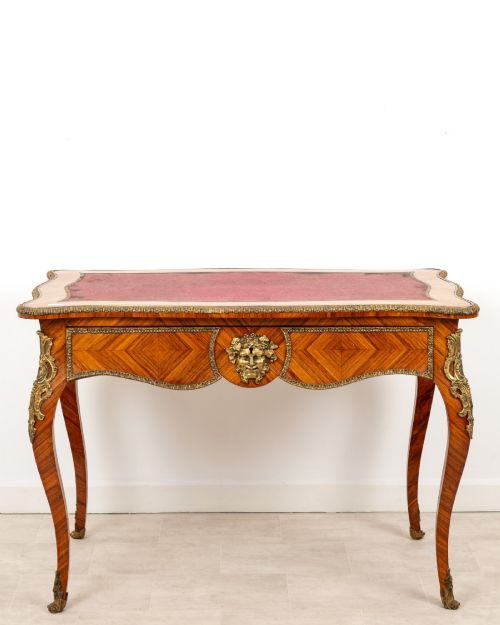
A louis xv style bureau on this page typically appears as a nineteenth-century bureau plat, writing table, or bonheur-du-jour from French and English workshops. These pieces replicate the flowing cabriole legs and asymmetric curves characteristic of the mid eighteenth-century Parisian cabinet makers.
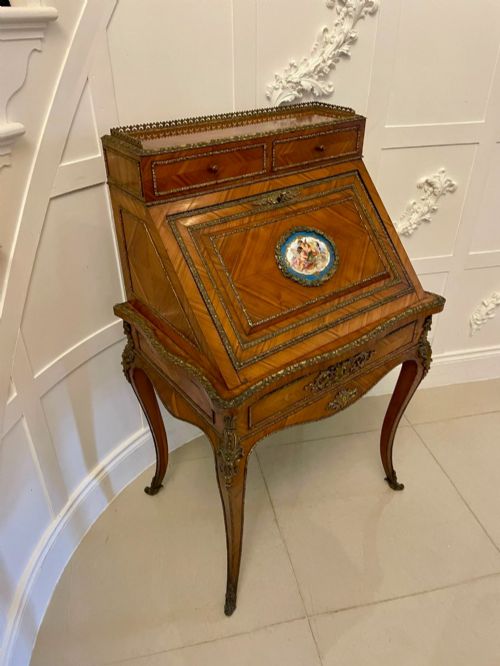
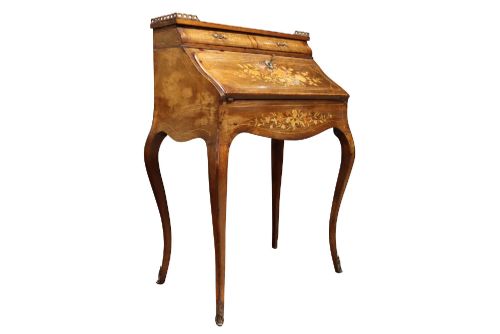
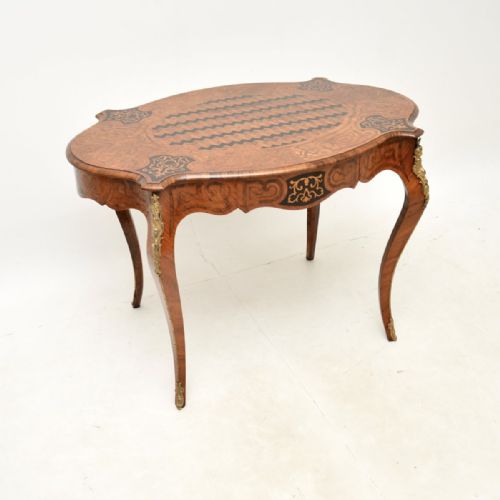
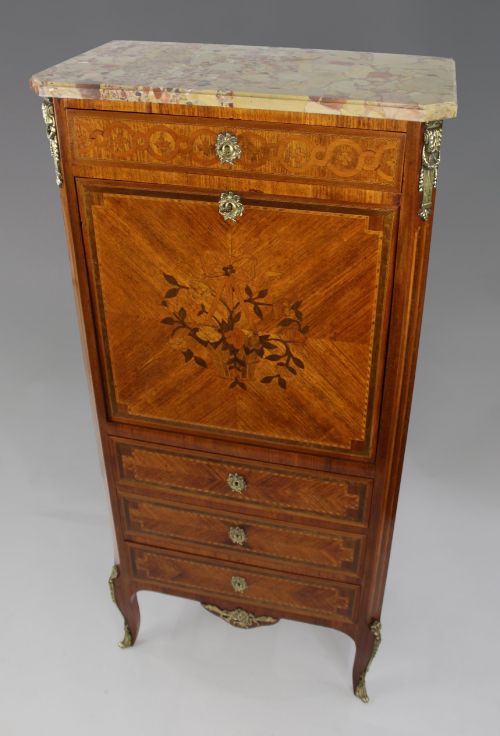
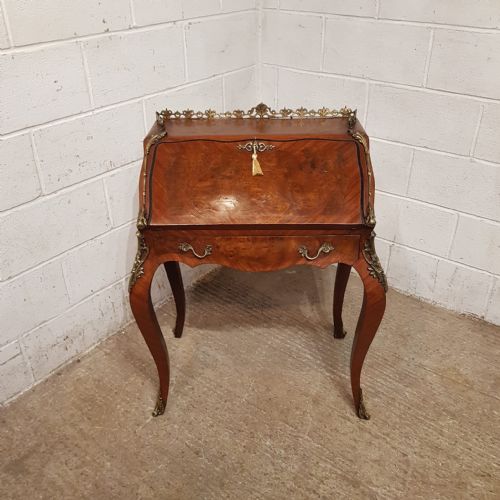
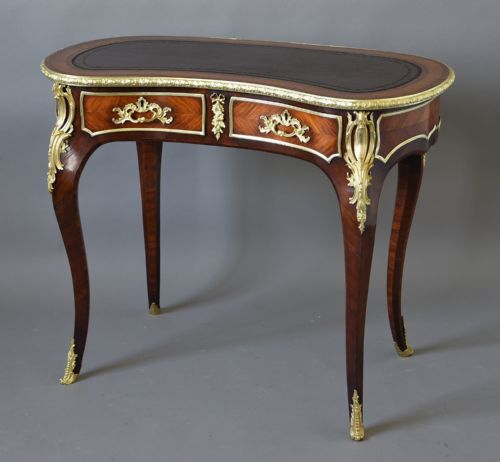
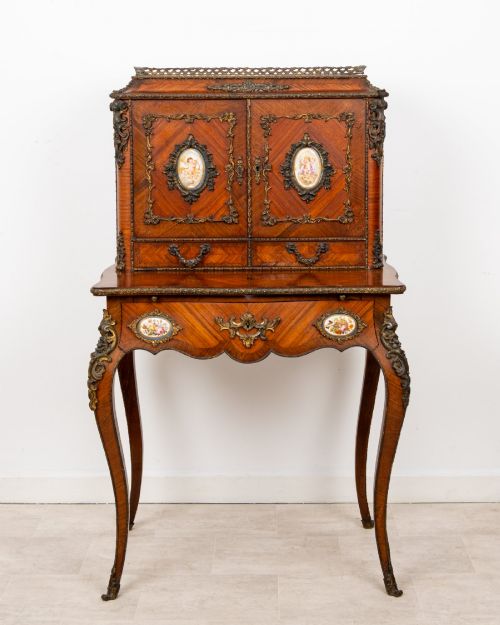
The versions most commonly met include freestanding writing tables with leather inset tops and kidney-shaped ladies desks produced during the Victorian period. Makers drew inspiration from original eighteenth-century forms, adapting them into cylinder desks, secretaires, and elaborate tiered writing cabinets.
Originating largely from the revival movements of the nineteenth century, these items bridge the gap between utilitarian workspace and decorative art. They reflect the Victorian and Napoleon III taste for ornate continental styling integrated into domestic interiors.
Materials and Technique
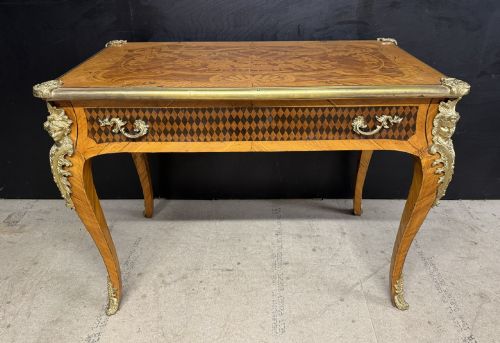
Cabinet makers utilised dense exotic timbers like kingwood, rosewood, and tulipwood, laid as delicate marquetry or geometric parquetry veneers over sound carcases of walnut or mahogany. Surface decoration often incorporated hand-tooled leather writing inserts and hand-painted porcelain plaques set into the wood.
Cast gilt bronze and ormolu mounts accentuate the structural lines of the desk, tracing the contours of the apron and casing the feet in protective sabots. These bronze elements were chased and gilded by hand, anchoring the undulating woodwork and providing a metallic contrast to the dark timber.
Louis XV Style Bureau Retail Price Guide 2026
Typical asking prices for louis xv style bureau among the pieces listed under this phrase on Sellingantiques today, from the lower quarter to the upper quarter. They describe what is for sale here now, not the wider market.
Listings span the nineteenth century, capturing Victorian and Napoleon III interpretations in walnut, kingwood, and ormolu.
Craftsmanship and Execution
The upper echelon of a louis xv style bureau is distinguished by the crispness of the gilt bronze mounts and the complexity of the timber veneers. Master workshops employed heavy, deeply chased ormolu and intricate floral marquetry that aligns seamlessly across drawer fronts and curves.
Simpler pieces rely on standard brass mounts and straightforward walnut or mahogany surfaces with minimal inlay. The calibre of the design is further revealed in the fluidity of the cabriole legs and the precision of the joinery within the internal drawers.
Francois Linke·Edwards and Roberts·Durand·CH Jeanselme and Co·JAS Shoolbred
The Louis XV Style Bureau Glossary
- Ormolu
- Gilded bronze applied to furniture as decorative mounts, corners, and handles. The term derives from the French for ground gold.
- Marquetry
- The art of applying small pieces of veneer to a structure to form decorative patterns or pictorial scenes. Makers cut contrasting woods together to achieve tight joints.
- Bonheur-du-jour
- A small, light lady's writing desk featuring a tiered superstructure with shelves or small drawers above the main writing surface. It became popular during the mid eighteenth century and saw revival in the nineteenth.
- Sabot
- A cast metal shoe fitted to the foot of a cabriole leg to prevent wear and enhance the decorative scheme. They are frequently cast in gilt bronze or brass.
Louis XV Style Bureau: Frequently Asked Questions
What is a bureau plat used for?
A bureau plat serves as a freestanding writing desk designed to sit away from the wall in the middle of a room. It provides a large leather-lined surface for correspondence alongside concealed drawers.
Historically, these tables functioned as status objects in grand libraries and reception rooms. Today, they work effectively as executive desks or display tables in domestic settings.
How do I identify a revival piece?
Nineteenth-century revival pieces exhibit construction methods, timber selections, and hardware typical of the Victorian or Napoleon III eras rather than the 1700s. Examination of the drawer linings, secondary woods, and screw types usually clarifies the age.
Makers often stamped their bronze mounts or timber carcases, pointing directly to nineteenth-century Parisian workshops. The presence of machine-cut elements alongside hand-finishing confirms the later date.
What timber was used most often?
Kingwood and rosewood dominate the surviving examples, prized for their rich grain patterns and deep natural colouration. Walnut, mahogany, and tulipwood also appear frequently as primary veneers or solid carcase woods.
Cabinet makers contrasted these dark and figured timbers with lighter boxwood stringing and exotic fruitwoods to create pictorial marquetry designs. Ormolu mounts were then layered over these wooden surfaces.
Where should I place this desk?
Because these desks are finished on all sides, they thrive floating in the centre of a study or drawing room rather than pushed against a wall. This positioning allows the ormolu mounts and veneered backs to remain fully visible.
Keep the timber away from direct sunlight and heat sources to prevent the veneers from drying out or lifting over time. Regular waxing maintains the moisture and lustre of the polished wood.