

Louis XV Glass Cabinet
A louis xv glass cabinet brings fluid rococo curves and glazed display space into a room, framed by rich veneers and gilt mounts.
Louis XV Glass Cabinet
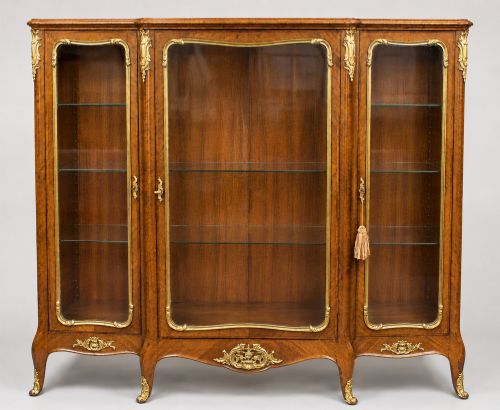
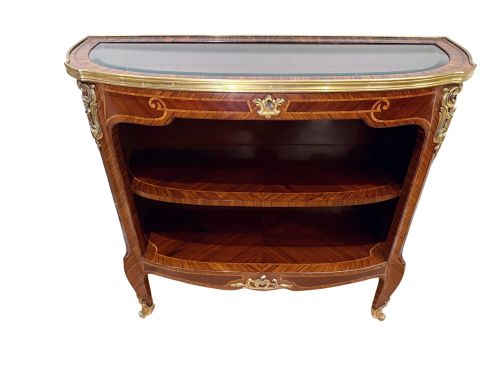
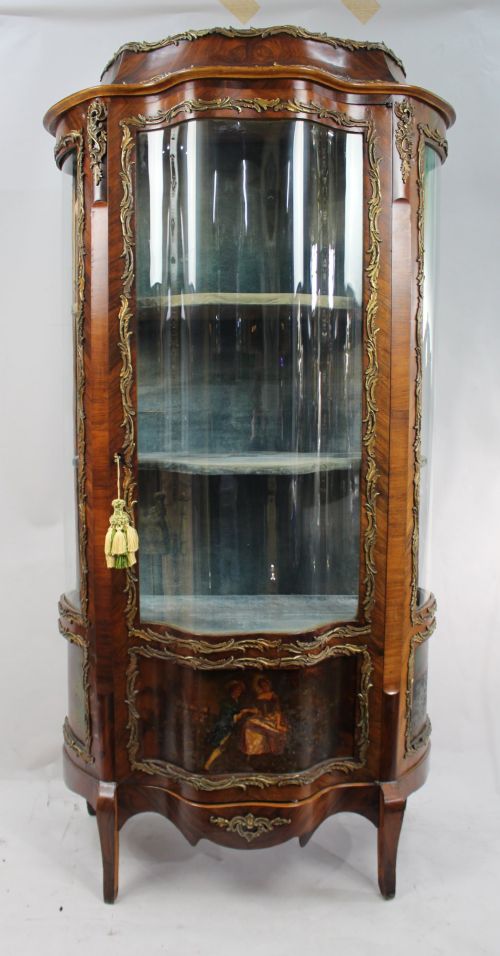
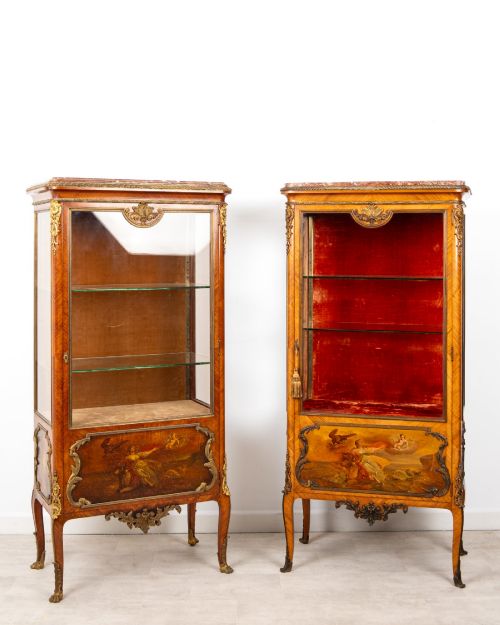
A louis xv glass cabinet encompasses freestanding vitrines, display cabinets, and smaller wall-hanging pieces designed to showcase porcelain and objects. The examples encountered on this page date primarily from the nineteenth century, including Victorian periods, through to the early twentieth century.
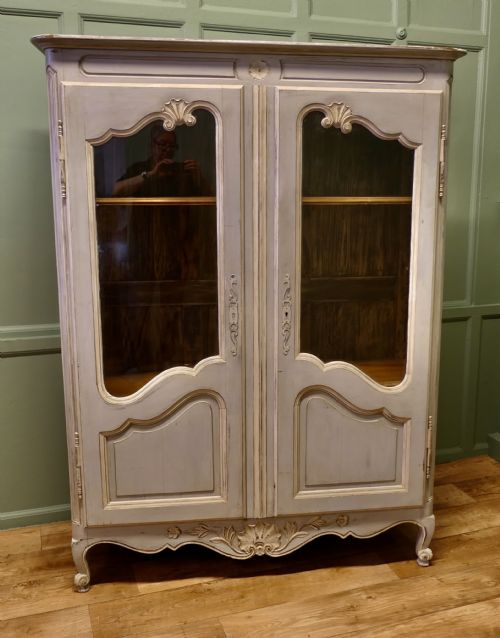
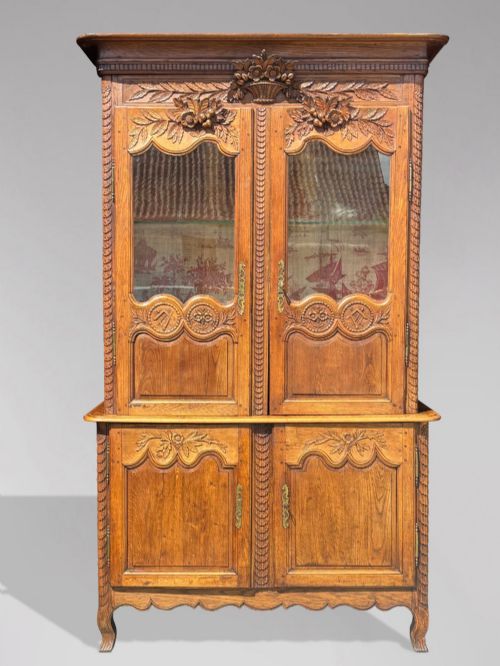
Makers and workshops across France produced these forms in styles such as French Rococo Revival, Louis XV Revival, and provincial interpretations. Cabinets often incorporate serpentine fronts, glazed sides, and integrated lower cupboards or open shelving.
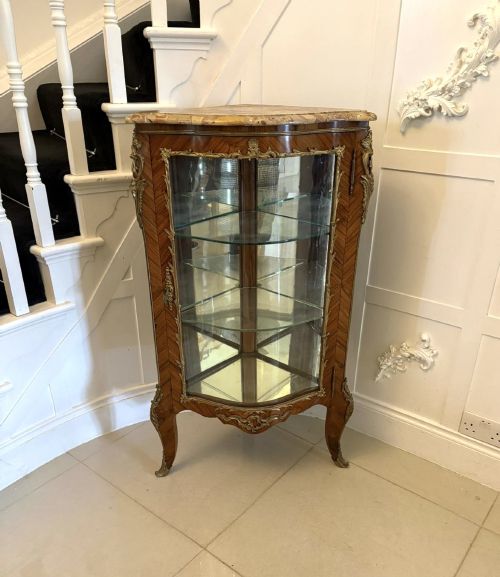
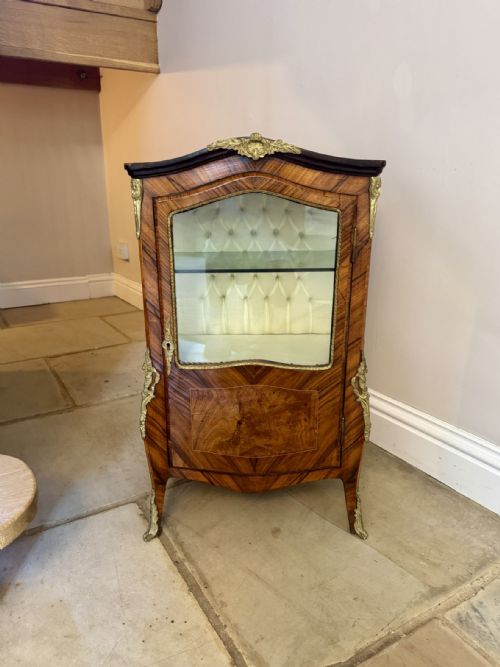
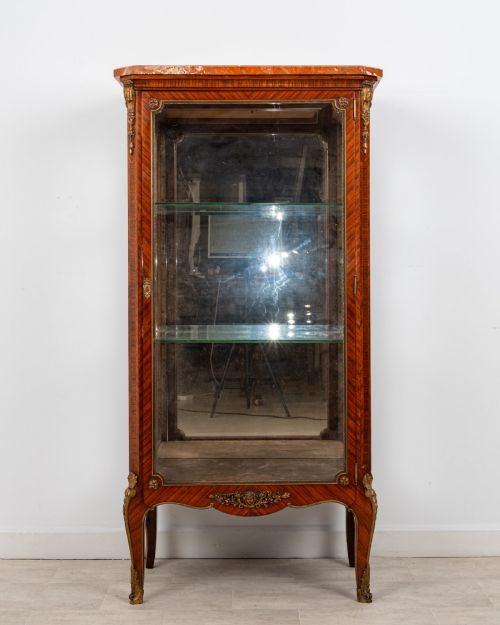
The primary forms utilise underlying structures of mahogany, walnut, or oak, heavily veneered in kingwood and fitted with dedicated display glazing. Many pieces combine display functions with cabinet storage beneath.
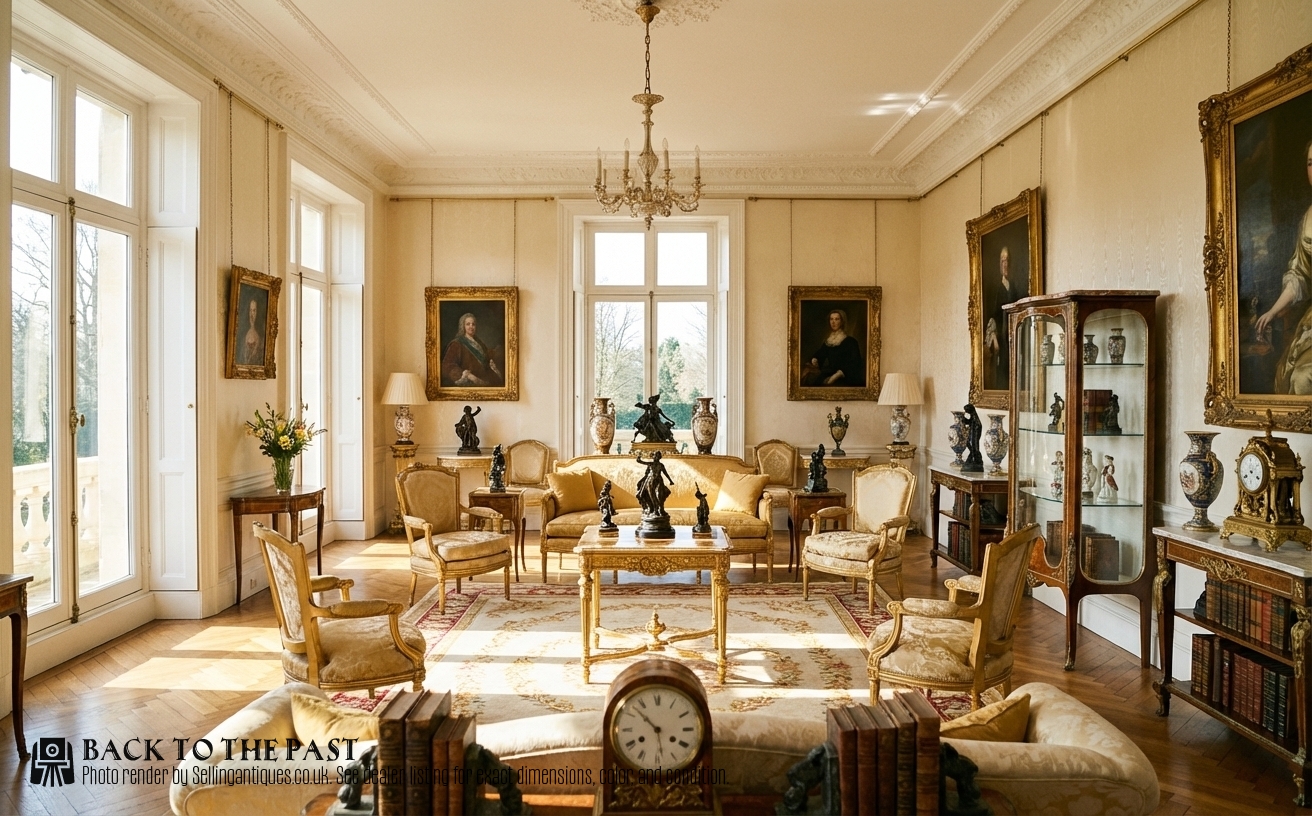
Materials and construction
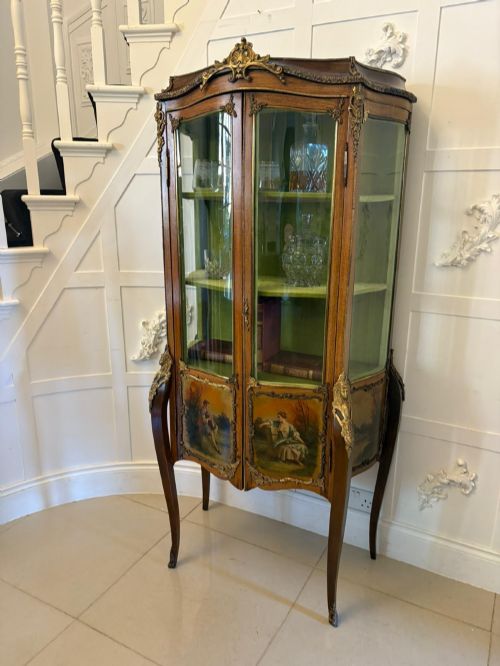
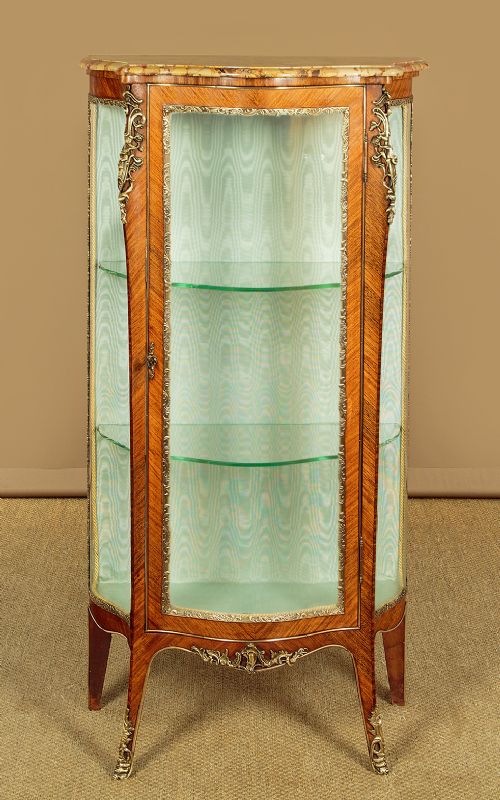
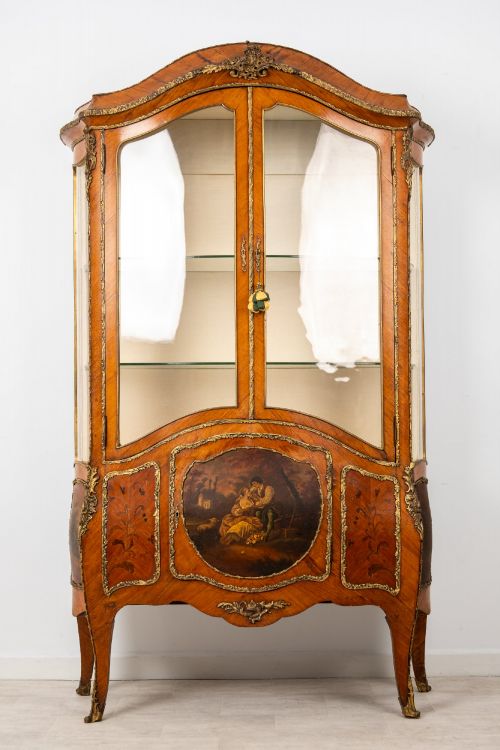
Makers applied figured kingwood, walnut, and mahogany veneers over robust timber carcasses, often shaping them into serpentine and curved contours. Ormolu and gilt bronze mounts were cast and chased to highlight corners, feet, and friezes.
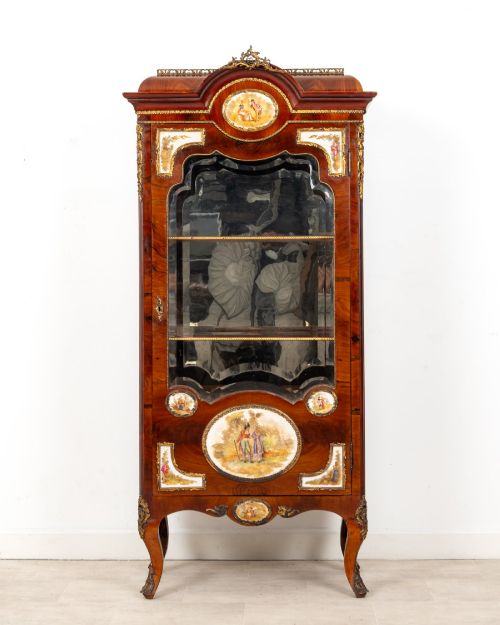
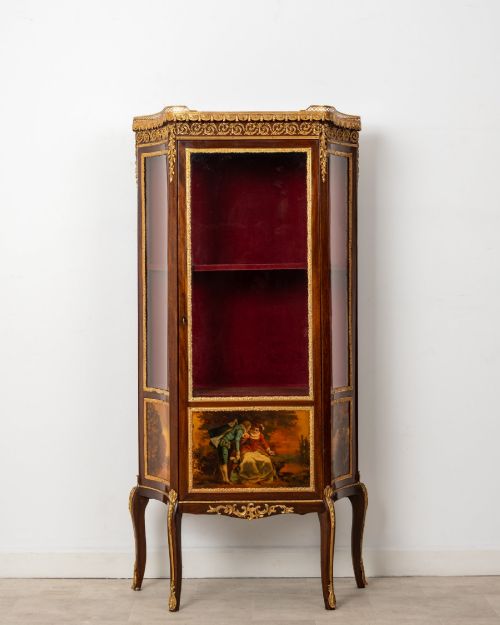
Glass panels were set into doors and glazed side apertures to maximise light penetration within the display chamber. Vernis Martin painted panels frequently decorated the lower portions of the doors, depicting classical or pastoral scenes in coloured lacquers.
Listings feature nineteenth-century and early twentieth-century pieces, spanning walnut, mahogany, and kingwood with ormolu mounts.
Distinctions in quality
The standard of an ormolu mount dictates much of the visual depth, separating crisply chased gilt bronze from softer, commercially cast replacements. Cabinetwork quality shows in the matching of veneer grains across curved serpentine door fronts and sides.
Hand-painted Vernis Martin panels display varying degrees of artistic execution, where finely rendered figures and deliberate shading elevate a piece above routine decorative painting.
François Linke·G. Durand·Paul Sormani
The Louis XV Glass Cabinet Glossary
- Ormolu
- Gilded bronze used for decorative mounts and feet. It provides bright metallic highlights against dark wood veneers.
- Kingwood
- A dense, richly figured timber utilised extensively for cabinet veneers. It displays contrasting dark and golden brown stripes.
- Vernis Martin
- Simulated Japanese lacquerwork developed in France. It consists of painted varnish layers applied to cabinet panels.
- Serpentine
- A wave-like curved shape featuring alternating convex and concave lines. It is frequently seen on cabinet fronts and marble tops.
- Vitrine
- A glass-fronted display cabinet intended for porcelain and curiosities. Glazed sides allow light to reach internal shelves.
Louis XV Glass Cabinet: Frequently Asked Questions
What items go inside a vitrine?
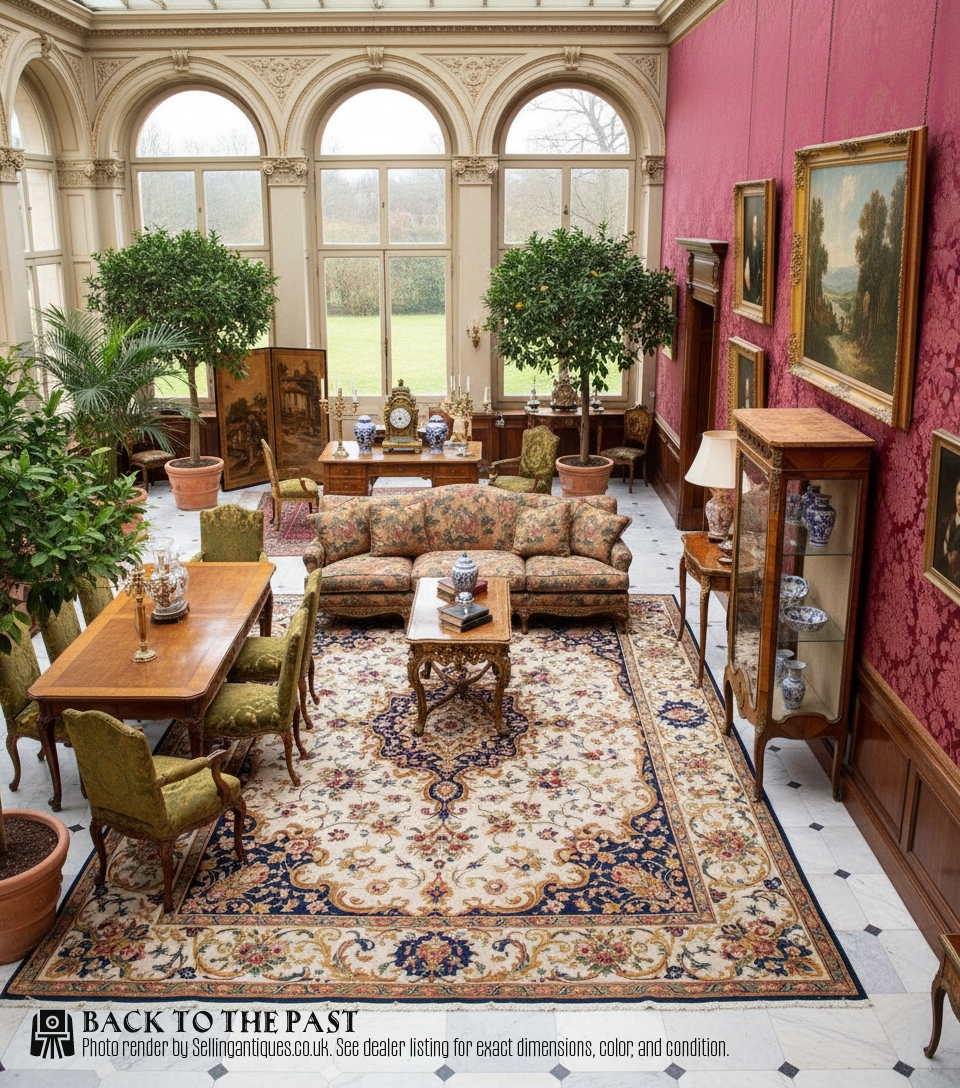
These cabinets were historically designed to house porcelain, small sculptures, and delicate collectibles. Glass shelves and glazed sides let light circulate around the objects.
Modern interiors continue this use, placing glassware, ceramics, and small artefacts inside to protect them while keeping them visible.
How do I spot revival styles?
Revival pieces draw on eighteenth-century French forms, identifiable through asymmetrical curves, cabriole legs, and rocaille ornament. Nineteenth-century interpretations often combine these motifs with dense kingwood veneers and fire-gilt mounts.
Construction methods, timber ageing, and secondary woods help separate nineteenth-century revival furniture from later twentieth-century copies.
Are marble tops original?
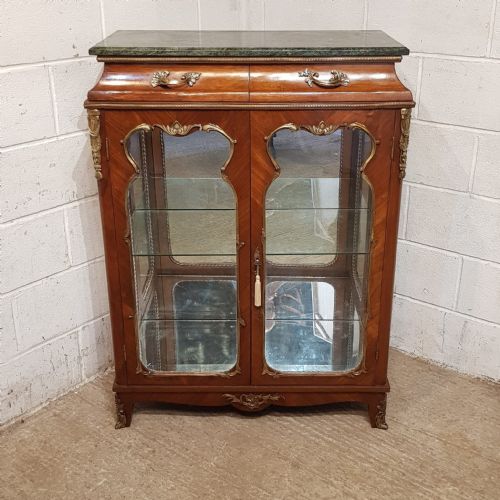
Many cabinets feature fitted marble slabs shaped to follow the serpentine contours of the wooden carcase below. These slabs provided a durable surface that complemented the polished veneers and metal mounts.
Replacement marble is sometimes found, identifiable by mismatched edge profiles or differences in thickness compared to the rebate.
Where should I place a cabinet?
Positioning benefits from natural light that passes through the glazed doors and sides to illuminate the interior. Placing the cabinet away from direct heat sources protects the wood veneers and lacquer panels.
Freestanding vitrines require level flooring to ensure the glazed doors open and close smoothly without binding.