
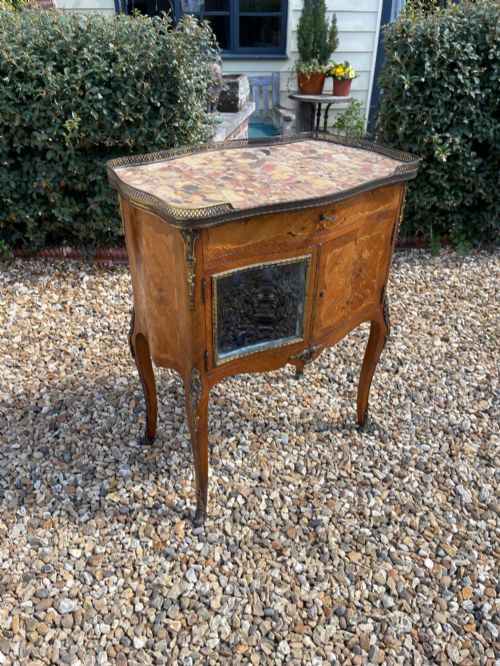


Louis XV Display Table
A louis xv display table brings eighteenth-century French elegance into a room through curved lines and glass panels designed for showcasing small treasures.

Louis XV Display Table
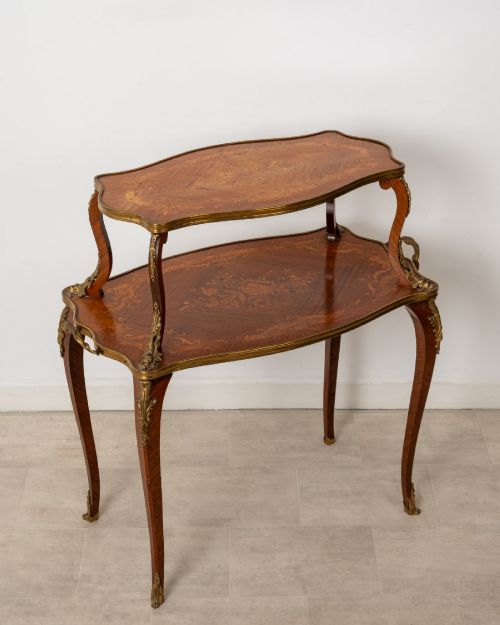
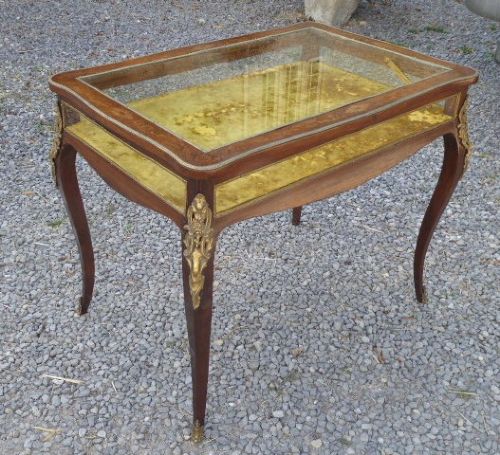
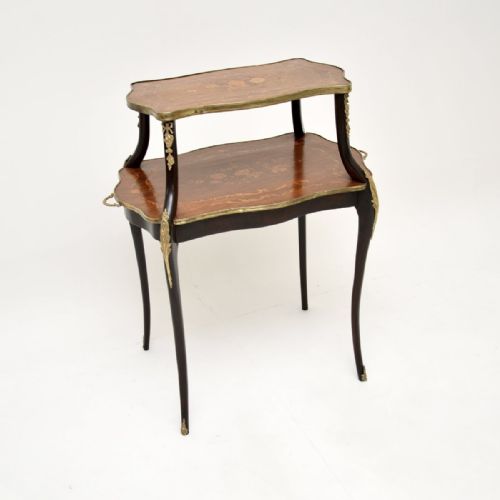
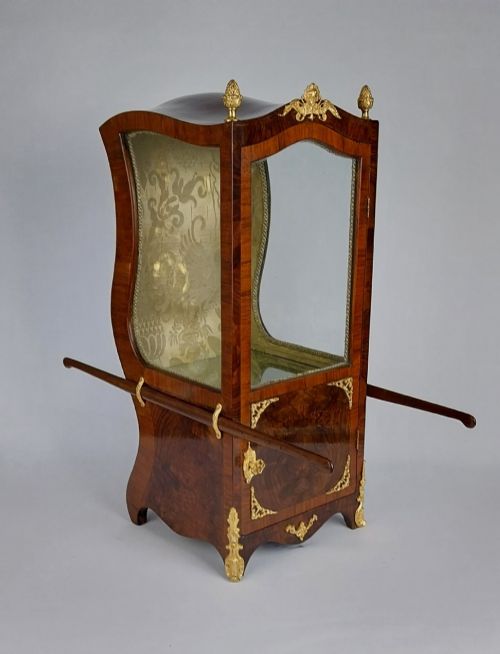
A louis xv display table manifests primarily as a bijouterie table, étagère, or vitrine cabinet originating from nineteenth-century revivals and continental workshops. These pieces combine flat display surfaces with glass cases or multiple tiers intended to hold personal items and ornaments.
The selection ranges from two-tier occasional tables to heart-shaped bijouterie cases and side cabinets. Most examples date from the Victorian and Edwardian eras, reflecting enduring British and continental taste for French Rococo forms.

Materials and Construction
Cabinet makers built these pieces using foundational timbers such as mahogany, walnut, rosewood, and kingwood, frequently applying intricate floral marquetry and contrasting veneers. Ormolu, gilt-bronze, and brass mounts edge the curves, framing glass panels and protecting vulnerable corners.
Internal surfaces often feature velvet linings to cushion displayed items, while glass trays and hinged lids provide access to enclosed compartments. The structural joints rely on traditional joinery hidden beneath decorative metalwork and wood inlays.
Listings feature woods including kingwood, mahogany, walnut, rosewood, and satinwood alongside glass and ormolu mounts.
Craftsmanship and Proportion
Quality rests in the precision of the marquetry and the crispness of the cast ormolu mounts rather than surface shine alone. Finer examples display harmonious proportions where the cabriole legs support the glass compartment without visual heaviness.
The integration of the glass top or display well indicates the maker's skill, with superior pieces showing tight mitres and smoothly operating hinges. Timber selection also dictates grade, with rich kingwood and detailed floral inlays marking the higher end of the range.
The Louis XV Display Table Glossary
- Bijouterie table
- A glass-topped table specifically constructed for displaying small valuable items, medals, or trinkets. These tables often feature hinged lids and velvet-lined interiors.
- Étagère
- An open tiered piece of furniture used for displaying ornaments or small objects. They appear in two-tier and three-tier formats across nineteenth-century inventories.
- Ormolu
- Gilt bronze applied as decorative mounts on furniture. It provides metallic contrast to dark cabinet timbers.
- Marquetry
- Decorative veneer work forming pictures or geometric patterns using various coloured woods. It covers the tops and sides of many refined display pieces.
Louis XV Display Table: Frequently Asked Questions
What is a louis xv display table used for?
These tables served primarily to exhibit small personal collections, fans, or decorative objects within a drawing room or salon. The glass top allowed guests to inspect delicate items without handling them directly.
Today, they function well as lamp tables or occasional surfaces that maintain a dual purpose for display and placement. Their enclosed compartments protect contents from dust while keeping them visible.
How do I date a louis xv display table?
Dating relies upon timber choices, construction methods, and the style of the metal mounts rather than strict reliance on the period name. Most pieces on the market stem from nineteenth-century revival movements rather than the original eighteenth-century reign.
Examining secondary timbers inside drawers or beneath platforms reveals age through hand-cut joints and timber oxidation. Revival pieces frequently adopt Victorian or Edwardian manufacturing techniques alongside older stylistic vocabularies.
Are these tables fragile?
The combination of glass panels and slender cabriole legs requires careful placement away from heavy household traffic. Most structural strength depends on secure joints at the upper frame where the display well sits.
Moving a table requires lifting it entirely from the base rather than pulling by the upper surfaces or glass edges. Regular checks of the mounting screws help keep the legs stable over time.
How do I clean the velvet interior?
Velvet linings benefit from gentle surface dusting using a soft brush attachment or a dry microfibre cloth. Avoid liquid cleaners that might stain the fabric or loosen the adhesive beneath.
Older linings can wear thin, but replacing them requires careful removal to preserve the original timber margins inside the display well.