

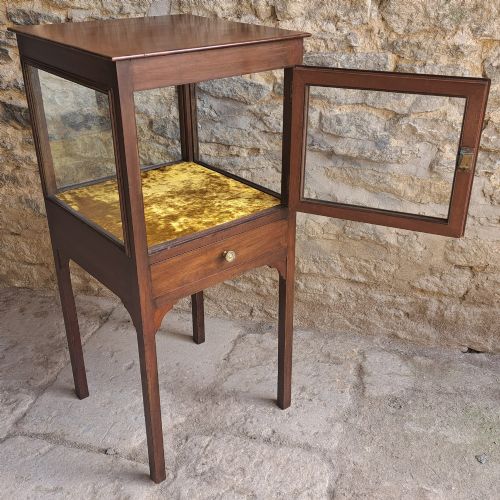


Velvet Lined Vitrine Table
These velvet lined vitrine table pieces combine glazed display surfaces with textile-lined interiors to present small collections.

Velvet Lined Vitrine Table
A velvet lined vitrine table serves primarily to display small objects, medals, or jewellery beneath glass while protecting them on a soft textile bed. When searching for a velvet lined vitrine table, collectors encounter pieces ranging from eighteenth-century specimens to later twentieth-century examples.
The selections on this page span several distinct periods including the Victorian, Edwardian, and eighteenth-century eras, alongside specific revivals like the Sheraton and French styles. Formats vary from serpentine-shaped display tables to oval bijouterie cabinets and freestanding mahogany stands.
Makers utilised various decorative approaches, incorporating brass inlays, satinwood details, and ormolu mounts onto timber structures. These tables function as both functional furniture and intimate display cases for domestic interiors.
How they were made
Cabinetmakers constructed the main framework using dense hardwoods such as mahogany and rosewood, often shaping the timber into serpentine or oval forms. Glass panels were then fitted into hinged or fixed frames to enclose the display area.
The interior surfaces received a lining of velvet or related fabric to cushion the items placed within the cabinet. Brass, ormolu, and satinwood inlay were applied to the exterior surfaces for decorative contrast.
Velvet Lined Vitrine Table Retail Price Guide 2026
Typical asking prices for velvet lined vitrine table among the pieces listed under this phrase on Sellingantiques today, from the lower quarter to the upper quarter. They describe what is for sale here now, not the wider market.
Secret compartments occasionally hide beneath the velvet display floors, ready to guard small fortunes or misplaced love letters.
What varies in quality
Quality in these display pieces depends largely on the crispness of the timber framing and the finesse of any inlaid details like satinwood or brass. Better examples show careful attention to the proportions of the glazed top and the stability of the legs.
The integration of the fabric lining within the glazed compartment also distinguishes standard production from finer work. Superior specimens maintain harmonious proportions between the timber structure and the glass display well.
The Velvet Lined Vitrine Table Glossary
- Vitrine
- A glass-fronted cabinet or table designed for displaying fine objects or curiosities. The term originates from the French word for glass.
- Bijouterie table
- A specialised piece of furniture featuring a glazed compartment for exhibiting jewellery and small valuables. These tables typically stand on slender legs at a height suitable for viewing contents from above.
- Ormolu
- Gilded bronze ornamentation applied to the mounts and edges of furniture. This technique gained widespread use during the eighteenth and nineteenth centuries.
- Satinwood inlay
- A decorative woodworking technique where contrasting light-coloured satinwood is inserted into the primary timber surface. It appears frequently on Sheraton revival pieces.
- Serpentine
- A curved shape characterised by a concave centre flanked by convex ends. This contour adds visual movement to table tops and cabinet fronts.
Velvet Lined Vitrine Table: Frequently Asked Questions
What is a velvet lined vitrine table used for?
These tables are designed to display small collectible items, pocket watches, jewellery, and medals beneath a protective glass top. The cushioned interior prevents delicate objects from shifting or scratching while on view.
They serve as both functional furniture surfaces and intimate home galleries for private collections.
How do I date a velvet lined vitrine table?
Dating relies on identifying the underlying timber, structural joinery methods, and the prevailing decorative style of the period. Pieces range from eighteenth-century models to Victorian, Edwardian, and later twentieth-century interpretations.
Stylistic cues such as Sheraton revival motifs or French influences help narrow down the decade of manufacture.
Where should I place a velvet lined vitrine table?
These tables suit drawing rooms, studies, or hallways where they can be viewed closely from above. Direct sunlight should be avoided to protect the interior velvet lining and any sensitive organic collection items from fading.
Positioning them away from high traffic areas ensures the glass top and slender legs remain undisturbed.
What woods are commonly found on these tables?
Mahogany forms the primary structural timber for the majority of these display pieces, appearing across multiple eras. Rosewood and satinwood inlay elements also feature prominently in the design vocabulary.
Brass and ormolu hardware are frequently integrated to accent the main timber body.