




Louis XV Bonheur Du Jour
A louis xv bonheur du jour is a small, elegant writing desk with compartments, offering a refined workspace that collectors prize for its graceful proportions.
Louis XV Bonheur Du Jour
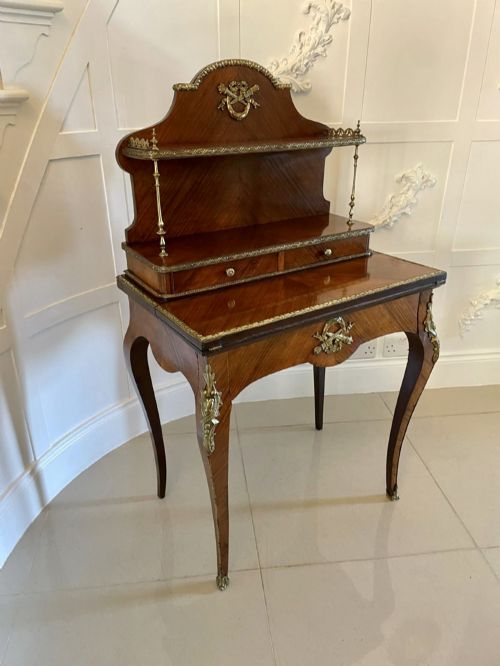
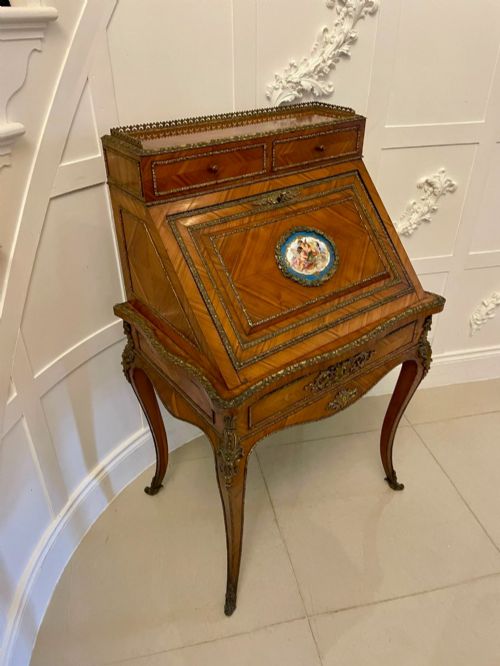
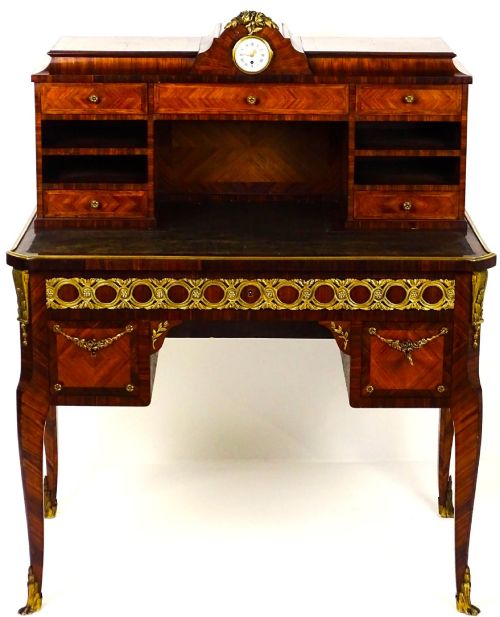
A louis xv bonheur du jour is a distinct type of ladies writing desk that emerged in France, combining a compact writing surface with an upper section of shelves, drawers, or a small cabinet. These pieces date predominantly from the nineteenth century, including Victorian interpretations and revival styles.
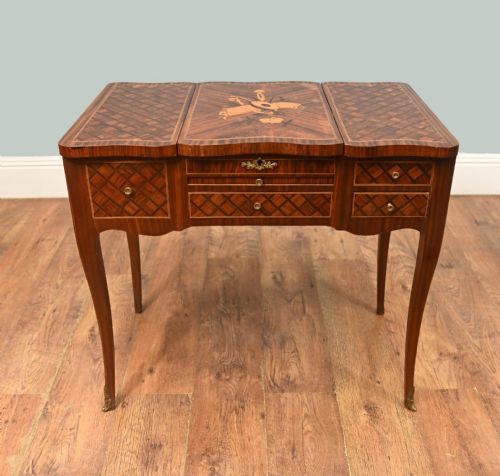
The selection on this page centres on French models executed in the Louis XV style and Rococo revival manner. Makers also produced variants in Louis XVI style, alongside writing tables, bureaus, and dressing tables.
Most examples hail from the nineteenth century, encompassing specific dates from eighteen fifty through to nineteen hundred, alongside Edwardian and later nineteenth-century pieces.
How They Were Made
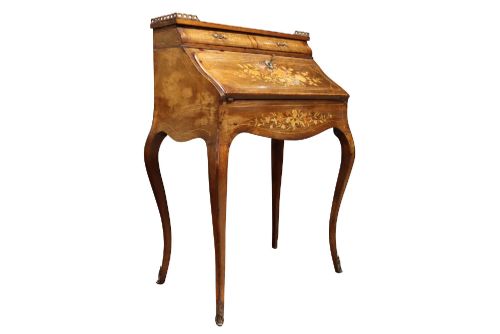
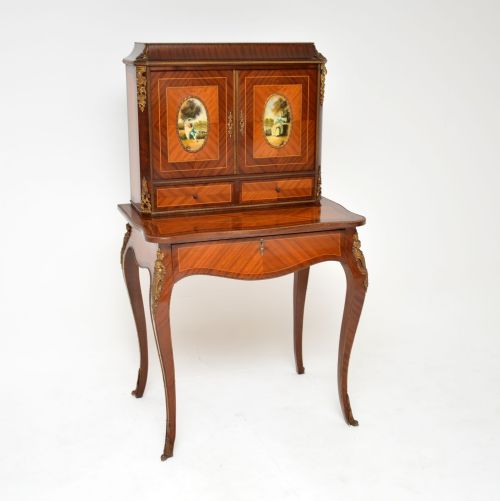
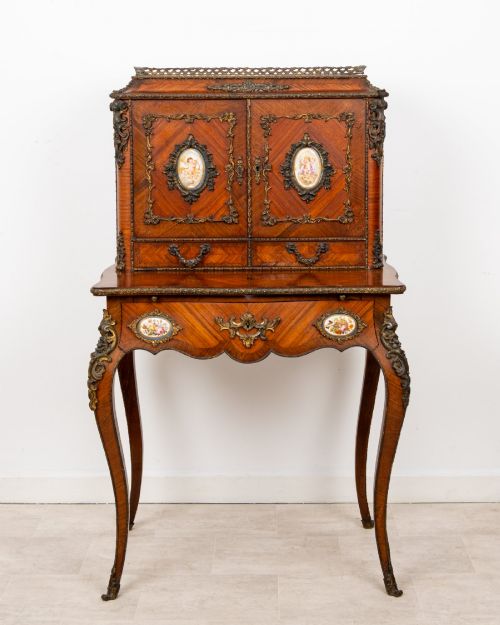
Cabinetmakers constructed these desks using timbers such as kingwood, walnut, and rosewood, frequently applying intricate marquetry patterns. Artisans then mounted ormolu, gilt bronze, and brass details onto the wooden frames to accentuate the curved contours.
Finer examples integrate decorative elements like Sevres porcelain plaques and Vernis Martin panels into the upper superstructure or fall-front doors. The combination of exotic wood veneers and cast metal mounts required specialist joinery and metalworking skills.
The selection spans the nineteenth century, with specific dates recorded from eighteen fifty to nineteen thirty.
What Varies in Quality
The standard of a louis xv bonheur du jour depends upon the crispness of the ormolu mounts and the complexity of the marquetry work. Elaborate floral inlays and finely chased bronze mounts distinguish superior cabinets from simpler walnut or ebonised versions.
The inclusion of porcelain plaques or painted panels alters the character and craftsmanship level of the piece. Selection of dense timber veneers and the precision of the desk's internal compartments separate standard nineteenth-century production from exceptional workshop output.
Paul Sormani·Edwards and Roberts
The Louis XV Bonheur Du Jour Glossary
- Ormolu
- Gilded bronze used for decorative mounts and trimmings. This technique was widely applied on French furniture to highlight architectural lines and corners.
- Marquetry
- The art of applying pieces of veneer to a structure to form decorative patterns. Craftsmen utilised various coloured woods to create pictorial floral or geometric designs.
- Vernis Martin
- A type of simulated Japanese lacquer developed in France. Furniture makers used this glossy varnish finish on panels to depict pastoral scenes.
- Bureau plat
- A flat-topped writing table without a superstructure. These desks stand free in a room and often feature drawers within the frieze.
Louis XV Bonheur Du Jour: Frequently Asked Questions
What is a bonheur du jour used for?
These desks served as private writing spaces for correspondence and letter-writing in the boudoir or salon. The upper tiers held stationery, inkwells, and small valuables.
Today, they function well as compact writing desks or decorative display cabinets in domestic interiors.
How do I identify a Louis XV style desk?
Louis XV style pieces are defined by asymmetrical curves, cabriole legs, and floral or scroll marquetry. The overall silhouette avoids straight lines in favour of flowing organic shapes.
Ormolu mounts on the corners and feet further signal this revival aesthetic.
What woods are typical for these desks?
Kingwood and walnut form the primary timber choices for nineteenth-century examples. Rosewood and ebonised finishes also appear across various workshops.
These exotic and native hardwoods provided stable surfaces for detailed marquetry and veneer work.
Are these desks strictly French?
The form originates in France, and the majority of pieces follow French design traditions. English makers also adopted the style during the Victorian era.
Revival pieces reflect both Parisian cabinet-making standards and British interpretation.