



Louis Style Bedstead
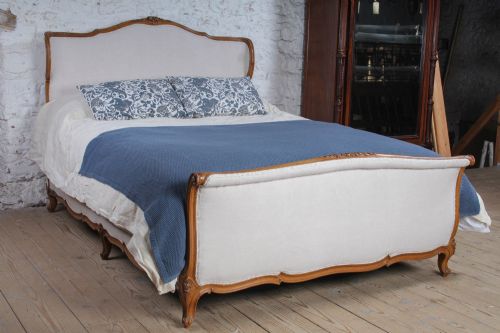
A louis style bedstead brings grand French character into a bedroom through scrolling woodwork, delicate carving, and generous proportions.
Louis Style Bedstead
A louis style bedstead draws inspiration from French royal court designs, spanning single, double, king, and emperor sizes for modern sleeping arrangements. The selection on this page ranges from late nineteenth-century Victorian examples to pieces made through the early decades of the twentieth century.
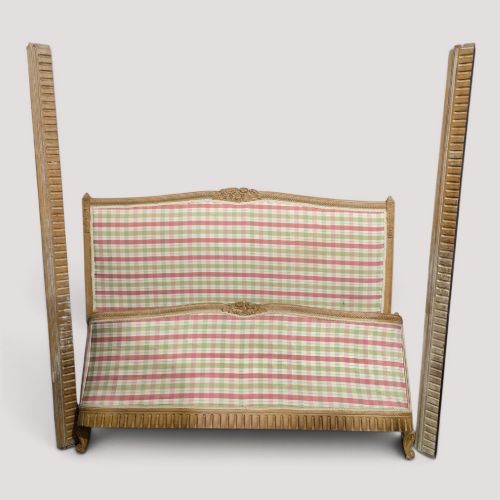
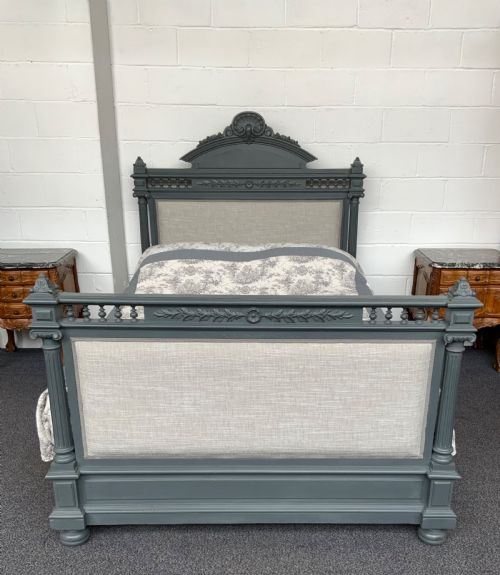
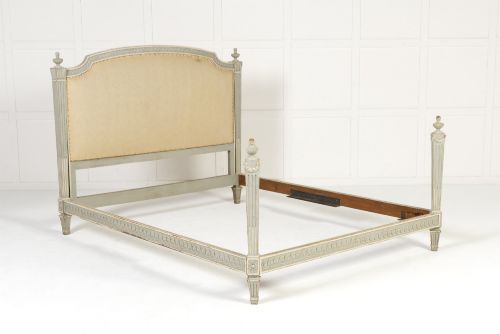
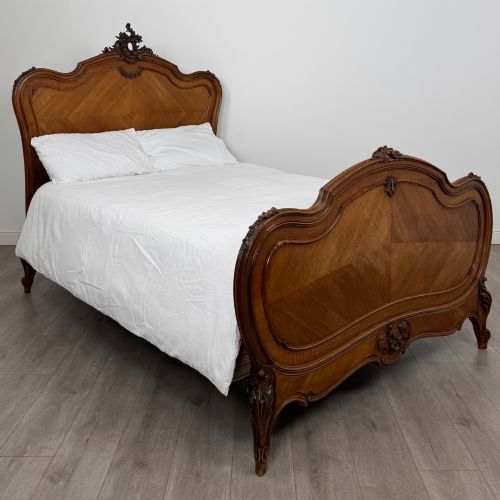
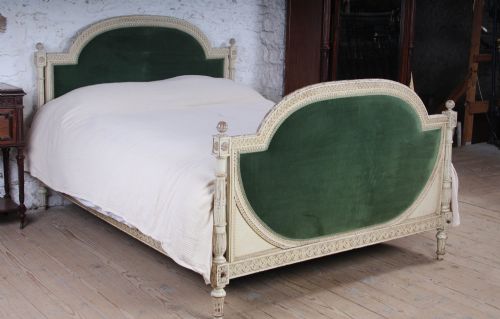
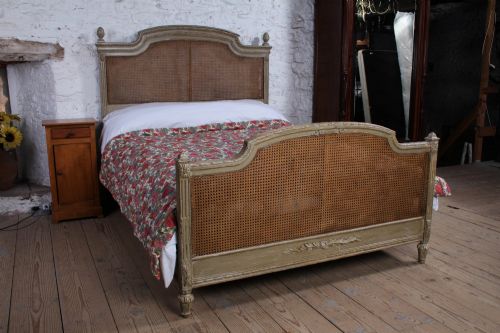
Makers adapted classic French aesthetics into practical bedroom furniture, producing frames in styles such as Louis XV, Louis XVI, and Empire. Buyers encounter both painted finishes and exposed timber constructions, often featuring curved headboards, low ends, and matching side rails.
The physical formats include standard rectangular frames alongside distinctive corbeille shapes that wrap around the sleeper. Single pairs and grand bedroom suites also appear among the selections, offering coordinated furnishings for larger spaces.
Materials and construction techniques
Cabinetmakers constructed these bedframes primarily using solid timber andveneers, selecting walnut, oak, mahogany, and fruitwood for their durability and grain. Skilled artisans carved intricate floral motifs, scrolls, and gadrooning directly into the wood by hand.
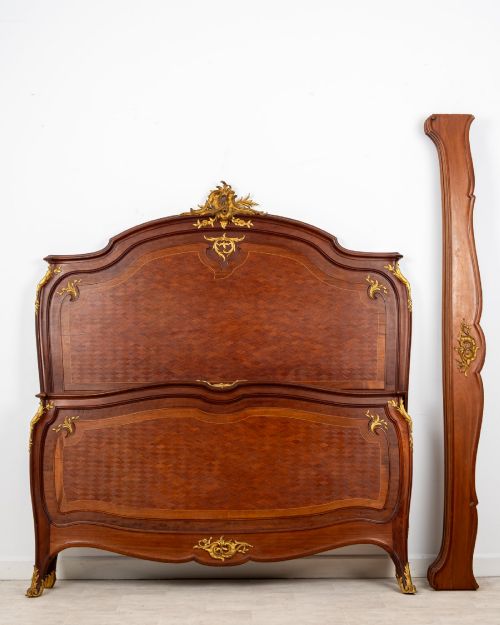
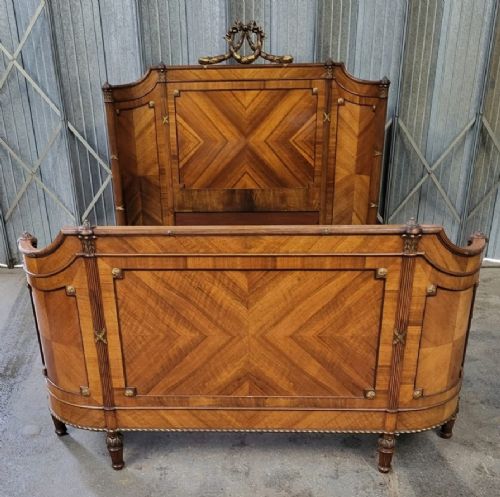
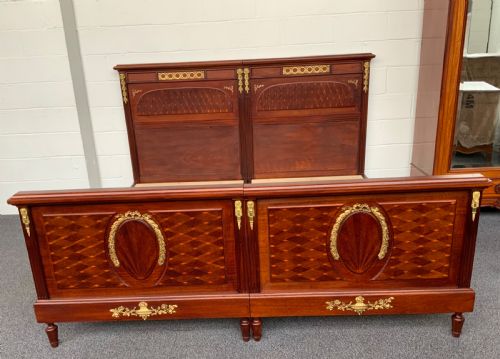
Surface treatments involved applying gesso and paint, liming techniques, or polishing natural wood to highlight quarter-veneered and parquetry patterns. Ormolu mounts, brass detailing, and woven cane panels provided textural contrast to the timber and painted surfaces.
Craftsmanship and decorative detail
Quality separates along the depth and crispness of the hand-carved ornamentation, where deeply undercut foliage and balanced symmetry distinguish superior cabinetwork. The precision of parquetry veneers and the weight of cast ormolu mounts signal higher workshop standards.
The integrity of the structural joints and the execution of curved wooden elements determine the durability and overall presence of the frame. Original painted polychrome portrait panels or finely preserved gilding elevate specific examples above standard production models.
The Louis Style Bedstead Glossary
- Ormolu
- Gilded bronze mounts applied to furniture for decorative enrichment. These metallic accents catch the light and frame wooden panels on finer beds.
- Parquetry
- Geometric wood veneer patterns laid down in precise arrangements. Artisans used contrasting timbers to create complex checkerboard or diagonal floor-like designs on the headboards.
- Corbeille
- A French bed style featuring an enveloping, curved back and sides reminiscent of a basket. This shape creates a sheltered sleeping enclosure.
- Polychrome
- Painted in several colours, often featuring delicate artwork or portrait panels. Such decoration appears on select twentieth-century headboards.
- Quarter veneered
- Wood slices cut from the log quarter and arranged symmetrically to display repeating grain patterns. This technique maximises visual interest across large headboard surfaces.
Louis Style Bedstead: Frequently Asked Questions
Will a standard modern mattress fit these antique beds?
Many of these frames were built to historical French dimensions, which can differ slightly from standard modern UK or European mattress sizes. Checking the internal length and width measurements before purchase ensures proper alignment.
Custom mattress makers can also supply bespoke bases and mattresses designed to drop neatly into antique wooden side rails.
How do I care for the painted and polished wood finishes?
Regular dusting with a soft, dry cloth protects delicate gesso and polished timber from abrasive particle buildup. Avoid placing the frame near direct heat sources or strong sunlight to prevent wood splitting and paint fading.
Periodic application of appropriate wax feeds solid walnut and mahogany, preserving the depth of the grain without creating sticky residue.
Are these beds easy to assemble at home?
Most antique French bedframes utilise traditional bed bolts that connect the headboard, footboard, and side rails into a sturdy self-supporting structure. Assembly typically requires simple hand tools and an extra pair of hands to manage large wooden sections.
Checking that all original metal brackets and bolts are present helps guarantee a stable setup.
What is the difference between Louis XV and Louis XVI styles?
Louis XV design is characterised by asymmetry, exuberant curves, and naturalistic rococo shell and scroll carvings. The aesthetic emphasises fluid lines and organic movement across the headboard.
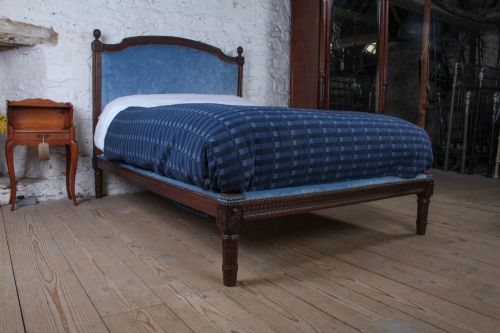
Louis XVI style reflects a return to classical symmetry, featuring straight lines, fluted columns, crisp geometric framing, and refined neoclassical motifs.