

Louis Style Armchairs
Louis style armchairs bring French decorative grandeur into a room, offering upholstered comfort shaped by centuries of royal design tradition.
Louis Style Armchairs
When searching for louis style armchairs, buyers encounter seating rooted in historical French court aesthetics, predominantly from the eighteenth century revival periods of the nineteenth and early twentieth centuries.
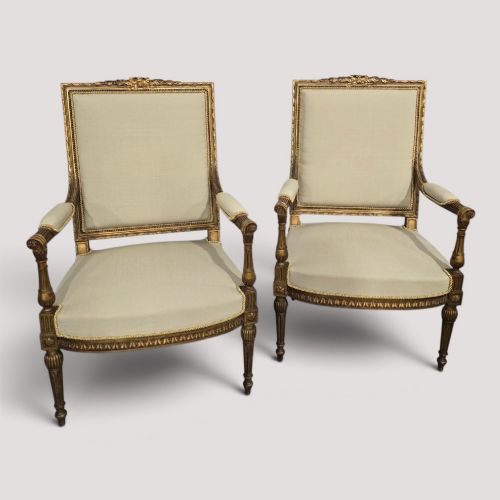
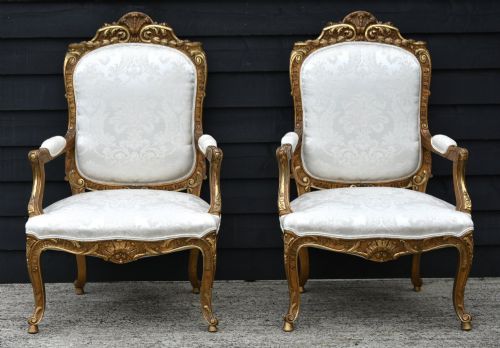
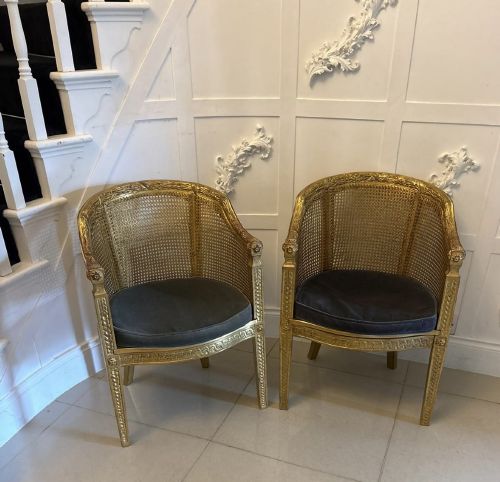
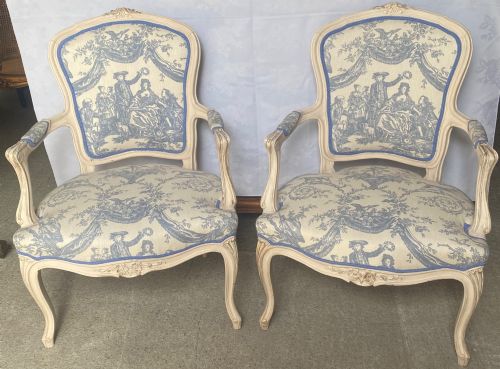
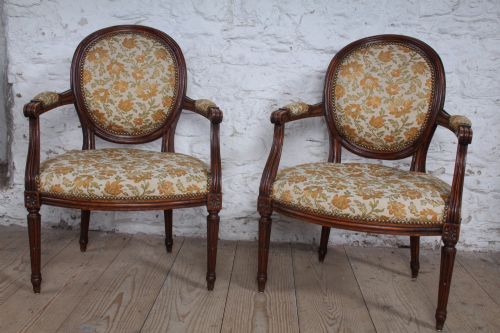
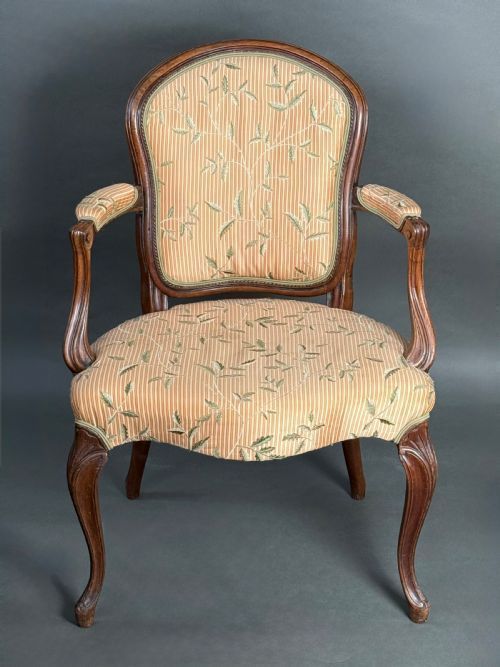
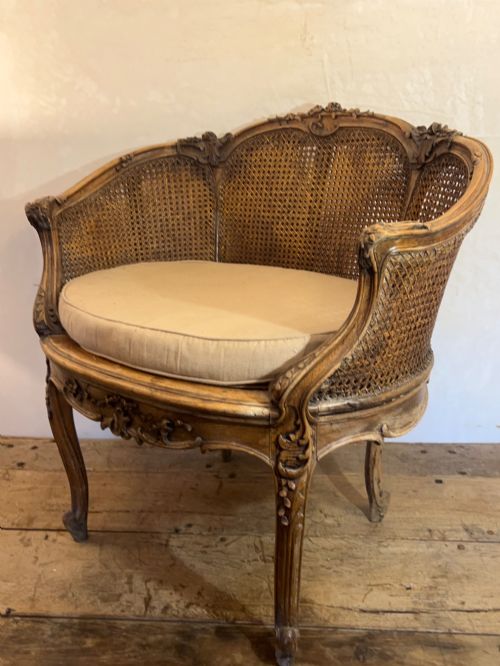
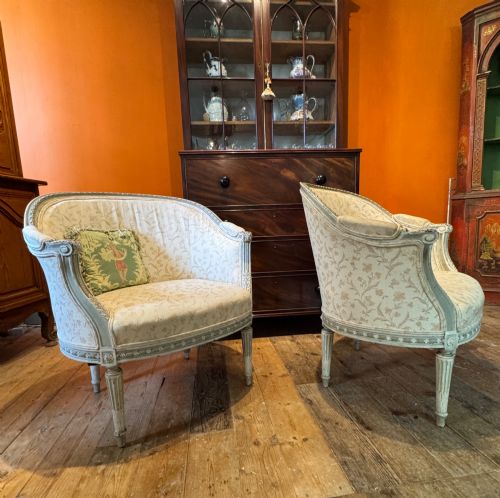
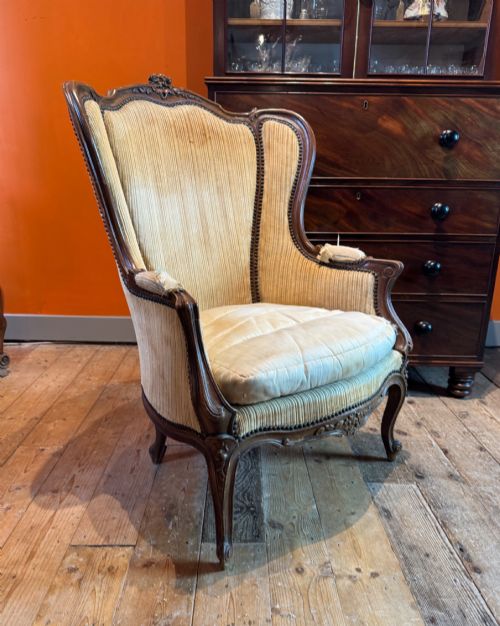
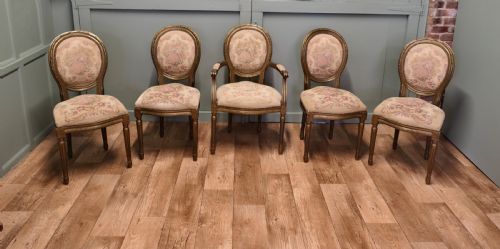
The selections on this page feature classic forms including open armchairs, bergères, and tub chairs, often found in matched pairs or larger salon suites.
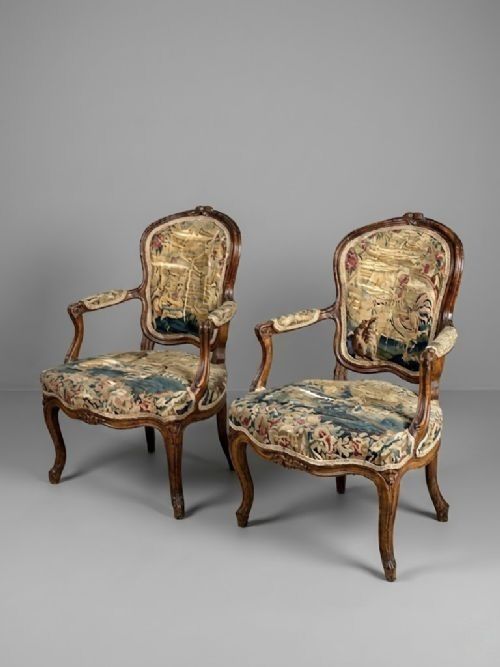
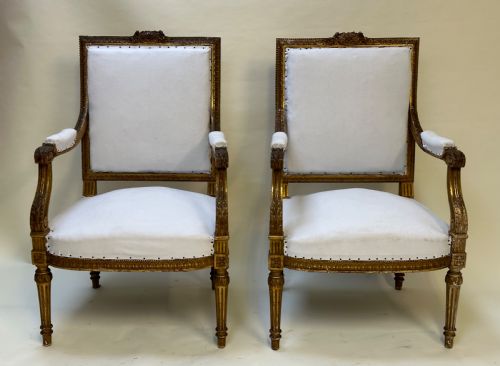
Originating largely from French workshops, these pieces draw heavily on Louis XV rococo asymmetry and Louis XVI neoclassical straight lines.
Materials and construction
Frames are constructed from solid timbers like walnut, beech, and mahogany, shaped through traditional joinery and detailed hand carving.
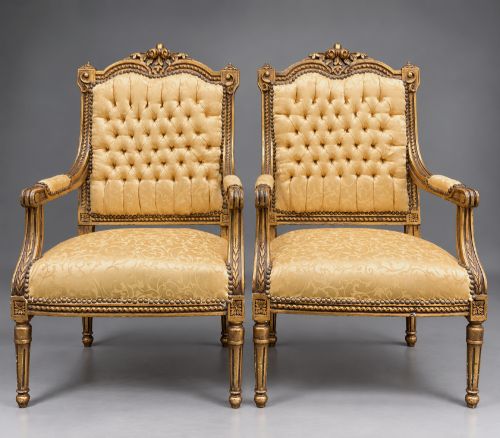
Surface finishes include applied gesso for gilding, original paintwork, and parcel-gilt highlights that emphasise the carved ornamentation.
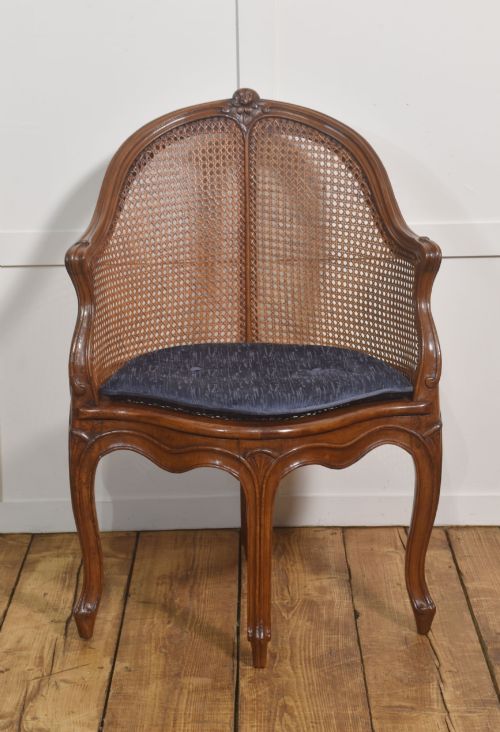
Upholstery methods incorporate traditional horsehair and webbing beneath textiles ranging from silk and velvet to antique tapestry and cane.
Listings feature walnut, beech, and mahogany frames finished with gilding, paint, or exposed grain.
Judging the work
Quality rests in the crispness and depth of the wood carving, where hand-tooled details surpass mechanical or shallow shaping.
The integrity of the frame construction dictates longevity, visible in tight joints and stable proportions that resist movement over time.
Surface preservation matters greatly, distinguishing pieces with original gilding or authentic paint from later, unsympathetic redecoration.
Blaise Maucuy
The Louis Style Armchairs Glossary
- Bergère
- An enclosed upholstered armchair with closed sides, typically featuring an exposed wooden frame and a loose seat cushion. These chairs offer a deeper seat than standard open versions.
- Fauteuil
- An open-armed upholstered armchair with exposed wooden sides, designed for formal salons. The arms generally feature padded elbow rests.
- Giltwood
- Timber treated with a thin layer of gold leaf over a prepared gesso ground. This technique creates a luminous, reflective surface characteristic of formal seating.
- Cabriole leg
- A furniture leg that curves outward in a convex arc before tapering inward in a concave arc, ending in a ornamental foot. This shape is a hallmark of rococo design.
- Medallion chair
- A chair featuring a distinct oval-shaped backrest framed in carved wood. This form is particularly associated with neoclassical revival periods.
Louis Style Armchairs: Frequently Asked Questions
What is a bergere armchair?
A bergère is a closed-arm upholstered armchair featuring exposed wooden framing around the back and sides. They usually contain a loose seat cushion and offer a more enclosed seating experience than standard open chairs.
These pieces were developed in France to provide greater comfort and draft protection in large rooms. Their upholstered sides distinguish them from traditional open-armed fauteuils.
How do I tell Louis XV from Louis XVI?
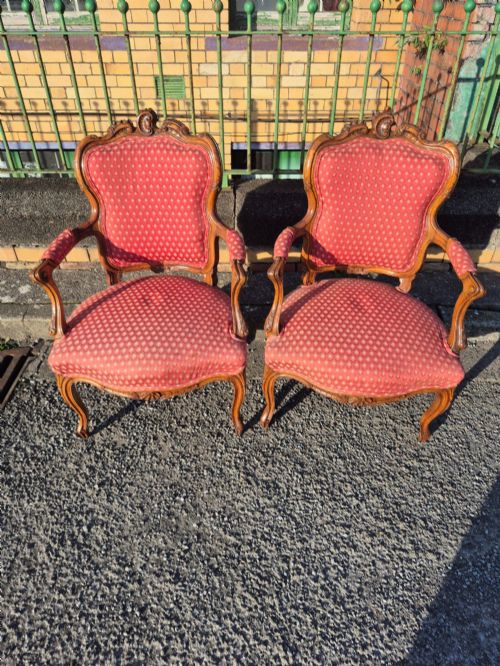
Louis XV furniture relies on asymmetrical rococo curves, sweeping lines, and cabriole legs without straight vertical elements. The overall feeling is flowing and organic.
Louis XVI design shifts toward strict symmetry, straight fluted columns, and geometric shapes like squares and ovals. The decoration draws inspiration from classical antiquity.
Are these chairs comfortable for daily use?
Most of these armchairs are built with generous proportions and sprung or webbed seats designed for relaxation. Their supportive backs and padded arms make them practical for everyday seating in living spaces.
Comfort levels can depend on the firmness of the traditional stuffing used inside the upholstery. Many buyers find them well-suited as fireside or reading chairs.
What does original paint mean on a chair?
Original paint indicates that the decorative surface coating applied to the wooden frame during its period of manufacture remains intact. This finish shows natural wear and patination accumulated over generations.
Such surfaces are valued for their historical authenticity compared to pieces that have undergone modern stripping and repainting. The subtle ageing adds character to the woodwork.